
What "Types" Really Means at Medusa
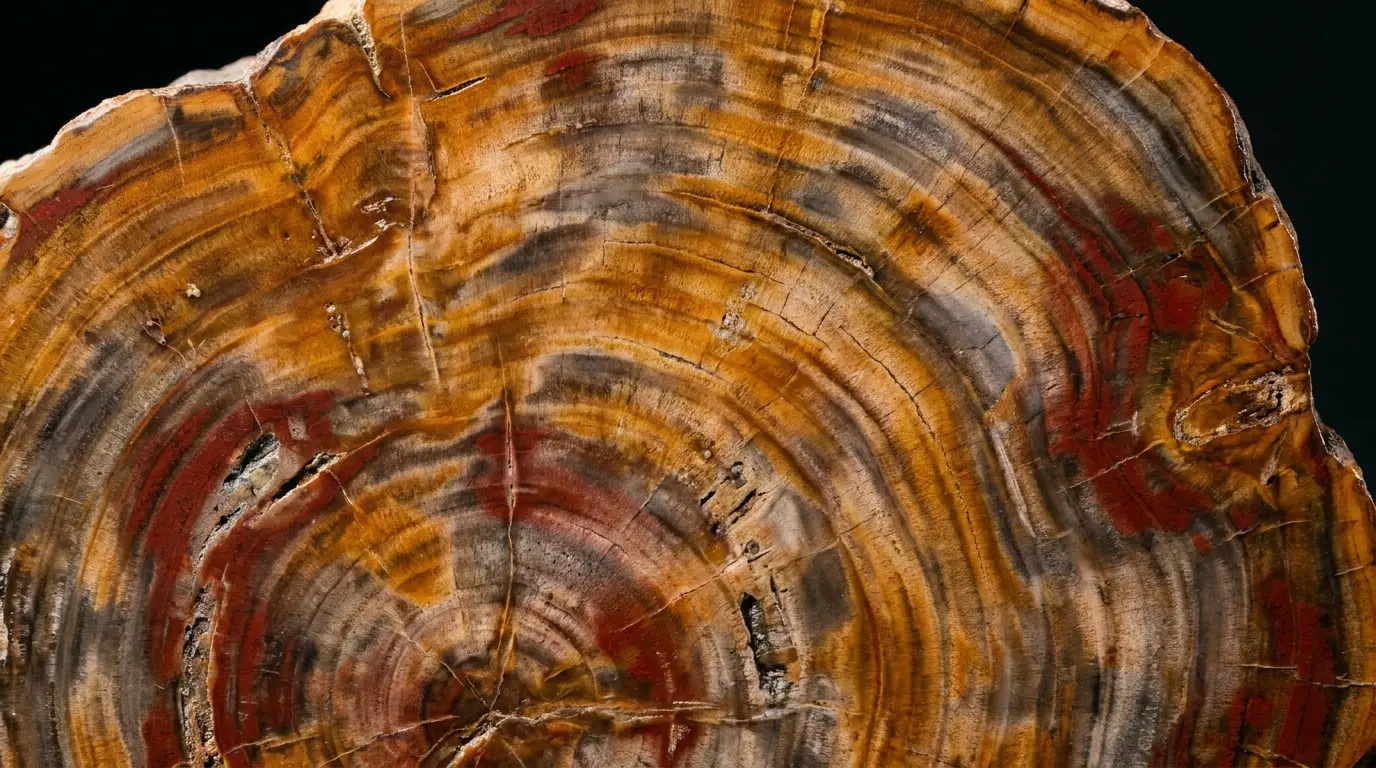
When people ask about types of petrified wood, they usually expect a catalogue of species — oak, pine, cedar. That is not how it works here. Each trunk we bring up from the ground in Madagascar is a single tree that lived and died some 230 million years ago, then spent an epoch absorbing minerals until its wood turned to stone. What varies is not the species so much as the mineral story written inside it. That story is unique to each log, and it never repeats. So instead of product categories, Medusa gives each trunk a name.
The Palette: How Color Becomes Identity
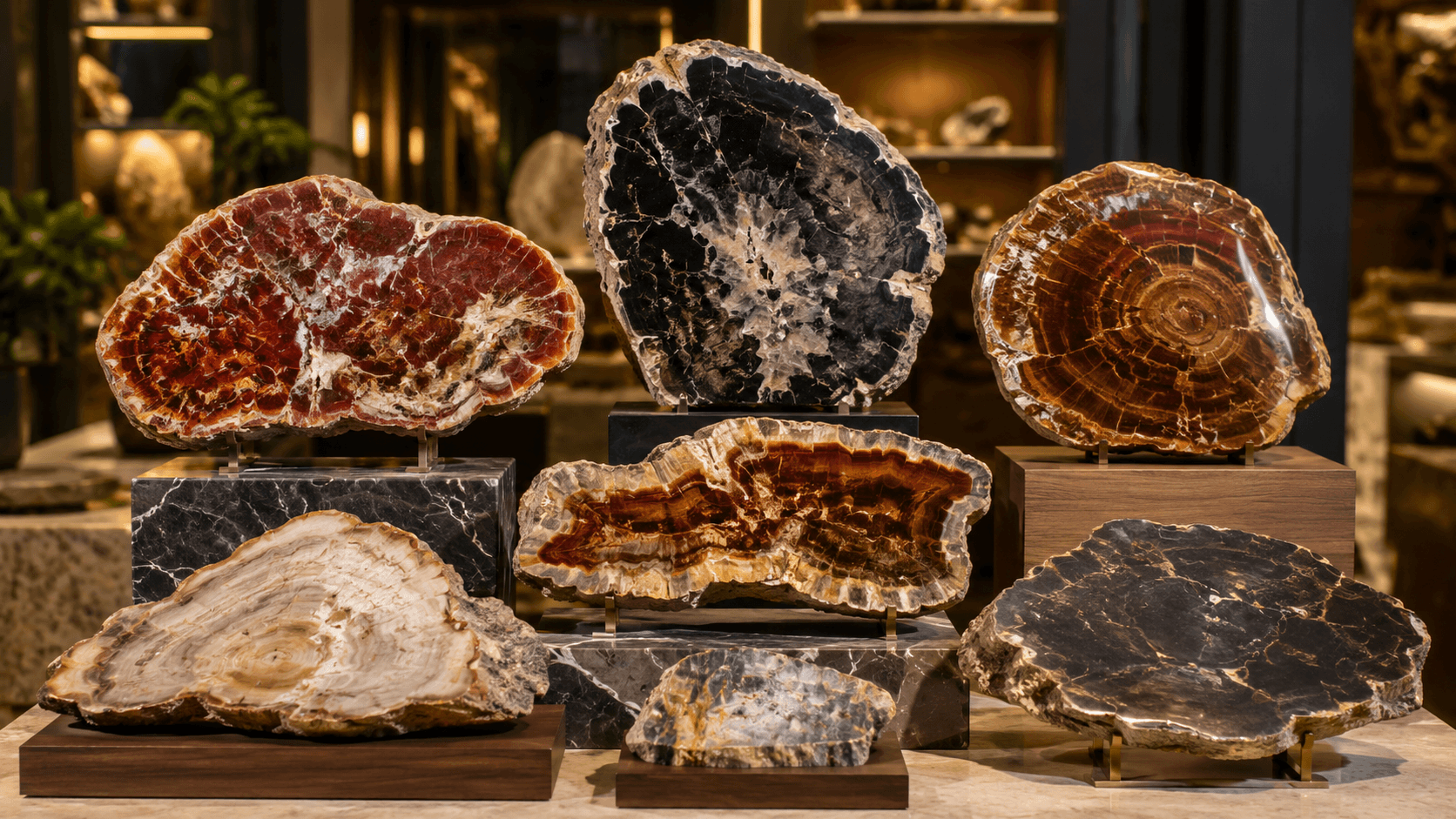
Petrified wood is quartz — silicon dioxide that replaced the original cellulose molecule by molecule, cell by cell, over geological time. The color you see is the fingerprint of whatever trace metals were dissolved in the groundwater surrounding that particular tree:
- Iron produces reds, oranges, and ochres.
- Manganese produces blacks and violets.
- Chromium and cobalt produce the rarer greens and blues.
No two trunks sat in identical mineral conditions long enough to fossilize identically. That is why a cross-section that looks amber in one log will never appear again once the log is fully sawn and sold. The color is not a finish. It is the tree's own chemical memory, fixed permanently in stone.
Five Names, Five Trees
Rather than sort our material into arbitrary grades, we name individual trunks according to their dominant tone, in the spirit of a naturalist cataloguing a specimen rather than a merchant labeling a batch:
- Ambra — warm amber and honeyed ochre, iron-rich.
- Argentea — pale silver-grey, quiet and mineral.
- Fusca — deep brown, dense and grounded.
- Umbra — near-black, shadowed by manganese.
- Viridis — the rarest, touched with green from chromium or cobalt.
A name marks a trunk, not a product line. Once Ambra No. 7 is cut into a table and a vasque, there is no "more Ambra" to order — only the next tree the ground gives up, which will carry its own signature. Across the deposits we work, fewer than 260 such rare colour variants have ever been documented, and Viridis alone accounts for a fraction of that number.
From Madagascar's Southwest
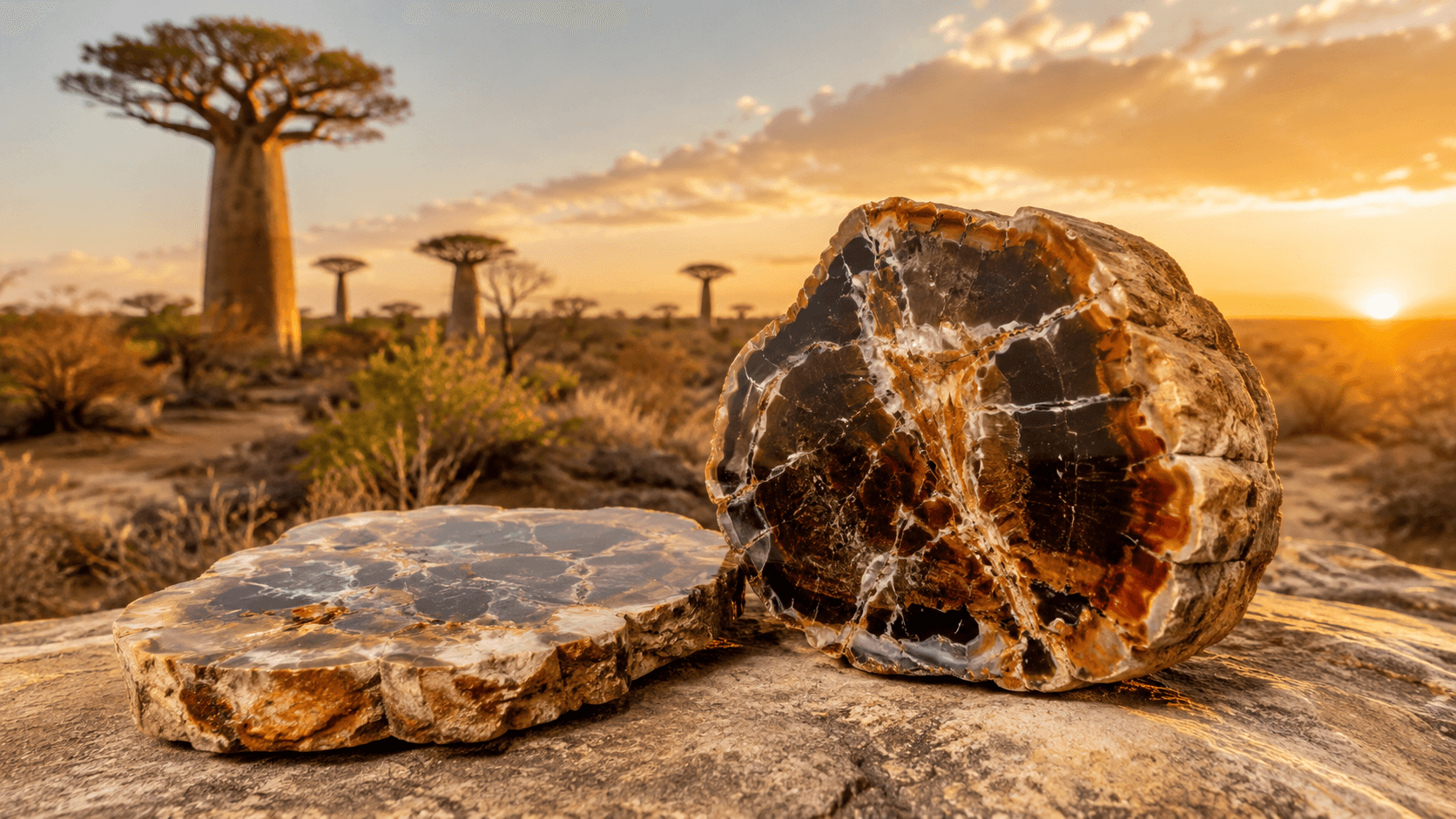
Every trunk we work comes from the same region: the arid southwest of Madagascar, where Triassic forests once stood and where volcanic ash and mineral-laden water later did the slow work of turning wood into stone. Two hundred and thirty million years is not a marketing flourish — it is roughly the age these deposits are dated to, placing the original trees well before the first dinosaurs many people associate with fossils. The climate and geology of this specific region are what allow such a range of named colors to exist within a relatively contained area. Elsewhere in the world, petrified wood tends toward a narrower, greyer palette.
A Stone That Behaves Like Stone
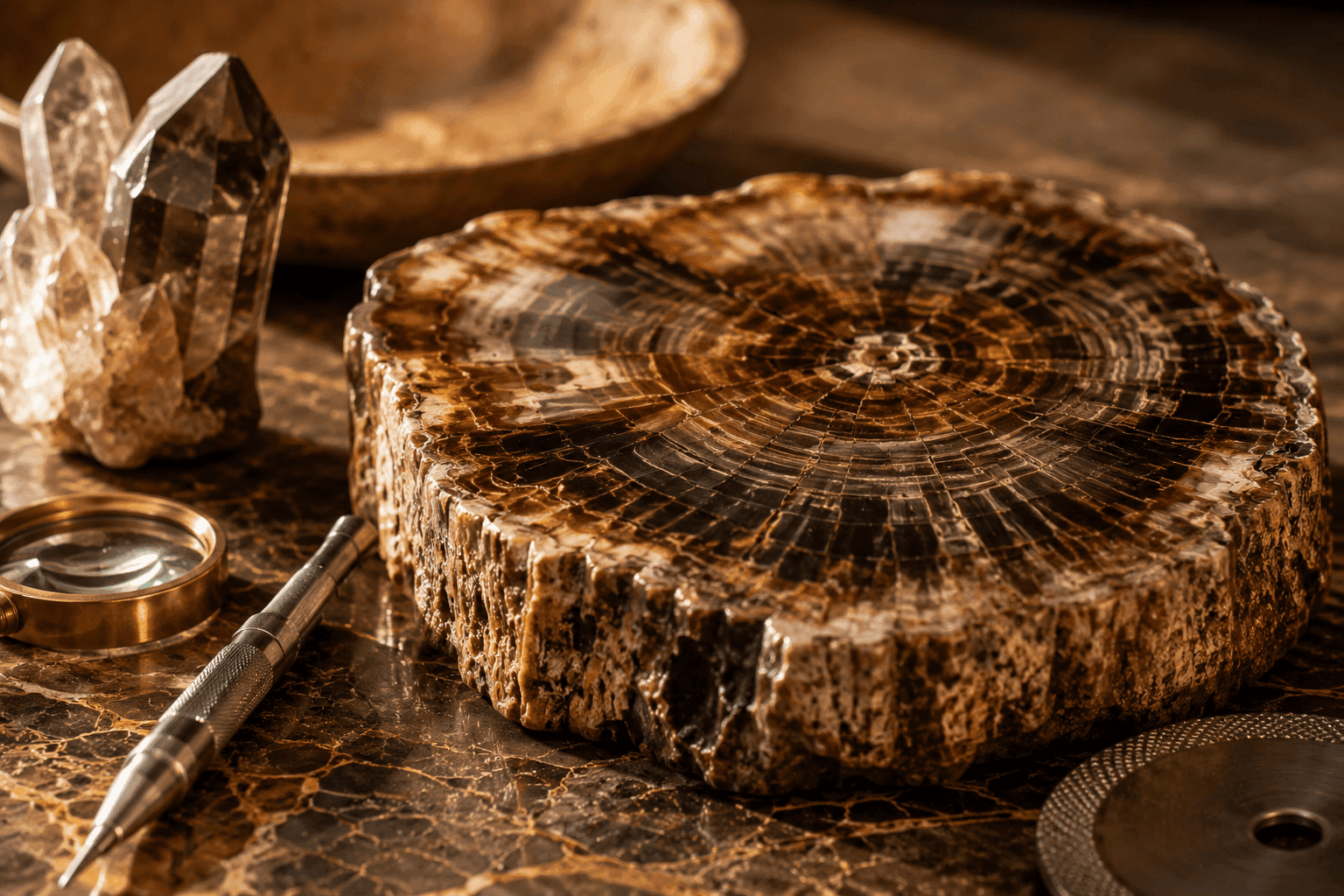
Because the material is quartz, it rates 7 on the Mohs hardness scale — harder than a steel blade, harder than glass. This has practical consequences that go well beyond aesthetics:
- It is unaffected by water, so a vasque carved from it needs no sealant.
- It tolerates heat without scorching or discoloring.
- It resists UV exposure, so color does not fade in sunlight.
- It withstands frost, making outdoor placement viable where wood or many stones would fail.
A tree that took two hundred million years to become stone does not ask to be treated gently.
Craft That Respects the Trunk
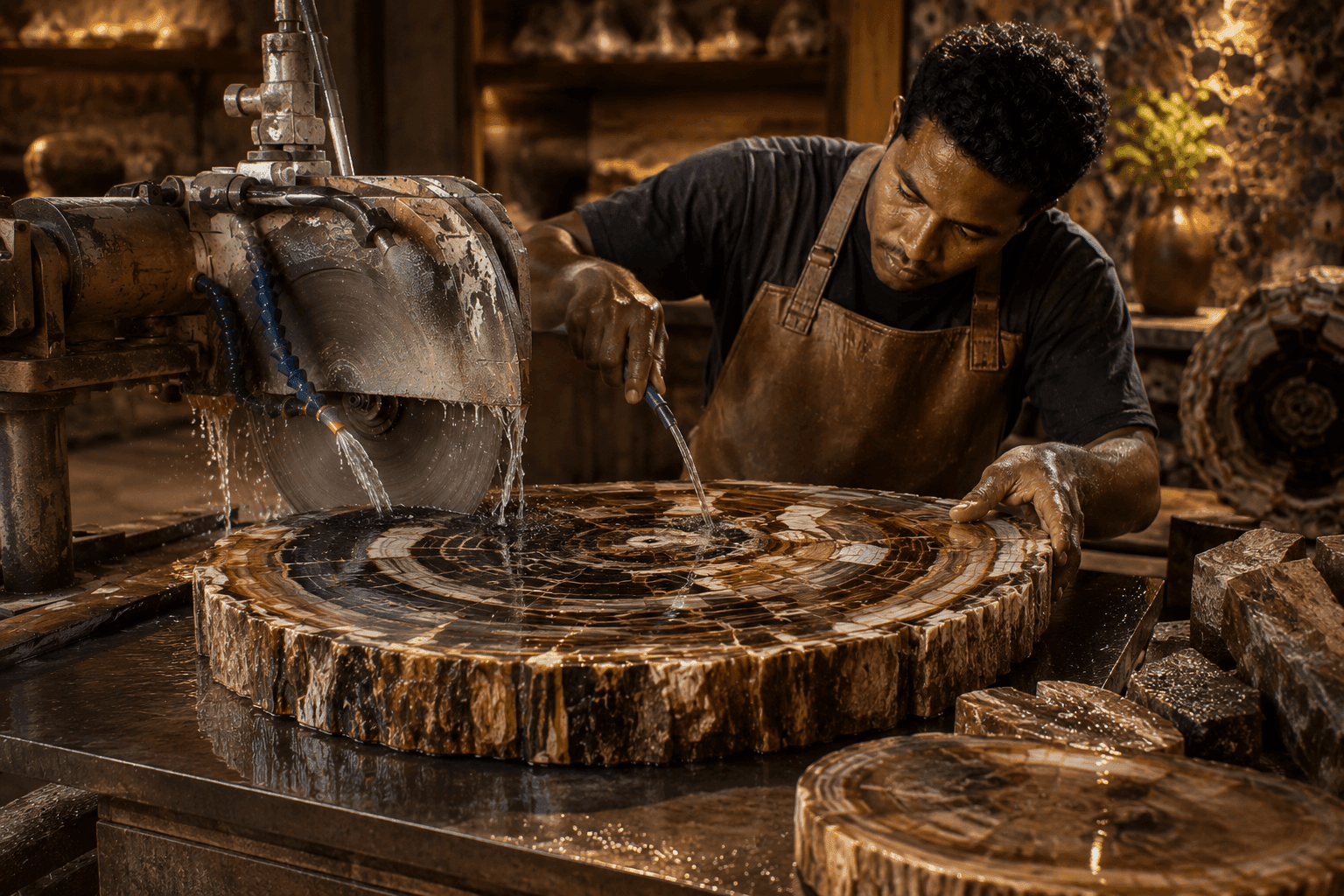
Because hardness this high resists standard woodworking tools entirely, every trunk is cut, ground, and polished using techniques closer to stonemasonry than carpentry. Our approach is to follow the log's natural geometry rather than force it into a uniform mold — an irregular edge or a visible growth ring is left as evidence of the tree it came from, not sanded into anonymity. This is also why the range of types of petrified wood we can offer is inseparable from the trunks currently available: we do not manufacture consistency, we reveal what each tree already contains.
Explore the trunks currently available, each one named and unrepeatable.
Visit the ShopFrequently Asked Questions
Are all petrified wood pieces essentially the same material?
Mineralogically, yes — nearly all are silicified quartz. What differs, sometimes dramatically, is the trace-metal content that gives each trunk its individual color and pattern.
Why does Medusa name trunks instead of listing product types?
Because each trunk is a single tree with a one-time mineral history. A name (Ambra, Argentea, Fusca, Umbra, Viridis) marks that individuality; once a named trunk is fully worked, that exact tone will not return.
Is green petrified wood (Viridis) really rarer than the others?
Yes. Green and blue tones require chromium or cobalt in the mineralizing groundwater, conditions far less common than the iron and manganese behind reds, browns, and blacks.
Can petrified wood be used outdoors?
Yes. As quartz rated 7 on the Mohs scale, it resists water, frost, heat, and UV exposure without treatment, making it suitable for both interior and exterior settings.