
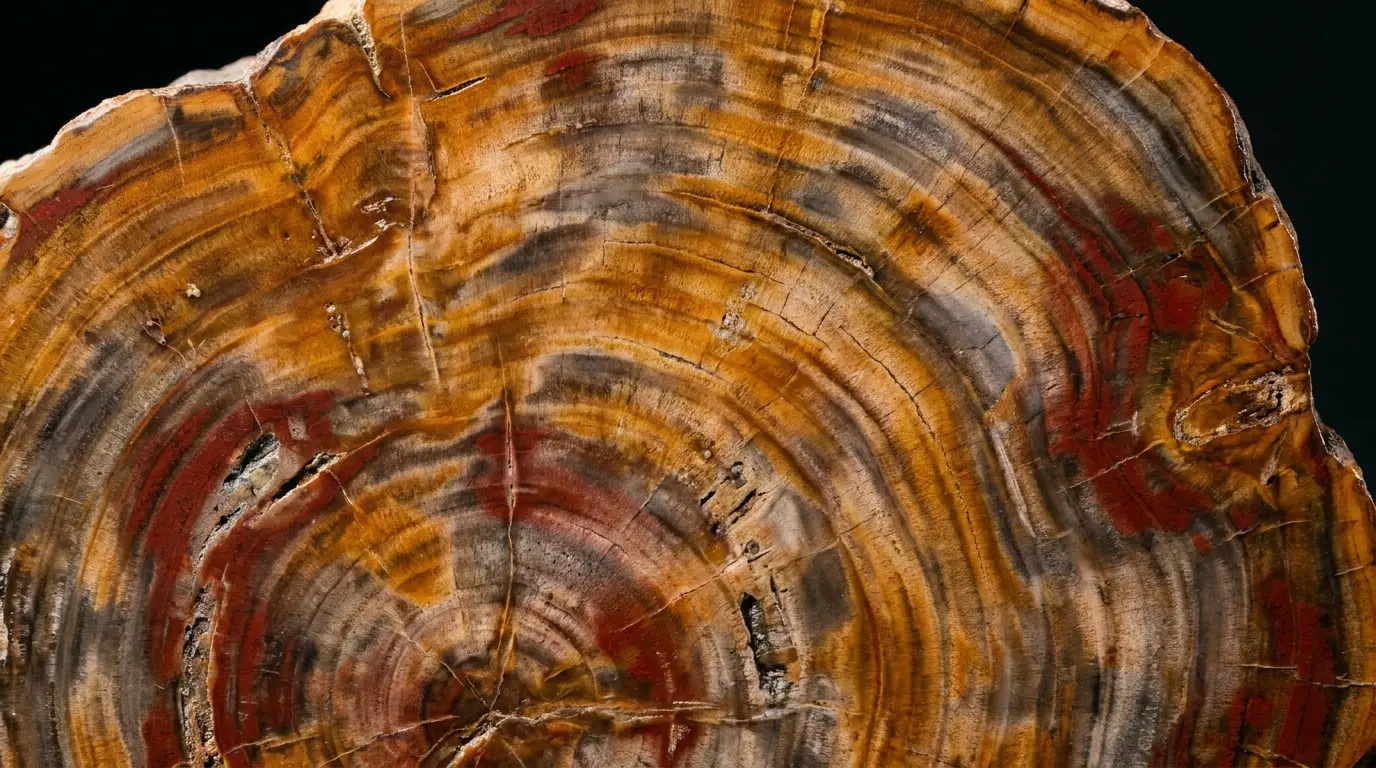
What Petrified Wood Actually Is
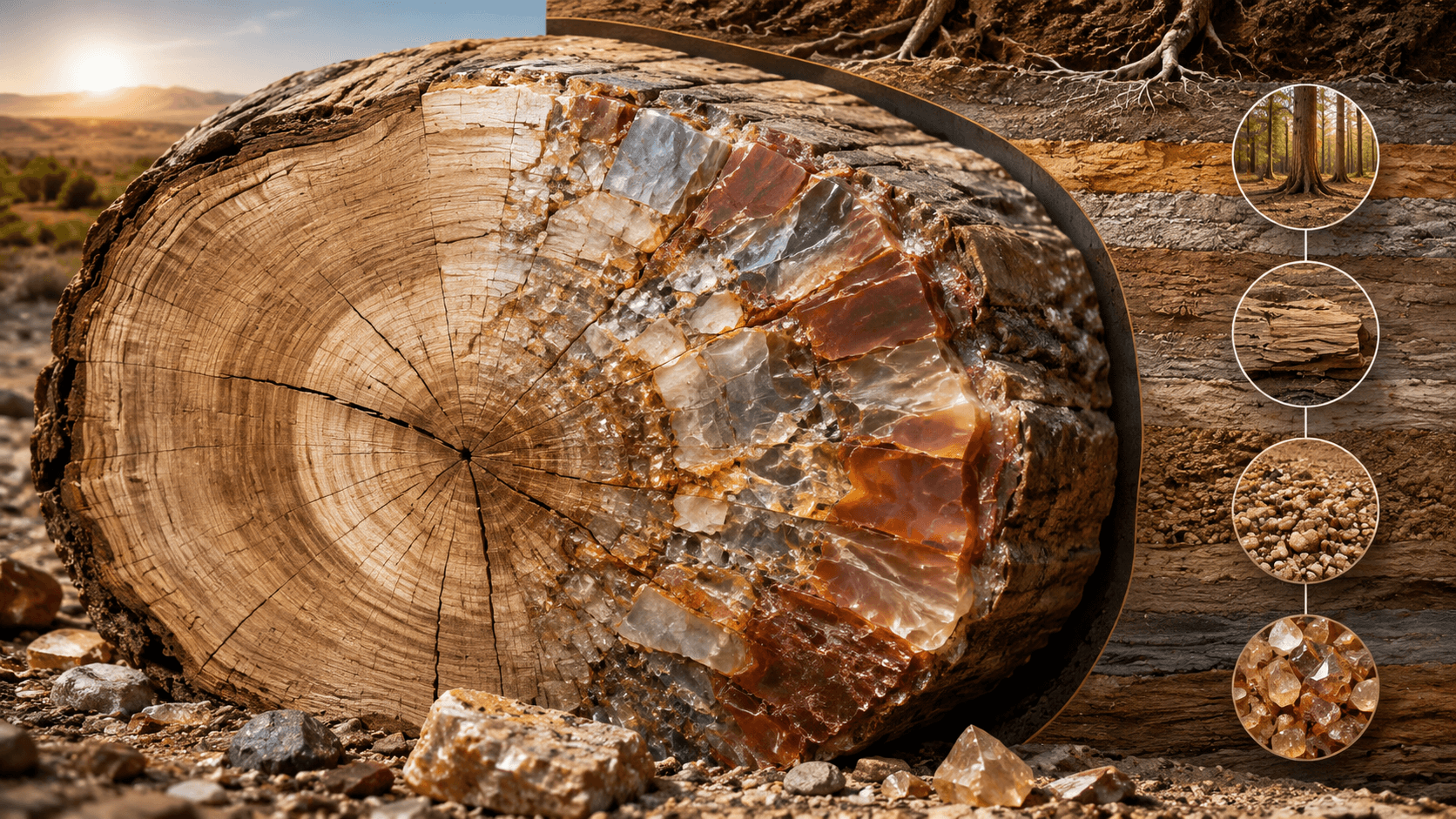
Before any symbol is attached to it, petrified wood is a fact of geology. A tree fell in the southwest of Madagascar roughly 230 million years ago, during the Triassic. Buried under sediment, cut off from oxygen, its cells were infiltrated by silica-rich water. Over vast spans of time, the organic wood dissolved and quartz took its place, molecule by molecule, preserving the grain, the rings, sometimes the bark, in stone.
This is why the word "meaning" matters here in a way it rarely does for ordinary decorative material. Petrified wood is not wood that resembles stone — it is wood that became stone, atom by atom, without losing its form. That transformation, slow beyond human comprehension, is the root of everything people read into it spiritually and metaphysically.
Petrified Wood Meaning: Transformation Made Visible
The most common meaning attached to petrified wood is also the most literal one: change without loss of identity. The tree did not vanish when it fossilized — it became something denser, harder, more durable, while keeping its original architecture legible in every ring and fiber. People drawn to petrified wood as a symbol often name exactly this: the idea that time and pressure can harden something without erasing what it was.
A second layer of meaning follows from the first. Wood is associated with growth, seasons, the visible passage of years. Stone is associated with permanence, memory, the geological long view. Petrified wood sits at the exact intersection of both — a living thing's record, held in a mineral that does not decay. That duality is why it appears so often in writing about grounding, endurance, and continuity between past and present.
A tree that took 230 million years to become stone does not need our stories to mean something. It already does.
Spiritual Meaning: Grounding, Patience, Ancestral Memory
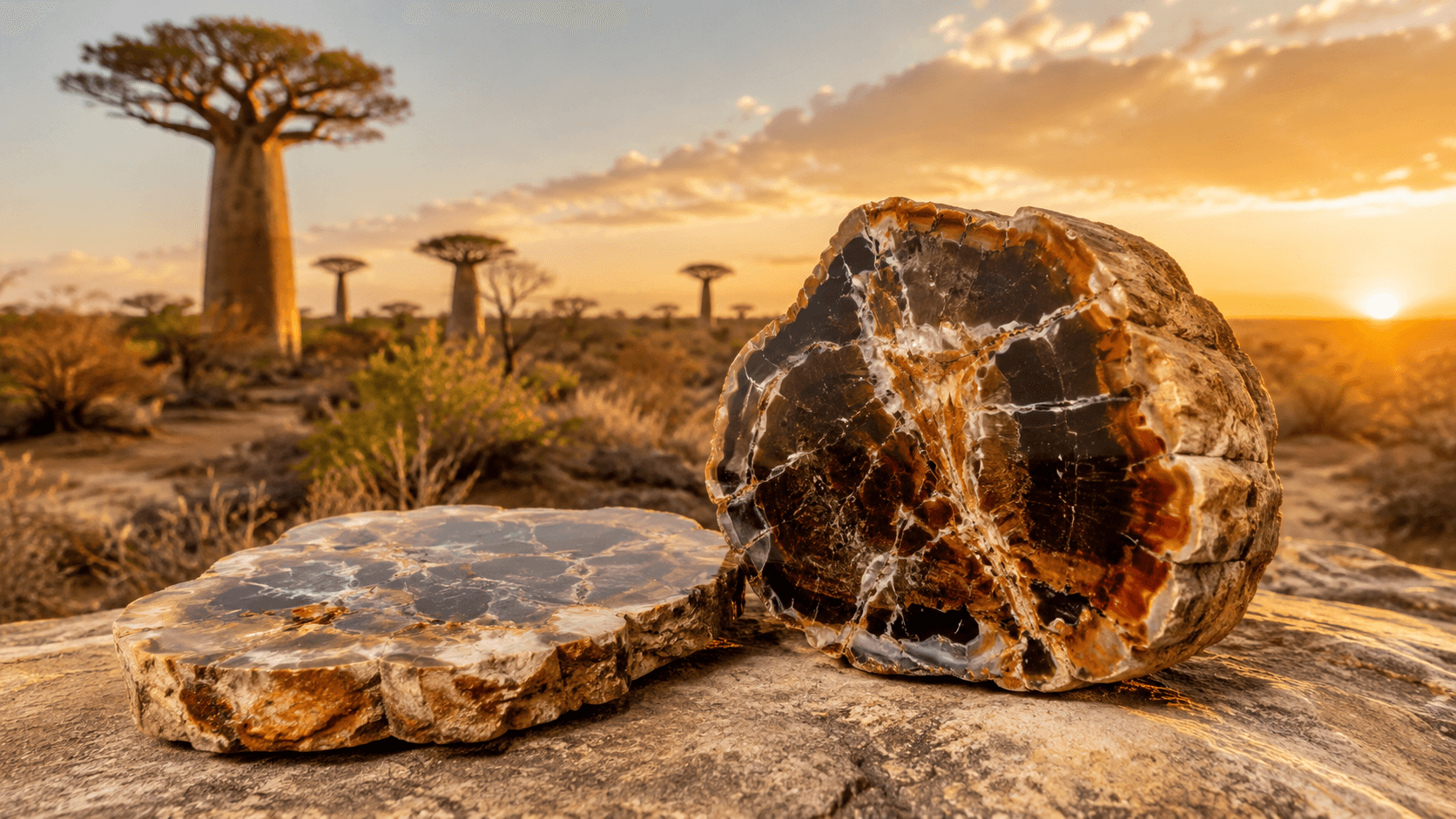
In spiritual and folk traditions that work with stones, petrified wood is consistently placed in the "grounding" family — alongside other heavy, earth-toned minerals believed to anchor scattered energy and support a sense of stability. Three ideas recur across these traditions:
- Patience. A process this slow is often read as an argument against haste — a reminder that some transformations cannot be rushed.
- Ancestral connection. Because the material predates human history by a vast margin, it is frequently associated with lineage, deep memory, and continuity across generations.
- Root and stability. Its density and earth tones are linked to the base or root chakra in systems that map stones onto the body's energy centers, supporting focus and a felt sense of being anchored.
These associations are cultural and symbolic, not scientific claims. Medusa states this plainly: what follows describes belief systems and traditional practice, not verified medical or physical effects.
Metaphysical & Crystal Properties: What the Stone Is, Chemically
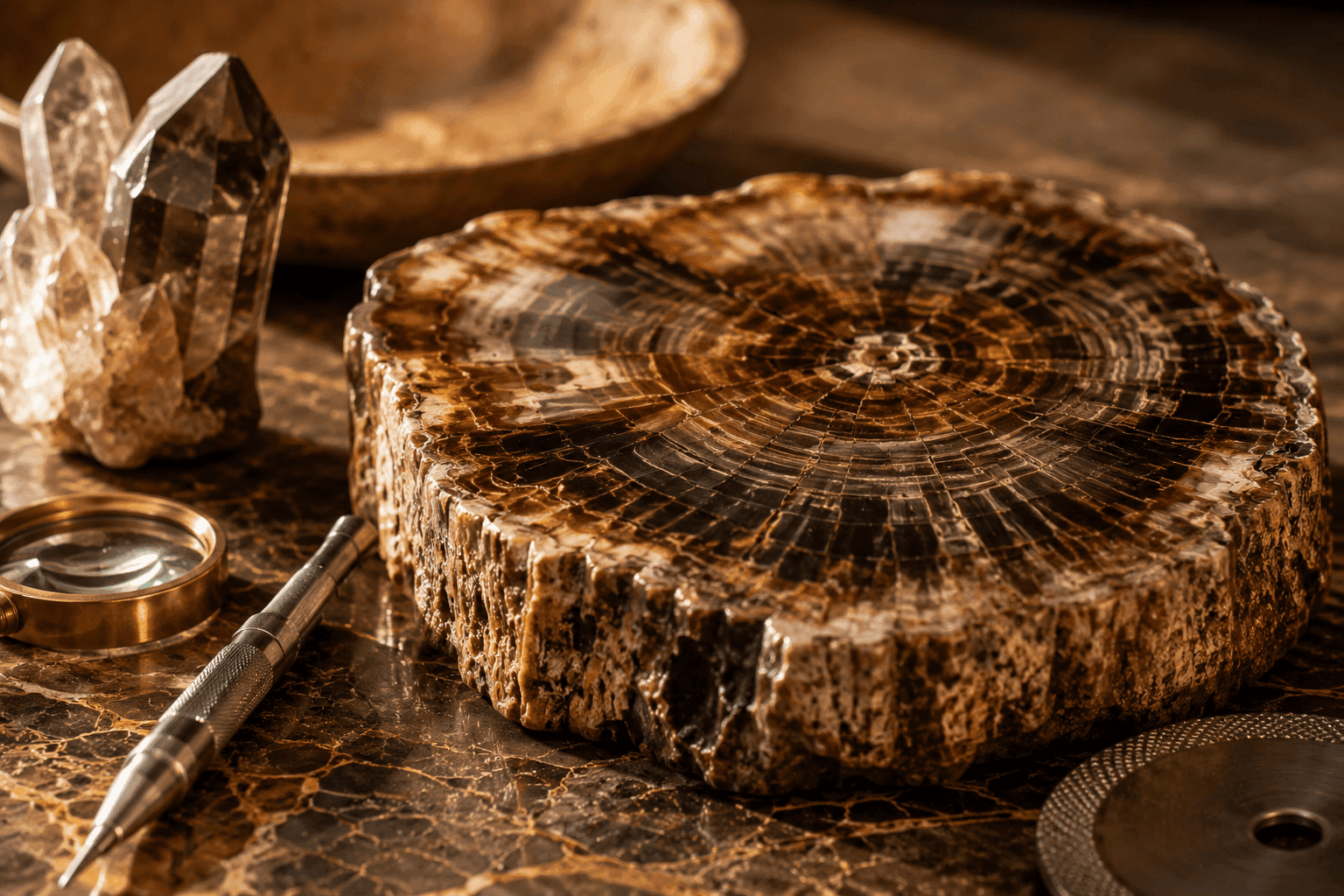
Metaphysical readings of petrified wood are not arbitrary; they generally track its actual mineral composition. The fossilization process replaces wood cells with silica, meaning petrified wood is chemically quartz — the same family of crystal used across crystal-healing traditions for clarity, focus, and protection. Its hardness, 7 on the Mohs scale, is often cited as a physical metaphor for resilience: a material that does not scratch, fade, or wear under ordinary conditions.
Color plays its own role in these interpretations, and here the science is genuinely interesting:
- Iron produces the reds, ochres, and ambers most commonly associated with warmth, vitality, and the lower chakras.
- Manganese produces blacks and violets, linked in some traditions to protection and introspection.
- Chromium or cobalt, rarer, produce greens and blues, associated with balance and calm.
Each trunk's palette is therefore not decorative choice but a chemical signature — a record of which minerals were present in the groundwater that replaced its cells. No two trunks share an identical map of trace elements, which is part of why no two pieces of petrified wood are truly alike.
Healing Properties: What Can Honestly Be Said
Traditional and crystal-healing sources attribute a range of properties to petrified wood: emotional stability, stress relief, a sense of protection, support during periods of change. These claims belong to a long, sincere, and widely practiced tradition — and Medusa does not dismiss them. At the same time, we do not present them as medical fact. What we can state with certainty is what the stone physically is: solid quartz, inert, unaffected by water, heat, UV light, or frost, carrying within its structure the literal record of a tree's life 230 million years ago. Whether that record carries the energetic properties some traditions describe is a matter of belief, not measurement — and we think that distinction deserves honesty rather than marketing.
Each Tree, Its Own Meaning

This is where Medusa departs from most sellers of petrified wood. We do not sort trunks into product categories. Each one is an individual tree, raised one at a time from the ground in southwest Madagascar, and each receives a name that describes its own mineralization: Ambra for amber tones, Argentea for silver-grey, Fusca for deep brown, Umbra for near-black, Viridis for the rare greens. These are not marketing labels. They are the closest thing we have to a name for an organism that lived a quarter of a billion years before naming existed.
Once a trunk is cut, its particular balance of iron, manganese, or trace chromium is fixed forever — there is no second trunk with the same palette. If meaning matters to you in a stone, it is worth knowing which tree you are bringing home, not just which color.
Discover the trunks currently available, each with its own name and story.
Explore the CollectionFrequently Asked Questions
What does petrified wood symbolize spiritually?
Most traditions read it as a symbol of grounding, patience, and continuity — a living thing transformed by time into something permanent, without losing its original form.
Is petrified wood a crystal?
Yes, chemically. The fossilization process replaces organic wood with silica, so petrified wood is quartz — rated 7 on the Mohs hardness scale, the same mineral family used across crystal traditions.
Which chakra is petrified wood associated with?
In systems that map stones to the body's energy centers, it is most often linked to the root or base chakra, reflecting its association with grounding and stability.
Does petrified wood have proven healing properties?
No scientifically verified medical effects have been established. Traditional and crystal-healing practices attribute emotional and energetic benefits to it, which Medusa presents honestly as belief rather than fact.