
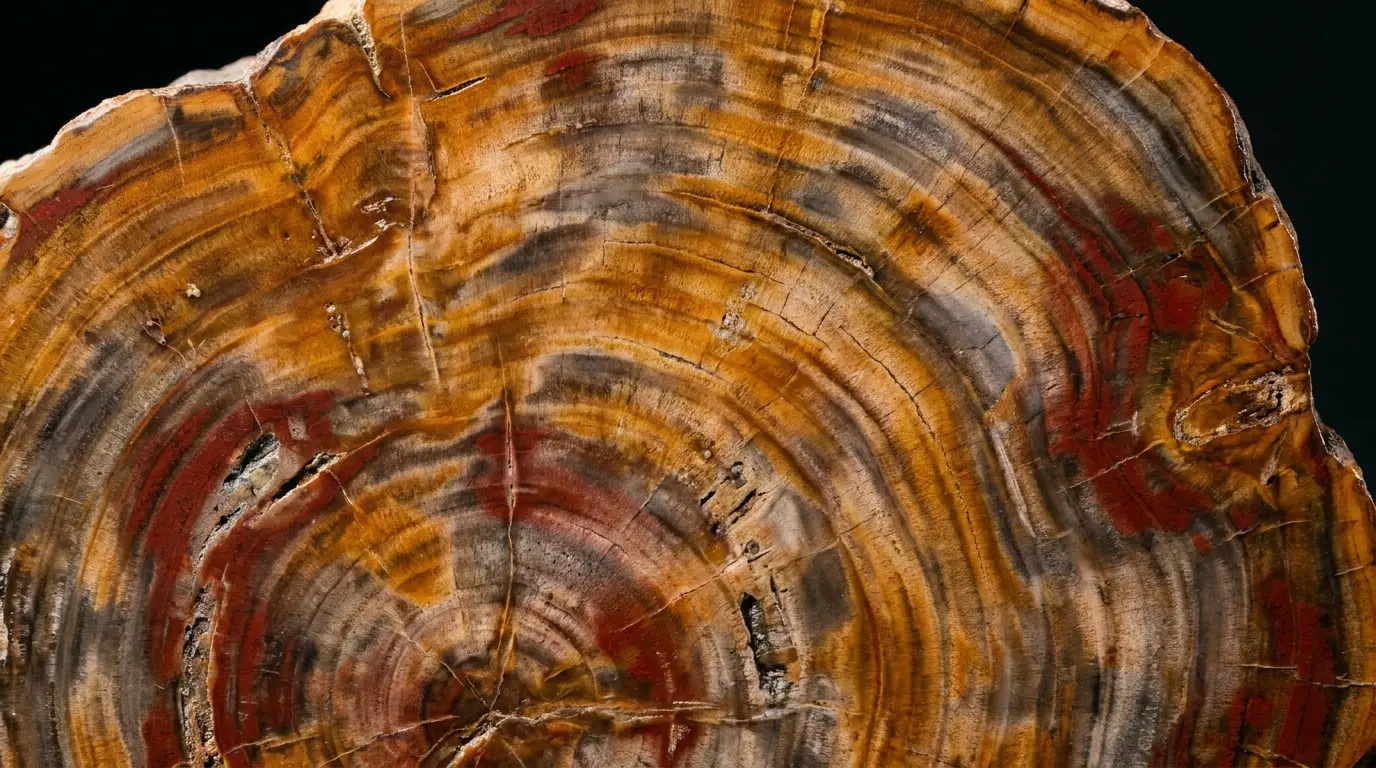
Is Petrified Wood a Rock or a Fossil?
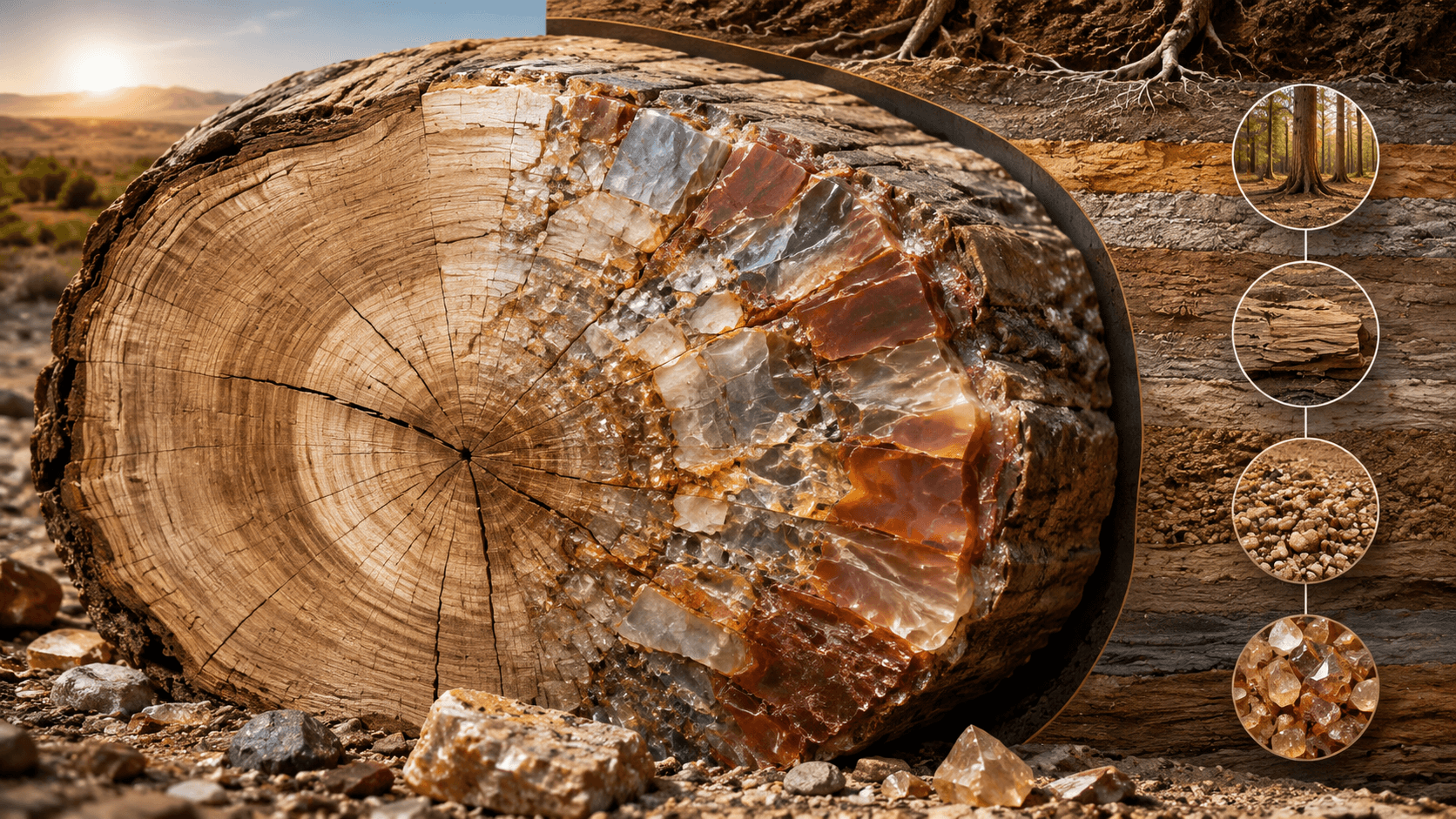
The honest answer is both — and neither in the way most people expect. Petrified wood is a fossil in origin and a rock in composition. It began as a living tree; it ends, some 230 million years later, as solid quartz. Understanding this dual identity matters more than it seems, because it explains why a table made from it behaves nothing like ordinary timber, and everything like stone.
What Type of Rock Is Petrified Wood, Exactly?
Petrified wood belongs to the family of sedimentary rocks, more precisely to a category geologists call permineralized fossils. Here is the sequence: a tree falls, gets buried quickly under sediment, mud, or volcanic ash, and is sealed off from oxygen before it can decay. Groundwater rich in dissolved silica then seeps through the wood's cellular structure, cell by cell, depositing quartz where organic tissue used to be. Over millions of years, the wood's form is preserved down to the growth rings and grain — but its substance is entirely replaced by mineral.
So the rock type is, technically, silicified wood — a variety of chalcedony, itself a cryptocrystalline form of quartz. It is not a rock in the sense of granite or basalt, formed from magma or accumulated sediment. It is a fossil that has been rewritten, atom by atom, into stone.
- Botanical origin: a real tree, with real anatomy.
- Mineral result: quartz, chemically identical to what fills the cell structure.
- Process: permineralization, not compression or carbonization like coal.
- Timeframe: this is not a fast reaction — it takes geological time, measured in millions of years.
Fossil First, Rock Second
The distinction matters because it changes what you are actually looking at. Coal, for instance, is also fossilized plant matter, but it stays organic, carbon-rich, and soft. Petrified wood takes the opposite path: the organic matter disappears entirely, replaced by silica. What survives is the architecture — the tree's memory, held in stone — not a trace of the tree itself.
This is why paleontologists study petrified wood as a fossil (it tells us about ancient forests, climates, species long gone), while lapidaries and furniture makers treat it as a rock (it can be cut, polished, and finished exactly like any other quartz-based stone). Both disciplines are correct. They are simply looking at two different chapters of the same object's history.
A tree does not become a rock. It becomes the memory of a tree, written in quartz.
Every Trunk, an Individual Story
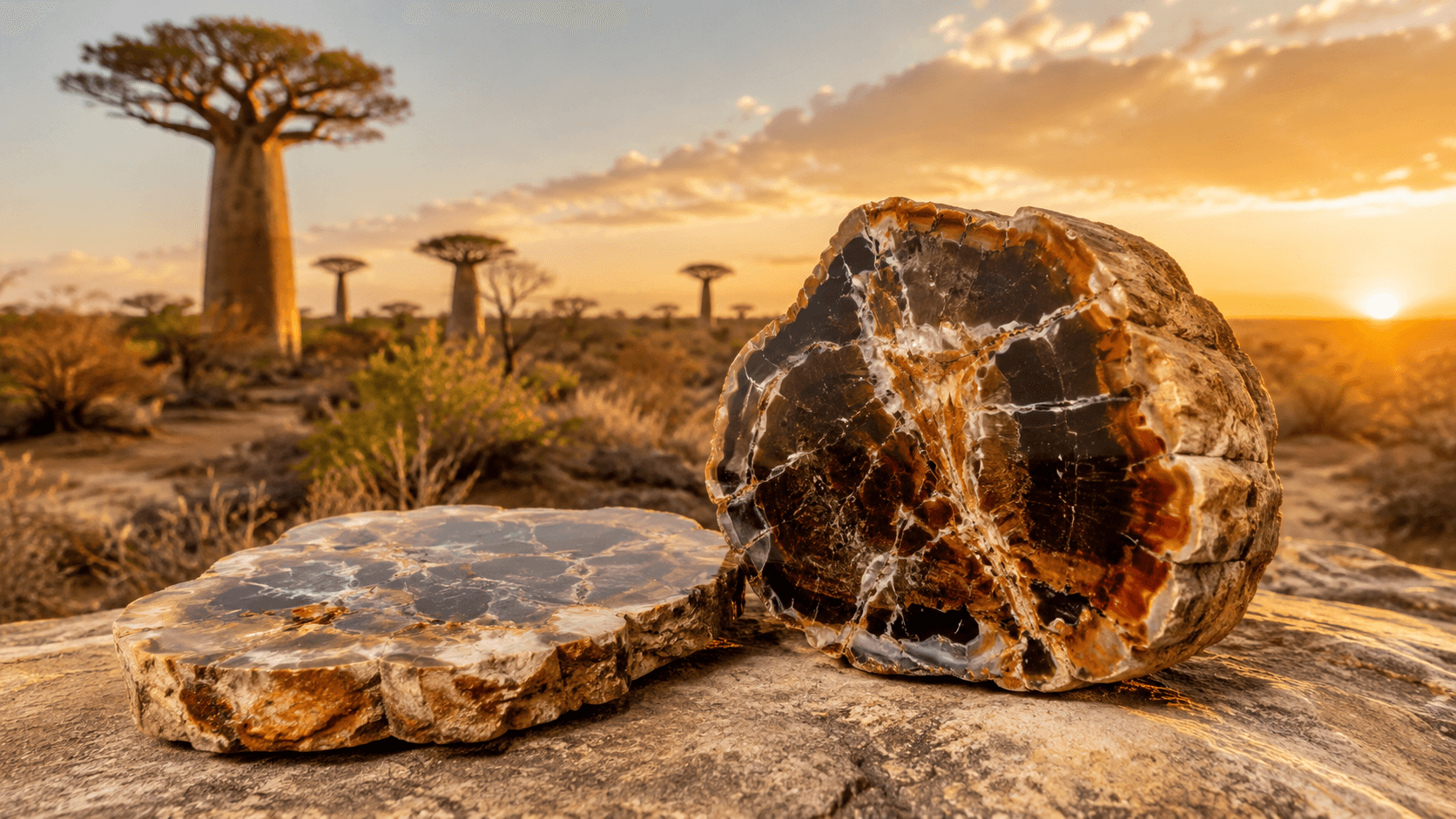
At Medusa, this scientific fact becomes the foundation of how we work. Each trunk we bring up from southwestern Madagascar is not a batch of "petrified wood" — it is one tree, once alive, now individually named: Ambra for the amber tones, Argentea for the silvered grays, Fusca for deep browns, Umbra for near-black shades, Viridis for the rare greens.
The reason names matter is mineralogical, not decorative. The color of a petrified trunk depends on which trace metals were present in the groundwater during fossilization — iron produces reds and ochres, manganese produces blacks and violets, chromium or cobalt produce greens and blues. No two trunks were mineralized under identical conditions. Once a trunk is cut, that particular chromatic signature is gone for good; there is no second trunk with the same veining, because there is no second tree that lived and fossilized in exactly the same way.
A Rock That Behaves Like Stone, Not Wood
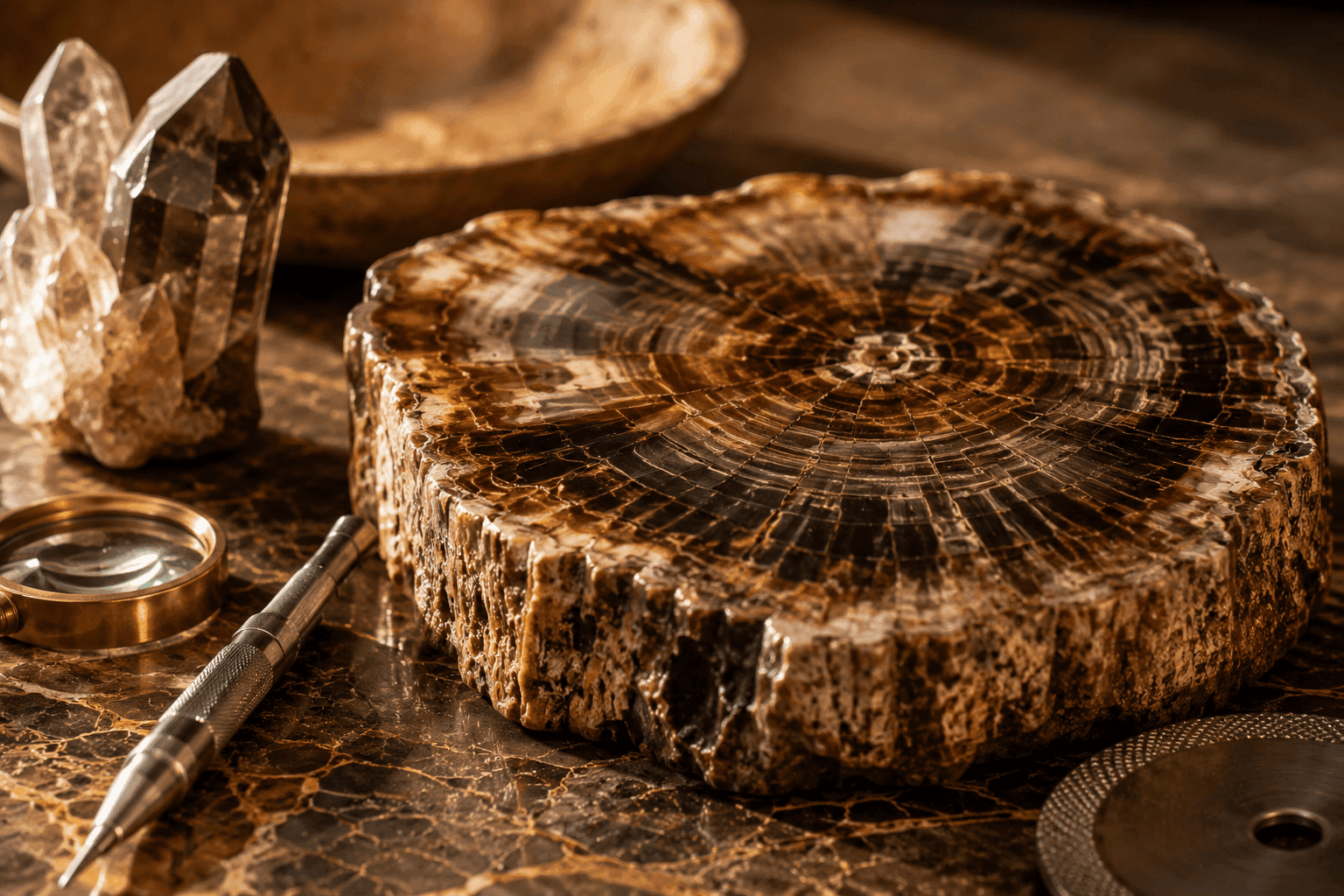
Because the final material is quartz, petrified wood scores 7 on the Mohs hardness scale — harder than steel, close to hardened glass. This has direct, practical consequences for anyone considering a piece for the home:
- It does not absorb water, so a vasque or basin carved from it needs no sealing.
- It is unaffected by heat, making it suitable near direct sunlight or heat sources.
- It resists UV fading; the colors seen at extraction remain stable indefinitely.
- It does not warp, crack from humidity, or age the way timber does.
- It is heavy and cold to the touch — the sensory signature of stone, not wood.
The visual vocabulary is entirely wood: rings, grain, knots, the occasional insect gallery frozen mid-tunnel. The physical vocabulary is entirely mineral. This tension between what the eye reads and what the hand feels is, for many, the material's most striking quality.
From Ancient Trunk to Finished Piece
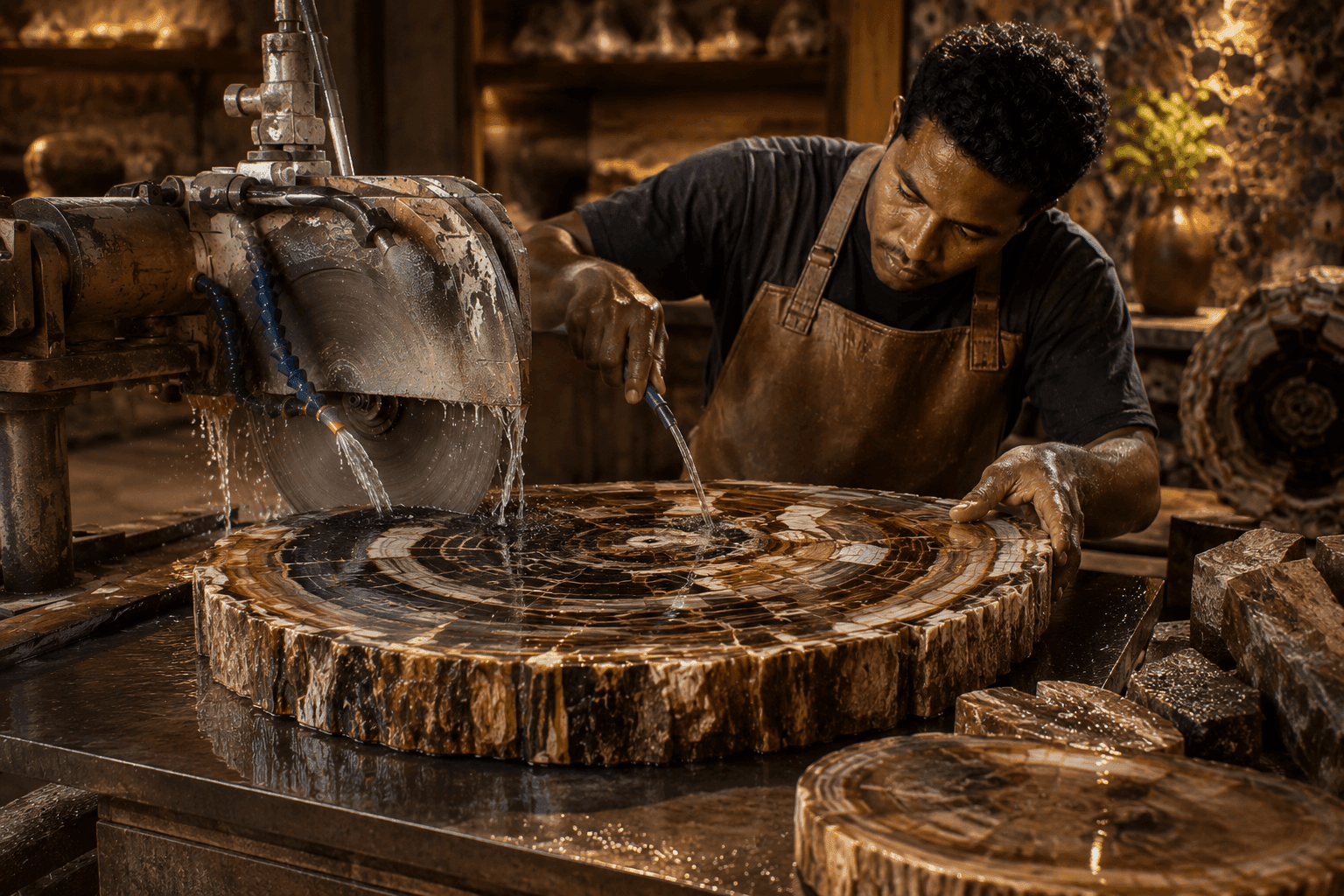
Turning a fossilized trunk into a table or vasque is slow, deliberate work. Because the rock is exceptionally hard, cutting and polishing cannot be rushed — diamond tooling is required at every stage, and each pass reveals more of the internal veining that no one, not even the artisan, could predict beforehand. This is part of why no two Medusa pieces are interchangeable: the cut itself is a discovery, not a reproduction.
We select trunks for their structural integrity as much as their color — a piece destined to become a tabletop or a basin must have survived 230 million years without fracturing internally. Not every trunk qualifies. Those that do carry their name, and their story, into the finished object.
Discover which named trunk suits your space, and request a tailored quote.
Visit the BoutiqueLiving With Petrified Wood
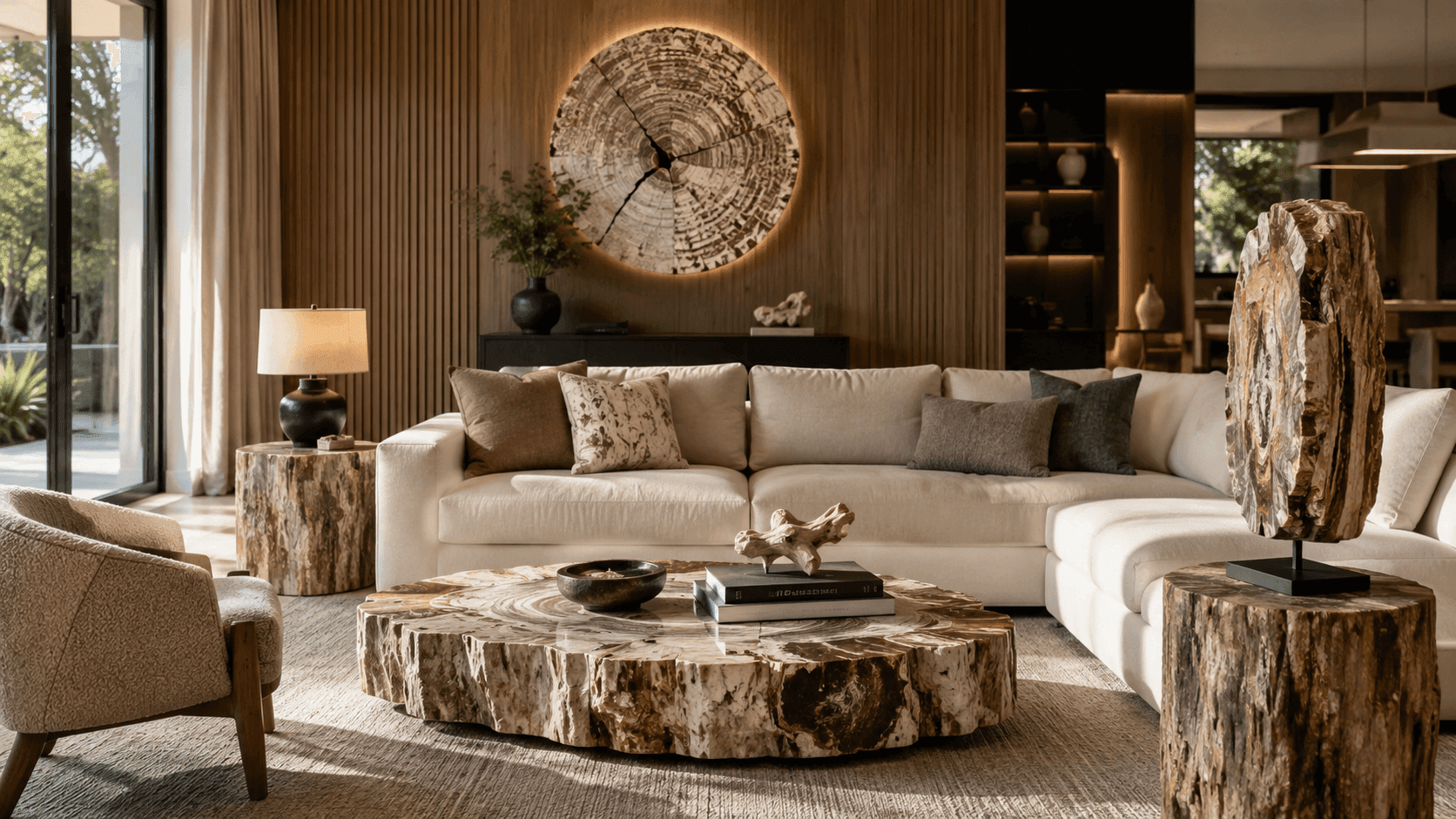
A piece of petrified wood in a room does something unusual: it holds two timelines at once. The eye reads a tree — its rings, its growth, its age as a living organism. The hand reads a stone — cool, dense, permanent. Placed as a console, a low table, or a freestanding vasque, it does not compete with other materials; it sits apart from them, closer to geology than to furniture.
- Ideal for pieces exposed to water or humidity (vasques, basins, bathroom consoles).
- Stable outdoors or in bright rooms, thanks to UV and heat resistance.
- Best appreciated where its cross-section can be seen fully — light from the side reveals the ring structure most clearly.
Frequently Asked Questions
Is petrified wood a mineral, a rock, or a fossil?
All three descriptions are technically accurate at different levels: the material itself is a mineral (quartz), its formation makes it a rock (silicified wood, a chalcedony variety), and its origin makes it a fossil (a permineralized tree).
Why do trunks show different colors?
Color comes from trace metals present in the groundwater during fossilization — iron for reds and ochres, manganese for blacks and violets, chromium or cobalt for greens and blues. Each trunk mineralized under its own specific conditions.
Does petrified wood need special care, like real wood?
No. Being quartz, it is insensitive to water, heat, UV light, and frost. It requires no sealing, oiling, or protective treatment.
How old is Medusa's petrified wood?
It originates from southwestern Madagascar and dates to the Triassic period, roughly 230 million years ago.