
How Old Is Petrified Wood?
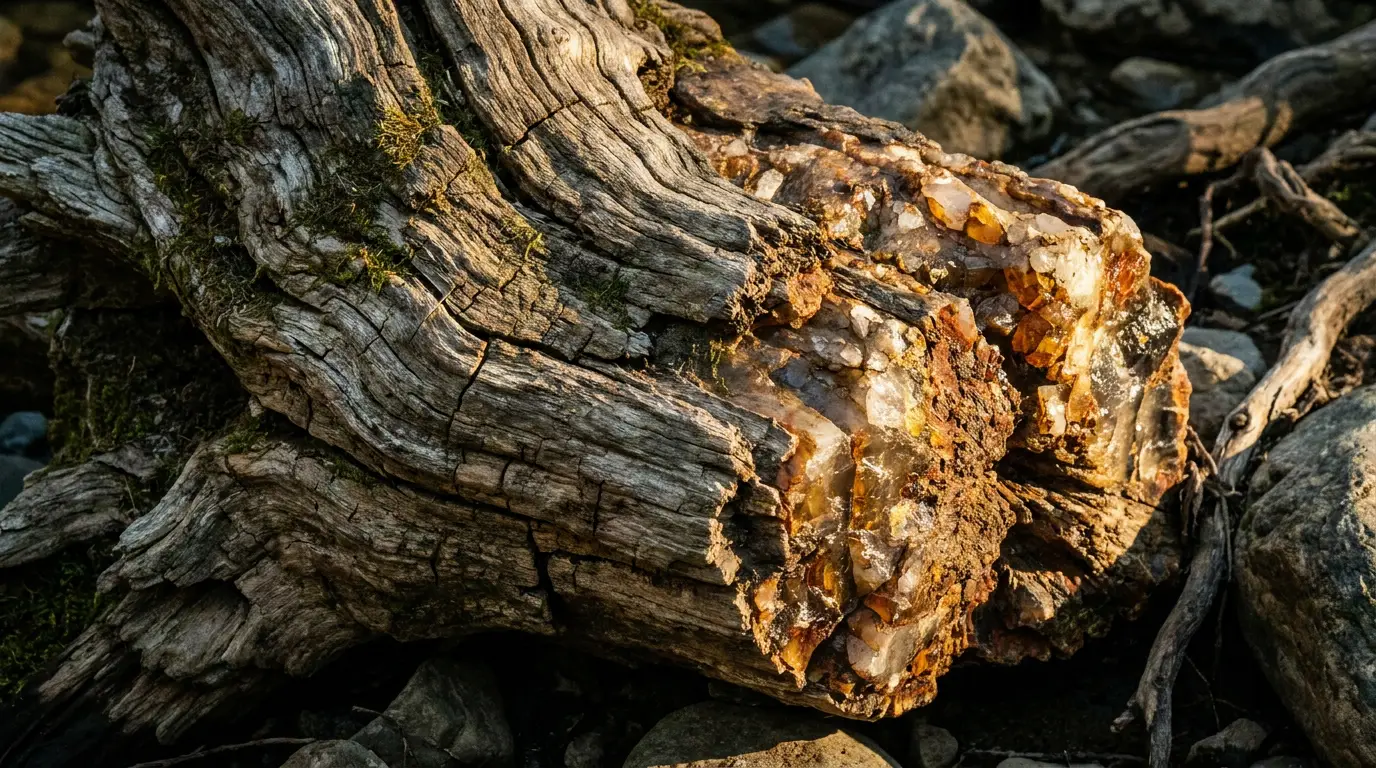
The question arrives before any other, usually within seconds of touching a polished slab for the first time: how old is this, really? The answer, for the wood we work with, is close to 230 million years. That figure places these trunks in the Triassic period — long before flowering plants existed, long before most dinosaurs we know by name, in a world still assembling itself into the continents we recognize today.
From Living Tree to Stone
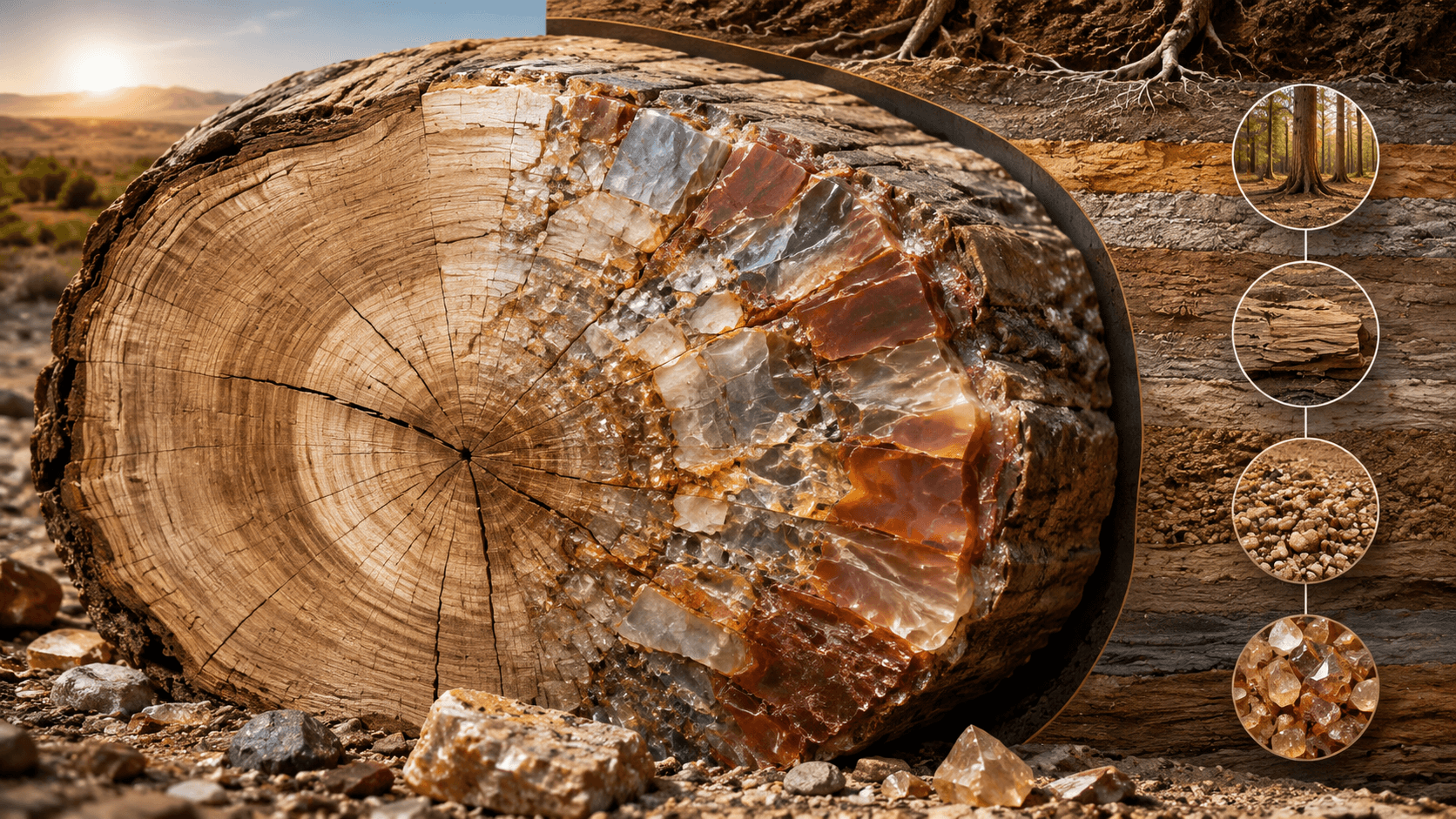
Petrification is not decay slowed down. It's a replacement. A tree falls, and rather than rotting, it is buried quickly enough — under sediment, ash, or mud — to be sealed off from the oxygen and organisms that would normally consume it. Groundwater rich in dissolved silica then moves through the wood's cellular structure, and over a very long span of time, mineral by mineral, the organic tissue is replaced with quartz while the cell walls, grain, and growth rings remain visible in the final stone.
This is why a cut trunk still shows rings, knots, and fiber direction: the geometry of the living tree survived, even though not a single organic molecule did. What you hold is mineral. What you see is memory.
Why Madagascar, and Why It Matters for the Date
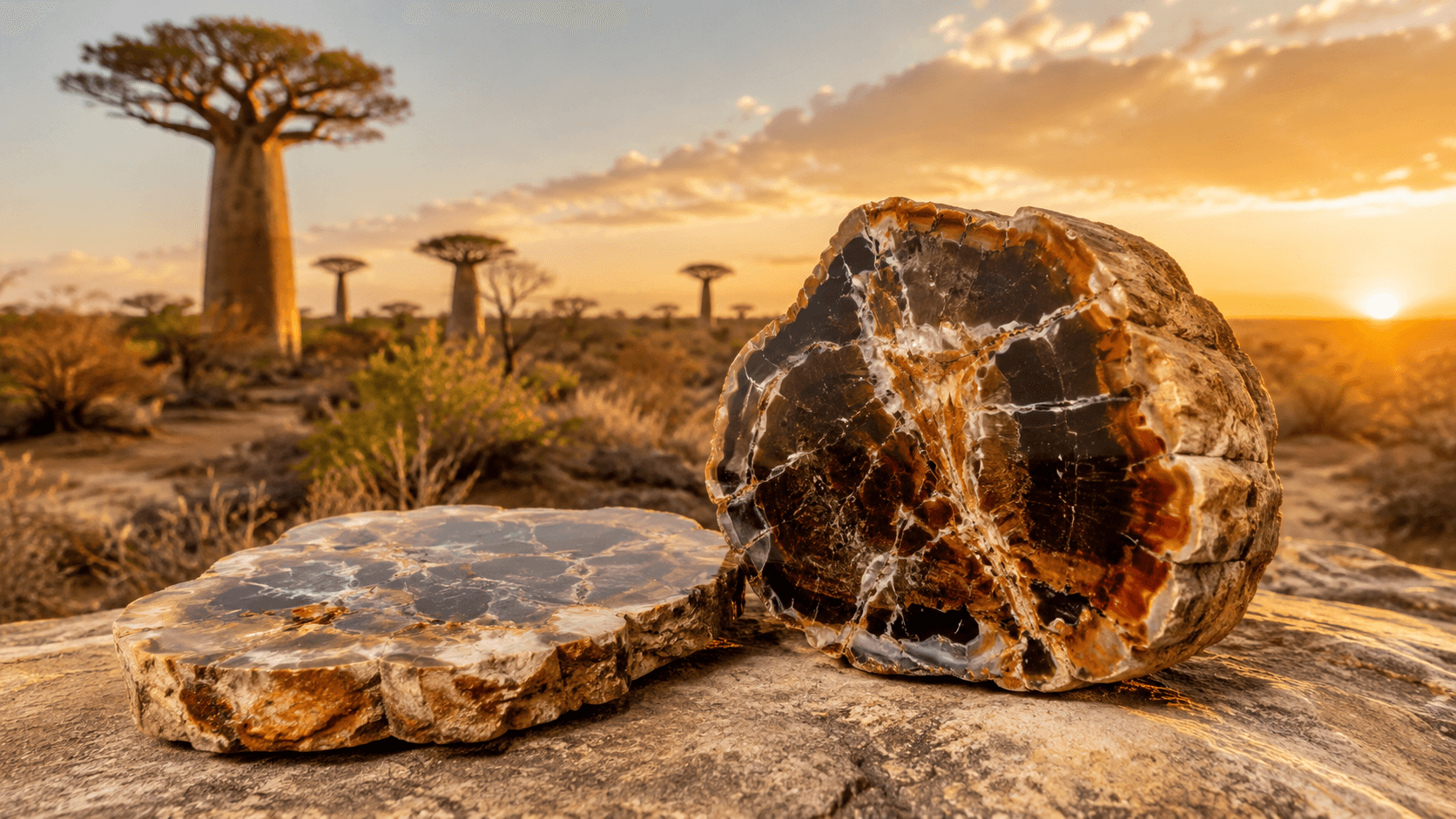
The trunks Medusa works with come from the southwest of Madagascar, a region where Triassic-era deposits have preserved forests that predate most of what we associate with the age of dinosaurs. The age isn't a marketing flourish — it's a geological fact tied to the specific strata these trunks are recovered from. Each log we bring up is extracted individually, not quarried in bulk, which is also why we give each one a name rather than a category: Ambra for amber tones, Argentea for silvered grays, Fusca for deep browns, Umbra for near-black density, Viridis for the rare greens. The name marks not a product line but an individual tree, with its own mineral history and its own age within that same ancient window.
What 230 Million Years Actually Produces
The age explains the material's behavior, not just its story. Because the wood has been fully silicified — turned to quartz — it now sits at 7 on the Mohs hardness scale. That's harder than steel, harder than glass. It doesn't absorb water, doesn't react to heat, doesn't fade under UV, doesn't fear frost. A dining table cut from a 230-million-year-old trunk isn't fragile despite its age; it's stable because of what that age did to it.
A tree does not become petrified wood by surviving time. It becomes petrified wood by being replaced, atom by atom, until only its shape remains — and that shape is now stone.
The colors, too, are a direct record of that mineral replacement. Iron produced the reds and ochres. Manganese gave the blacks and violets. Chromium and cobalt, far rarer, produced the greens and blues. Every named trunk carries the specific mineral cocktail that reached it during fossilization — which is also why, once a trunk is cut and its stock is gone, that exact tone cannot be reproduced. There is no second Ambra.
Reading the Age in the Object Itself
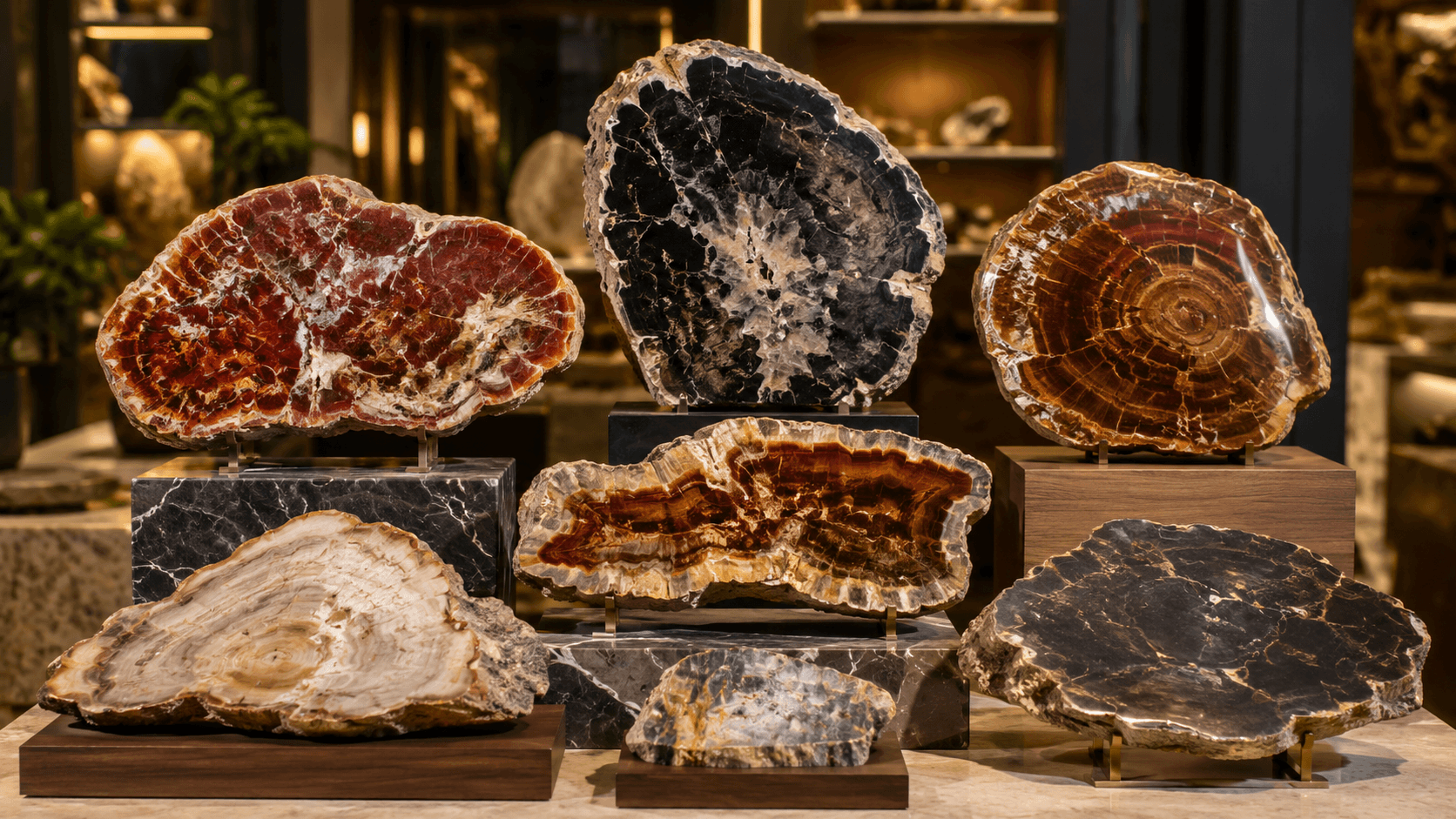
Look closely at a polished surface and the age becomes visible, not abstract:
- Growth rings, sometimes tight and regular, sometimes irregular — a record of seasons that passed 230 million years before any human measured a calendar.
- Mineral veining, where silica-rich water traveled through fractures in the original wood.
- Color transitions within a single trunk, marking shifts in the groundwater's mineral content over the burial period.
- A weight and coolness to the touch that no living wood, however dense, ever has — because this is quartz, not cellulose.
None of this is decoration added afterward. It's the geological process itself, frozen mid-transformation and then polished so it can be read.
Living With a Piece of the Triassic
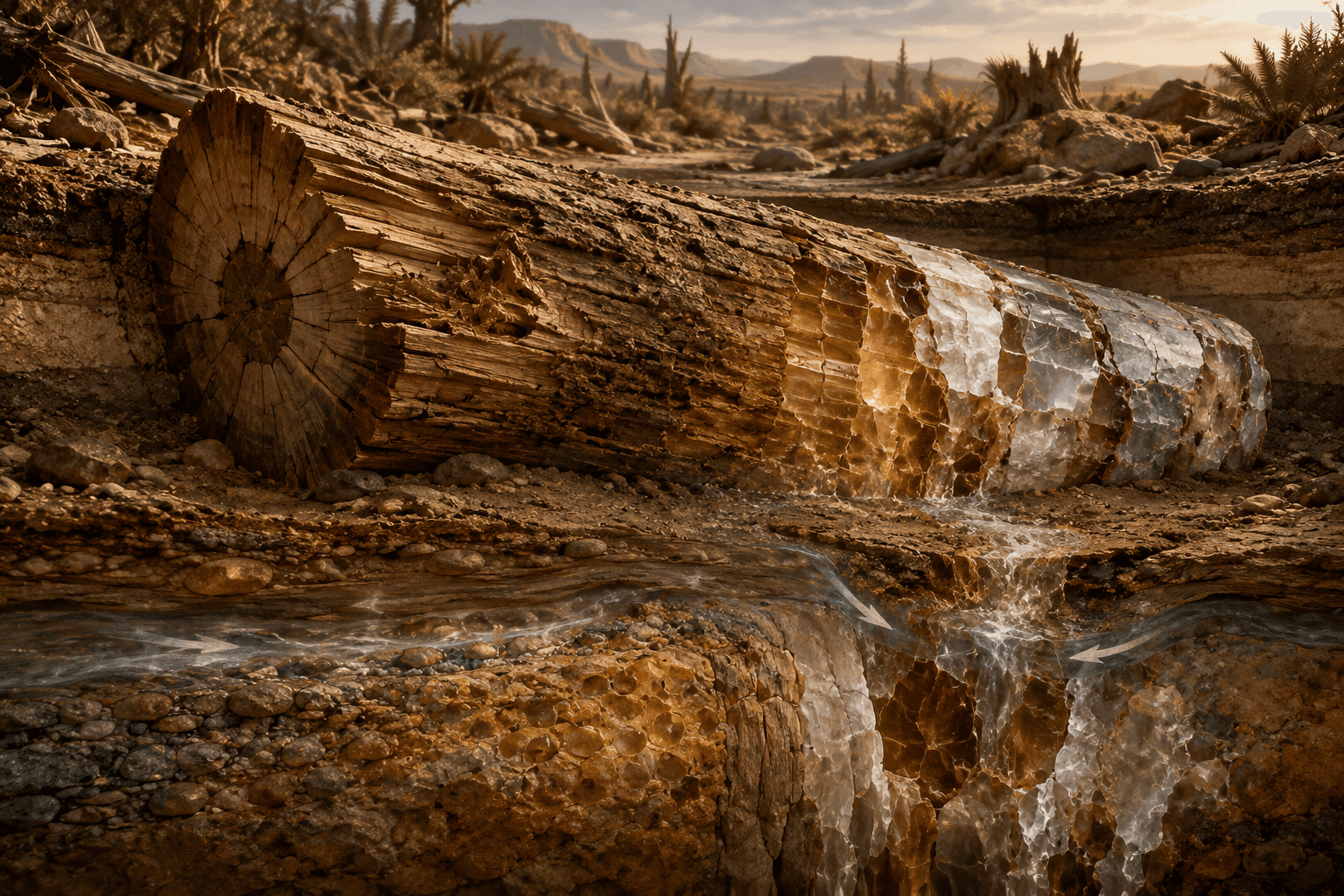
An object this old, worked by an artisan into a table or a vessel, sits strangely well in a contemporary room. It asks nothing of you — no oiling, no protection from sun or water, no anxiety about heat from a dish or a glass left too long. Its hardness and its age are the same fact seen from two angles. What took hundreds of millions of years to form now simply needs to be placed, and used.
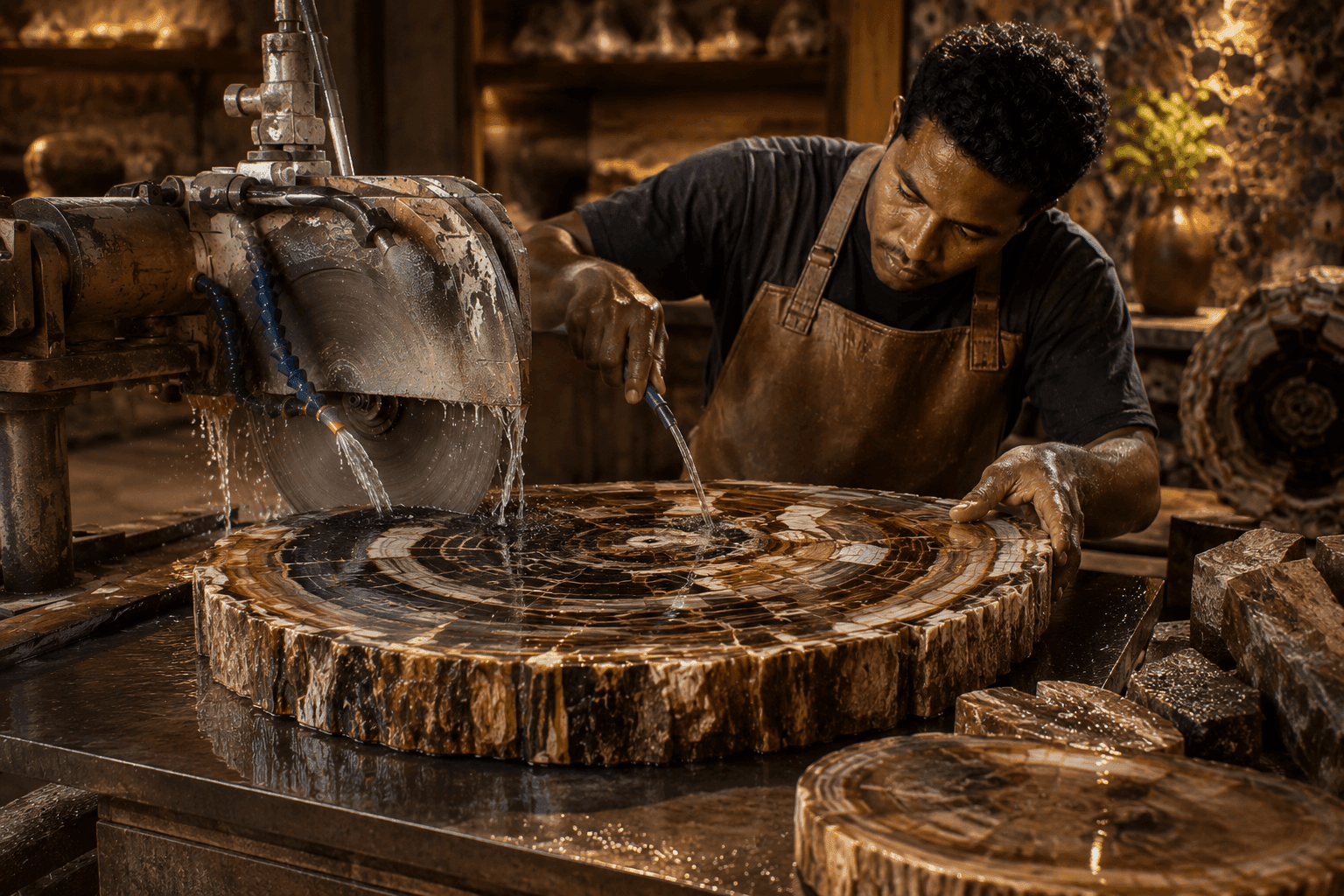
The craftsmanship at this stage is one of revelation rather than addition: cutting to expose the most striking plane of color and grain, polishing to bring out what silica replacement already built inside the trunk over its long burial. Nothing is stained, dyed, or treated to imitate age. There is no need — the age is real, and it shows.
Discover trunks recovered one by one, each with its own name, color, and 230-million-year history.
Visit the ShopFrequently Asked Questions
How old is petrified wood exactly?
The trunks Medusa works with date to the Triassic period, roughly 230 million years ago — long before flowering plants or most dinosaur species existed.
Does the age of petrified wood affect its hardness or durability?
Yes, directly. Full silicification over that span of time converted the original organic wood into quartz, giving it a hardness of 7 on the Mohs scale — harder than steel — and making it indifferent to water, heat, UV light, and frost.
Why does petrified wood have different colors if it's all the same age?
Color comes from trace metals present in the groundwater during fossilization: iron produces reds and ochres, manganese produces blacks and violets, and chromium or cobalt produce the rarer greens and blues. Each trunk absorbed a different mineral mix, which is why every named trunk at Medusa has a unique palette.
Can you tell the age of a piece just by looking at it?
Not precisely — dating relies on the geological strata the trunk was recovered from, not visual inspection. But the growth rings, mineral veining, and color banding visible on a polished surface are physical traces of that same 230-million-year mineral transformation.