
Petrified Wood vs Marble: Which Natural Stone to Choose
Marble has furnished palaces for centuries. Granite has anchored kitchen counters for decades. Both are legitimate, both are beautiful — and both are made of minerals that formed the same way everywhere on earth. Petrified wood asks a different question. It isn't quarried from a stratum; it's recovered, trunk by trunk, from what was once a living tree. That distinction changes everything about how you should compare these materials before you commit to one for a table, a vanity, or a signature piece in a room.
What Marble and Granite Actually Are
Marble is metamorphosed limestone — calcium carbonate recrystallized under heat and pressure. Granite is an igneous rock, a solidified magma of quartz, feldspar, and mica. Both are cut from continuous rock beds that can run for kilometers. A slab of Carrara marble bought today resembles, structurally, the slab quarried last year and the one that will be quarried next year from the same face. The material is consistent. That consistency is precisely what makes it a commodity — reliable, but repeatable by design.
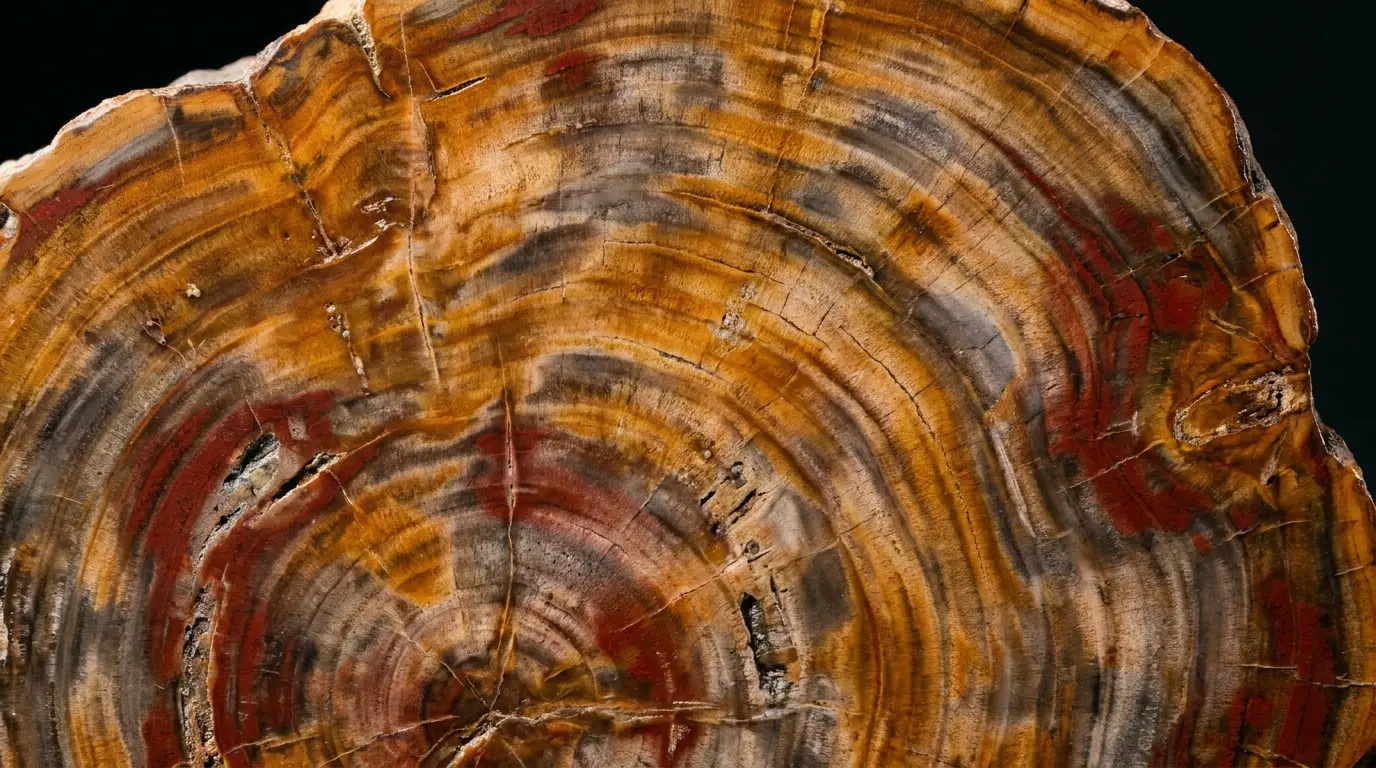
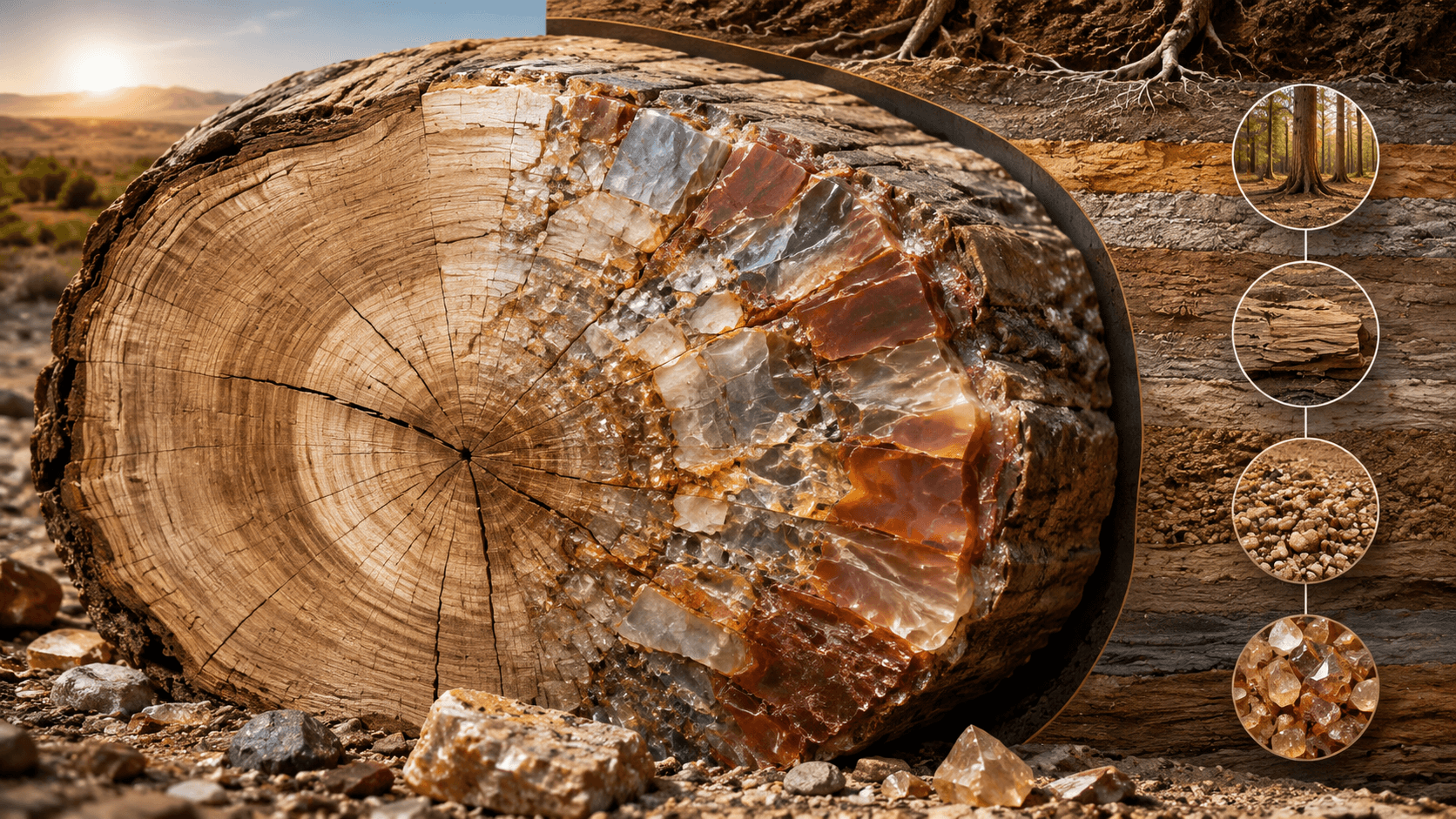
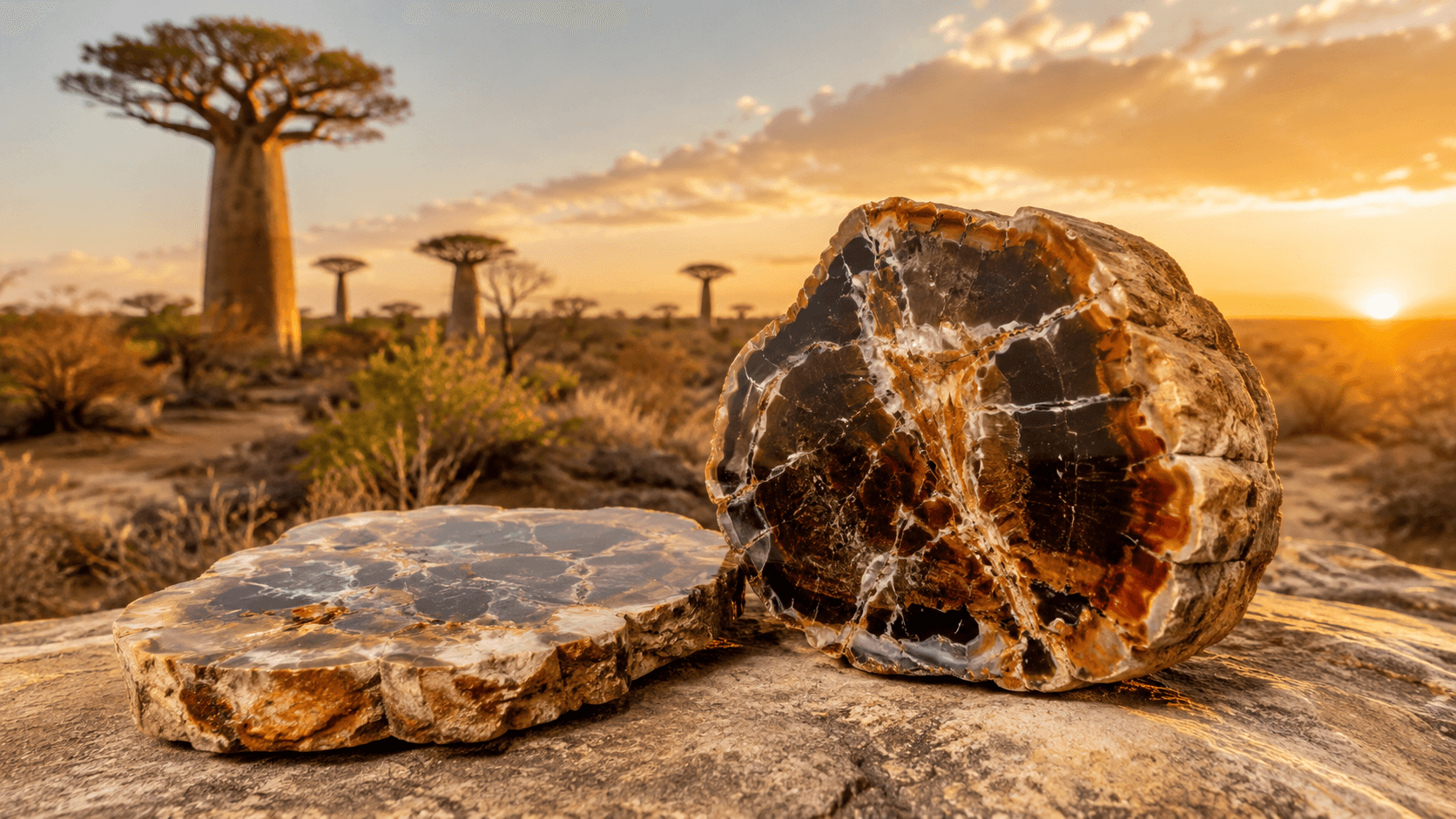
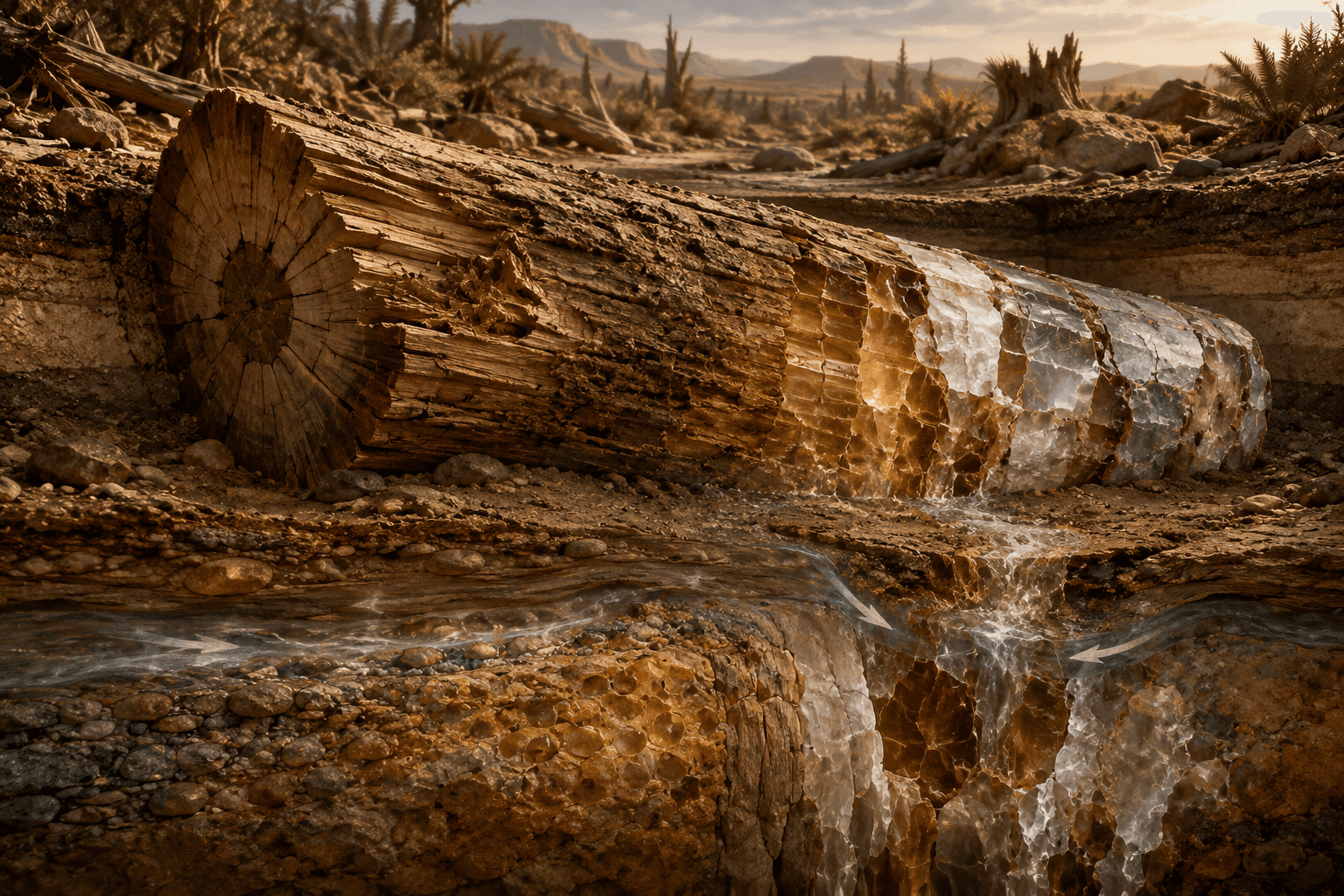
Petrified wood is quartz too, in its final chemical form, but it began as organic tissue. Roughly 230 million years ago, in the Triassic, trees fell in what is now southwestern Madagascar and were buried before they could decay. Silica-rich groundwater infiltrated the wood cell by cell, replacing organic matter with mineral matter while preserving the original structure — rings, grain, fracture lines. The result is a stone with a biography. No two trunks lived the same life, so no two trunks fossilized the same way.
Hardness and Durability: Reading the Numbers Correctly
On the Mohs scale, marble sits at 3 to 4. It scratches under a knife edge, etches on contact with lemon juice or vinegar, and dulls in matte patches wherever acid touches it. Granite performs considerably better, typically between 6 and 6.5, which is why it dominates kitchen counters — but it remains porous enough to need periodic sealing against staining.
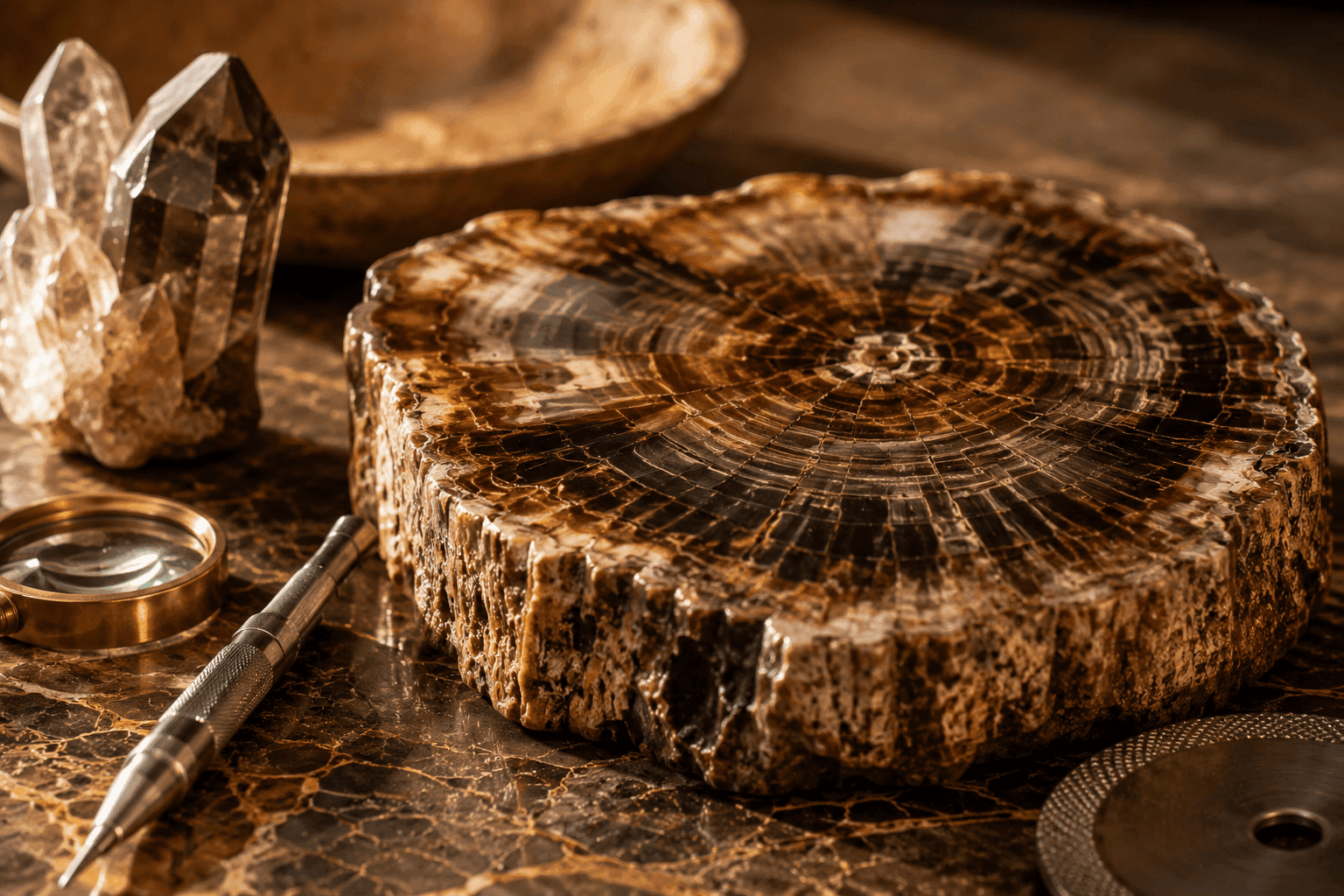
Petrified wood, being fully silicified quartz, measures 7 on the Mohs scale. That is harder than a steel blade, harder than glass, harder than granite. It does not etch with citrus or wine. It does not absorb liquids because there is no organic porosity left to absorb them — the wood cells were replaced by mineral, not filled around. Heat from a hot dish leaves no mark. Cold has no effect on it, and neither does direct sunlight over years of exposure. It is, in practical terms, a surface you stop worrying about.
A marble table asks you to protect it. A petrified wood table simply endures.
Uniqueness: Where the Real Comparison Ends
This is where the two materials part ways entirely. Marble's veining is attractive, but it is geological noise repeated across a quarry face — buy a slab this year or in five years, and the vein pattern is a variation on the same theme, from the same mountain. Granite's speckled texture is even more uniform, engineered by nature to look the same slab after slab.
At Medusa, each trunk we recover from southwestern Madagascar is treated as what it is: an individual tree, not a category of stock. We give each one a name — Ambra for amber tones, Argentea for silvered grey, Fusca for deep browns, Umbra for near-black density, Viridis for the rare greens. These names aren't marketing labels; they describe the specific mineral history of that specific tree. Iron oxidation produced the reds and ochres. Manganese produced the blacks and violets. Traces of chromium or cobalt, far rarer, produced the greens and blues. Once a trunk is cut and its slabs are placed, that exact combination of color, density, and grain is gone. There is no second Ambra. There is no re-order.
Living With the Material: Maintenance Compared
Marble maintenance is a recurring commitment: resealing every year or two, avoiding acidic foods near the surface, polishing out etch marks, watching for hairline cracks under sustained weight. Granite is easier but not maintenance-free — sealants still degrade, and porosity still allows staining from oils and pigments over time.
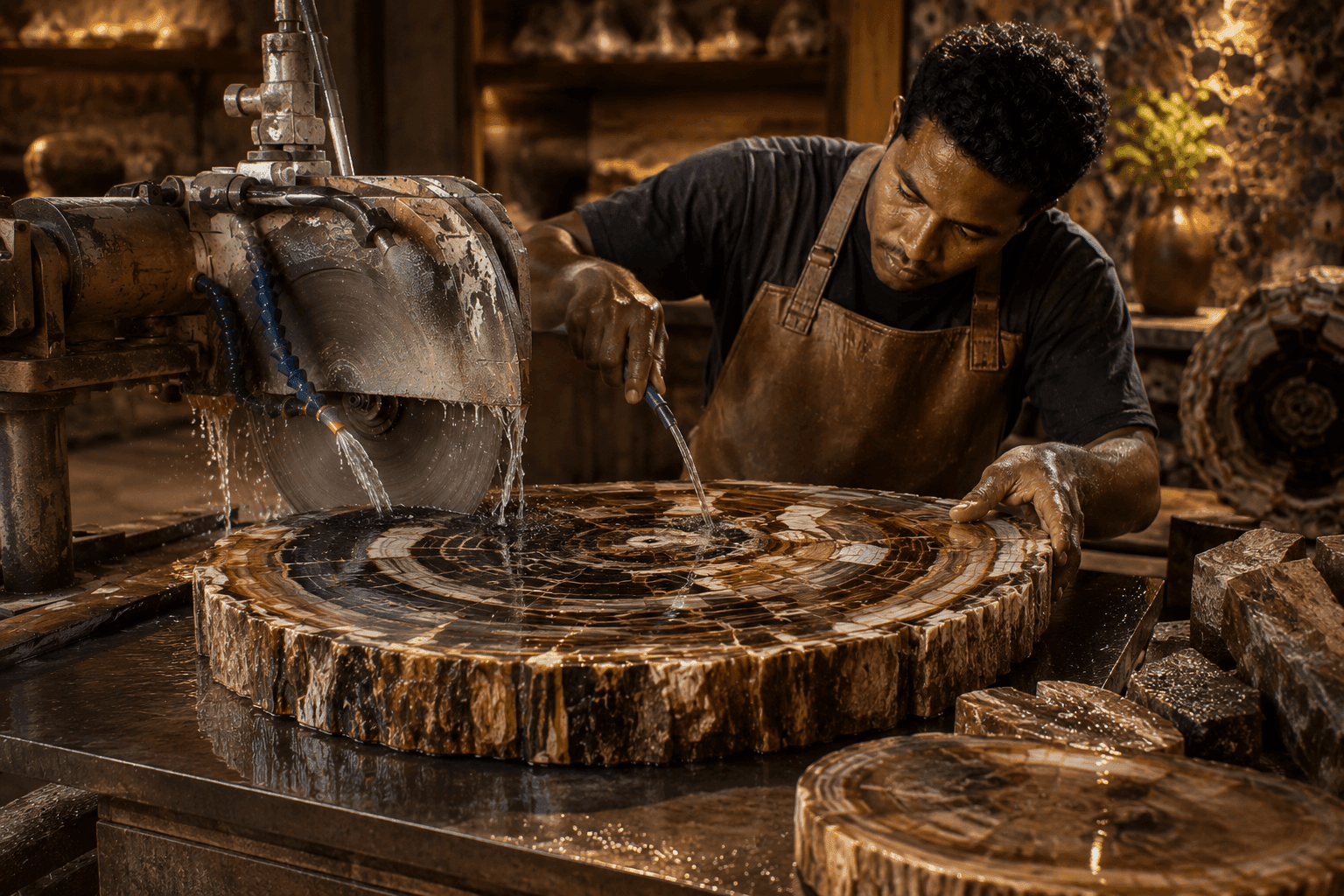
Petrified wood asks for none of this. Because it is fully mineralized quartz with no residual organic porosity, there is nothing to seal and nothing for stains to penetrate. A damp cloth is the entire cleaning routine. The piece that leaves our workshop is, mineralogically, the piece you'll have in twenty years — same color, same surface, same weight in the room.
Choosing Between Them
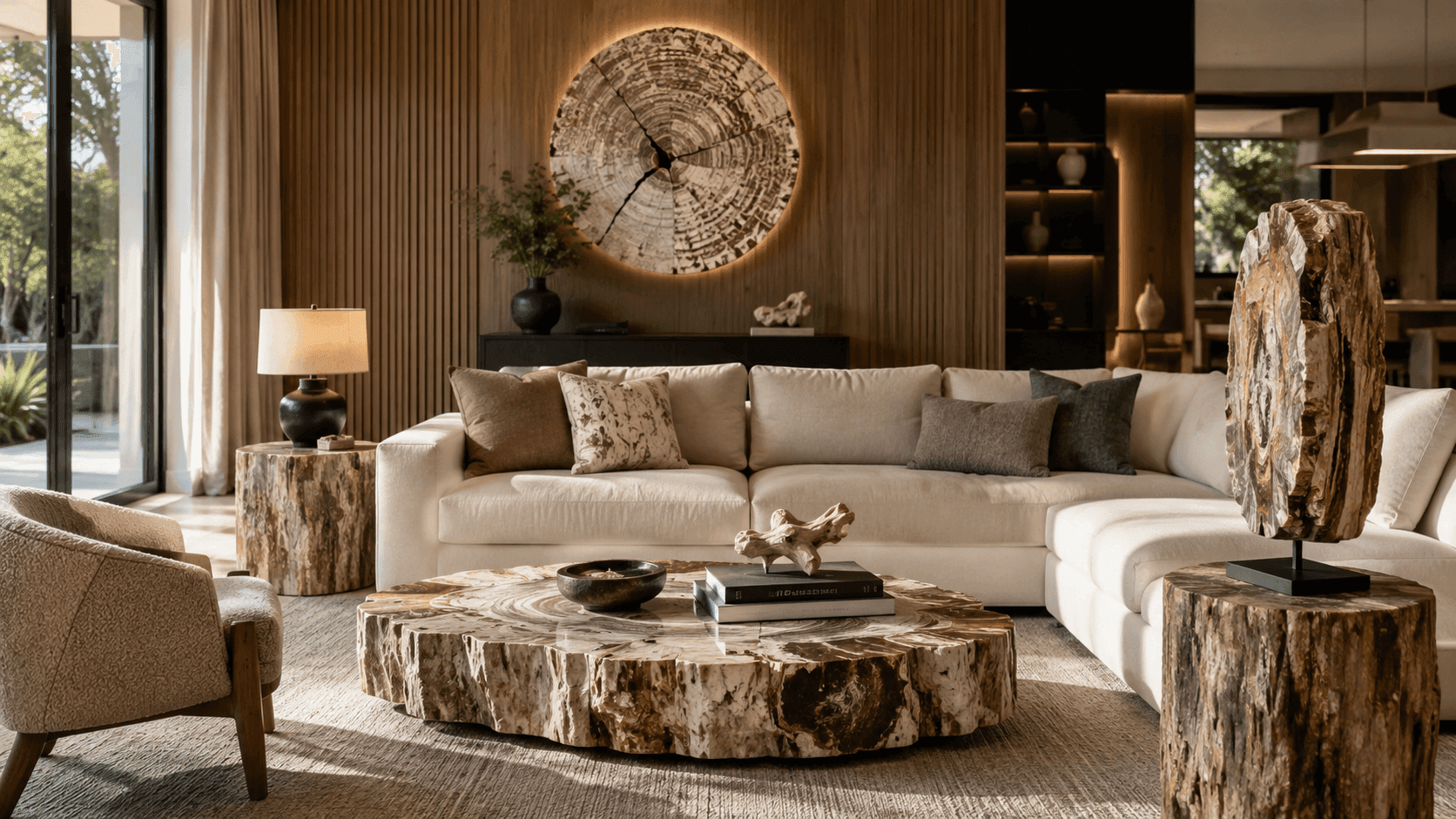
Marble suits a certain kind of restrained, uniform elegance — and it has earned its place in architecture for good reason. Granite suits heavy daily use where cost and availability matter more than individuality. Petrified wood suits a different intention: a piece meant to be the one thing in the room that cannot be replicated, sourced, or reordered from a catalogue. It carries geological time you can see in its rings, and biographical uniqueness no quarry can manufacture.
- Marble: elegant, but soft (Mohs 3–4) and reactive to acid
- Granite: durable (Mohs 6–6.5), but porous and quarry-uniform
- Petrified wood: hardest of the three (Mohs 7), non-porous, and genuinely unrepeatable, trunk by trunk
See which trunk speaks to your space, and let's discuss what's possible on devis.
Browse the ShopFrequently Asked Questions
Is petrified wood really harder than granite?
Yes. Petrified wood measures 7 on the Mohs scale, while granite typically ranges from 6 to 6.5. The fossilization process converts the wood entirely into quartz, which explains the difference.
Does petrified wood need sealing like marble or granite?
No. Because the original wood structure has been fully replaced by silica, there is no organic porosity left to protect. The surface doesn't absorb liquids or stain.
Why does each Medusa piece have a name instead of a product number?
Each trunk is an individual tree recovered from southwestern Madagascar, with its own mineral history and color. We name each one — Ambra, Argentea, Fusca, Umbra, Viridis — to reflect that it is not a repeatable stock item but a unique specimen.
Can petrified wood be damaged by heat, cold, or sunlight?
Practically, no. As fully silicified quartz, it is inert to heat, cold, and UV exposure over time, unlike marble, which can etch, and unmaintained granite, which can stain or dull.