
The Stump That Was Once a Tree
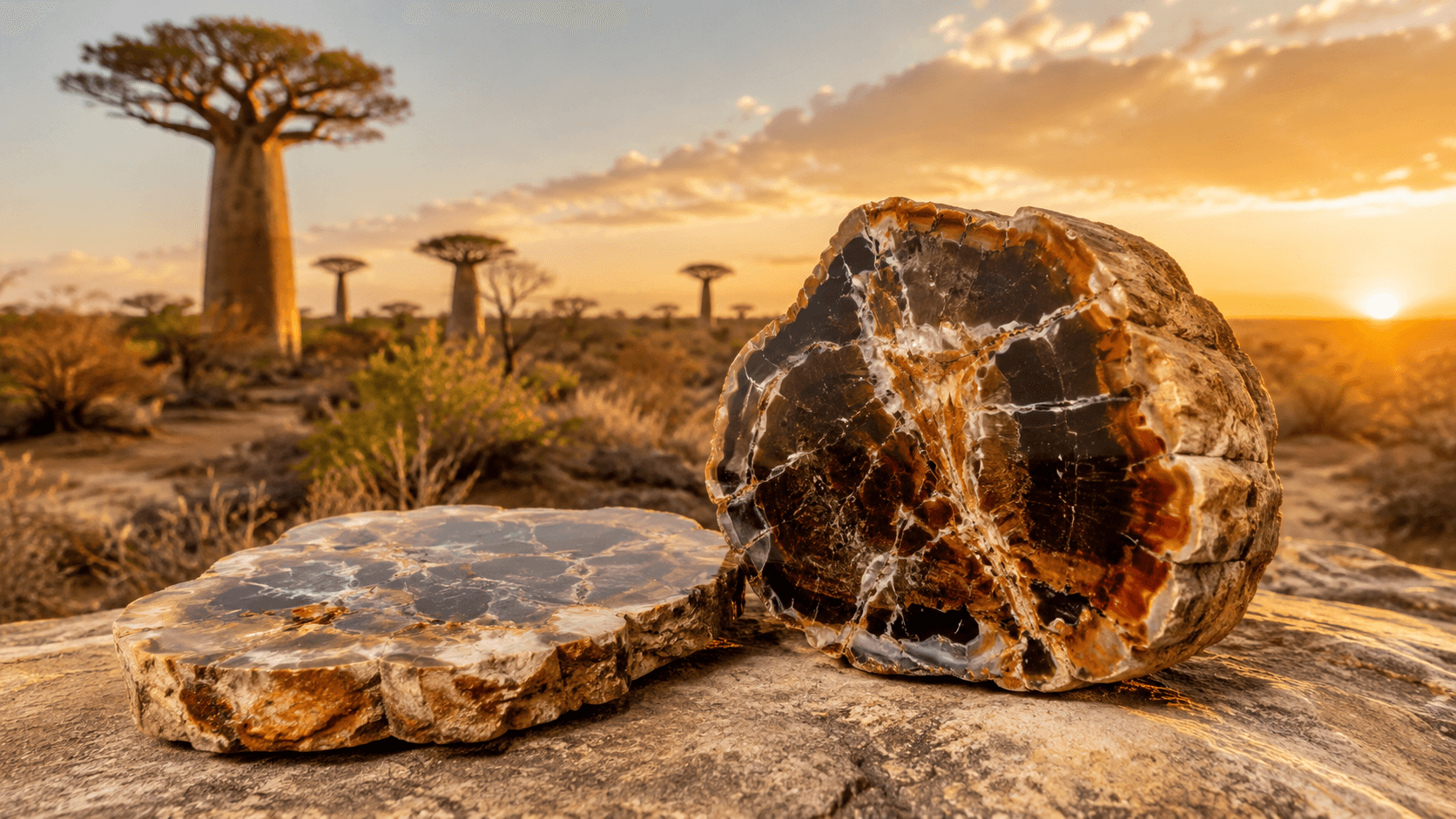
A stump table is not a slab. It is the base of a trunk, the part that once anchored a tree to the ground — root flare, growth rings, the slow architecture of decades or centuries of life. At Medusa, every stump we bring back from southwestern Madagascar is roughly 230 million years old, dating to the Triassic. What grew as wood has since become quartz, molecule by molecule, while keeping the exact form it had the day it fell.
A petrified wood stump table is this object, polished and set on a base: not a reproduction of a tree stump, but the stump itself, mineralized.
From Root to Table: How a Stump Becomes a Piece
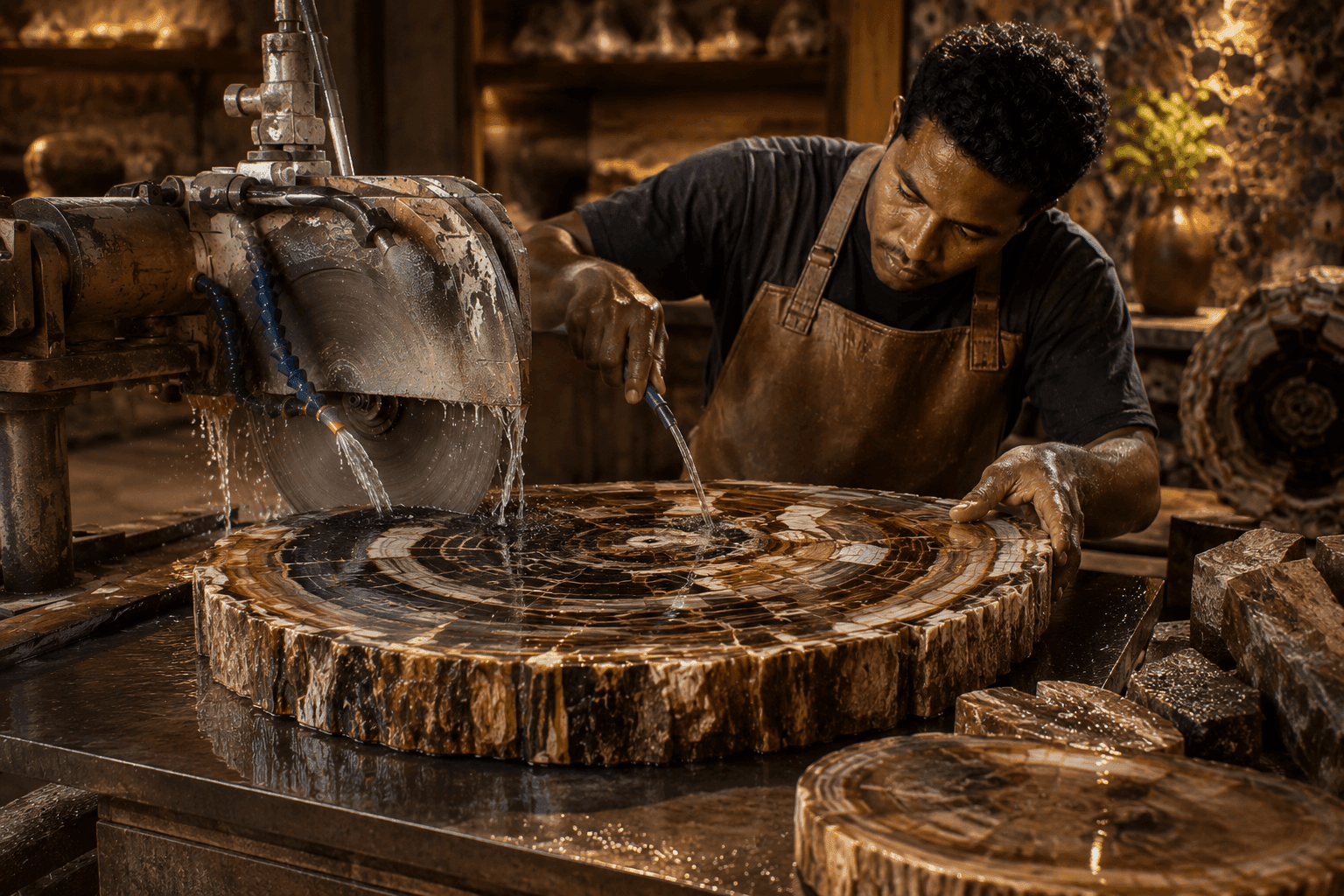
Each stump is extracted whole, then studied before a single cut is made. Because the material is quartz — hardness 7 on the Mohs scale — nothing about the process resembles carpentry. Diamond tooling, slow polishing passes, and a reading of the internal veining guide every decision:
- The base is leveled without erasing the natural silhouette of the root flare.
- The top surface is cut to reveal the growth rings, then polished to bring out the internal color.
- Any voids or cavities, common in fossilized wood, are either left open or filled with resin, depending on the piece.
The result keeps the stump's original outline — irregular, asymmetrical, unmistakably itself — while offering a stable, usable surface.
A Named Tree, A Unique Color
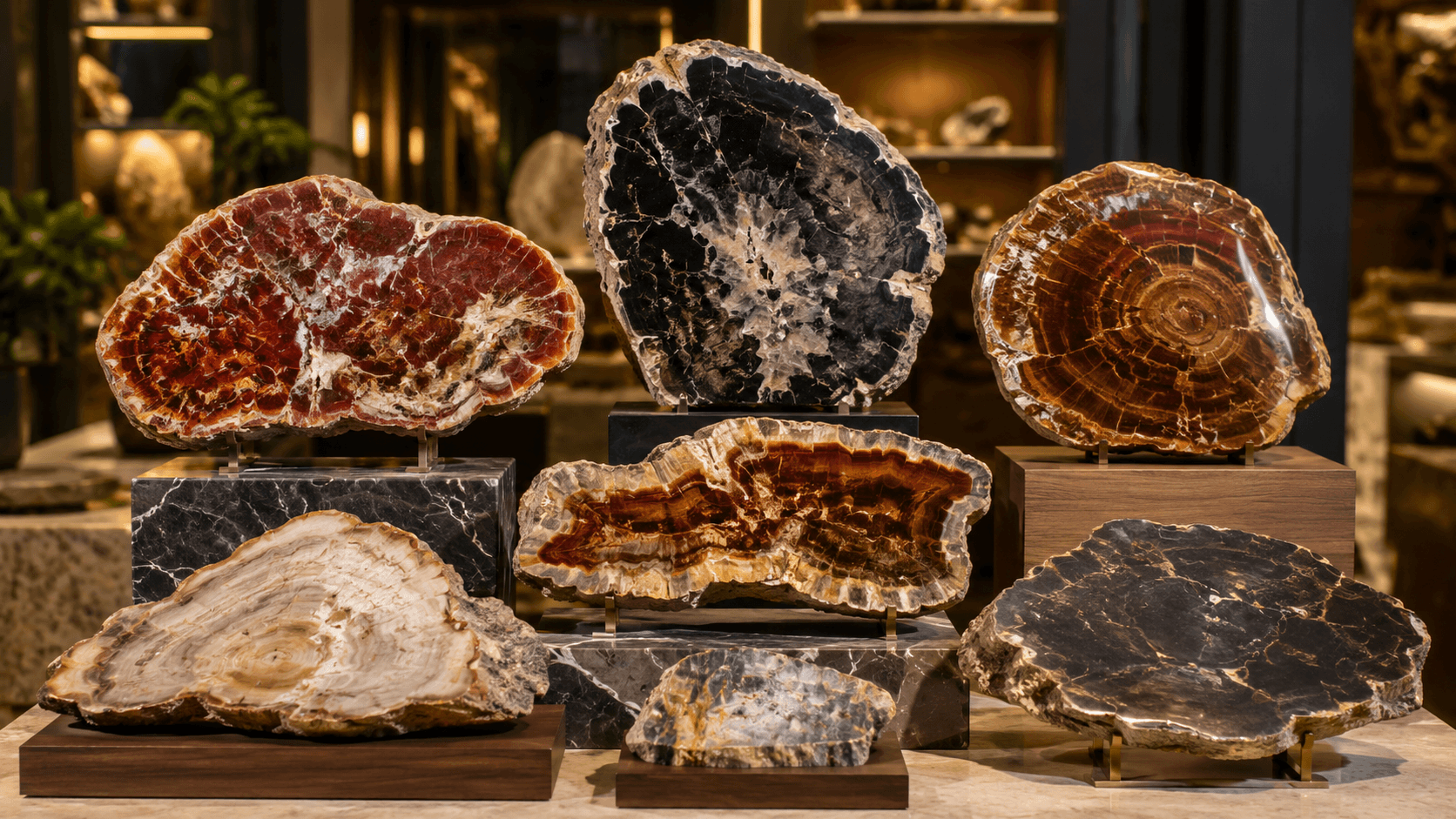
We do not sell "petrified wood" as a category. We sell trees, and each one has a name: Ambra for amber tones, Argentea for silvered grays, Fusca for deep browns, Umbra for near-black density, Viridis for the rarer greens. The name is not decoration — it describes what happened underground.
Color in petrified wood comes from the metals present during mineralization: iron produces reds and ochres, manganese gives blacks and violets, chrome and cobalt yield greens and blues. No two trunks absorbed exactly the same minerals in the same concentration, so no two stumps carry the same palette. Once a trunk is cut into tables, vessels, or objects, that particular color combination is gone. There is no reissue.
Each stump had one life as a tree and one death as stone. We only uncover what was already decided 230 million years ago.
Quartz, Not Wood: What That Means for Daily Use
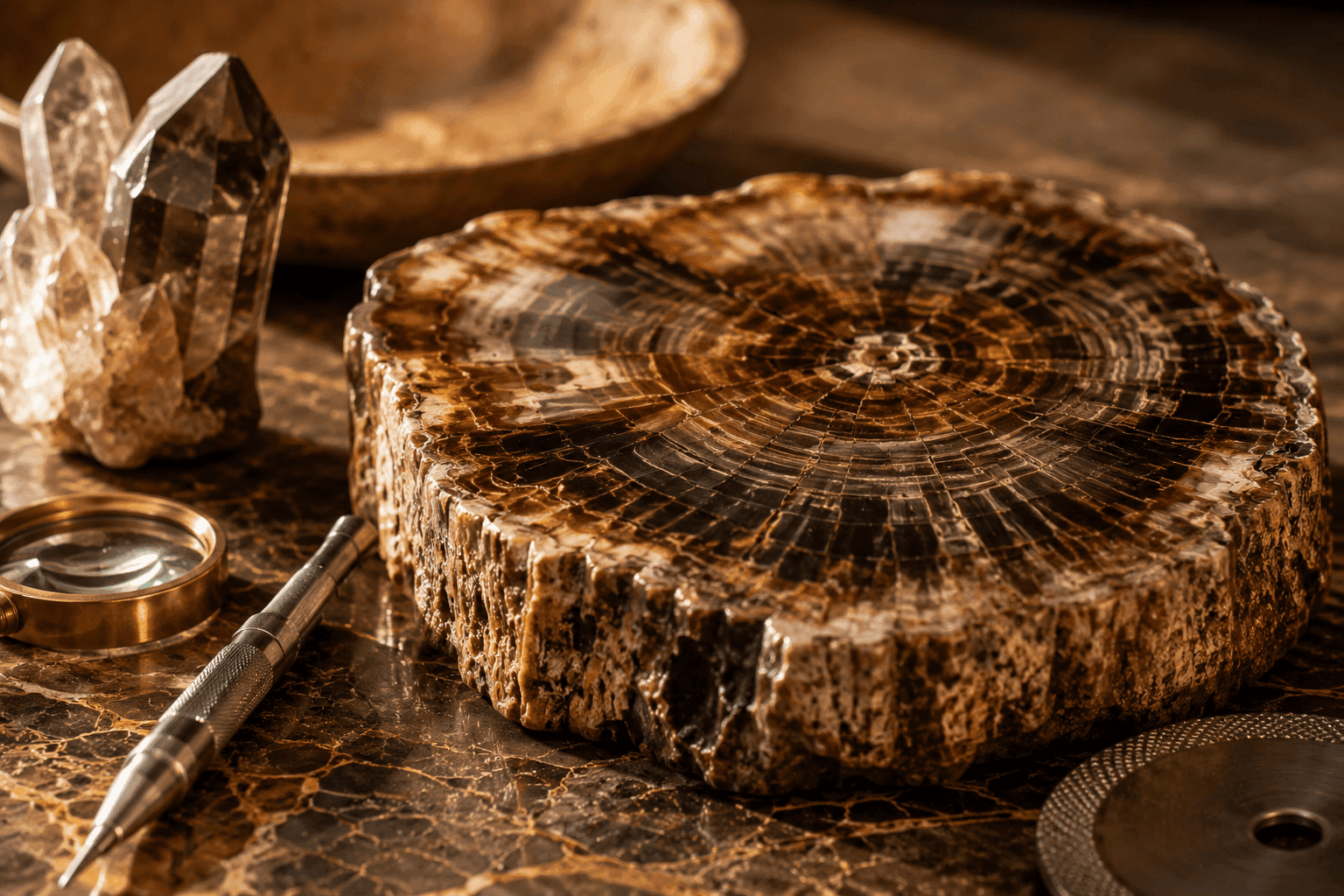
Calling it "wood" is a habit of language, not a description of the material. A petrified wood stump table is stone through and through — cold to the touch, heavy underhand, and entirely indifferent to the conditions that damage furniture wood:
- Water leaves no mark, and there is no risk of swelling or rot.
- Heat from a cup or a dish does not scorch the surface.
- UV exposure will not fade or bleach the color.
- Frost causes no cracking, making outdoor placement realistic where wood would fail.
The trade-off is honest: it is heavy, it does not flex, and moving it requires planning. In exchange, it asks for almost nothing in return — no oiling, no seasonal care, no anxiety about a spilled glass.
Where the Stump Belongs in a Room
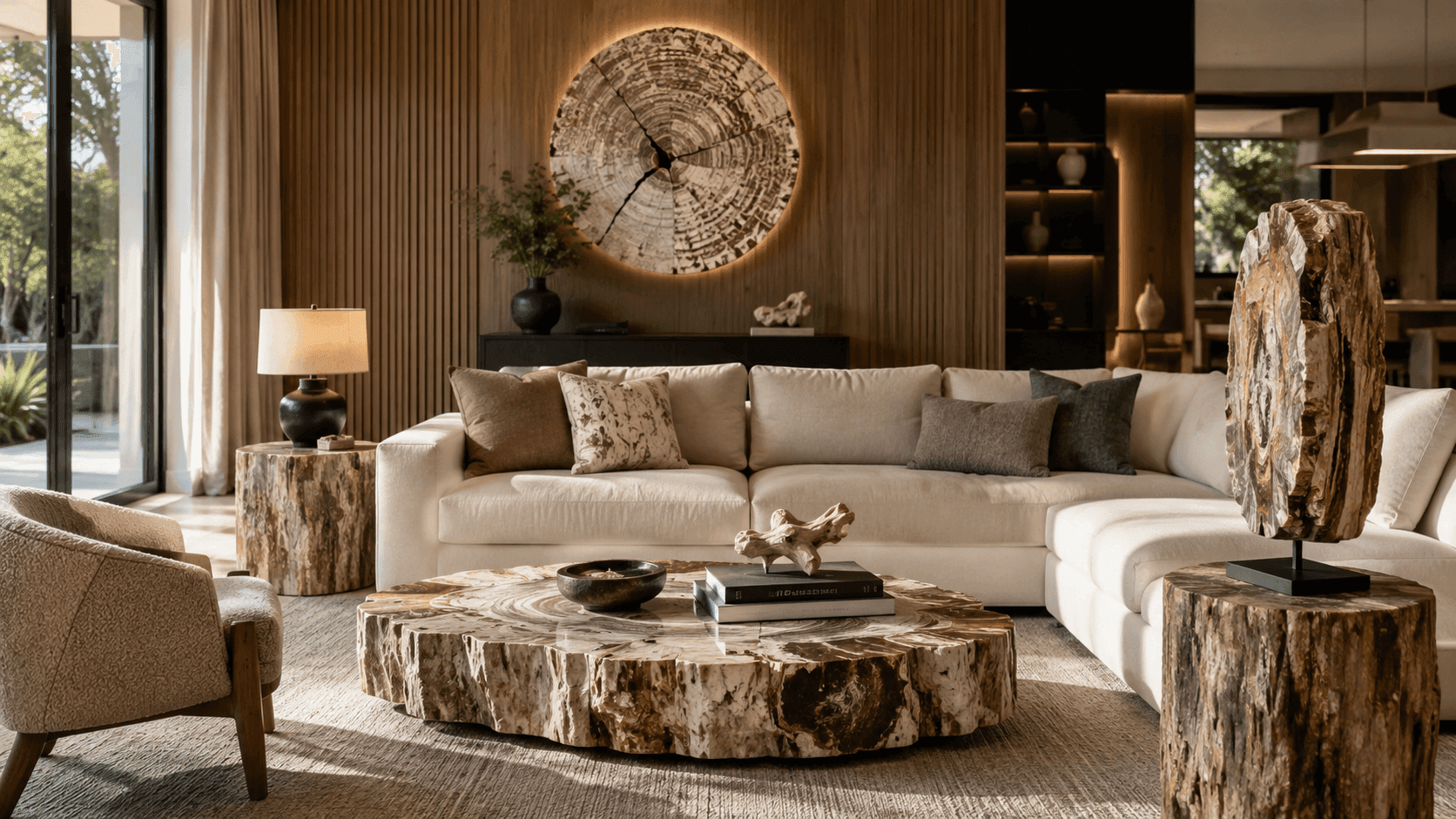
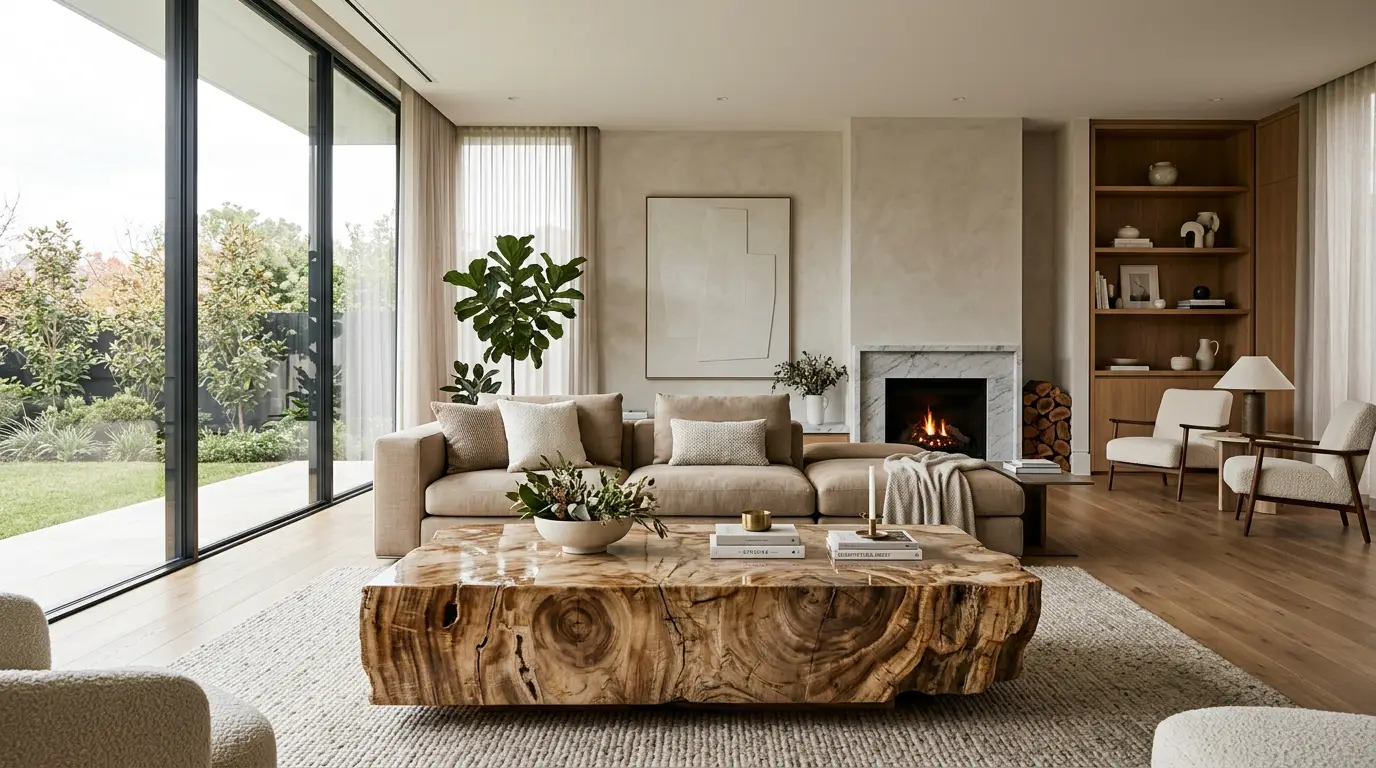
A stump table rarely serves as a dining surface for six. Its scale and irregular top suit a different role: a low table beside a sofa, a plinth for a single sculptural object, an entry piece that greets before anything else does. Because the silhouette is unrepeatable, it tends to anchor a room rather than blend into it — the surrounding furniture adjusts to the stump, not the reverse.
Pairing matters. Raw stone, dark wood, and unpolished metal let the mineral veining stay the visual center. Overly busy surroundings compete with a pattern that took hundreds of millions of years to form and deserves a quieter setting.
Each stump exists once. See which ones are still available.
Visit the ShopFrequently Asked Questions
Is a petrified wood stump table actually wood?
No. The original wood tissue has been entirely replaced by silica over roughly 230 million years. What remains is quartz that preserved the tree's structure — grain, rings, root form — but the material itself is stone.
Can it be used outdoors?
Yes. Quartz is unaffected by frost, rain, or UV light, which makes petrified wood suitable for covered outdoor spaces where ordinary wood furniture would deteriorate.
Why do the colors vary so much between pieces?
Color depends on which metals were present during mineralization: iron for reds and ochres, manganese for blacks and violets, chrome or cobalt for greens and blues. Each trunk mineralized under slightly different conditions, so its color signature is its own.
How much does a piece like this cost?
Pricing depends on the specific stump — its size, color, and condition. We do not list fixed prices; each piece is quoted individually. Please consult us or request a quote through the shop.