
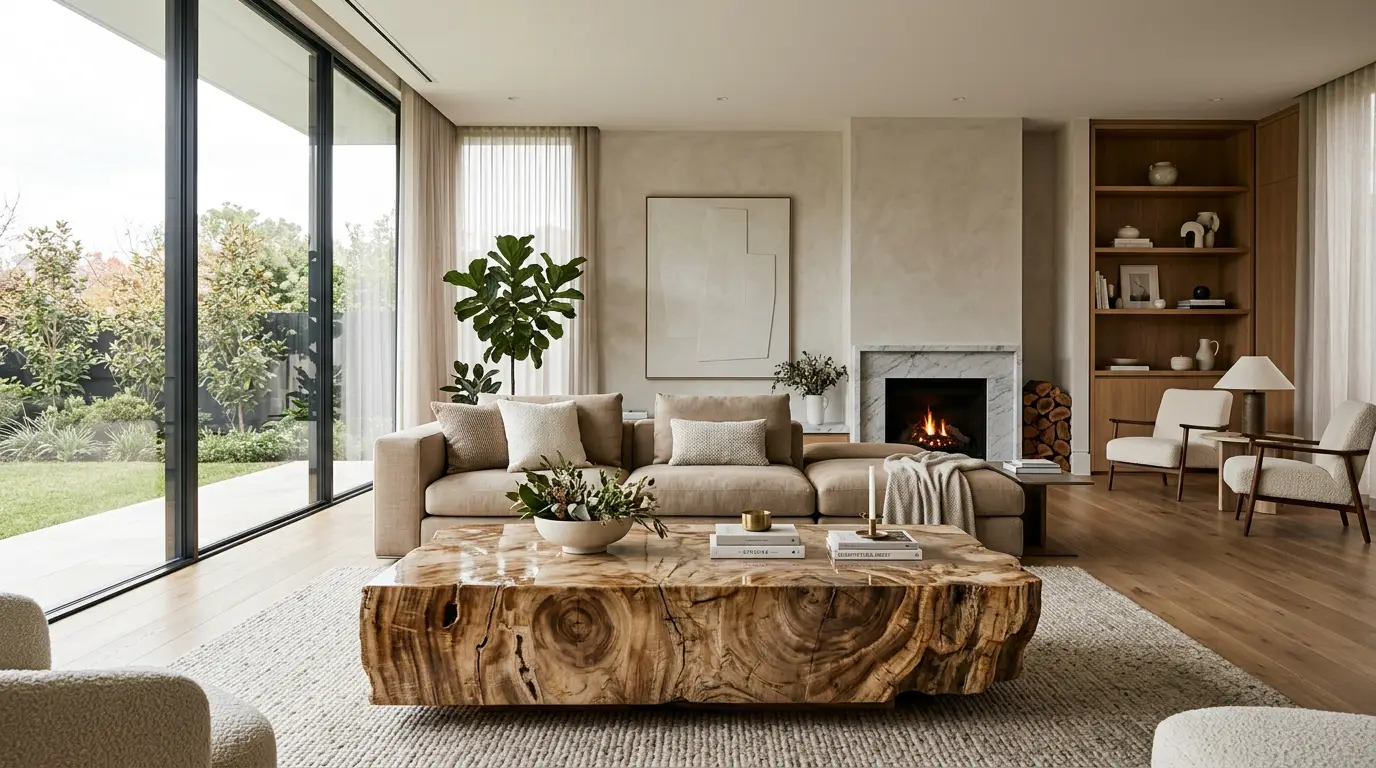
An End Table Cut From a Single Tree, 230 Million Years Ago
A petrified wood end table is not veneer, not composite, not a pattern printed to resemble stone. It is the cross-section of an actual tree — trunk, bark line, growth rings — that stood in a forest in southwestern Madagascar roughly 230 million years ago, during the Triassic. Buried before it could decay, its wood was replaced cell by cell with silica. What remains is quartz holding the exact architecture of a living organism. Set beside a sofa or an armchair, it reads less like furniture and more like a fragment of deep time you happen to rest a coffee cup on.
Each Trunk Has a Name, Because Each Trunk Was a Tree
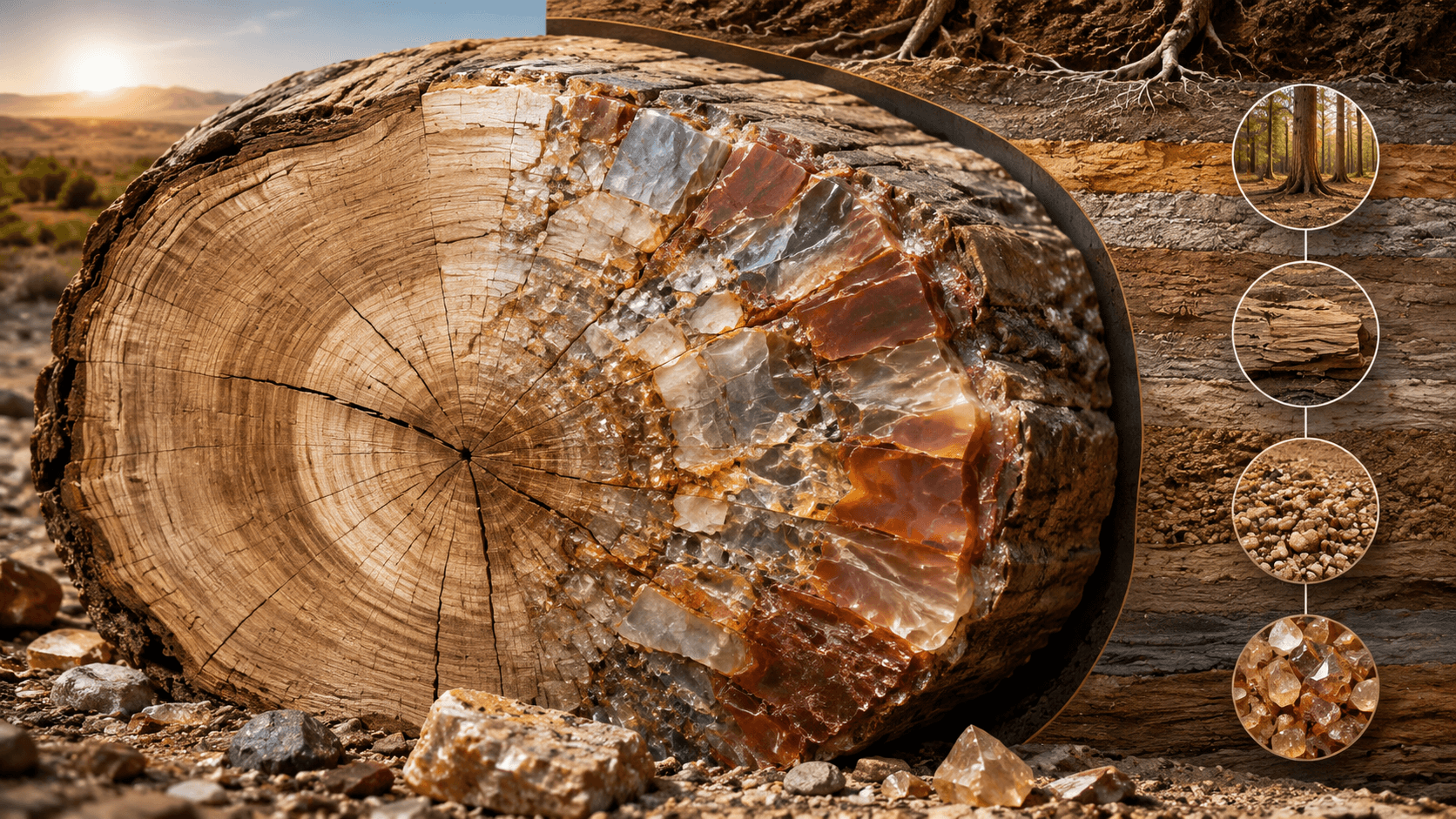
At Medusa, we don't sell "petrified wood end tables" as a product category. We recover individual trunks from the Madagascar sud-ouest, one at a time, and each one receives a name: Ambra for amber tones, Argentea for silvered grays, Fusca for deep browns, Umbra for near-black density, Viridis for green-toned minerals. These aren't marketing labels — they describe the specific mineral history of that specific tree. Iron gave it red and ochre. Manganese gave it black and violet. Chromium or cobalt gave it green or blue. No two trunks share exactly the same recipe, because no two trees mineralized under exactly the same conditions.
This matters for an end table more than for almost any other piece, because an end table is small enough that the whole trunk's character sits in front of you. You're not looking at a corner of a large surface — you're looking at the tree itself.
Once a trunk is cut, its particular color is gone. What you place beside your sofa is the only piece that will ever carry that exact mineral signature.
Where the Material Comes From
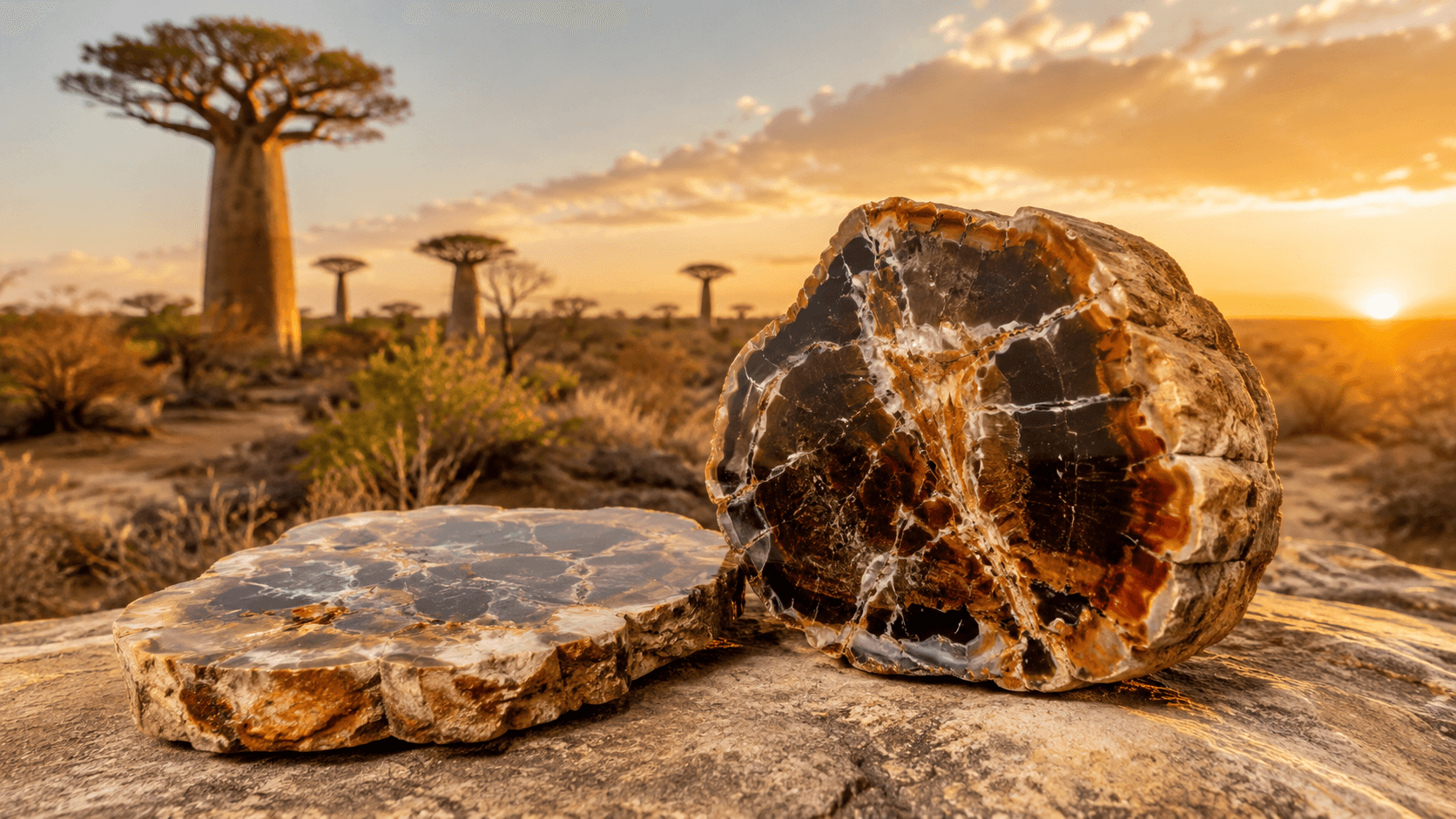
The trunks we work with come exclusively from the southwest of Madagascar, a region where ancient forests were buried under sediment and volcanic ash, sealing them from oxygen long enough for silica-rich water to do its slow work. This is not a renewable harvest — it is excavation of a finite deposit. Every trunk pulled from the ground is one fewer trunk in the ground. That scarcity is part of what an end table like this represents: not a design choice, but a geological event, extracted once.
Why It Behaves Unlike Any Other Table Material
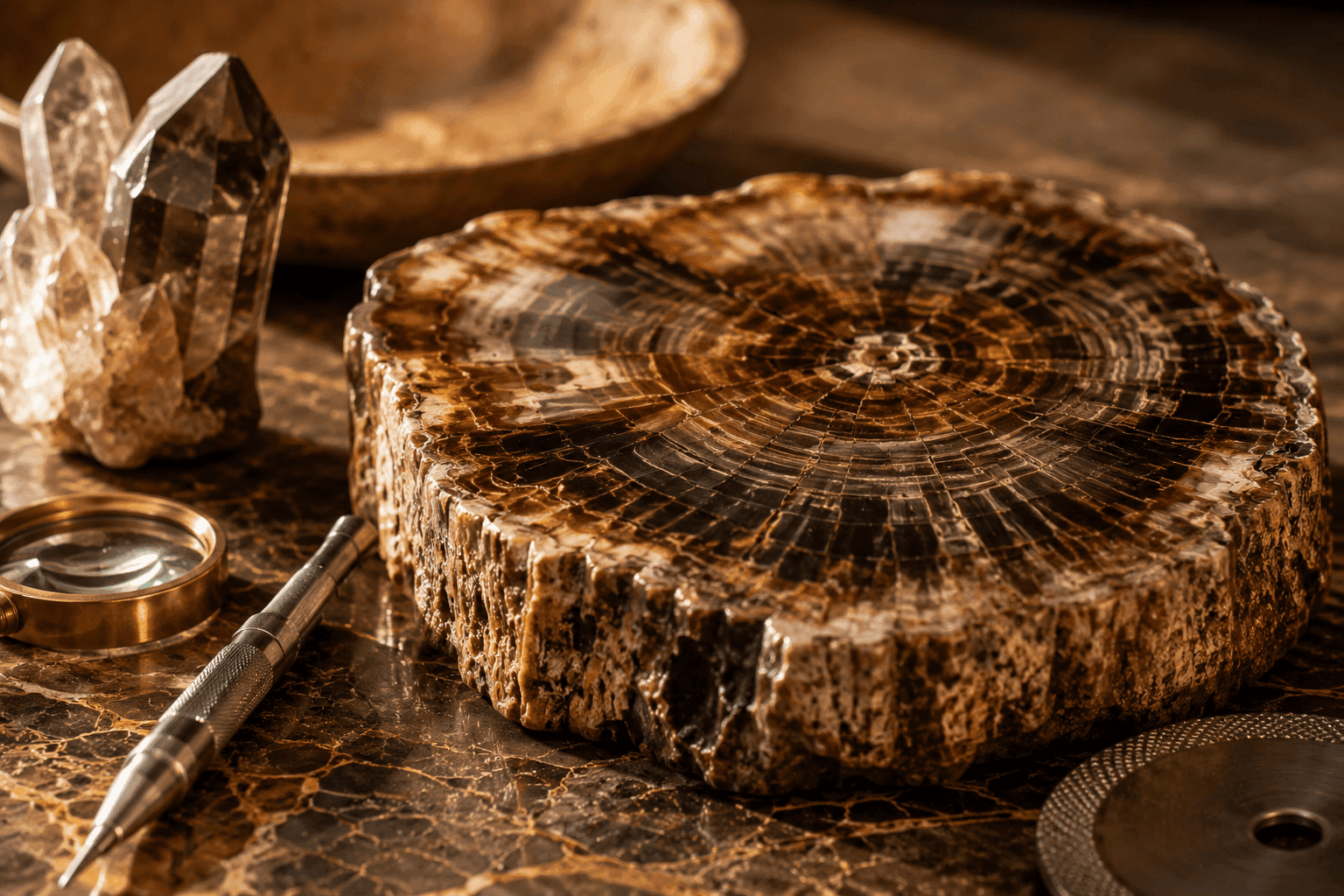
Because petrified wood is quartz, it sits at 7 on the Mohs hardness scale — harder than steel, harder than glass. Practically, this means the table you place a drink on won't scratch, won't stain, won't warp with heat or humidity, and won't fade under sunlight the way lacquered wood does. It is cold to the touch, heavy in the hand, and entirely indifferent to the daily wear that ages ordinary furniture. An end table takes constant small abuse — mugs, keys, remote controls, the occasional spill — and this material simply doesn't register it.
- Mohs hardness of 7, resistant to scratching under normal use
- Unaffected by water, heat, or UV exposure
- Substantial weight gives it a stable, grounded presence next to seating
- Surface polish reveals the trunk's original ring pattern permanently
From Trunk to Table
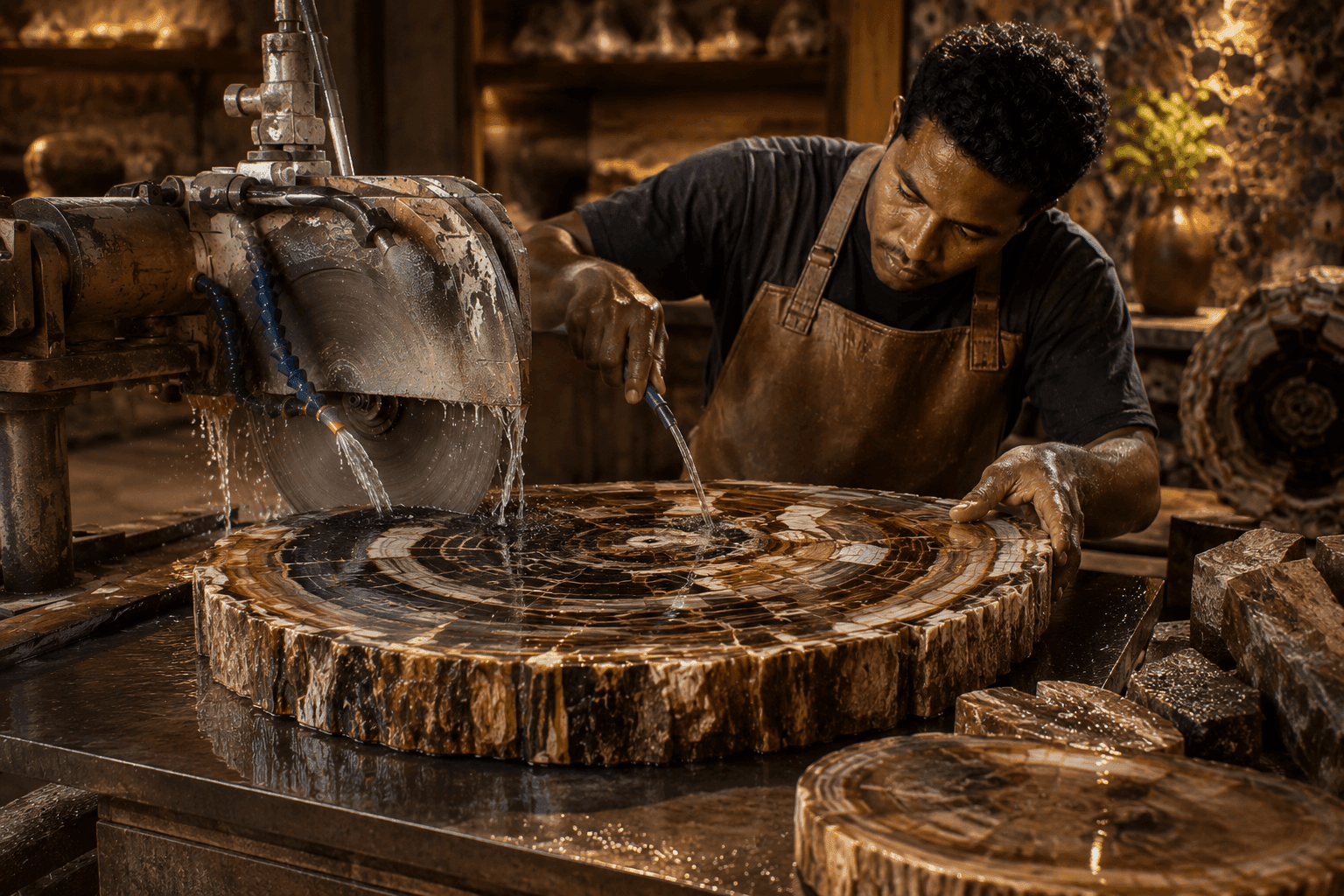
Turning a raw trunk into a usable end table is slow work, done by hand at each stage. The trunk is first assessed for its natural cross-section — where the cut will reveal the most compelling ring structure and color banding. Cutting quartz of this hardness requires diamond tooling, not standard woodworking equipment. Once cut, the surface is polished in stages to bring out depth and contrast without artificial treatment. Many pieces are paired with a metal or wood base to bring them to table height, but the trunk itself is never reshaped beyond what it already is. We finish the material; we don't reinvent it.
Placing It in a Room
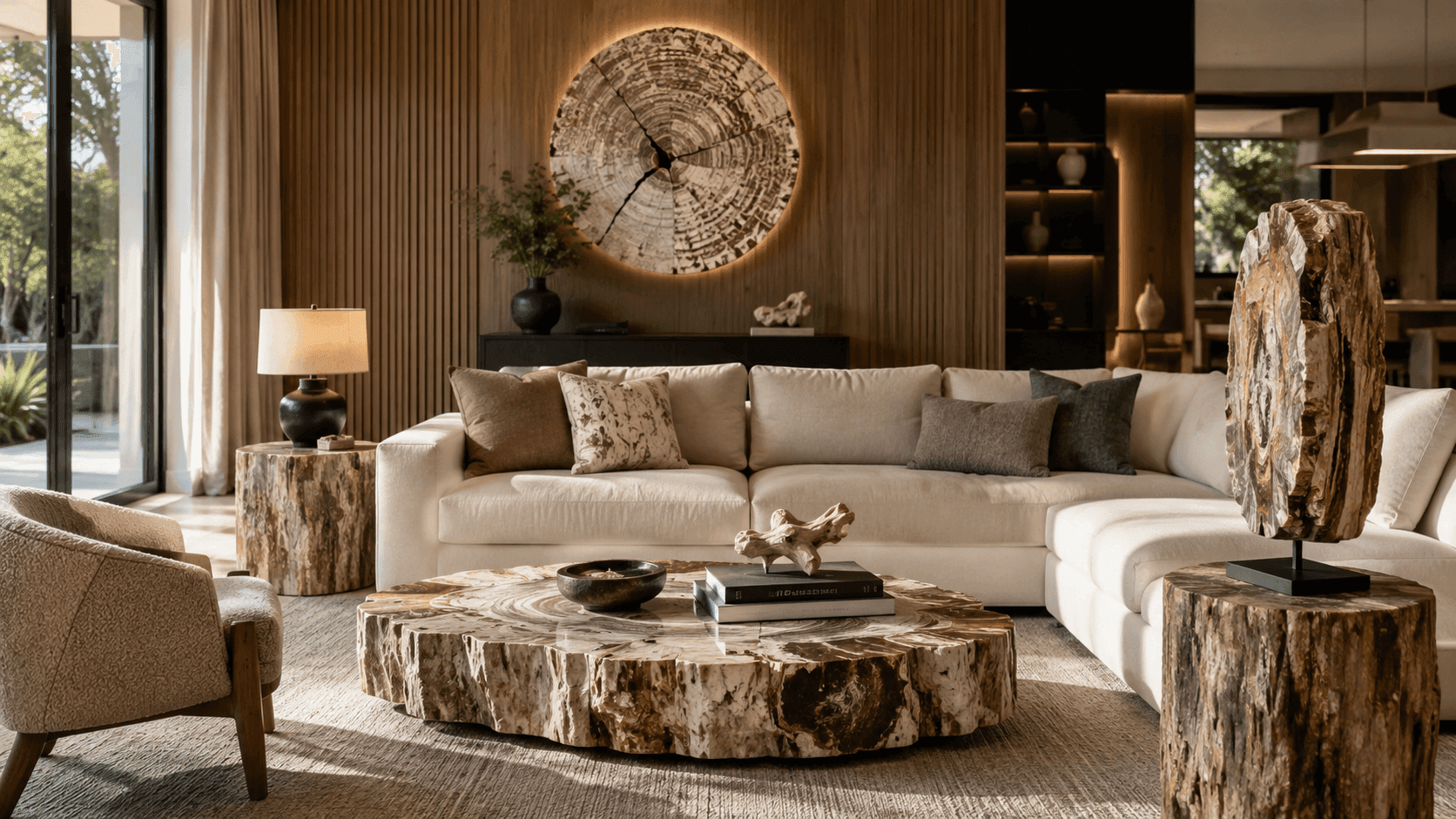
A petrified wood end table works best where it can be seen from more than one angle — beside a reading chair, at the end of a sofa run, in an entryway where its surface catches low light. Because each trunk's coloring is singular, the table becomes the anchor point of a room rather than a background object. Ambra pieces warm a neutral palette; Argentea and Fusca sit comfortably in darker, more graphic interiors; Viridis introduces a mineral green rarely found in natural furniture. The choice of trunk is, in effect, a choice of which 230-million-year-old story you want in the room.
Browse available trunks and find the one that will anchor your space.
Visit the ShopFrequently Asked Questions
Is a petrified wood end table heavy?
Yes. Because the material is solid quartz rather than organic wood, it is considerably heavier than a comparable wooden table. This weight is part of its stability and its permanence.
Can it be used outdoors?
The material itself tolerates water, heat, and UV without damage, since it is fully mineralized stone. Any metal base, however, should be chosen with outdoor conditions in mind.
Why do prices vary so much between pieces?
Each trunk is unique — in size, color, ring definition, and rarity of mineral tone. Rather than list fixed pricing, we invite you to consult us directly or request a quote for the specific piece that interests you.
How do I clean and maintain it?
A soft cloth and mild soap are sufficient. The surface does not require sealing, waxing, or special treatment, as the quartz itself is inert and non-porous.