
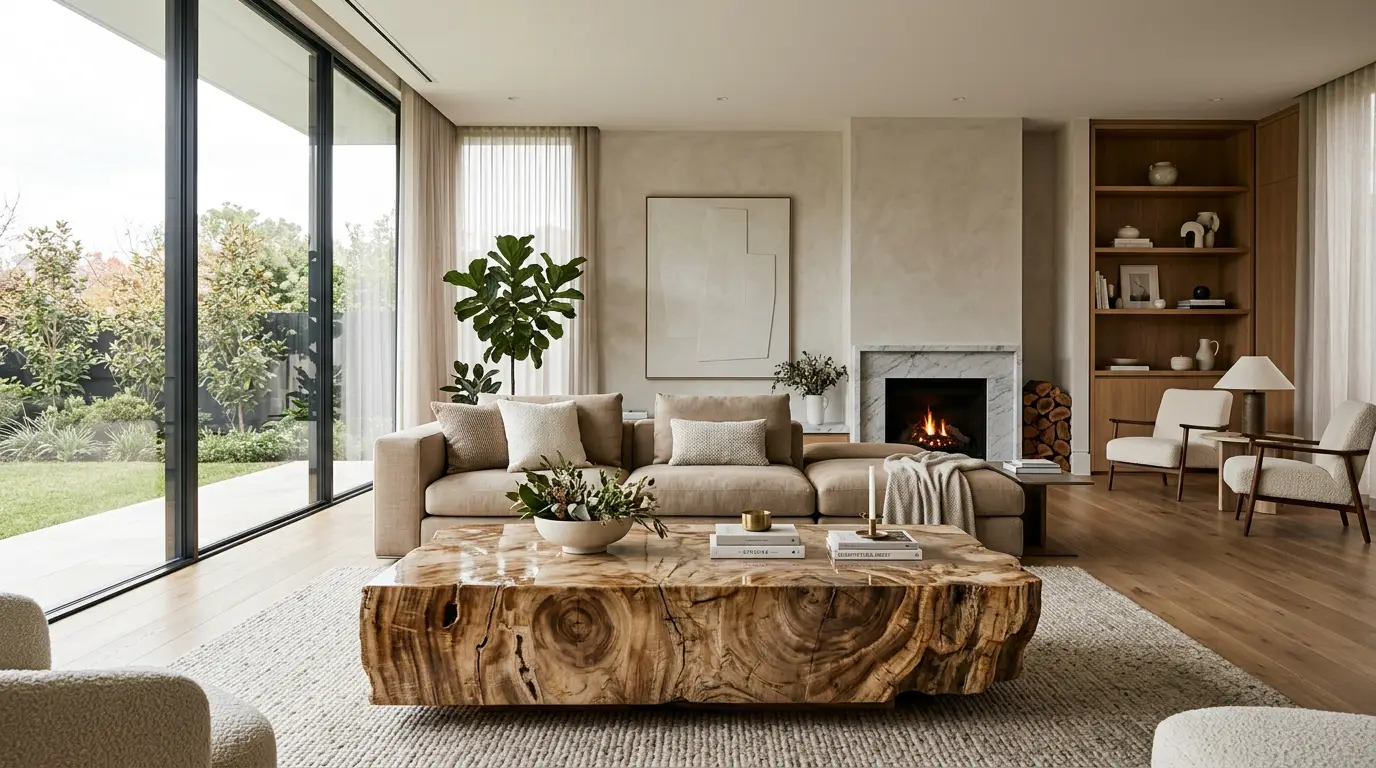
An Object That Was Once a Forest
A side table asks little of a room and gives much back. Placed beside a sofa or an armchair, it holds a glass, a book, a lamp — and, when cut from petrified wood, it holds something else entirely: the compressed record of a tree that grew in the Triassic, fell, and was replaced cell by cell with quartz over millions of years. What you set your coffee cup on is mineral, not organic. It only looks like wood.
At Medusa, every side table begins as a trunk with a name. Ambra, Argentea, Fusca, Umbra, Viridis — each one an individual tree raised from the ground in southwestern Madagascar, each with its own mineral signature and therefore its own color. There is no "petrified wood collection" in the way there might be a ceramics line. There is Fusca, and there is Umbra, and once a trunk is cut, its particular shade of brown or black or ochre cannot be reordered. The tree is gone; what remains are the sections that came from it.
Why This Material Behaves Unlike Any Other
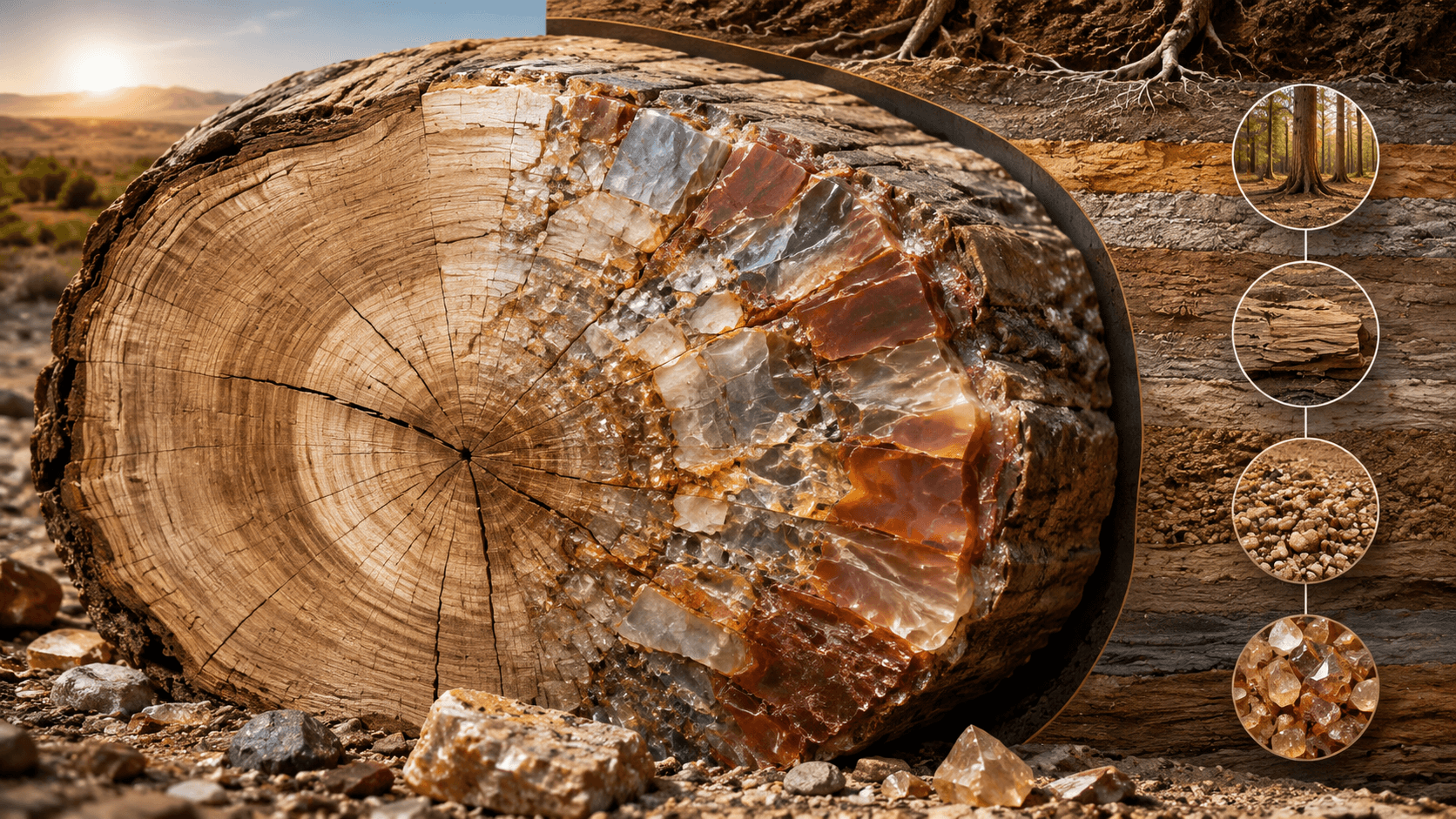
Petrified wood is silicified quartz. Groundwater rich in dissolved minerals seeped into buried wood and replaced its organic structure so precisely that bark texture, growth rings, even insect galleries survive in stone. The result sits at 7 on the Mohs hardness scale — harder than steel, close to the hardness of most gemstones used in jewelry.
Practically, this means a petrified wood side table:
- Will not scratch under normal domestic use, unlike lacquered or varnished wood.
- Is entirely indifferent to heat — a warm mug or a hot teapot leaves no mark.
- Does not fear humidity, spills, or damp climates; there is no organic fiber left to swell or rot.
- Holds its color under UV exposure, since the pigments are mineral, not organic dye.
- Carries genuine weight — it will not tip, and it will not migrate around a room by accident.
The trade-off is honest: it is cold to the touch, heavier than wood furniture of the same size, and it does not flex or give. You are not buying something that behaves like a tree. You are buying what happened after the tree stopped behaving like one.
Color as Geological Signature
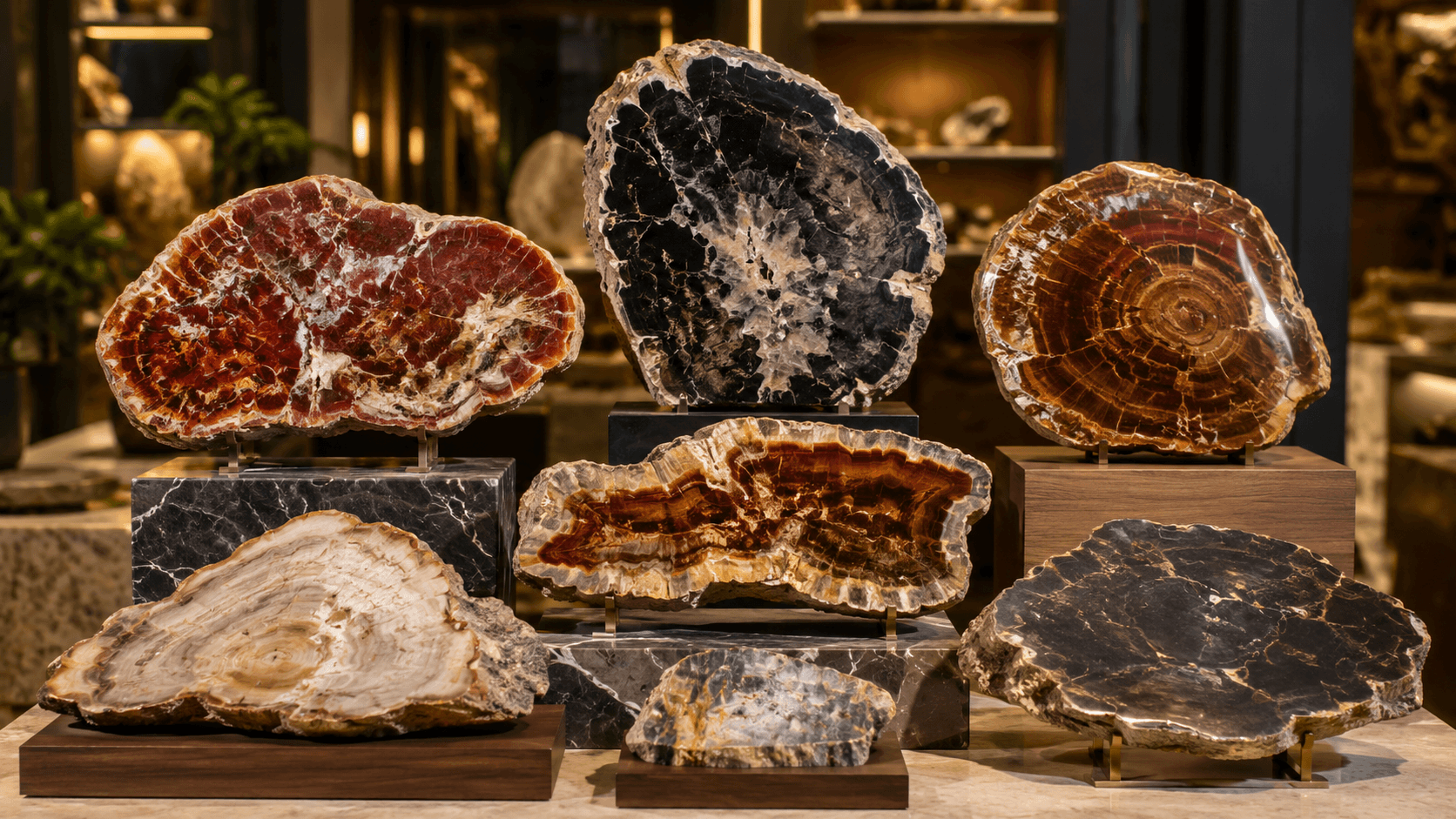
The palette of a petrified wood side table is not decorative choice — it is chemistry. Iron oxide produces the reds and ochres. Manganese gives blacks and violets. Traces of chromium or cobalt, far rarer, yield the greens and blues that make Viridis-family pieces so sought after. Because mineralization varies along the length of a single trunk, two tables cut from neighboring sections of the same tree can still differ in tone.
This is why we name trunks rather than catalog products. A client choosing an Ambra side table is not choosing an amber finish from a swatch book; they are choosing what remains of one specific tree, remounted from Madagascar's southwest, with a coloration that exists nowhere else once that trunk is fully worked.
A side table in petrified wood does not decorate a room. It anchors it to a moment 230 million years before the room existed.
From Trunk to Tabletop
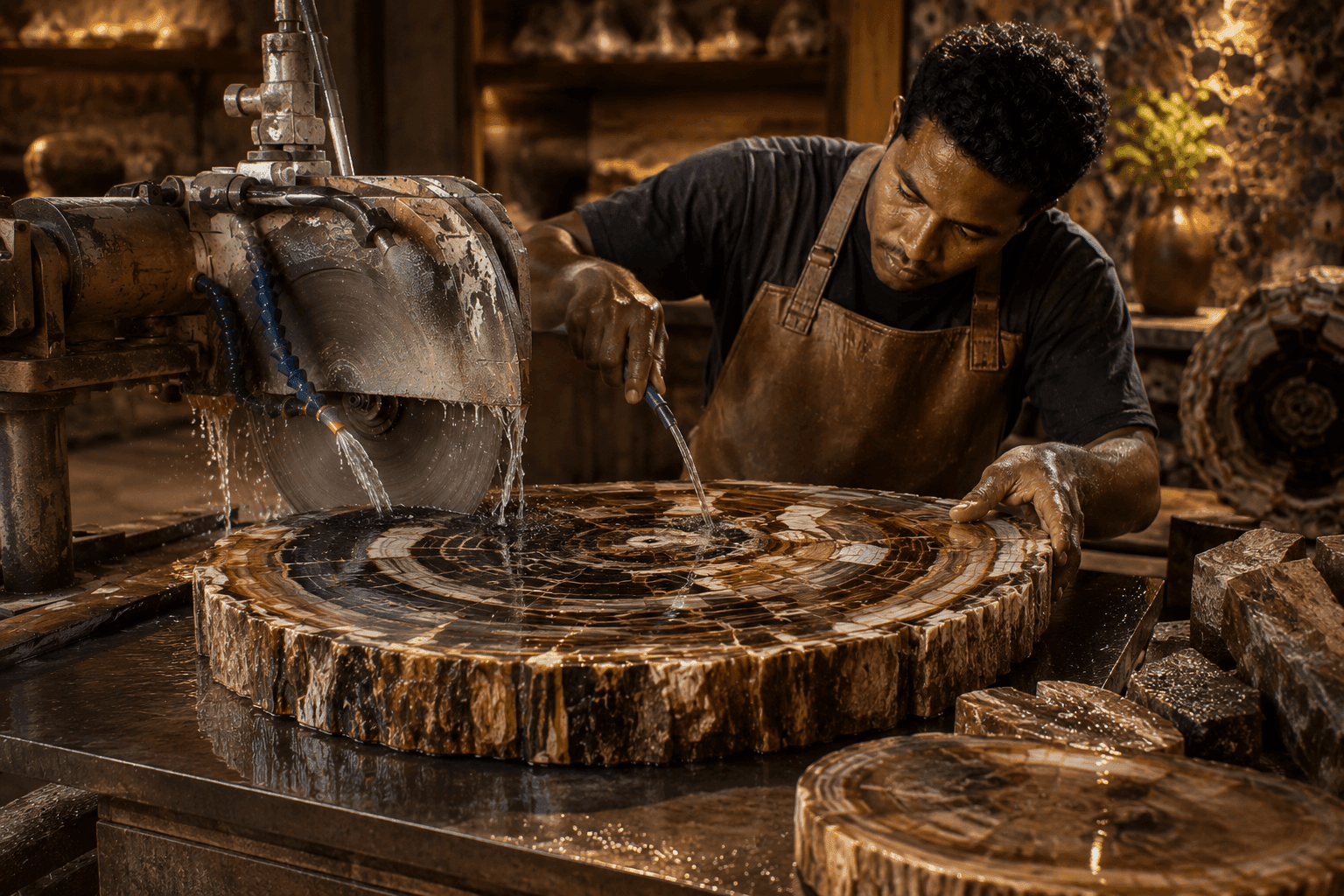
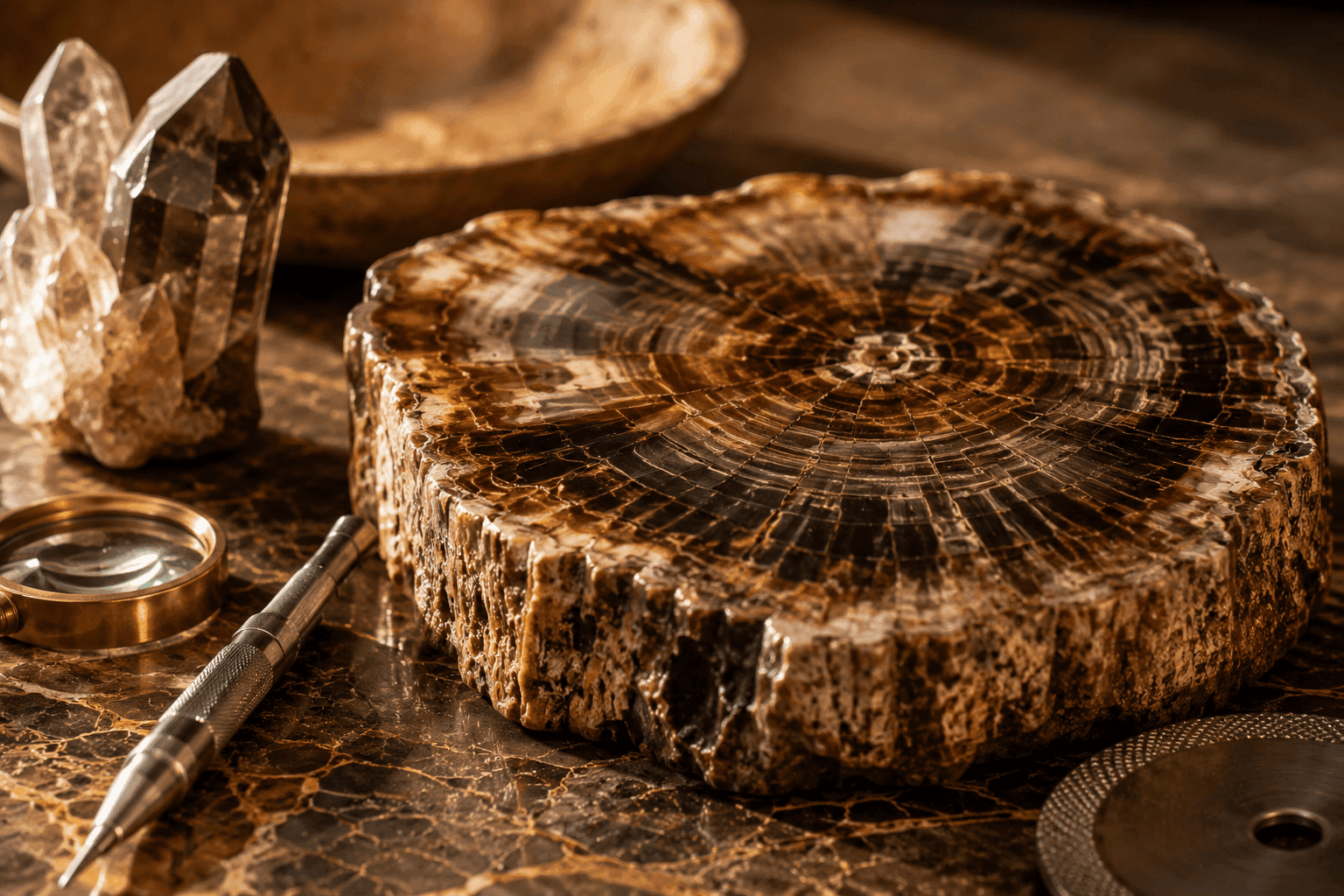
Working petrified wood is closer to lapidary craft than carpentry. Diamond-tipped blades cut the stone; progressive grinding brings out the grain patterns hidden beneath a rough, often unremarkable exterior; polishing takes the piece from matte to a depth that lets light travel slightly into the surface, the way it does in true gemstone. A base — often blackened steel, sometimes brass — is fitted to the underside, engineered specifically for the trunk's shape and weight distribution, since no two sections are ever geometrically identical.
The process cannot be rushed for volume. Each side table is the outcome of a single trunk's structure: its cracks, its density variations, its natural silhouette dictate the final form more than any design brief does.
In the Room
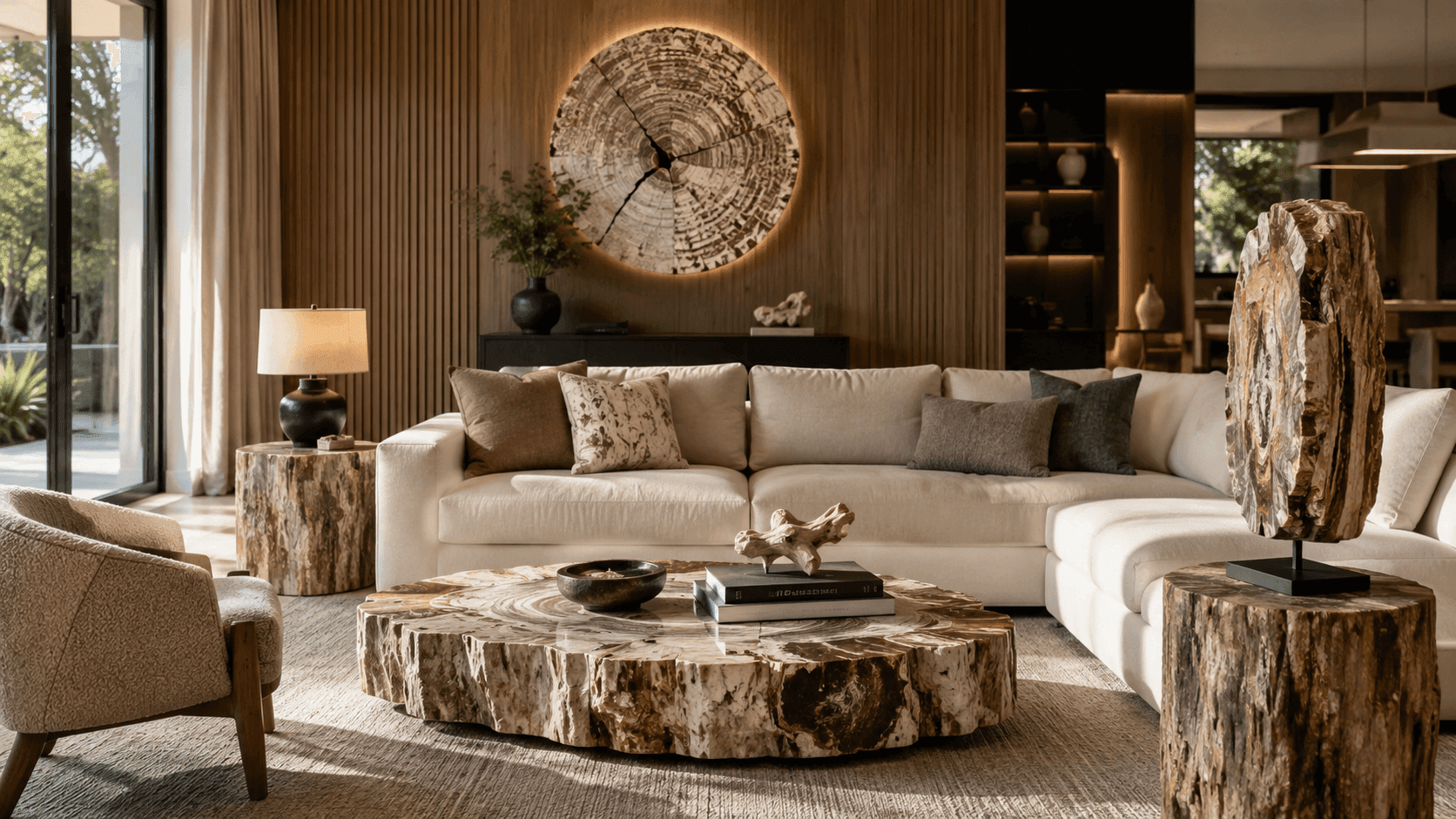
A petrified wood side table reads differently depending on what surrounds it. Against pale walls and natural fiber upholstery, its density and mineral color become the focal point of a seating area. In a more minimal, monochrome interior, a paler trunk — an Argentea, closer to grey and silver tones — recedes into quiet structure while still offering the tactile weight that lighter furniture lacks.
Because the table itself is inert — no wood to expand, no finish to fade — it suits spaces that see real use: a sunlit reading corner, a terrace under cover, a bathroom vanity area where humidity would eventually punish conventional wood. It is furniture that asks nothing of its environment.
See the individually named trunks currently available and request a tailored quote for your space.
Visit the BoutiqueFrequently Asked Questions
Is petrified wood actually wood?
No. The organic material has been entirely replaced by silica (quartz) over millions of years, a process called permineralization. The original cellular structure is preserved in mineral form, but chemically the table is stone.
Where does Medusa's petrified wood come from?
Every trunk is sourced from deposits in southwestern Madagascar, dating from the Triassic period, roughly 230 million years ago.
Can a petrified wood side table be used outdoors?
Yes, within reason. The quartz structure is unaffected by rain, frost, or UV light. The main consideration is the base material and the surface it rests on, which should be checked with us on a case-by-case basis.
Why does Medusa give each trunk a name instead of a product code?
Because each trunk is a distinct tree with a unique mineral composition and color. Naming them — Ambra, Argentea, Fusca, Umbra, Viridis — reflects that they are individual origins, not interchangeable stock, and that once cut, a given trunk's palette cannot be reproduced.