
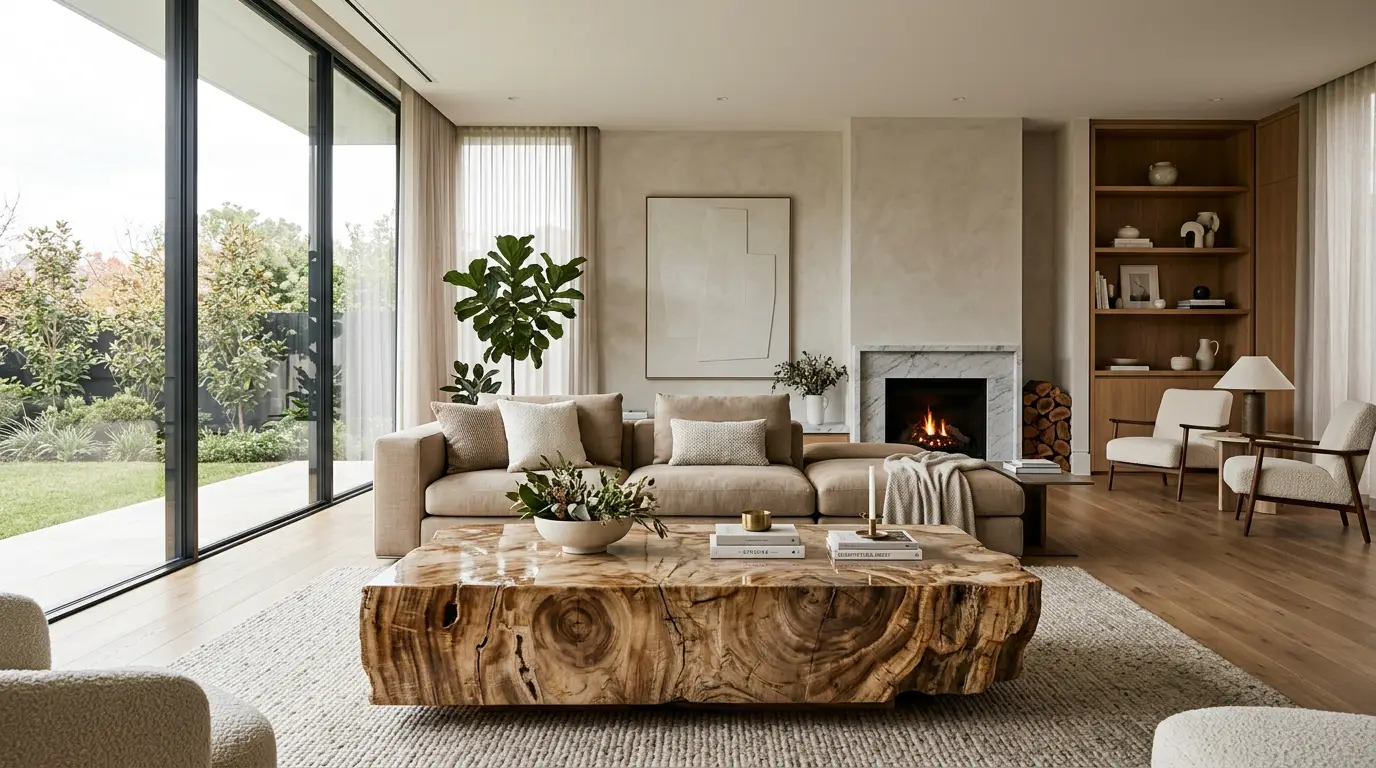
A Table Cut From Time
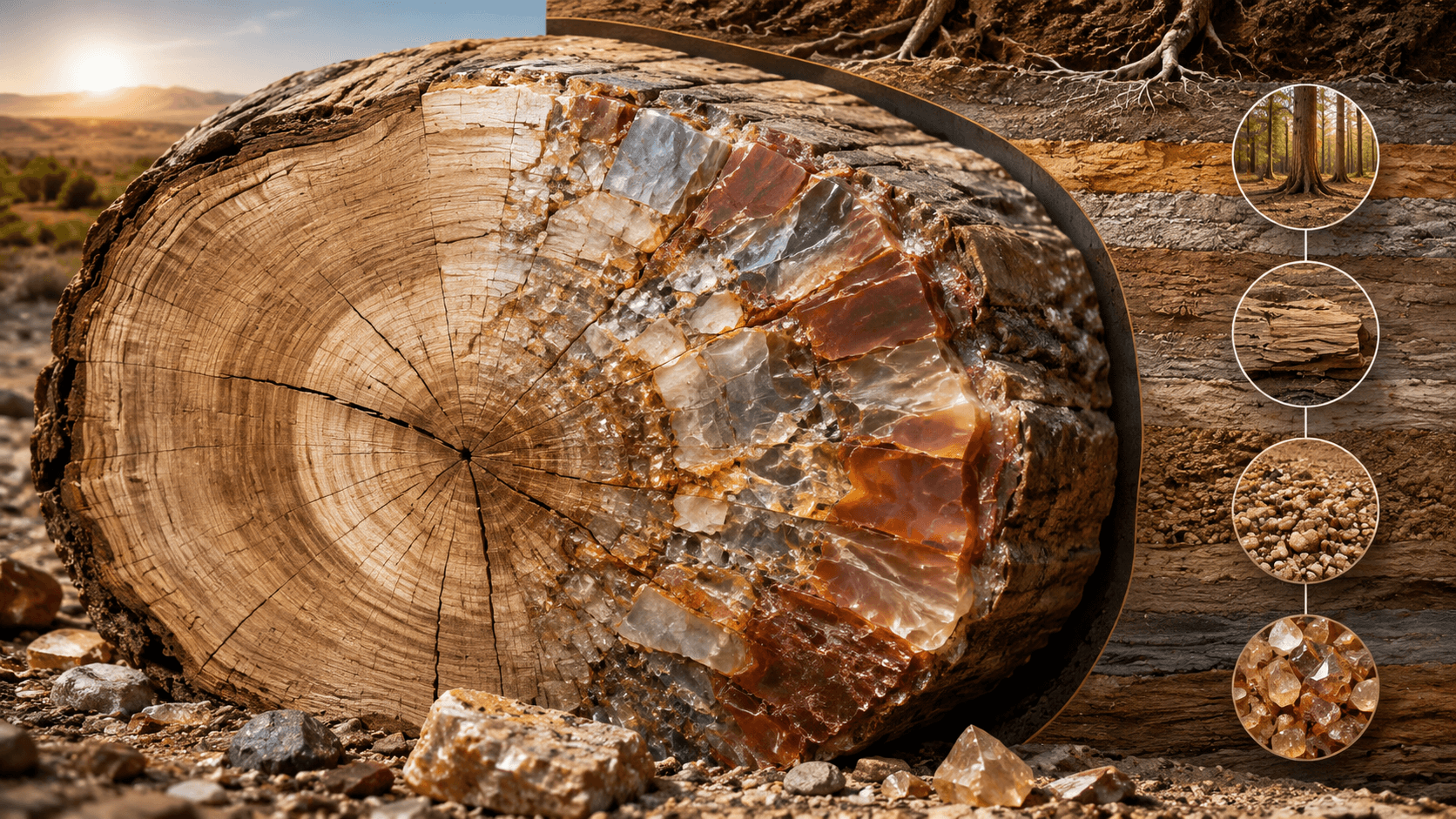
A cocktail table asks for presence at eye level, low and wide, the surface you actually look down into rather than across. Petrified wood answers that brief better than almost any other material: the rings, the fractures, the mineral veining sit right there under the polish, inches from your hand. Each piece we offer as a cocktail or console table was once a living tree in the southwest of Madagascar, felled by time itself some 230 million years ago and replaced, cell by cell, with silica. What you're looking at is quartz — hardness 7 on the Mohs scale — holding the memory of wood grain with a permanence wood never had.
We don't sell "petrified wood tables" as a category. We sell Ambra, Fusca, Umbra, Argentea, Viridis — named trunks, each with its own mineral signature, each finite. When a trunk is cut into a table, that particular color is gone from our inventory. There is no reordering the same grain twice.
One Trunk, One Name, One Table
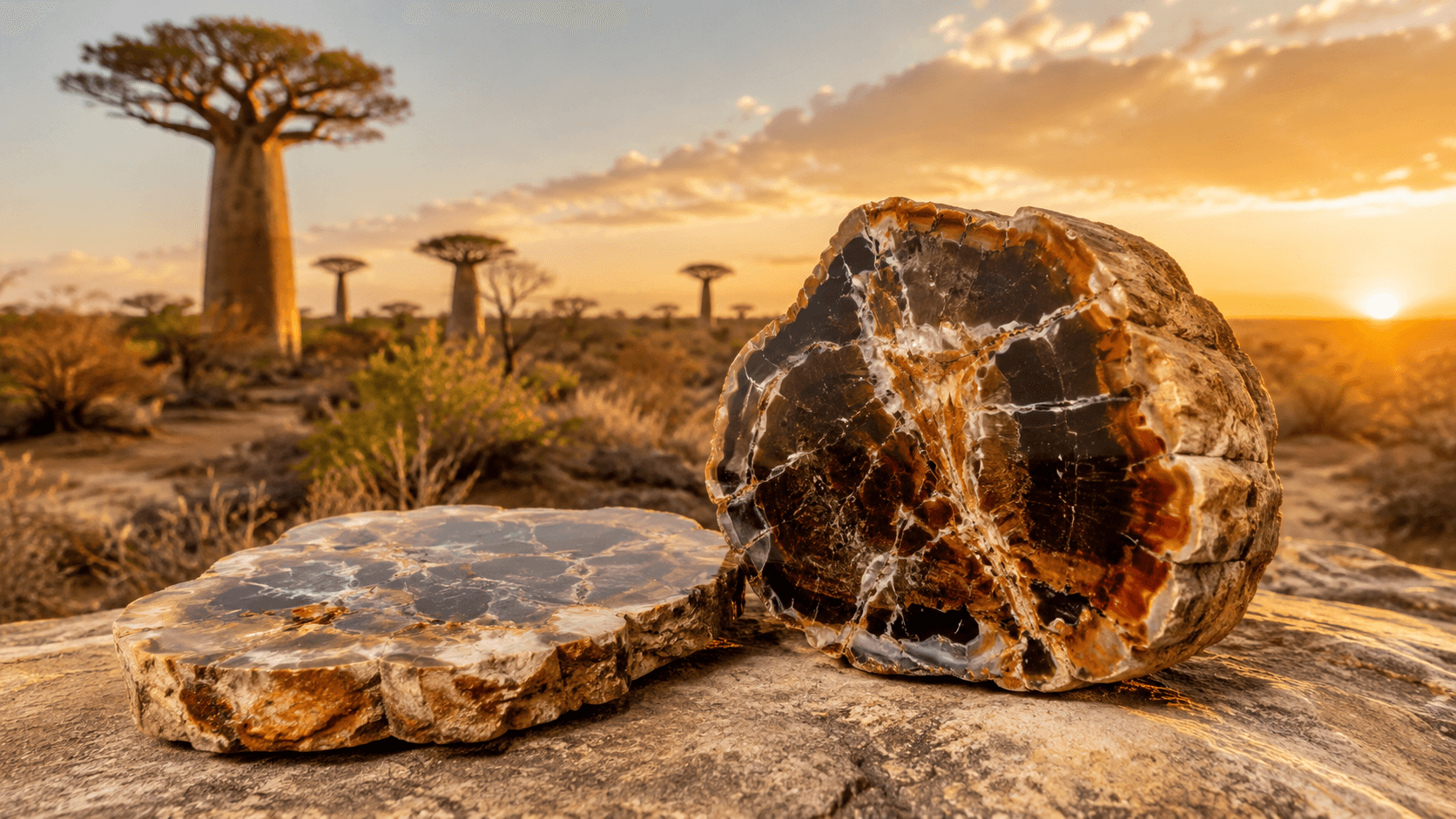
Every table starts as a single trunk section, selected in the field for its density, its fracture pattern, its color potential before a single cut is made. We give it a name at that point — not as a marketing flourish, but because it genuinely behaves like an individual: no two trunks polish the same way, even from the same fossil bed.
- Ambra — amber to honey tones, iron-driven, often the warmest under lamp light
- Fusca — deep brown, dense grain lines, reads as classic hardwood at a glance
- Umbra — near-black, manganese-rich, dramatic against pale interiors
- Argentea — grey-silver, cooler and more mineral in feel
- Viridis — green to blue-green, from chrome and cobalt traces, the rarest of the five
A cocktail table cut from Umbra will never exist again once that trunk is used up. That's not scarcity as a sales tactic — it's geology.
Why Petrified Wood Works as a Low Table
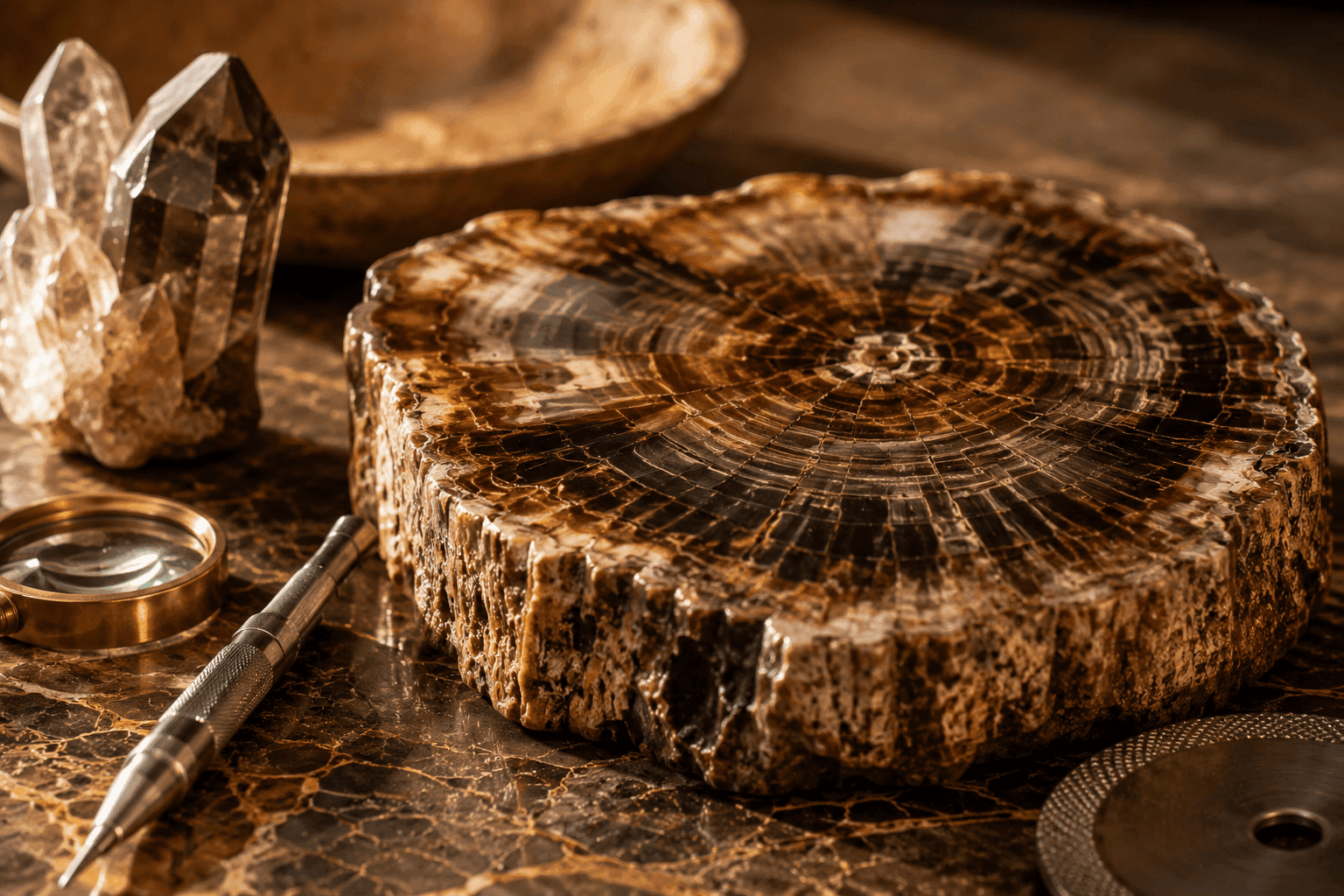
A coffee table takes abuse: glasses set down without coasters, feet resting on the edge, the occasional dropped object. Being pure quartz changes the equation entirely.
- Heat — hot mugs, candles, even a dish straight from the oven leave no mark
- Water and condensation — no ring stains, no swelling, no sealing required
- UV exposure — color holds near a sunlit window without fading
- Cold and humidity variation — stable in any climate, indoors or on a covered terrace
- Scratching — at hardness 7, only a handful of natural minerals can mark it
The trade-off is honest: these pieces are heavy, cold to the touch, and unapologetically mineral. That weight is also why they don't wobble, don't creak, and don't move when you don't want them to.
A table this old doesn't ask to be protected. It asks to be used.
From Trunk to Living Room
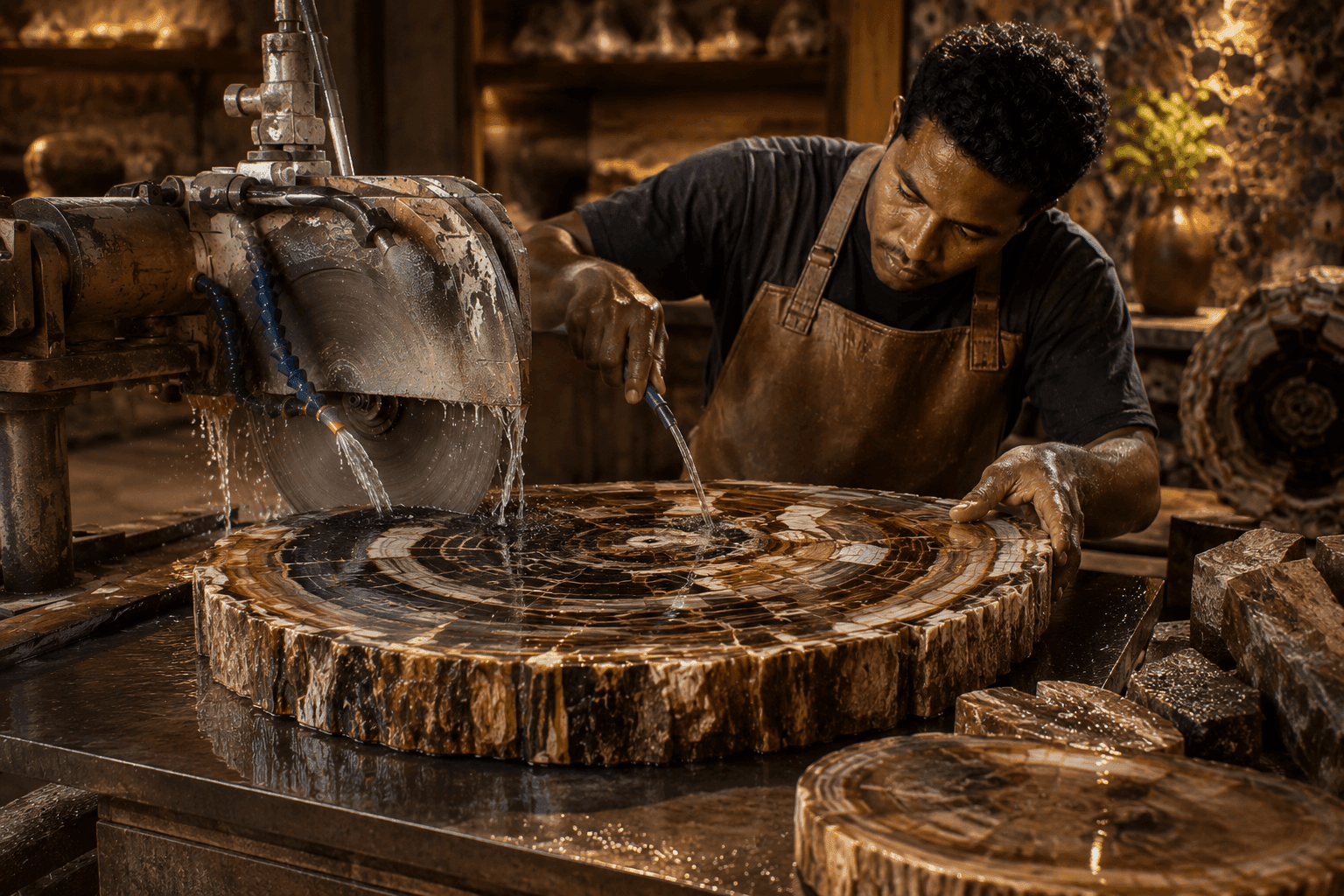
The trunk arrives rough, still carrying soil stains and the fracture lines of extraction. Turning it into a cocktail or console table is slow, deliberate work:
- The trunk is assessed for its natural base — many of our tables keep the organic silhouette of the original cut rather than forcing a rectangle
- Cutting follows the existing fracture lines wherever possible, to avoid stressing the quartz
- Polishing is done in progressive stages, by hand, to bring out the ring pattern without erasing the trunk's natural texture
- A steel or wood base is fitted to the underside, sized to the specific trunk — no two bases are quite identical either
Nothing here is molded, cast, or reproduced. The unevenness of the top, the slight asymmetry of the base — these are the tree's decisions, not ours.
Cocktail Table or Console: Reading the Piece
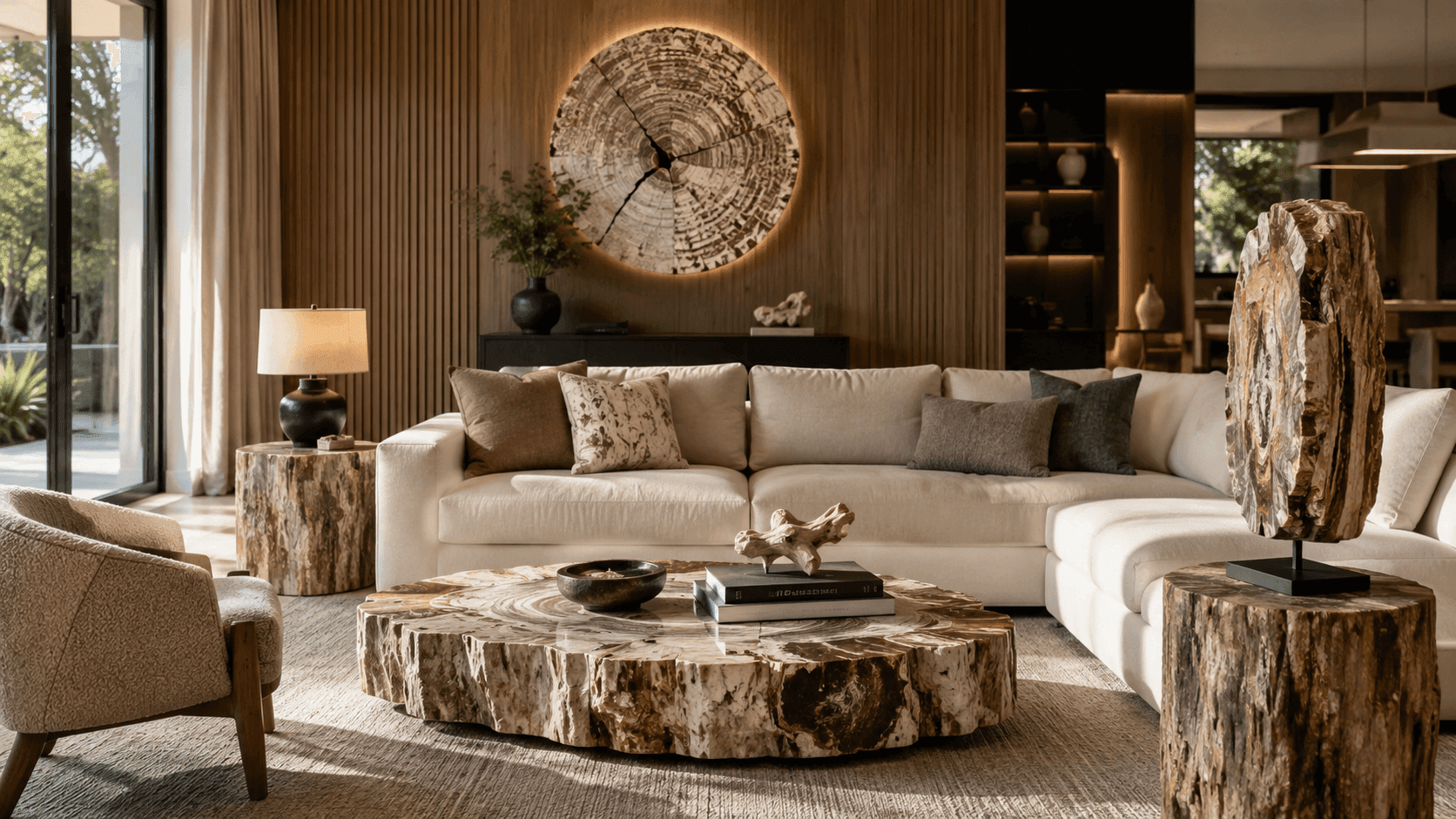
The same trunk can read as a cocktail table or a console depending on its natural proportions — a wider, lower cut sits well in front of a sofa; a narrower, taller section works against a wall or behind seating. We don't force a trunk into a format it doesn't have. Instead, each one is matched to the use it suits best:
- Low and wide trunks become cocktail tables, meant to be looked into, not just at
- Narrower, taller cuts become consoles, standing pieces for an entryway or behind a sofa
- Asymmetric bases are left as found, rather than trimmed square, when the trunk's own shape is the more interesting choice
This is why browsing our current pieces feels less like choosing a model and more like meeting what's available — because it genuinely is a finite, changing selection.
See which trunks are currently available as cocktail and console tables.
Visit the shopFrequently Asked Questions
Is petrified wood actually stone, not wood?
Yes. Over roughly 230 million years, the original wood structure was replaced by silica (quartz) while retaining the tree's grain and ring pattern. It is mineral, not organic, which is why it resists heat, water, and scratching in ways wood cannot.
Will the color of my table match the photos exactly?
Close, but expect natural variation. Each trunk — Ambra, Fusca, Umbra, Argentea, Viridis — has its own mineral makeup, and even within one named trunk, tone can shift slightly across the cut. This variation is part of the material, not a flaw.
How much does a petrified wood cocktail table weigh?
It depends on the trunk's size and density, but expect these pieces to be substantially heavier than an equivalent wood or stone table of the same dimensions — this is solid quartz, not veneer.
Can I get a custom size or shape?
Within the limits of the trunk available, yes. Since each table starts from a single natural section rather than a manufactured slab, sizing is a conversation about the specific piece — get in touch or request a quote for your project.