
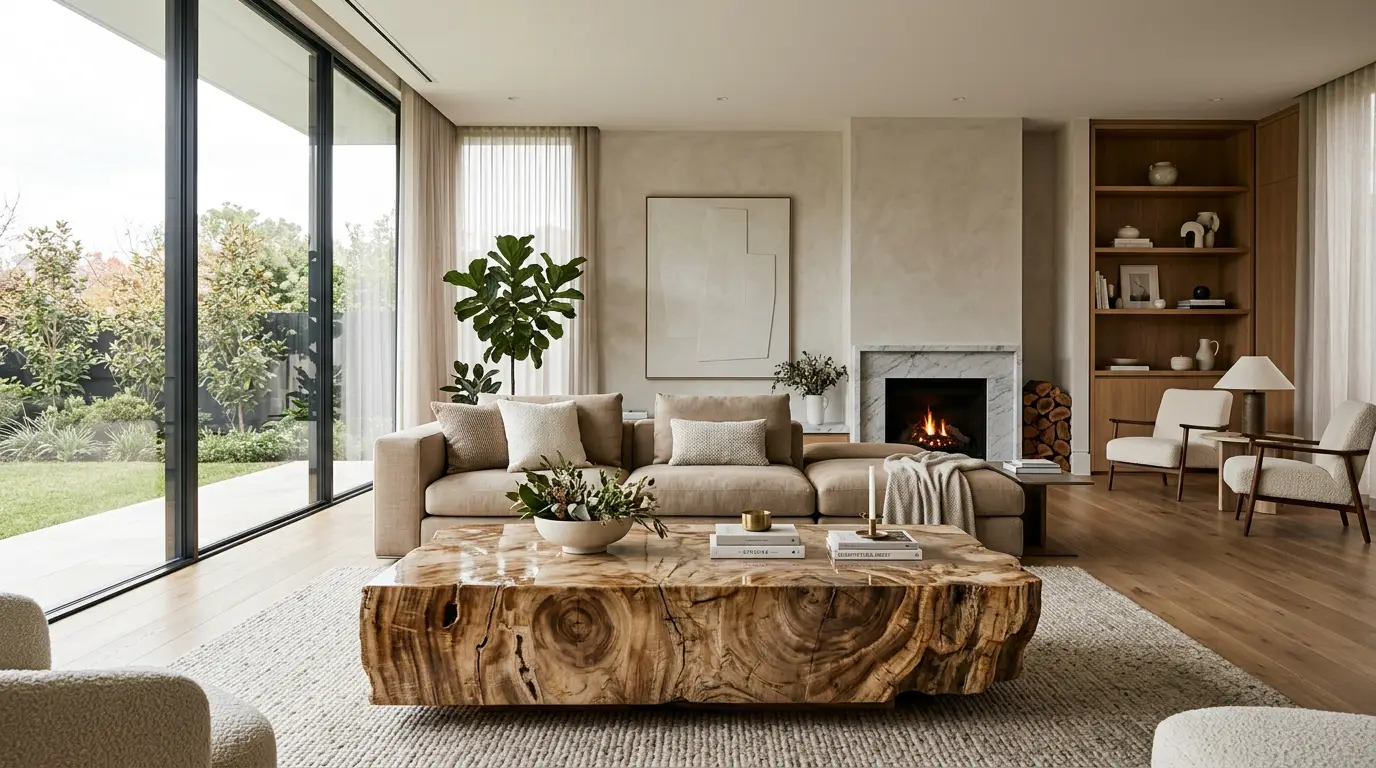
A Stool That Was Once a Tree
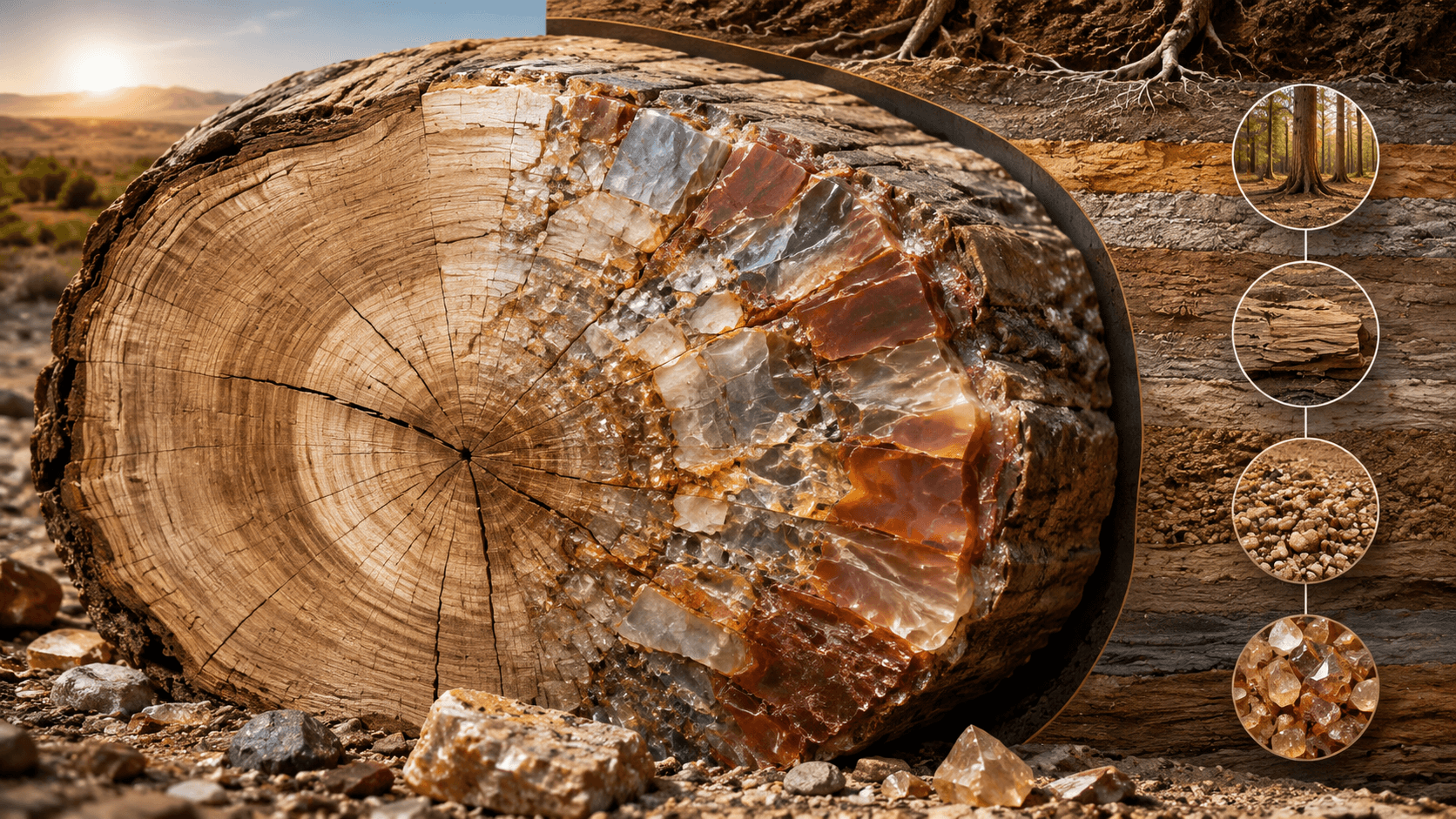
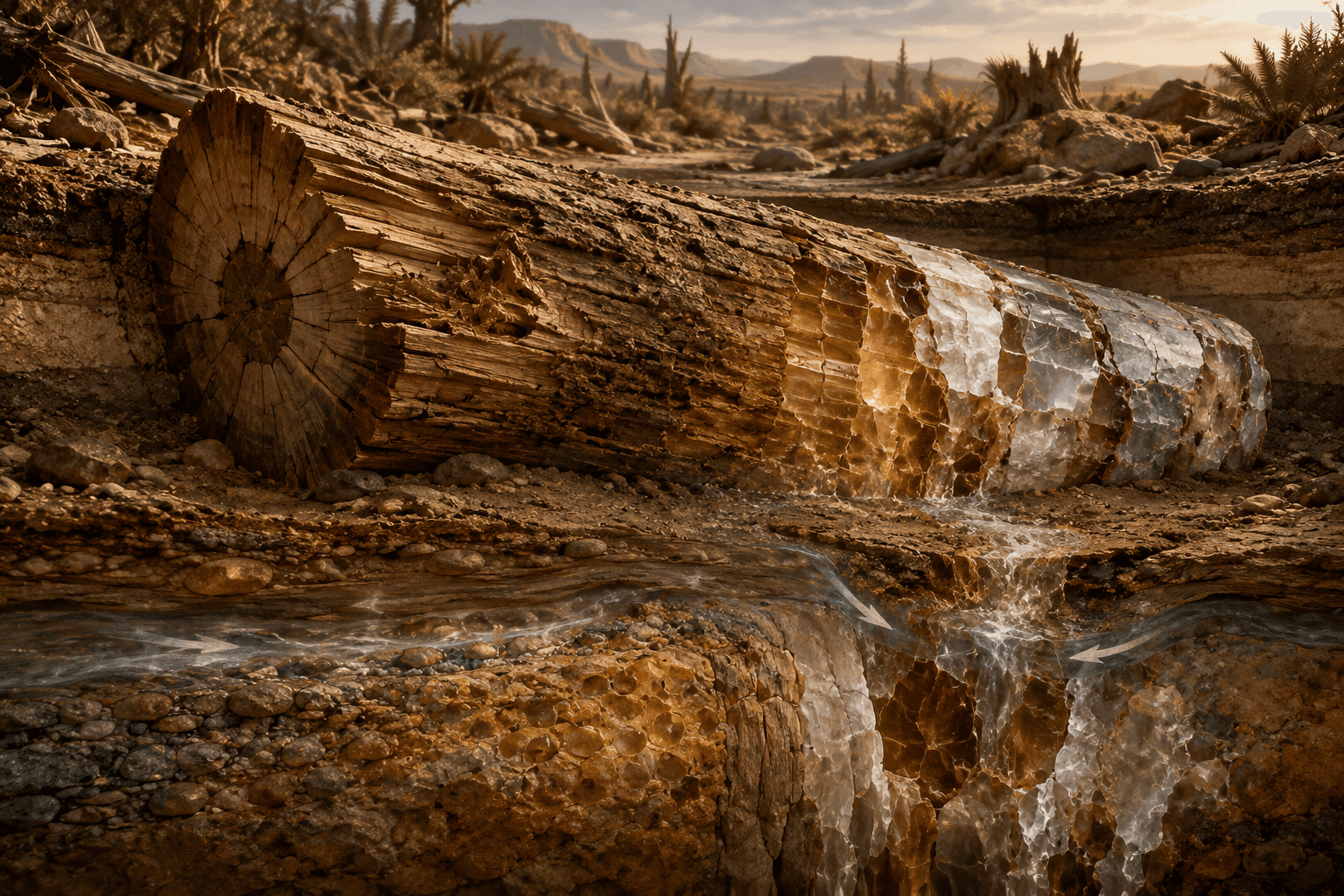
A petrified wood stool is not shaped from a block of stone selected for its veining. It is the base of an actual tree — one that grew in the forests of southwestern Madagascar roughly 230 million years ago, fell, and was buried before it could decay. Groundwater rich in silica infiltrated its cells over millennia, replacing organic matter fiber by fiber until the trunk turned entirely to quartz. What Medusa cuts and polishes into a stool is that mineralized trunk, still bearing its rings, its bark line, sometimes its knots.
Each trunk we raise from the ground is given a name — Ambra, Argentea, Fusca, Umbra, Viridis — because each one is genuinely singular. No two trees fossilized under identical conditions, so no two stools share the exact same palette. Once a trunk is cut, that particular tone is gone for good.
Furniture With the Density of Stone
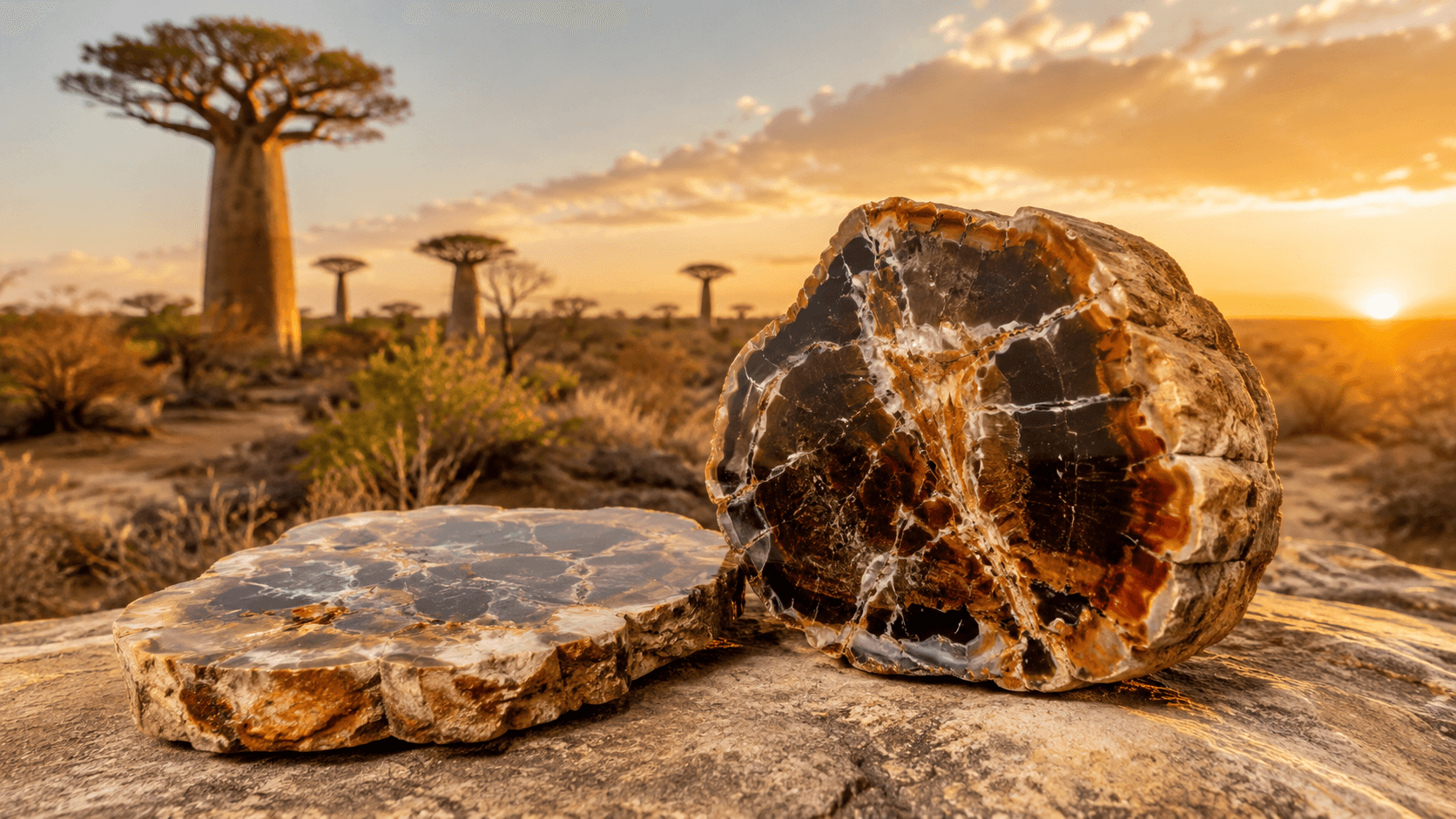
What you sit a lamp on — or occasionally sit yourself on — is quartz rated 7 on the Mohs hardness scale. That single fact explains everything about how this stool behaves in a home:
- It is cold to the touch, and stays that way regardless of the room's temperature.
- It is indifferent to water rings, spilled wine, or a forgotten glass of ice.
- Direct sun will not fade it; there is no pigment to bleach, only mineral.
- It will not warp, crack from dry heat, or need any protective treatment.
This is why the piece Restoration Hardware and other high-end interiors have popularized as accent furniture isn't a design gimmick — it's a practical answer to a very old material. A petrified wood stool asks nothing of you. No coasters, no oiling, no seasonal care.
Two Uses in One Object
The proportions of these trunk sections make them naturally flexible in a room. Positioned beside an armchair, a stool becomes a side table — solid enough to hold a tray, a stack of books, a cup of coffee that will never leave a mark. Positioned in an entryway or beside a low sofa, it works as an occasional seat, low and unshakeable. Interior designers favor them precisely because they resist categorization: they don't announce themselves as "a stool" or "a table," they simply sit in a room as an object that has clearly existed far longer than anything else in it.
The polished top is typically left flat and smooth, the sides retaining more of the trunk's natural contour — bark remnants, subtle swelling, occasional fissures filled with contrasting mineral. No two tops read the same under raking light.
Color Is a Question of Chemistry, Not Choice
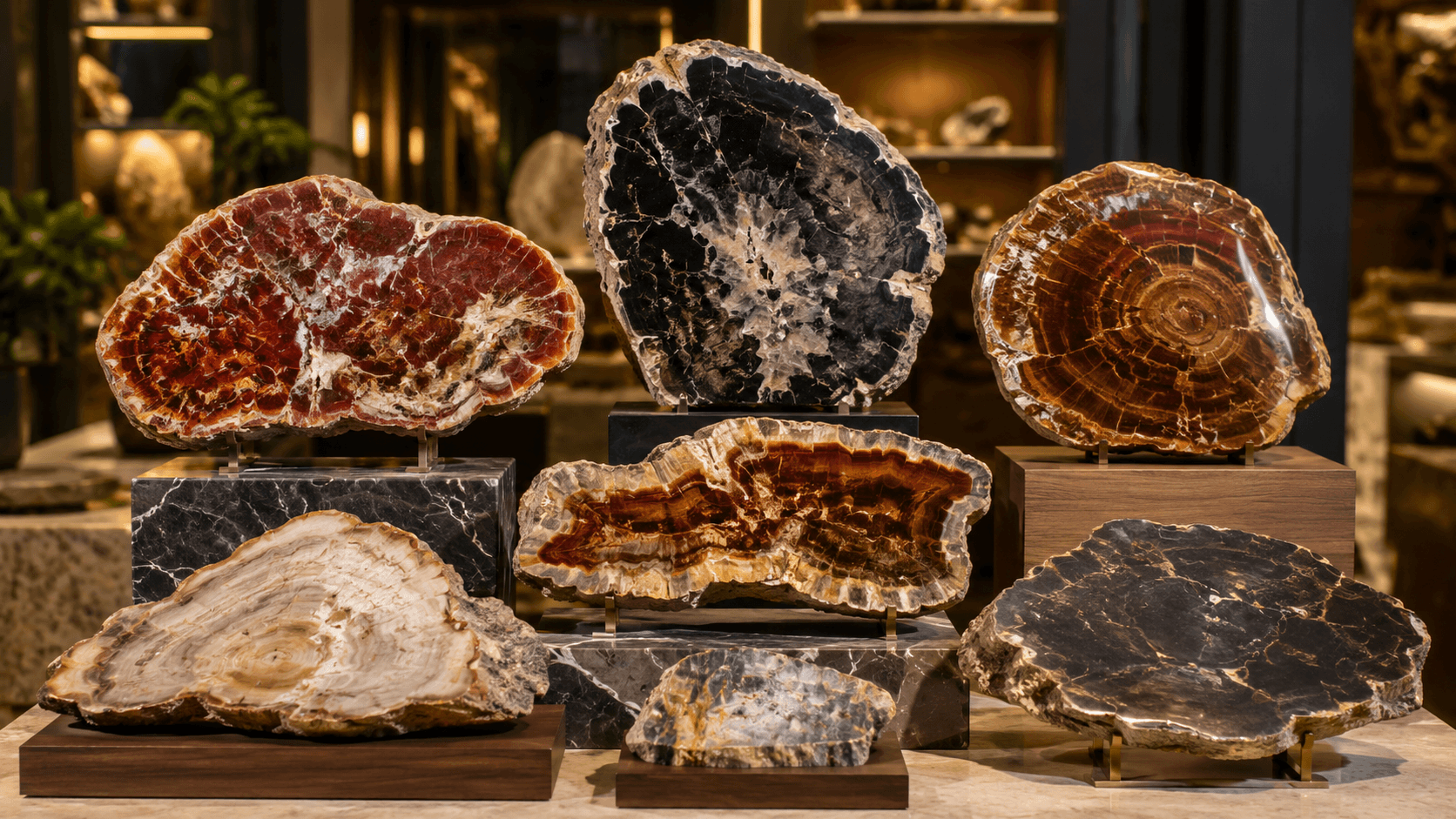
The colors you see in a finished stool were written into the wood during fossilization, determined by which trace metals were present in the groundwater at the time:
- Iron produces the reds, ambers, and ochres — the tones behind trunks like Ambra and Fusca.
- Manganese yields blacks and violets, seen in darker trunks such as Umbra.
- Chrome and cobalt, rarer, produce the greens and blues found in a trunk like Viridis.
Because these minerals infiltrated unevenly, a single trunk can shift from amber core to grey rim, or carry a vein of near-black running through lighter stone. This is not staining or dye — it is geology, fixed permanently in the quartz. A stool cut from Argentea will never be reproduced identically, because the tree it came from no longer exists.
A tree does not repeat itself twice. Neither does the stone it becomes.
From Trunk to Object
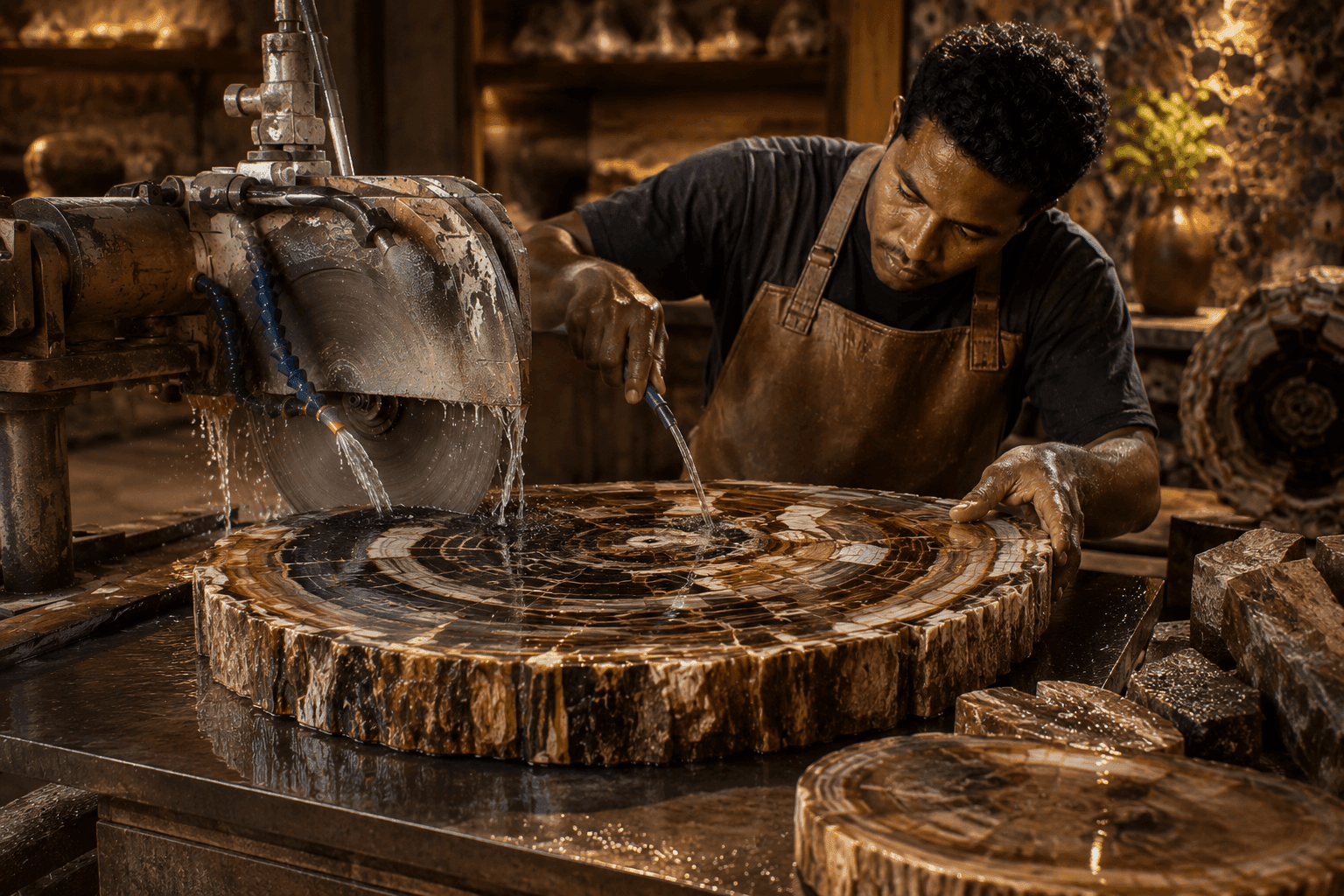
Turning a raw trunk section into a stool that stands level and finishes smooth is slow, deliberate work. Quartz at hardness 7 does not yield to standard woodworking tools — cutting and polishing petrified wood requires diamond blades and progressive grinding, done by hand to preserve the natural silhouette rather than force it into a uniform shape. Each base is leveled individually, since no two trunk cross-sections are alike. The result is a piece that looks as though it simply rose from the ground this way — because, in essence, it did.
A Piece That Anchors a Room
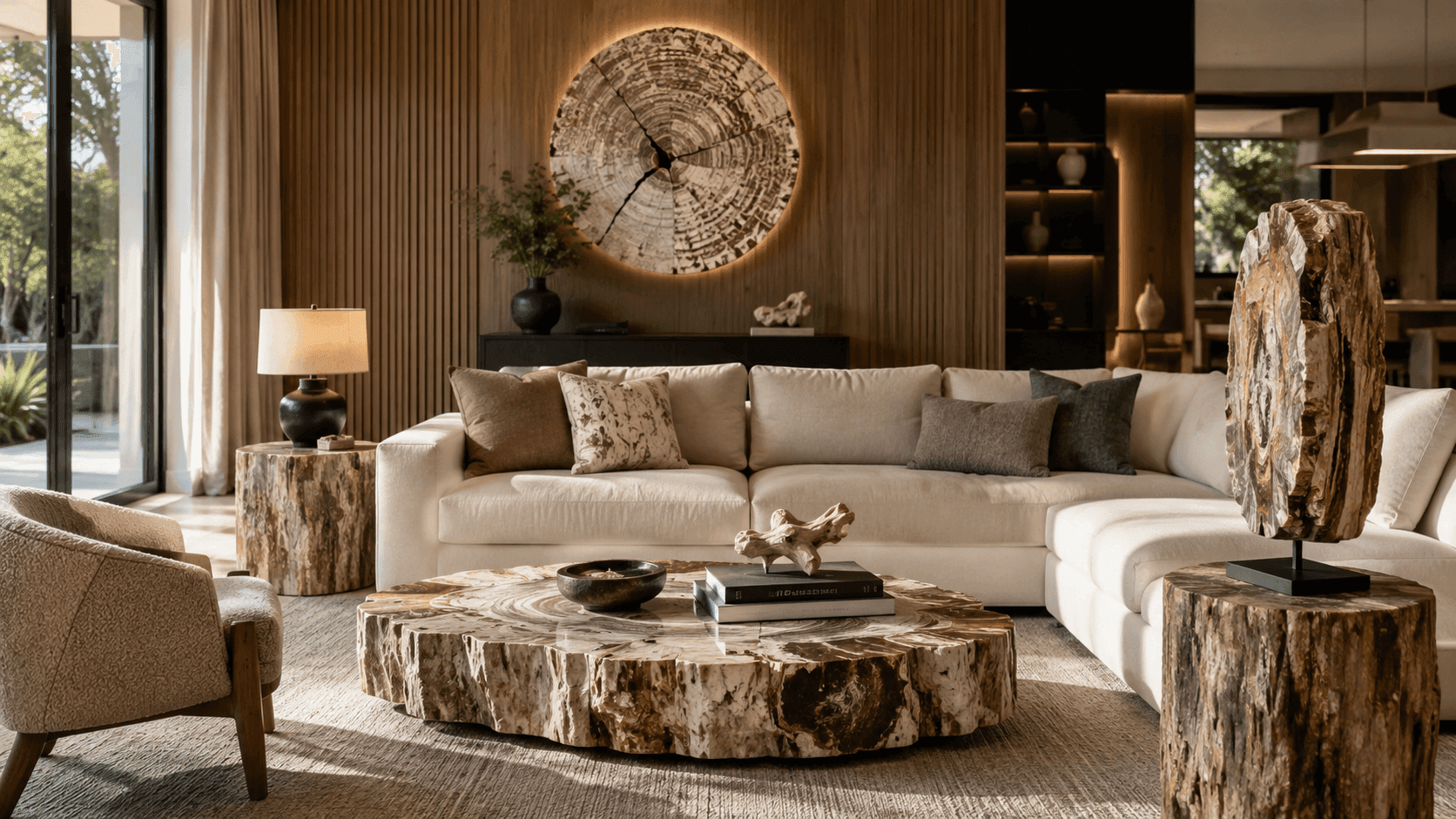
Beyond function, a petrified wood stool carries weight — literally and otherwise. It does not compete with other furniture for attention; it simply holds its ground, dense and quiet, next to lighter modern pieces. Interior designers often place a single trunk stool as a counterpoint to glass, steel, or pale wood — the contrast of something 230 million years old against something built last year tends to do more for a room than any additional accessory could.
Discover the current trunks available as stools and side tables.
View the ShopFrequently Asked Questions
Can a petrified wood stool actually be sat on?
Yes. The material is solid quartz, dense and load-bearing. Weight capacity depends on the trunk's thickness and shape — we can advise on the piece best suited to seating versus display, upon request.
Does it need any maintenance?
None beyond an occasional wipe. It is insensitive to water, heat, and UV, so no oiling, sealing, or protective treatment is required.
Why do prices vary so much between pieces?
Each stool comes from a unique trunk section — size, color rarity, and finishing work all differ. We price each piece individually; please consult us or request a quote.
Is the color natural or treated?
Entirely natural. The tones come from trace metals — iron, manganese, chrome, cobalt — absorbed during fossilization. Nothing is dyed or artificially enhanced.