
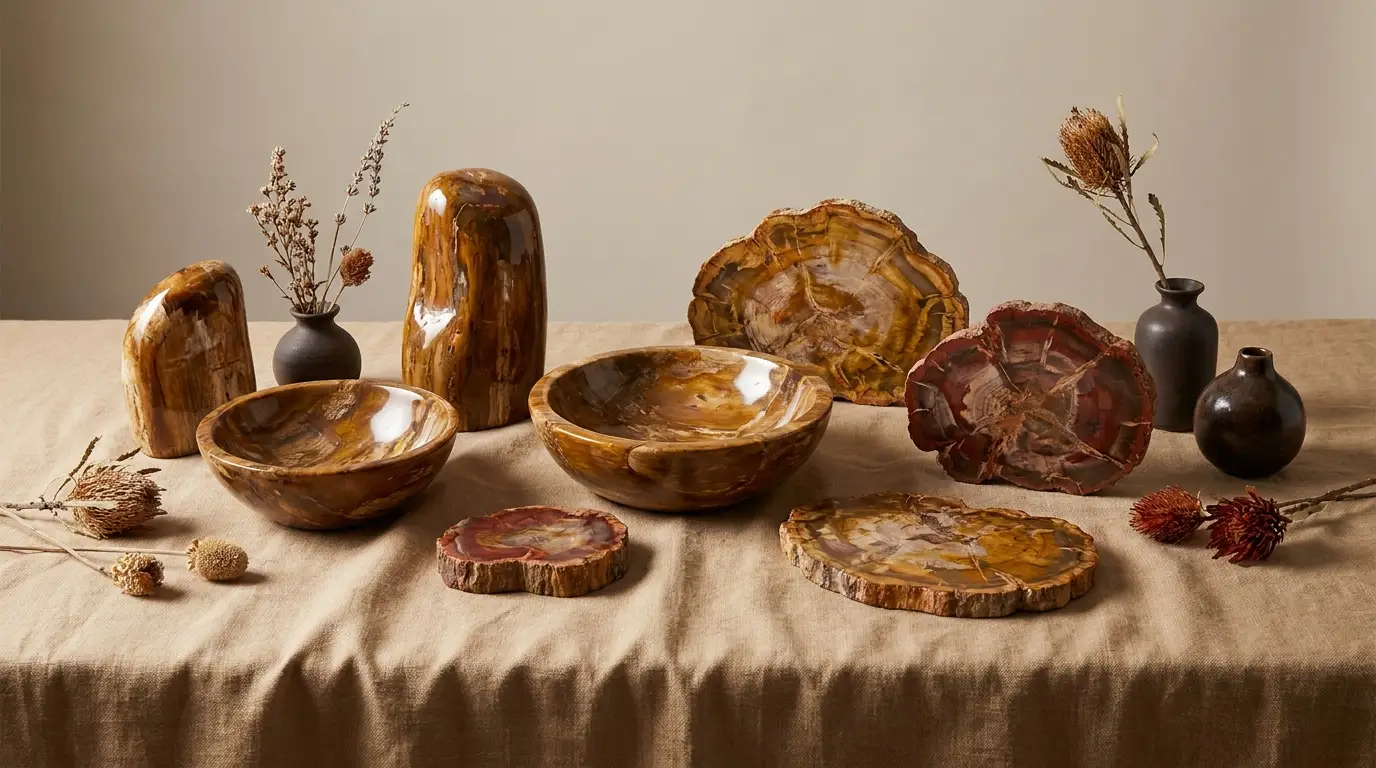
A Sphere Cut From a 230-Million-Year-Old Tree
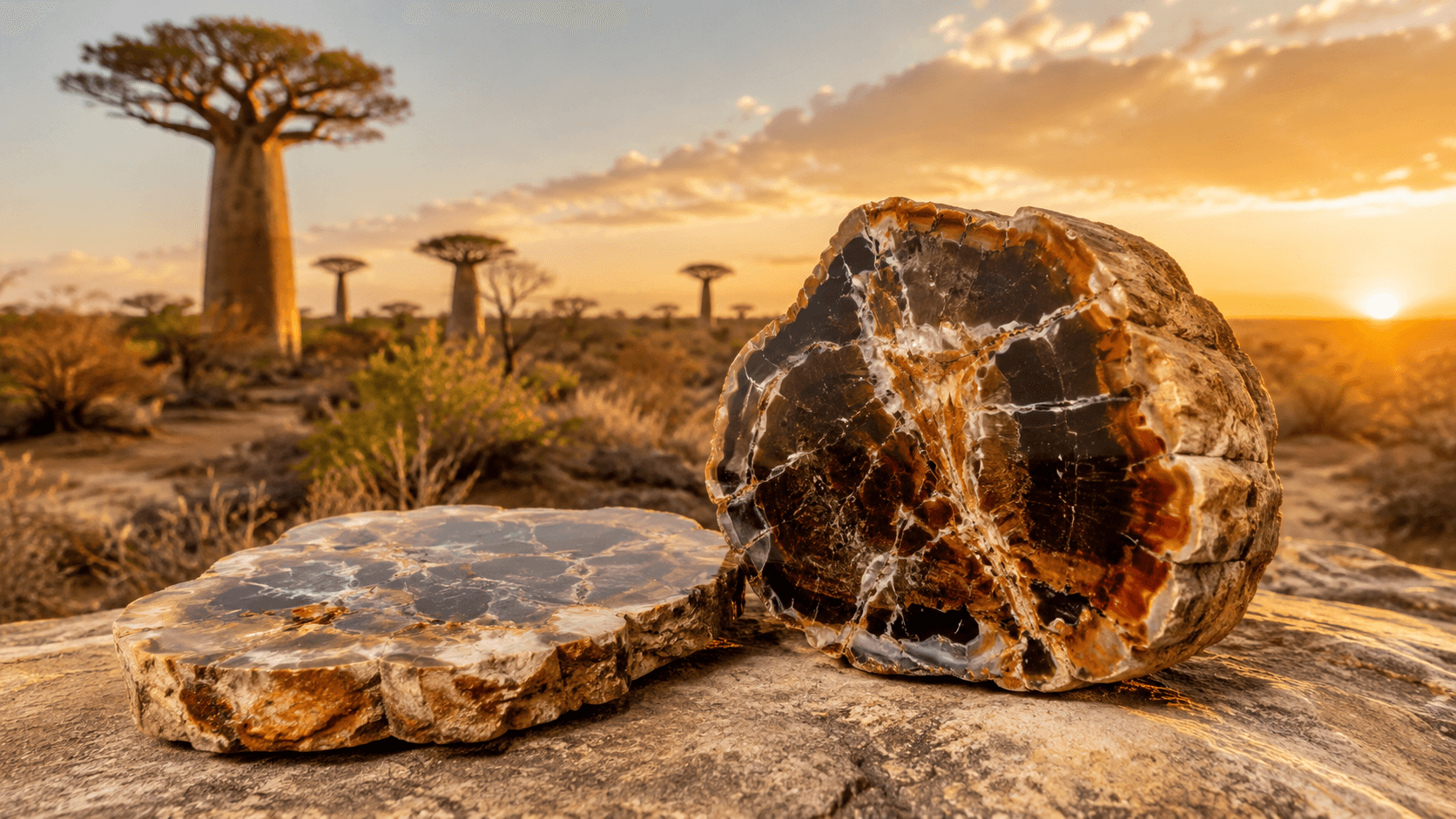
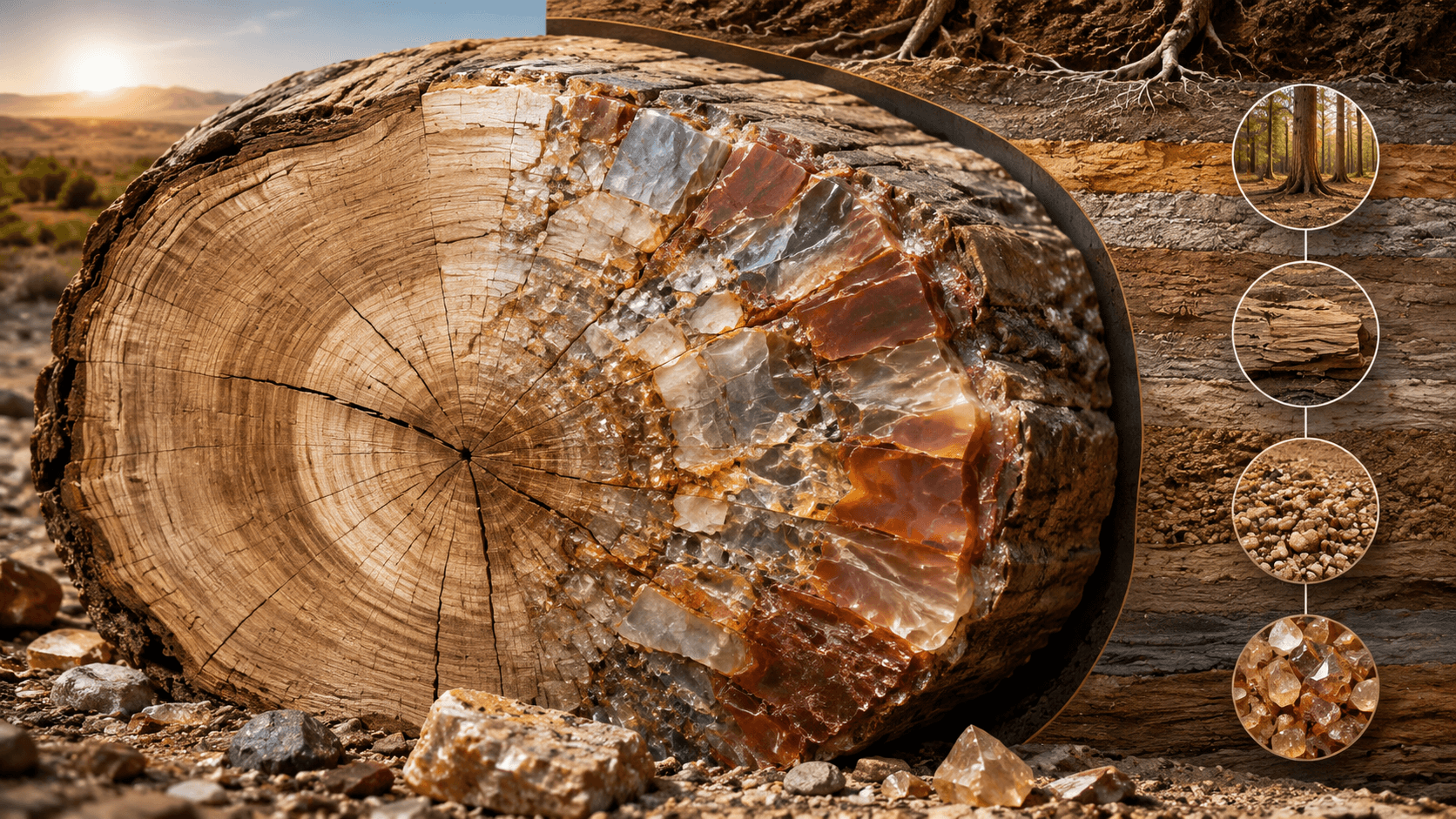
A petrified wood sphere is not a decorative object shaped from a raw material. It is the last chapter of a tree's story — a trunk that grew in the Triassic, some 230 million years ago, in a forest that no longer exists, buried by sediment before it could decay, and slowly replaced, cell by cell, by silica. What comes out of the ground in southwestern Madagascar is stone that remembers being wood: growth rings, fibrous grain, sometimes even the trace of an old wound in the bark. Turned into a sphere, that memory becomes a form with no beginning and no end — the most reductive, most honest way to present what the tree has become.
At Medusa, each sphere is cut from a trunk we have named. Not a product line, not a batch number — a tree.
Each Sphere Carries the Name of Its Tree
Every trunk we bring up from the ground is one individual, and we give it one name: Ambra for the amber-toned trees, Argentea for the silvered ones, Fusca for the deep browns, Umbra for the darkest, Viridis for the rare greens. The name is not a marketing device. It reflects a simple, irreversible fact: each trunk mineralized on its own, in its own pocket of earth, absorbing a distinct mix of dissolved minerals over millions of years. No two trunks took up iron, manganese, or chromium in the same proportions, at the same depth, under the same pressure. The result is a palette that cannot be repeated once the trunk is gone.
When we cut spheres from a trunk like Ambra or Viridis, we are not choosing a "collection." We are distributing the last visible material of one specific tree. Once that trunk is fully worked, its exact color disappears from what we offer — permanently.
- Ambra: warm ochre and honey tones, iron-rich.
- Argentea: pale grey-silver, quartz-dominant with little iron.
- Fusca: deep chestnut brown, layered with darker striation.
- Umbra: near-black, manganese-marked.
- Viridis: rare olive-green to blue-green, colored by chromium or cobalt traces.
A sphere doesn't imitate a form found in nature — it's a tree, reduced to its purest geometry.
Quartz, Not Wood: What the Sphere Is Made Of
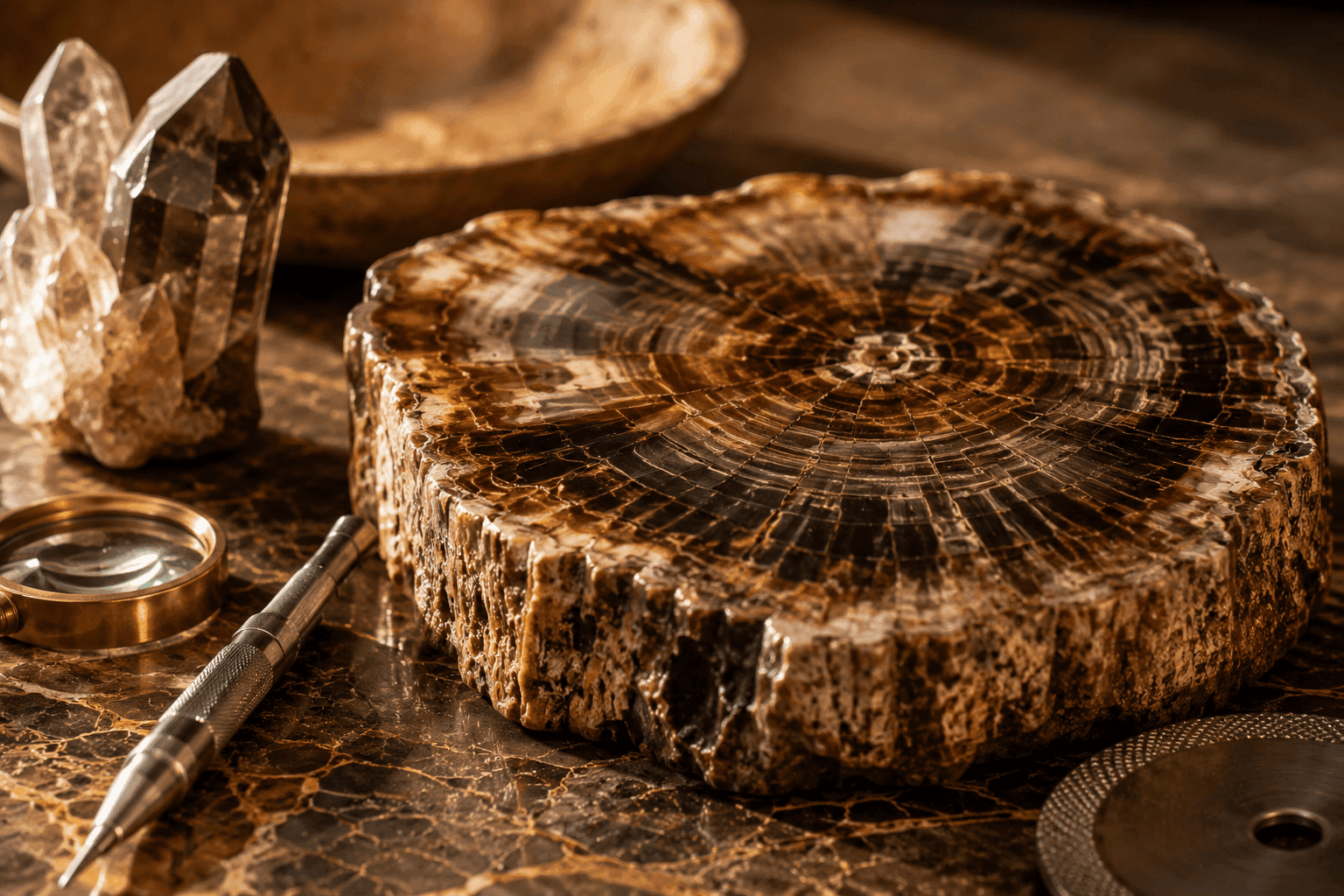
Despite its appearance, a petrified wood sphere holds nothing organic. The original cellulose is gone, replaced entirely by silica in its quartz form. That single fact governs everything about how the object behaves:
- Hardness of 7 on the Mohs scale — it will not scratch under normal use, and it takes a polish that stone-workers describe as glass-like.
- Mineral coloring — reds and ochres come from iron oxide, blacks and violets from manganese, greens and blues, when present, from chromium or cobalt traces absorbed during fossilization.
- Total indifference to water, heat, UV, and frost — quartz does not fade, warp, or absorb moisture. A sphere left in direct sun or handled daily shows no wear.
- Weight — as a solid mineral, it is considerably heavier than its wooden ancestor, which is part of what makes it feel substantial in the hand or anchored on a shelf.
This is why a Medusa sphere is never treated, sealed, or coated for protection. There is nothing to protect it from.
The Cut: Why a Sphere Is a Rare Choice
Most petrified wood pieces are cut to preserve the trunk's natural silhouette — a slab, a slice, a raw-edged table top that keeps the bark line intact. A sphere asks for the opposite: the trunk's original shape is entirely erased in favor of a form the tree never had. That decision only makes sense on a section where the internal pattern — the rings, the mineral veining, the density of the grain — is striking enough to justify losing the outline.
Cutting a true sphere from a solid mineral this dense is also a matter of patience rather than machinery. Rough-shaping, grinding, and polishing must proceed evenly on all sides at once, or the sphere will read as lopsided the moment light hits it. It's one of the more demanding forms we produce, and one of the most immediate: unlike a table or a vessel, a sphere offers no functional alibi. It exists purely to hold and show what 230 million years did to a piece of wood.
Living With a Petrified Wood Sphere
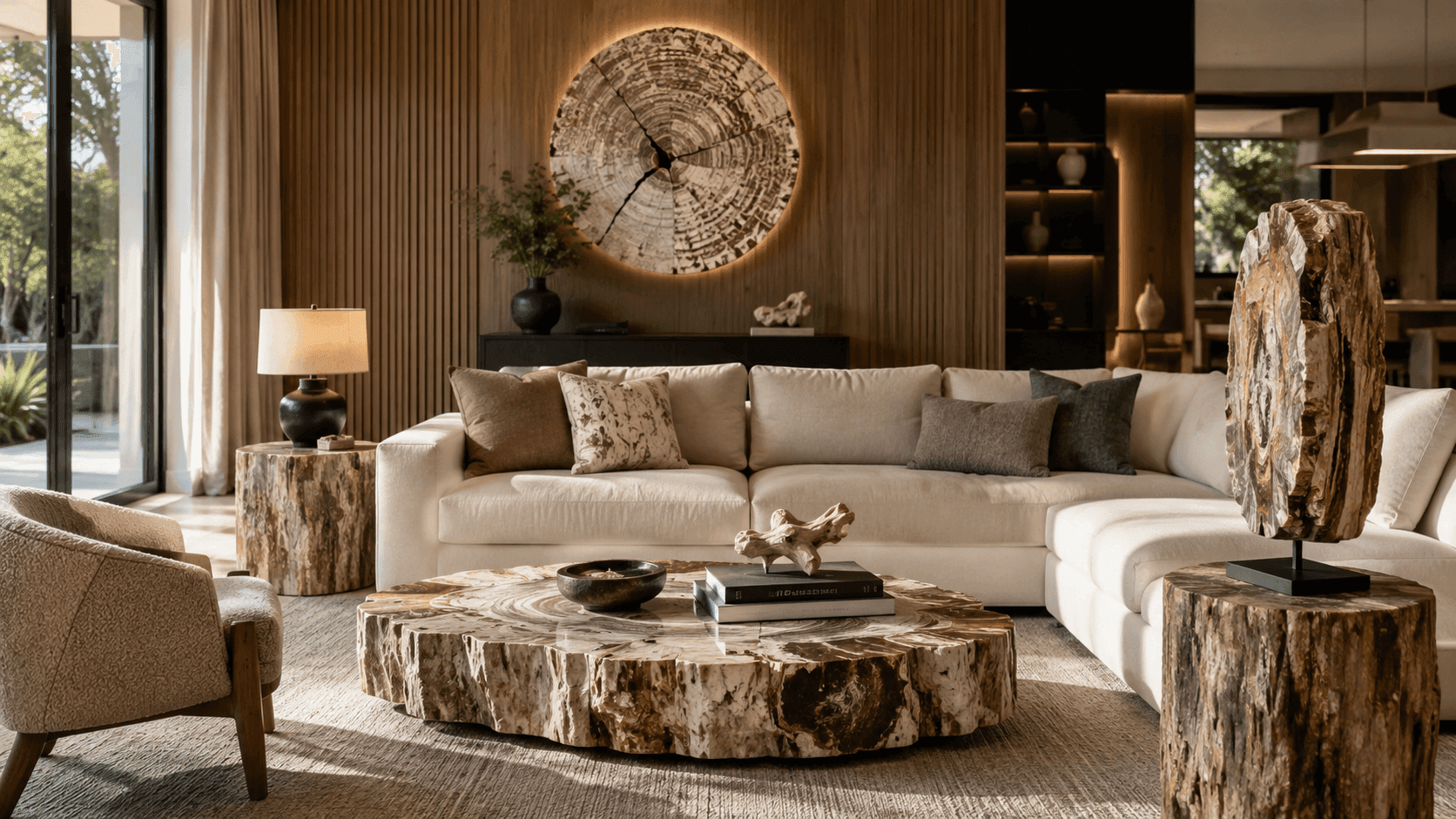
A sphere earns its place by sitting still. On a console, a low table, a shelf between books, it reads less as an accessory and more as a fixed point — something the rest of the room is arranged around rather than the reverse. Its density gives it a presence disproportionate to its size; its color, tied to one named tree, means no other piece in a room will share its exact register of tone.
Because the material is inert to heat, light, and humidity, there is no placement to avoid. It can sit near a window, close to a heat source, in a bathroom — the sphere will not react to any of it. The only real consideration is scale: a sphere from a slender trunk section will sit close to hand-sized, while one cut from a broad trunk face can hold a room's attention from across the space.
See which named trees currently hold a sphere in stock and request a tailored quote.
View the ShopFrequently Asked Questions
Is a petrified wood sphere heavy?
Yes. Since the wood has fully mineralized into quartz, a sphere is markedly heavier than its size suggests — expect a piece with real mass in hand, even at modest diameters.
Can it be placed outdoors or near a heat source?
Quartz is unaffected by water, UV exposure, heat, or frost, so a sphere can be placed anywhere in the home, including sunlit spots or near a fireplace, without risk of fading or damage.
Why does each sphere have a different color?
Color comes from trace metals absorbed during fossilization: iron produces reds and ochres, manganese gives blacks and violets, and chromium or cobalt — rarer — yield greens and blues. Each trunk mineralized independently, so its palette is unique and named accordingly (Ambra, Argentea, Fusca, Umbra, Viridis).
Will you have the same color available again later?
Not exactly. Once a named trunk is fully worked, its specific tone is gone — Medusa does not reproduce colors artificially, since each hue depends on the mineral history of one individual tree.