
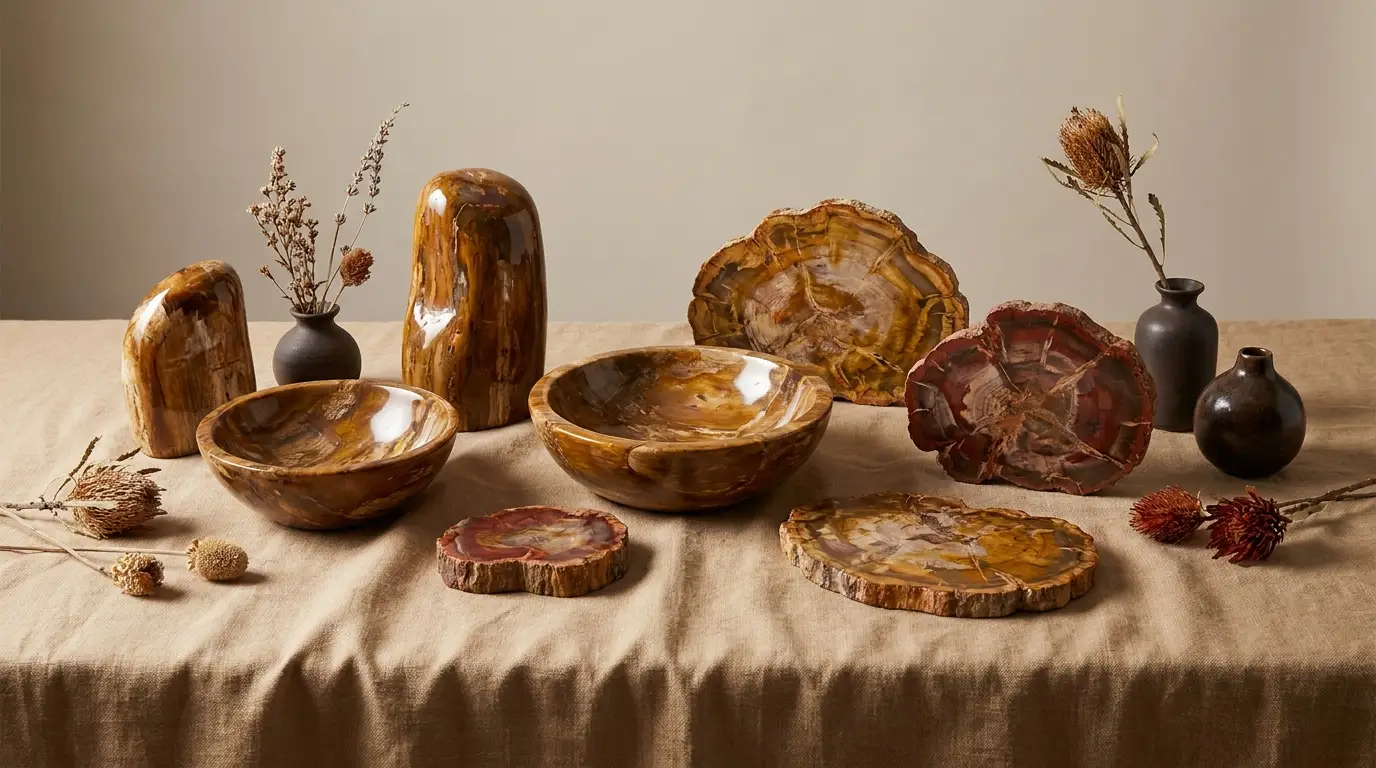
A Bowl Cut From a Single Tree, Not a Product Line
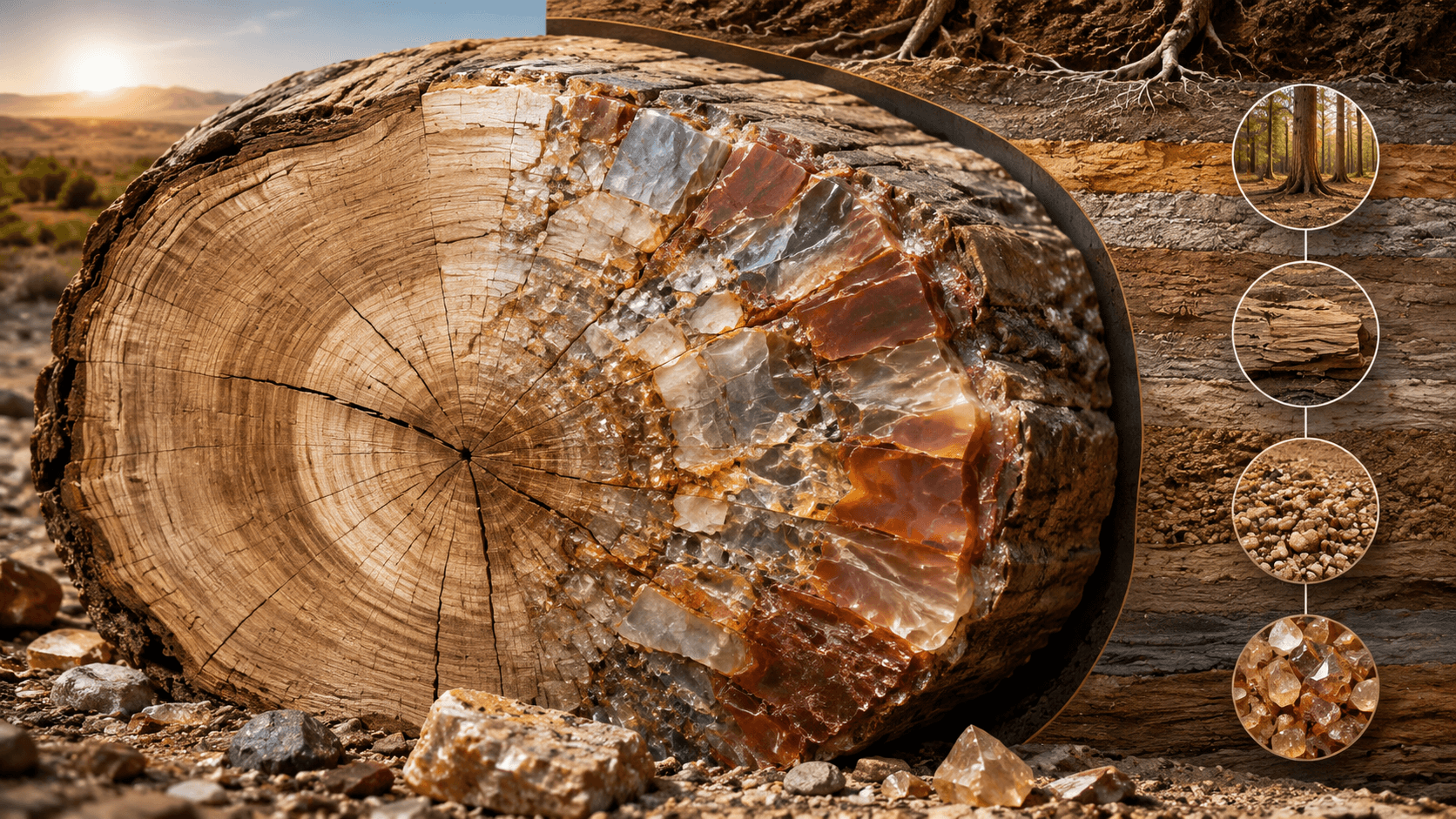
A petrified wood bowl is not manufactured. It is revealed. Somewhere in the arid southwest of Madagascar, a conifer fell some 230 million years ago, was buried before it could rot, and spent millions of years absorbing silica-rich groundwater until every cell of its wood turned to quartz. What we recover today is not a copy of that tree — it is that tree, mineral now, but still bearing its rings, its grain, its scars.
At Medusa, each trunk we bring up from the ground receives a name — Ambra, Argentea, Fusca, Umbra, Viridis — because each one is genuinely singular. No two trunks share the same mineral history, so no two bowls share the same palette. When a piece is cut from Ambra, that particular amber warmth exists nowhere else. Once the trunk is gone, so is the color.
From Trunk to Bowl: What Determines the Color
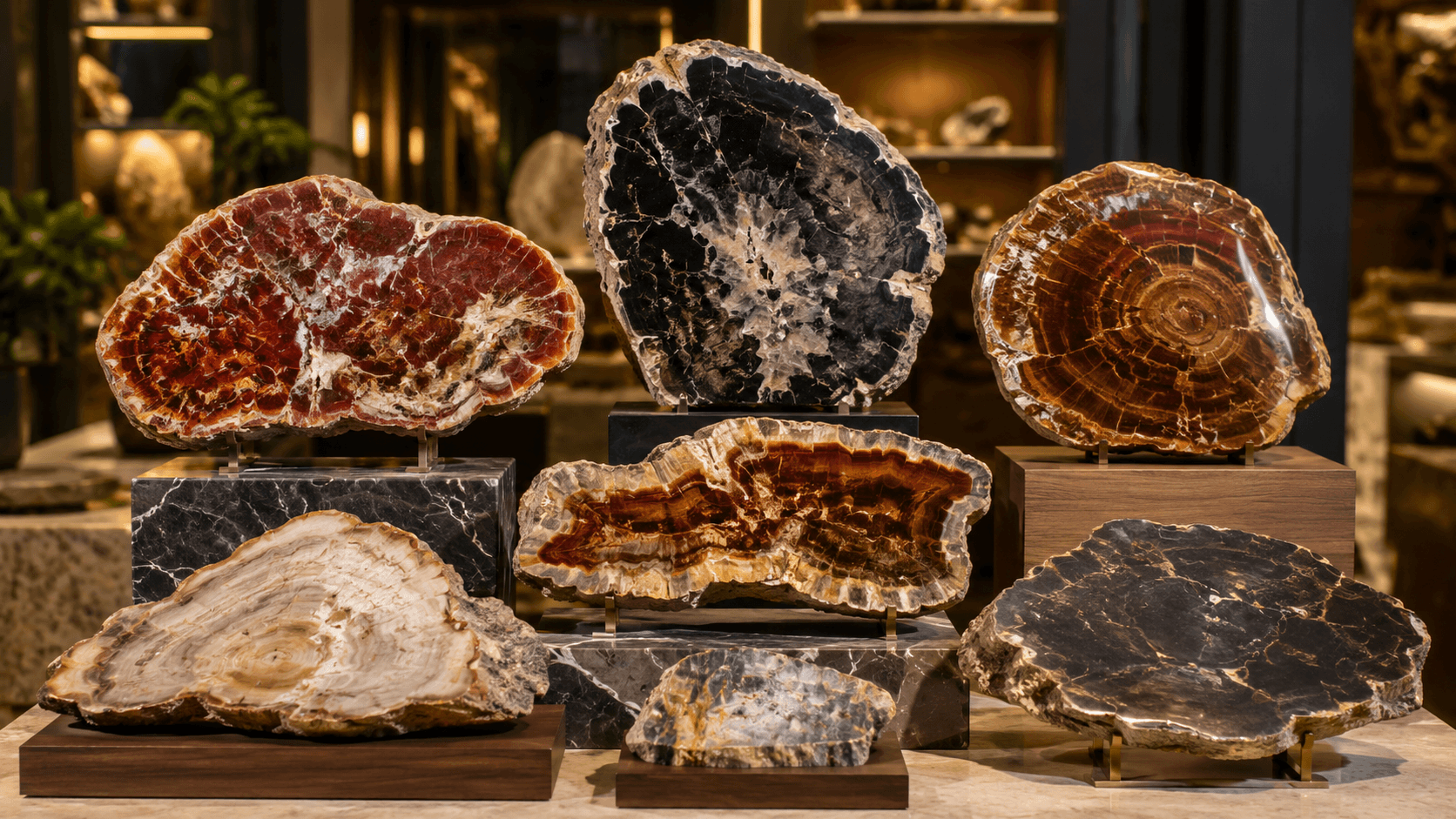
The color of a petrified wood bowl is not a finish. It is chemistry, fixed in stone.
- Iron produces the reds, ochres, and rust tones most commonly associated with fossilized wood.
- Manganese deepens the palette toward black and violet.
- Chromium and cobalt, rarer, yield the green and blue veining collectors look for.
These metals were dissolved in the groundwater that replaced the tree's organic tissue, atom by atom, over an immense span of time. The result is a stone that keeps the tree's original architecture — its rings, its fractures, its knots — while wearing a mineral coat that no dye or pigment could replicate.
Why Quartz Makes a Serious Bowl
Petrified wood is fossilized wood only in name. Structurally, it is quartz — a 7 on the Mohs hardness scale, the same as the crystal in a watch face. This has practical consequences for anyone considering a bowl or tray for daily use:
- It will not scratch under normal kitchen or tabletop use.
- It is indifferent to water — no sealing, no swelling, no staining from liquids.
- Heat and cold leave no mark; a bowl can sit near a stove or hold ice without concern.
- UV exposure will not fade it, unlike dyed wood or lacquered finishes.
- It will not warp, crack from dryness, or need periodic oiling.
A wooden bowl asks for care. A petrified wood bowl asks for almost nothing — it has already survived everything.
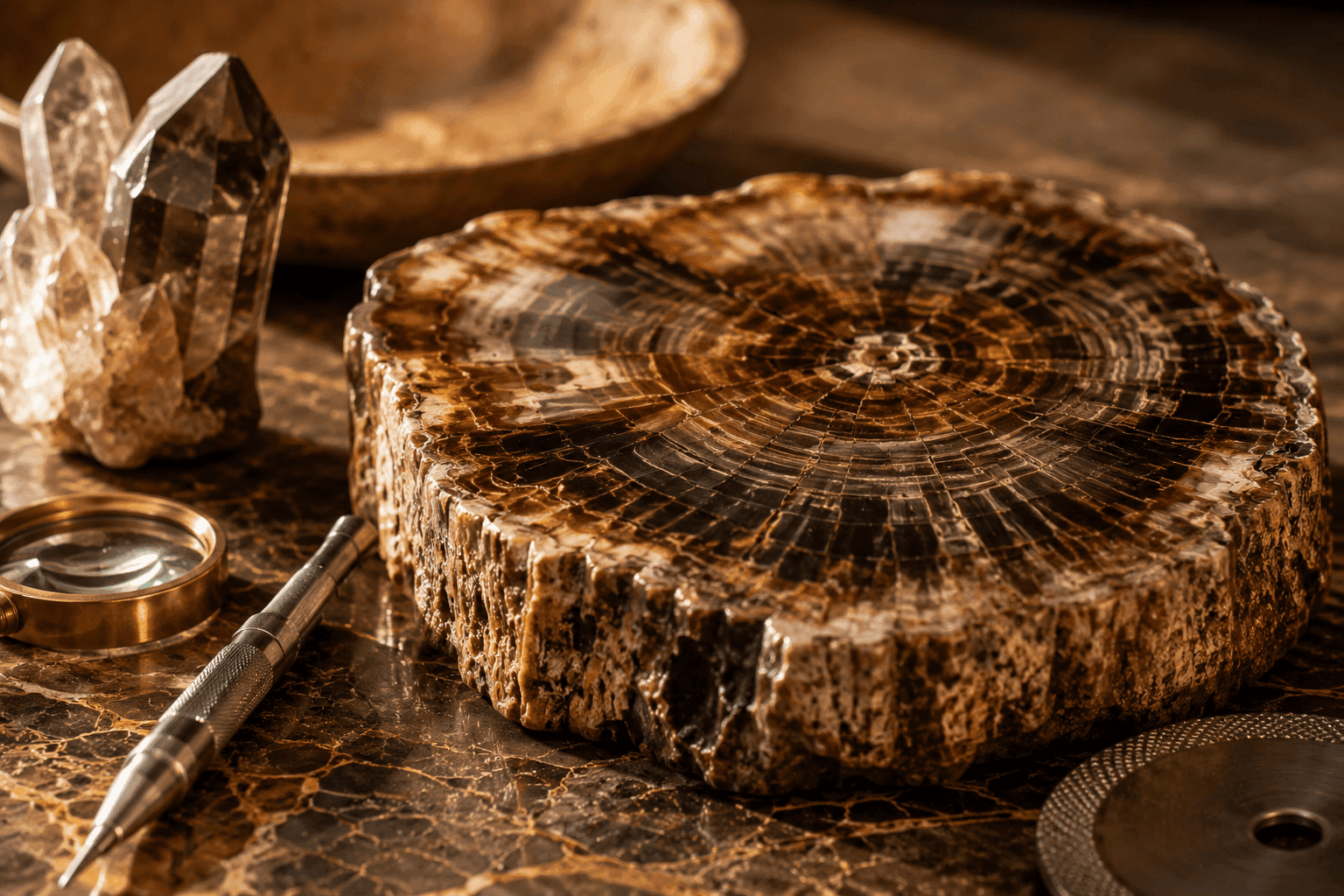
The Work of Turning Stone Into an Object
Recovering a trunk from the Madagascar bush is only the first stage. What follows is slow, deliberate work: the trunk is assessed for its natural fault lines, sawn with diamond blades built for stone rather than wood, then shaped and polished by hand to bring out the grain without erasing the marks of its origin — a knot, a fracture line healed in quartz, a shift in color where the mineral concentration changed mid-trunk.
A bowl or tray is chosen, not designed. The artisan works with what the stone gives: a trunk section wide enough for a shallow bowl, a flatter cut for a tray, a rim left slightly irregular where the original bark line still shows. Nothing here is templated.
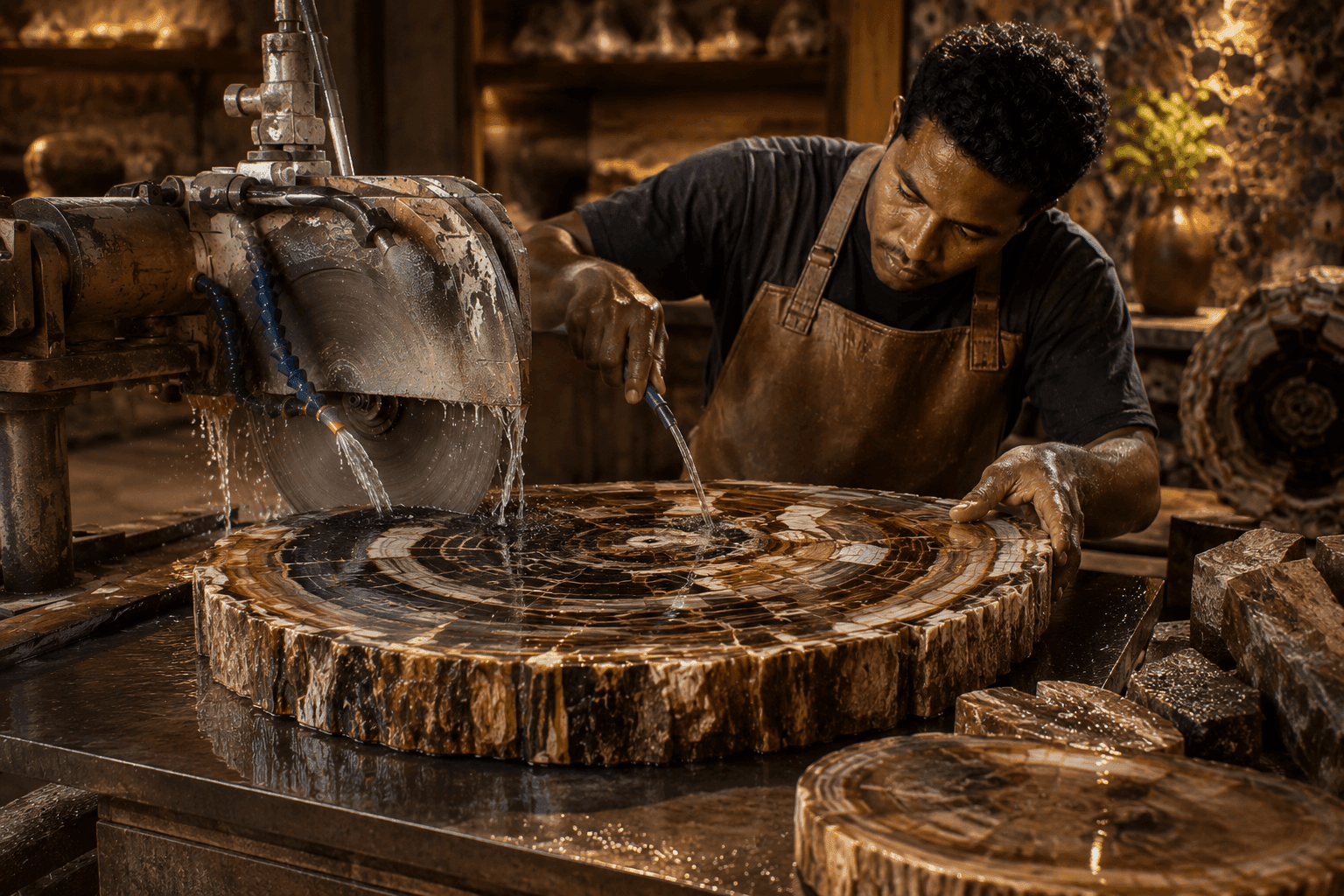
A bowl carved from wood decays with time. A bowl cut from Ambra has already outlasted every civilization that might have owned it.
Living With a Petrified Wood Bowl or Tray
Placed on a console, a dining table, or a shelf, a petrified wood piece behaves less like tableware and more like a small geological specimen that happens to be useful. It holds fruit, keys, or nothing at all — the weight and cold touch of the stone are often reason enough to keep it visible rather than stored.
Because each trunk yields a limited number of pieces before its particular coloring is gone, a bowl from Fusca or a tray from Viridis is inherently a closed edition. Two identical bowls, in the strict sense, do not exist.
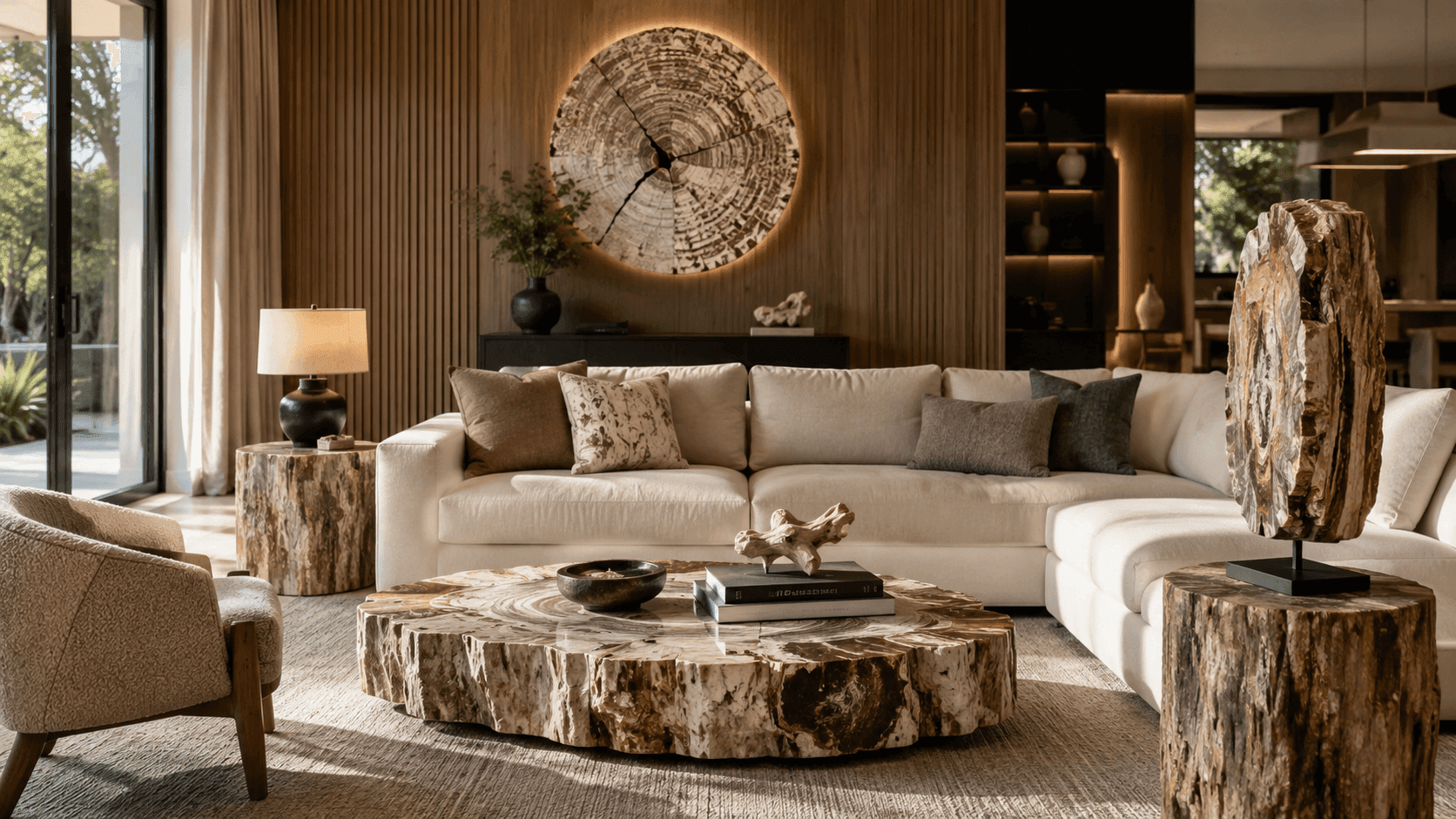
- Best suited to spaces where it can be seen, not tucked into a cupboard.
- Pairs well with raw materials — linen, unfinished wood, matte metal — that don't compete with its density.
- Works equally as a centerpiece or as a quiet object on a side table.
Choosing the Right Trunk for Your Space
Each named trunk has its own character, and the bowls or trays cut from it will reflect that:
- Ambra — warm amber and honey tones, iron-dominant.
- Argentea — cooler grays and silvers, subtler veining.
- Fusca — deep browns, dense and grounded.
- Umbra — near-black, manganese-rich, dramatic in low light.
- Viridis — the rarest, with green-blue traces from chromium and cobalt.
Availability depends entirely on what each trunk yields — once a color is cut through, it does not return.
Discover the trunks currently available and find the bowl or tray that matches your space.
View the ShopFrequently Asked Questions
Is a petrified wood bowl food-safe?
Because the material is solid quartz, it is inert and non-porous once polished, making it safe for dry foods such as fruit. For direct contact with liquids or acidic foods over long periods, we recommend asking us about the specific finish of your piece.
How heavy is a petrified wood bowl compared to a wooden one?
Significantly heavier. Since the wood has been fully replaced by quartz, even a modestly sized bowl carries real mineral weight — expect it to sit solidly on a surface rather than shift or slide.
Can it be used outdoors?
Yes. Quartz is unaffected by UV light, frost, or moisture, which makes petrified wood pieces well suited to covered outdoor spaces without any risk of fading or cracking.
Why do two bowls from Medusa never look alike?
Every bowl or tray is cut from a single, individually named trunk with its own mineral history. Once that trunk's particular coloring is used, it cannot be reproduced — each piece is tied to the tree it came from.