
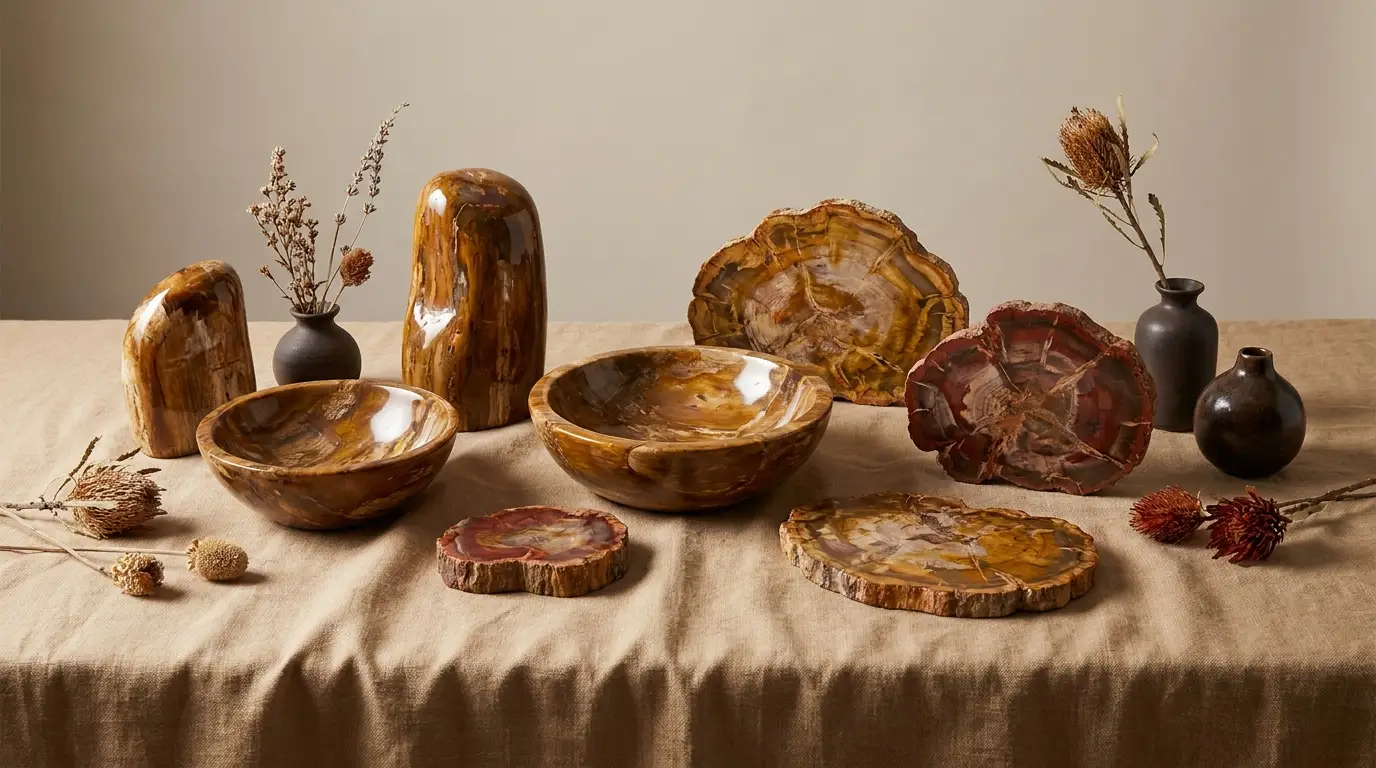
A Ring Cut From a Single Tree
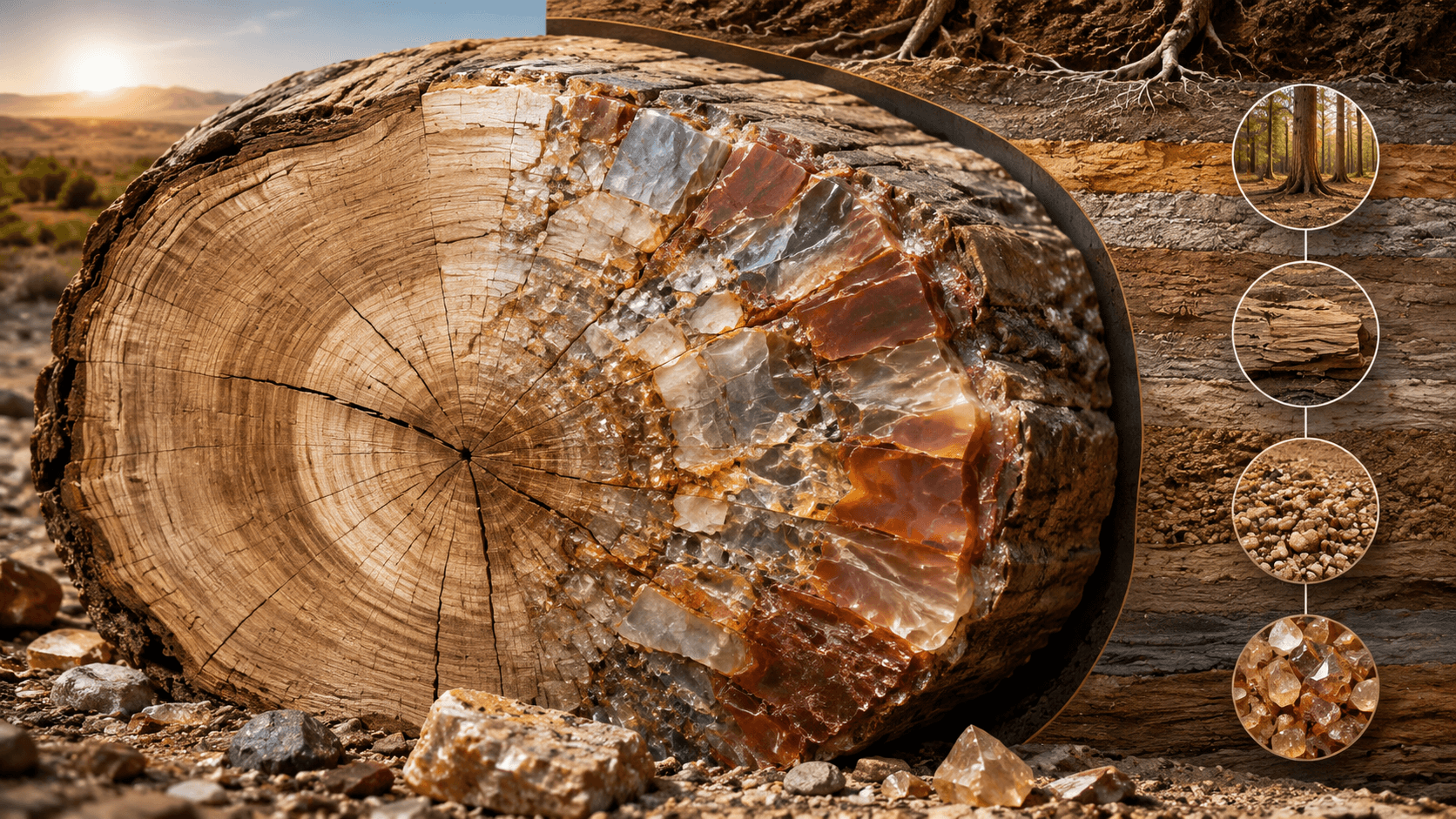
A petrified wood ring does not come from a warehouse of raw material sorted by grade. It comes from one trunk, felled by time some 230 million years ago in what is now southwestern Madagascar, silently replaced cell by cell with quartz. At Medusa, that trunk has a name — Ambra, Fusca, Umbra, Argentea, Viridis — and every ring we set traces back to a specific log, a specific colour, a specific history that will never be repeated once the tree is fully worked.
This is the quiet difference between a ring band and a piece of jewelry with a story: the stone in your ring is not a category, it is a fragment of an individual that stood before the first flowering plants existed.
Why Petrified Wood Holds a Vow
Wood turned to stone keeps the memory of wood — grain, rings, sometimes bark texture — but none of its fragility. The process replaces organic tissue with silica, and what remains is quartz: hardness 7 on the Mohs scale, denser and harder than most gemstones worn daily.
- Resistant to scratching from keys, tools, everyday friction
- Indifferent to water, heat, and prolonged sun exposure
- Unaffected by frost or seasonal temperature shifts
- Cold to the touch, heavy in hand — unmistakably mineral, never plastic
A wedding band inlaid with petrified wood is not a delicate accessory to be protected from daily life. It is built to be worn through it.
A ring that has already survived 230 million years is not asking to be handled carefully. It is asking to be worn.
Every Trunk, Its Own Palette
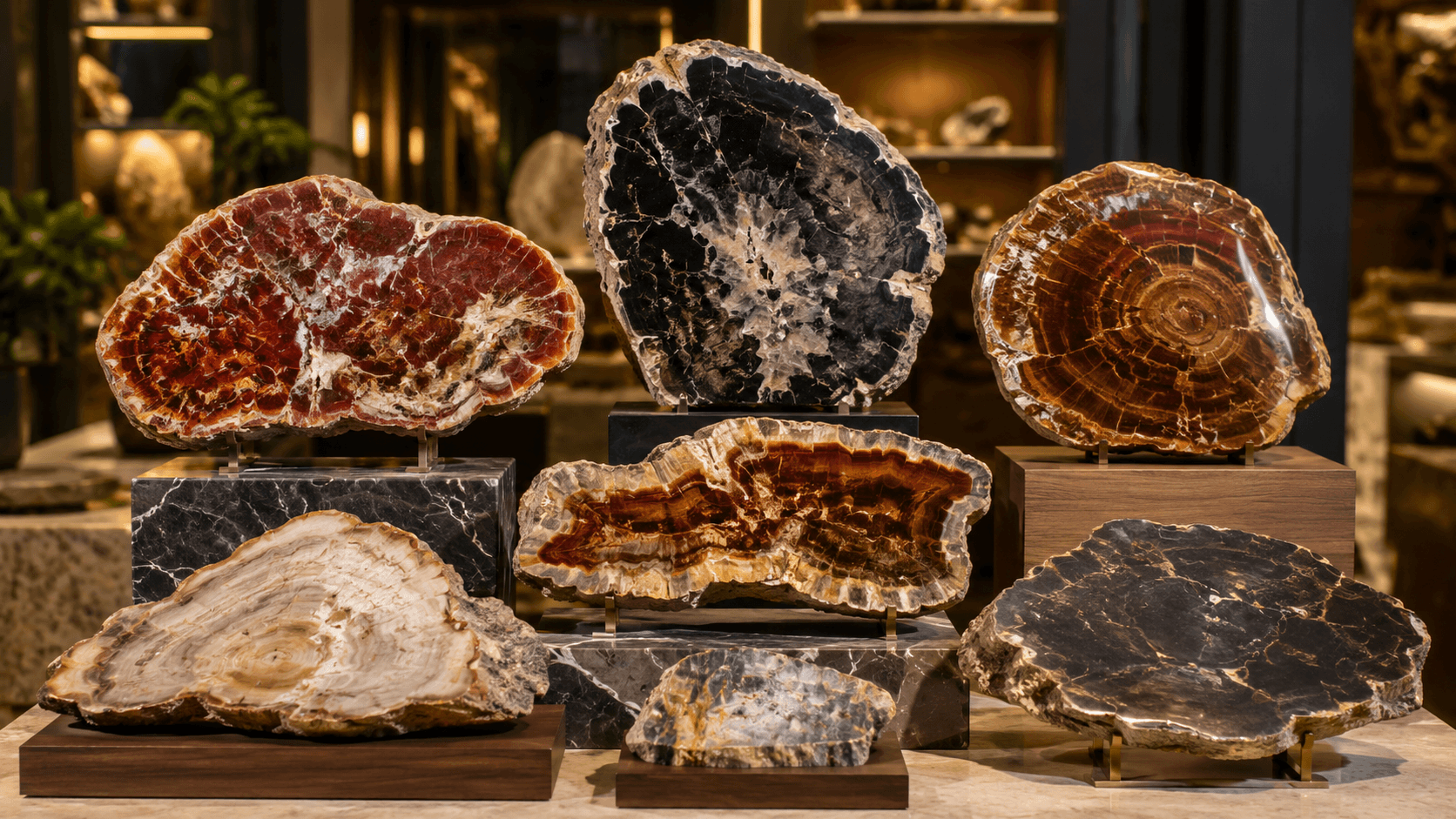
No two Medusa trunks share the same tone, because no two trunks mineralized under identical conditions. Iron oxide gives ochres and reds. Manganese produces near-blacks and violets. Traces of chromium or cobalt shift certain veins toward green or blue. The palette of a ring inlay is decided entirely by the geology the tree was buried in — we do not dye, treat, or correct it.
This means choosing a wedding band from Medusa is choosing a fragment of a named tree, not a swatch from a colour chart:
- Ambra — warm amber and honey tones, iron-rich
- Fusca — deep browns, dense and grounded
- Umbra — near-black, dramatic contrast against metal
- Argentea — pale silvery greys, subtle and understated
- Viridis — rare green undertones, the most singular of the five
Once a trunk is fully cut into slabs and inlays, its exact shade leaves our workshop for good. There is no reordering the same tree.
From Trunk to Band: The Making Of
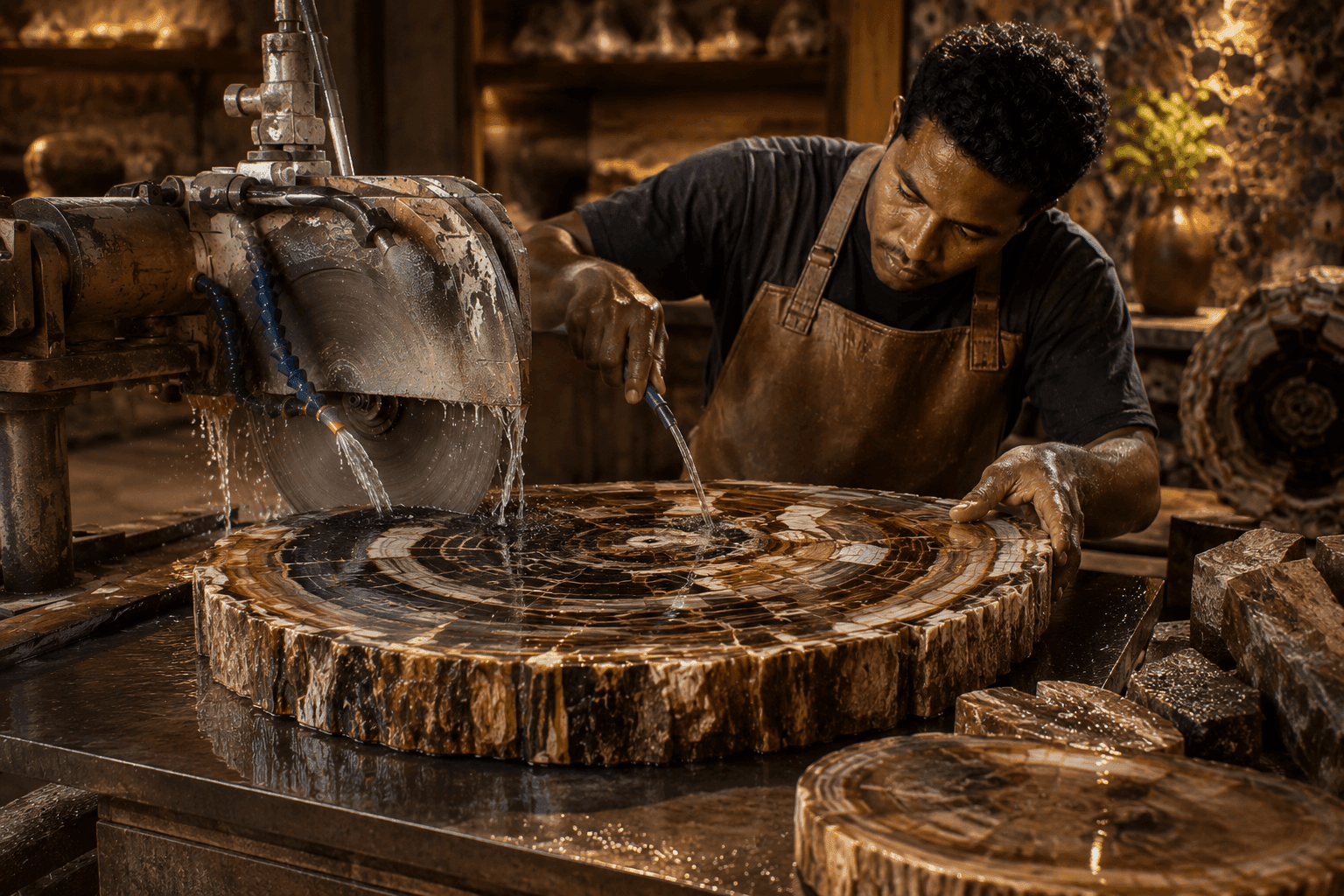
Shaping quartz-hard stone into a band thin enough to wear on a finger is not a fast operation. Each inlay is cut from a slice selected for grain and colour continuity, then ground down in stages — the material does not forgive rushed tolerances the way softer stones or resins do.
The stone is set into a metal band (gold, silver, or titanium, depending on the piece), with the petrified wood forming an inset rather than the entire ring — this keeps the band comfortable and structurally sound for daily wear, while letting the ancient grain sit visibly at the center of the design. The finish is polished to reveal what quartz does best: a soft, deep lustre that shows the cellular pattern of the original wood without any artificial gloss.
Choosing Your Band
Whether for an engagement ring, a wedding band, or an anniversary piece, the same logic applies: you are not picking a style off a shelf, you are picking a trunk. We work with couples to match tone to intention — a deep Umbra for a bold, graphic band; a pale Argentea for something quieter beneath a diamond; an Ambra for warmth against yellow gold.
Because supply is bound to what has actually been recovered — never manufactured, never replicated — availability shifts. A colour in stock today reflects the trunk currently being worked, and once it's gone, that particular vein is gone with it.
Find the trunk that will carry your vow.
Explore the RingsFrequently Asked Questions
Can a petrified wood ring be worn every day?
Yes. Quartz rates 7 on the Mohs hardness scale, well above most materials it will encounter in daily life, and it is unaffected by water, heat, or cold.
Will the color of my ring match another piece I've seen?
Only if it comes from the same trunk. Colour is determined by the specific minerals present during that tree's fossilization, so no two trunks — and no two rings from different trunks — are identical.
Is petrified wood fragile like regular wood?
No. Once fossilization is complete, the organic material has been replaced by silica. What you're wearing is stone, not wood — it does not rot, warp, or absorb moisture.
How is the petrified wood set into the ring?
It is cut as an inlay and set into a metal band. This preserves the visible grain and colour of the stone at the center of the ring while keeping the band itself durable and comfortable for daily wear.