
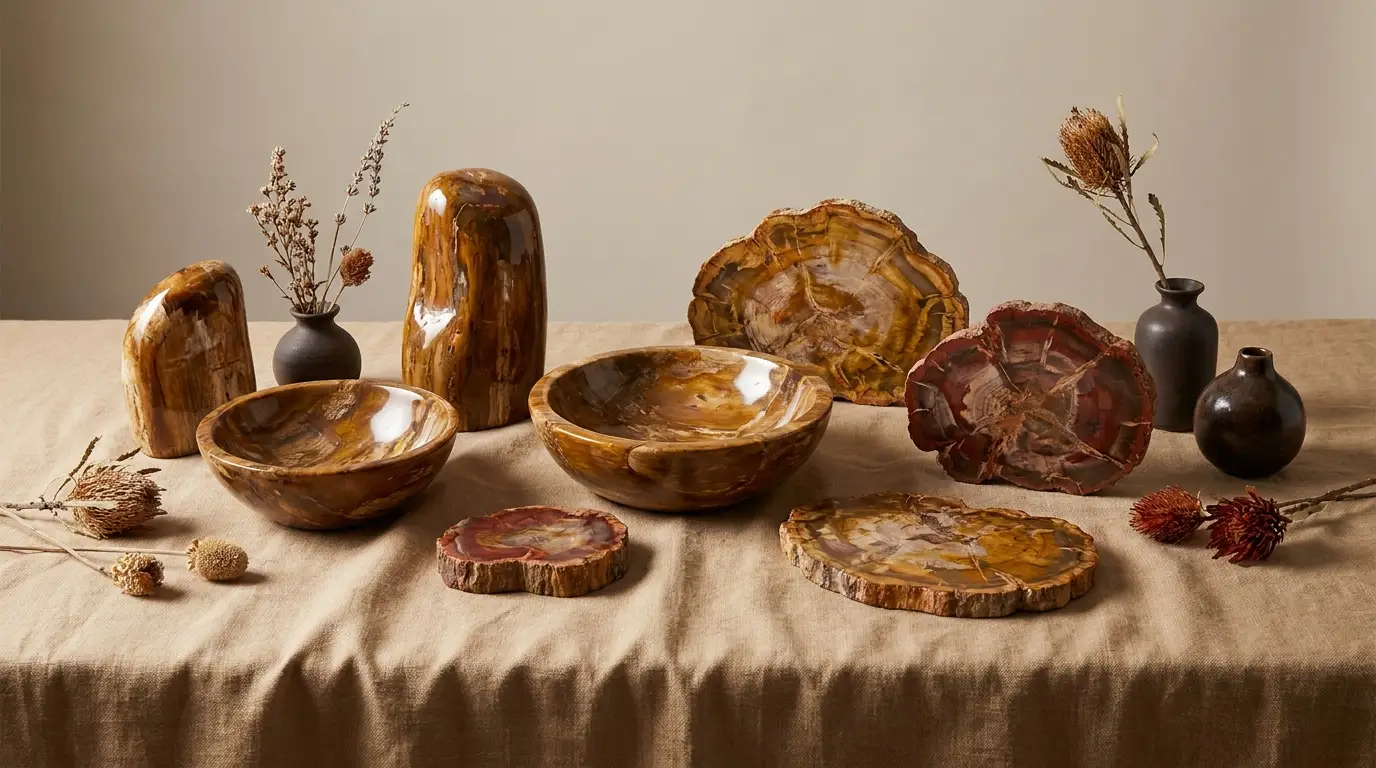
A Stone That Remembers Being a Tree
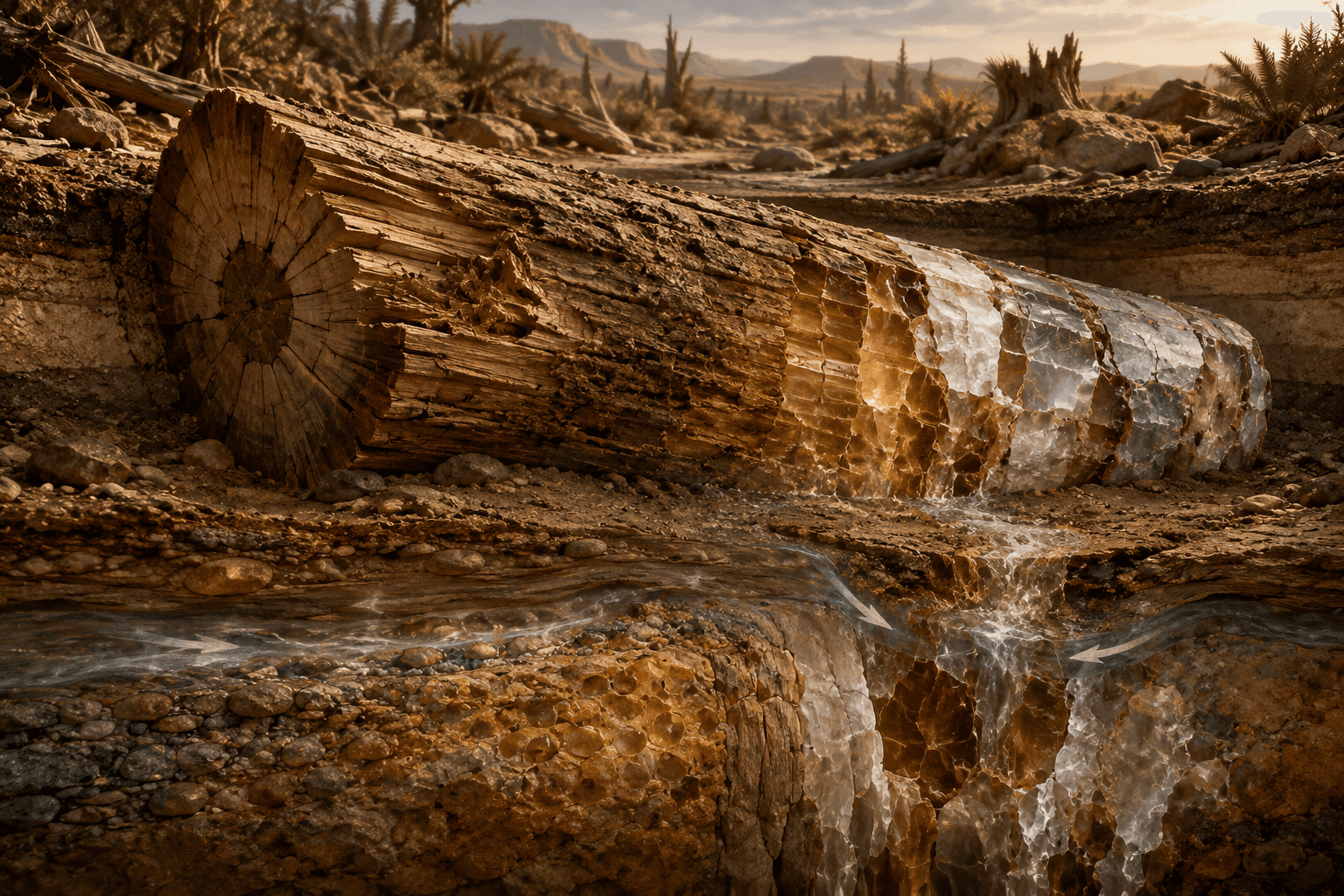
Petrified wood decor occupies a rare place among natural materials. It is neither wholly stone nor wholly wood, but the memory of one held perfectly inside the other. Roughly 230 million years ago, during the Triassic, a forest grew in what is now the south-west of Madagascar. When those trees fell, mineral-rich water crept through their cells and replaced fibre with quartz, cell by cell, until the wood had turned entirely to stone while keeping its bark, its rings, its knots.
What you place in your home is therefore not an imitation of wood in stone. It is the exact tree, recorded down to the grain, in a material hard enough to outlast anything else in the room.
At Medusa, this distinction shapes everything. We do not sell a product line. We raise individual trunks from the ground, one by one, and we give each of them a name.
One Trunk, One Name, One Colour
Most sellers speak in categories and volumes. We speak in trees. Each trunk we bring up from the Malagasy earth carries its own mineral signature, and that signature decides its colour. We name the tree for what it became:
- Ambra — the amber trees, warm and honeyed.
- Argentea — the silvered trees, cool and pale.
- Fusca — the brown trees, deep and grounded.
- Umbra — the darkest trees, close to black.
- Viridis — the green trees, the rarest turn of the mineral.
These are not options on a menu. They are the actual arbres, each shaped by the metals that soaked into it while it fossilised. Once a trunk is cut, its particular tone is gone for good — no second tree will ever repeat it.
When a trunk is sawn open, its colour is spoken once and never again.
This is the quiet reason Medusa exists. A table from Ambra and a table from Umbra are not two versions of the same idea. They are two different trees, two different lives, separated by hundreds of millions of years and a few notes of iron or manganese.
Where the Colour Comes From
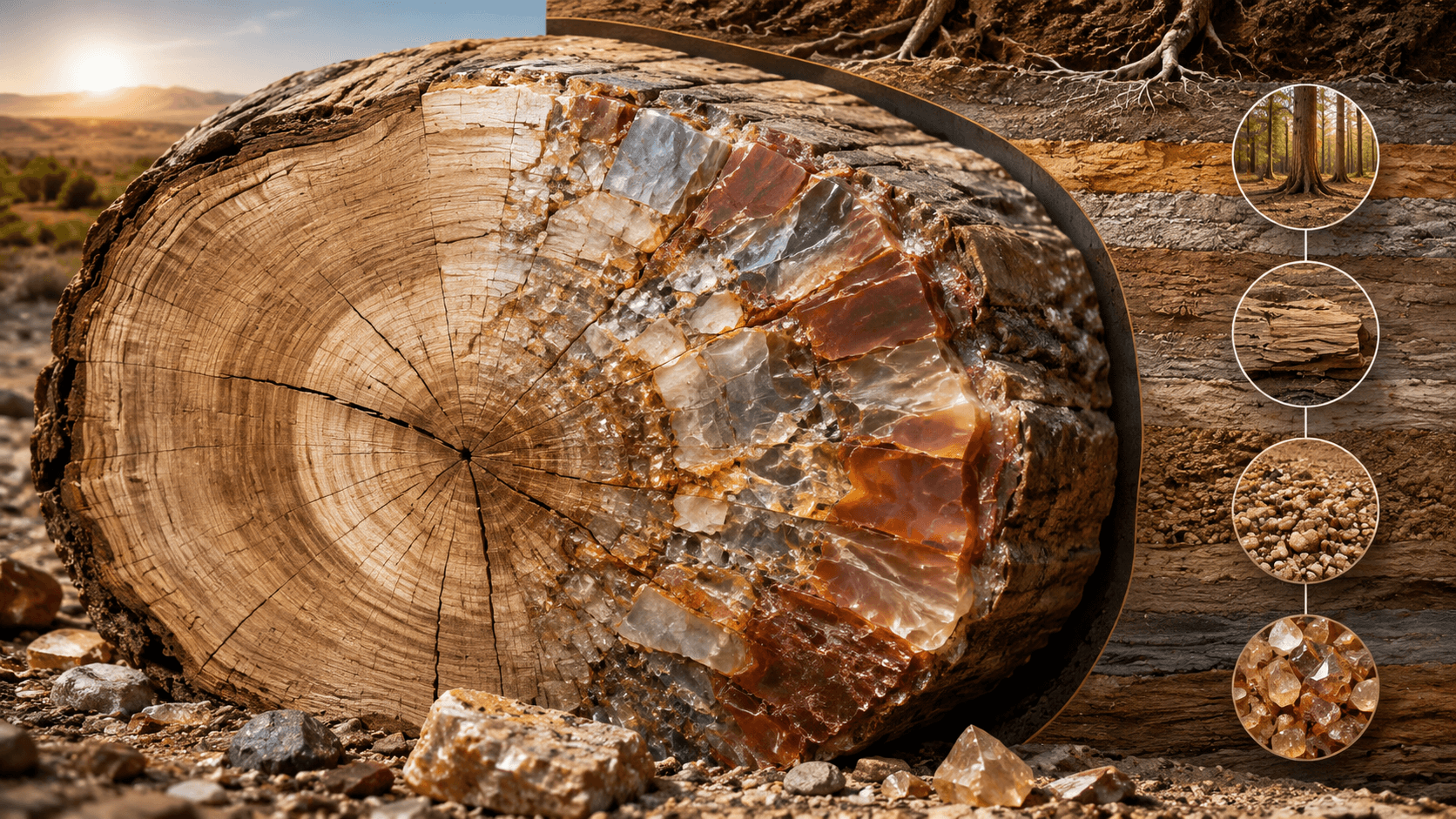
The palette of petrified wood is written by chemistry, not by choice. As quartz took the place of living fibre, trace metals settled into the stone and stained it permanently:
- Iron gives the reds, ochres and warm ambers.
- Manganese brings the blacks and violets.
- Chromium and cobalt produce the greens and blues — the reason a Viridis trunk is so uncommon.
Because these colours are mineral, they are locked into the material itself. They do not sit on the surface like a stain or a finish. They run through the full body of the stone, which is why a polished cross-section can hold a landscape of tones no craftsman could design.
Understanding this helps when you choose a piece for a room. You are not matching a paint chip. You are reading a fossil, and the colour you see is a fact about the tree it once was.
Living With Quartz
Petrified wood is quartz, and quartz sits at 7 on the Mohs scale of hardness. This single fact governs how these pieces behave in a home, and it is worth understating rather than overselling.
Because it is stone, petrified wood is:
- Heavy and cool to the touch — it holds the temperature of the room and settles it.
- Indifferent to water — a vasque or basin will not swell, warp or rot.
- Unbothered by heat, UV and frost — a table keeps its colour in full sun and survives outdoors.
- Extremely hard to scratch — at 7 on Mohs, very few everyday objects can mark it.
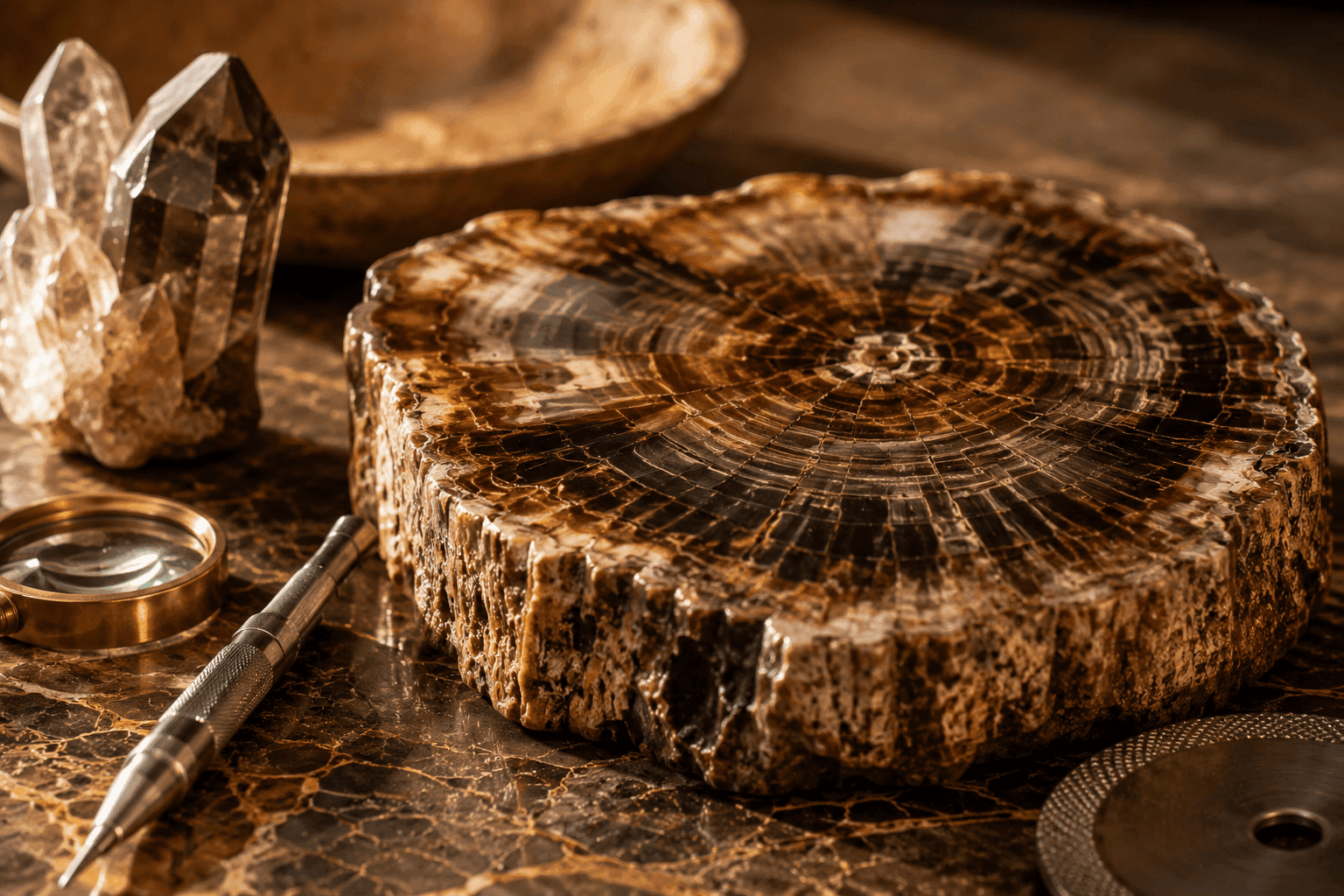
This means a Medusa piece is not fragile decoration to be protected. It is furniture and objects meant to be used, in kitchens, bathrooms, gardens and living rooms, across a human lifetime and well beyond it. For a closer look at how this durability plays out day to day, our guide on caring for petrified wood explains the little that maintenance actually requires.
Choosing Petrified Wood Decor for a Room
The pieces we shape from these trunks fall into a few natural families, each with its own presence.
Tables
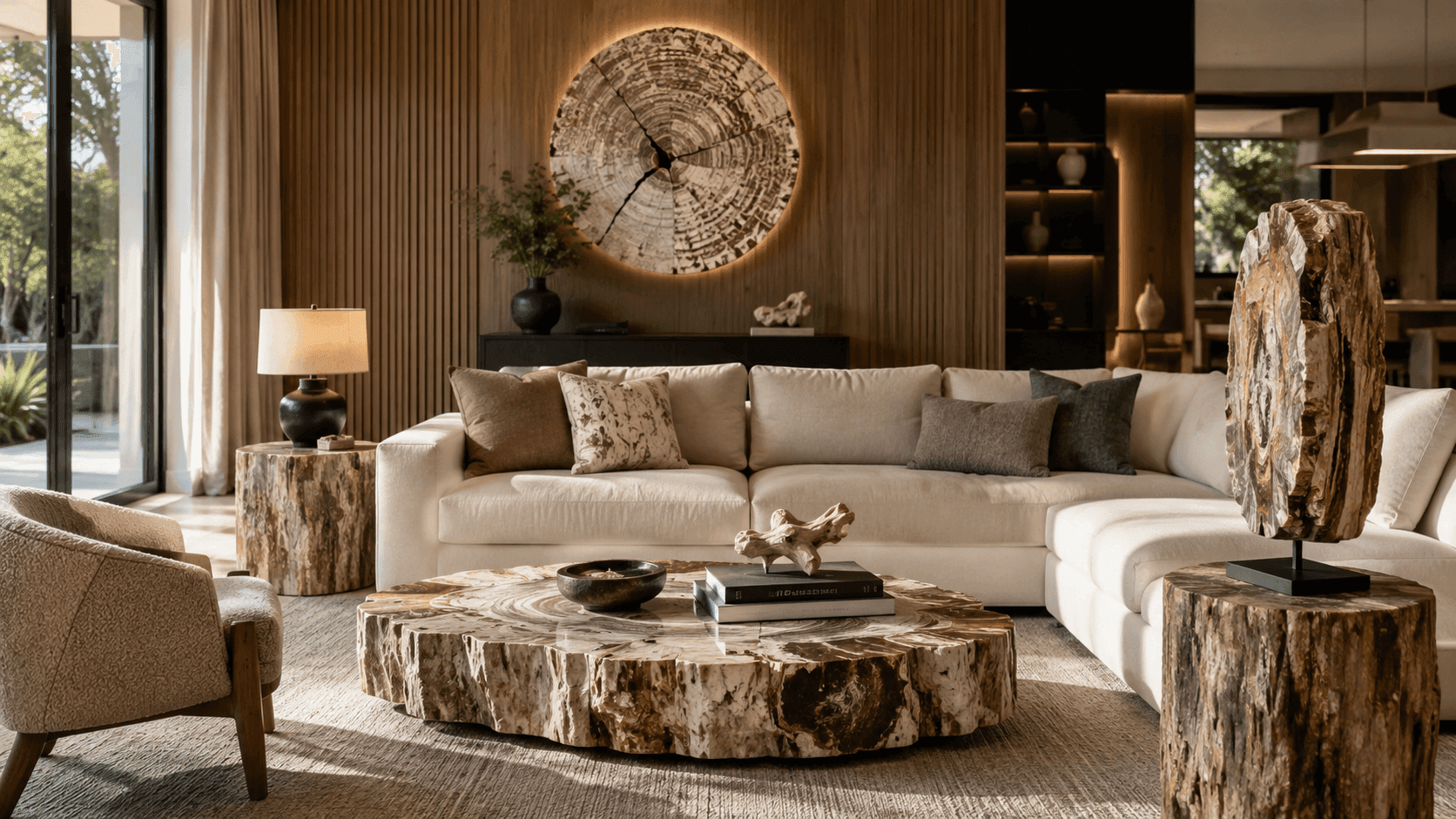
A petrified wood table is often the anchor of a room. Because each top is a single slice through one trunk, its edges follow the tree's real silhouette and its surface reveals the rings. Coffee tables, side tables and dining tops each carry the trunk's name and colour with them.
Basins and Vasques
A vasque hollowed from petrified wood turns a bathroom into something quieter and older. Since the material ignores water completely, these basins are as practical as they are unusual. Our dedicated piece on petrified wood basins goes further into forms, sizes and installation.
Objects and Smaller Pieces
Bookends, spheres, lamp bases, decorative slices and offcuts let the same stone enter a room at a smaller scale. They are the natural way to begin, and they carry the same names and origins as the larger works.
When you choose, work in this order: pick the tree — the colour — first, then the form. The tone is the part that can never be repeated; the shape can always be discussed.
From Malagasy Ground to Finished Piece
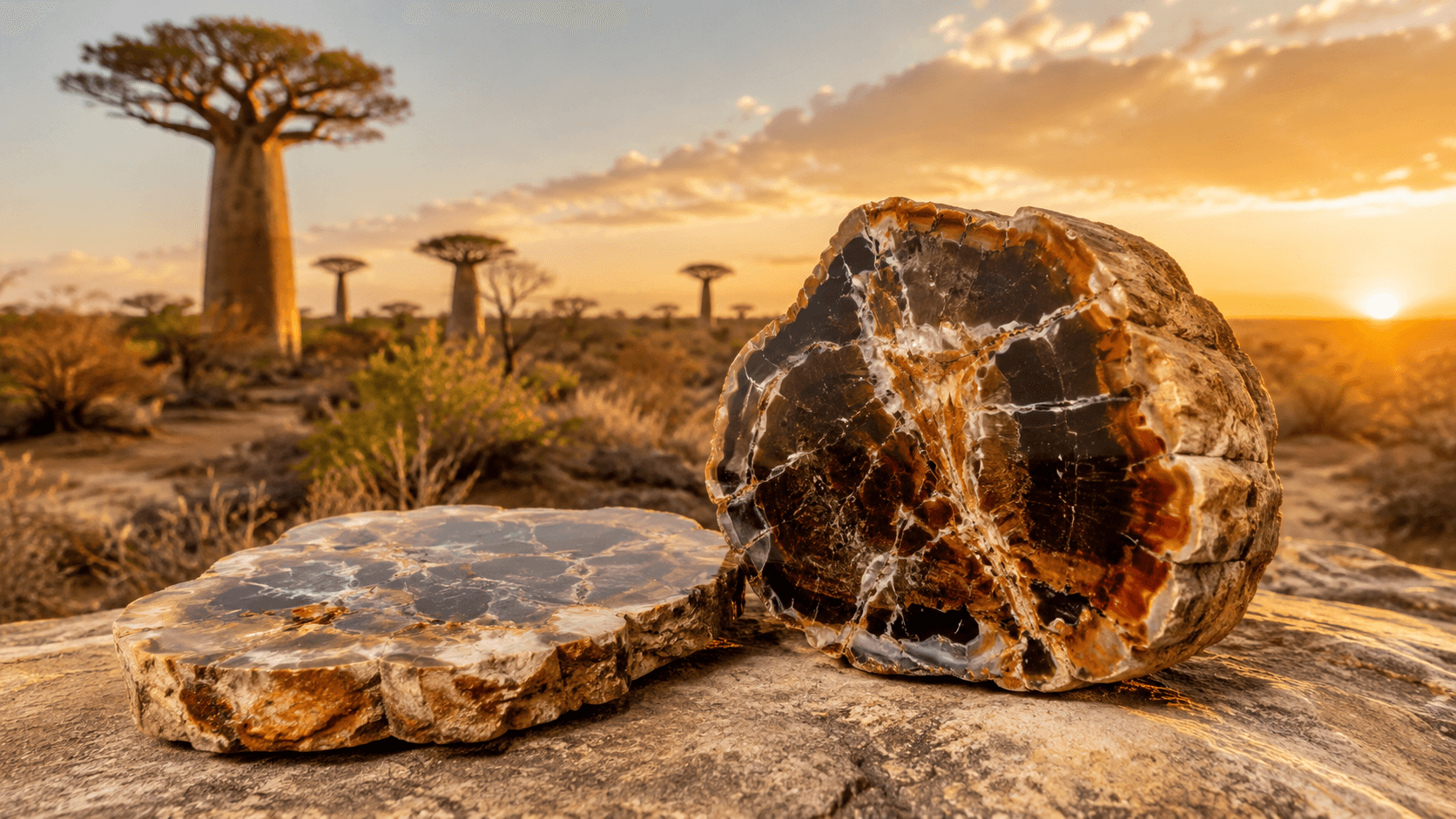
Every Medusa piece begins as a whole trunk lifted from the south-west of Madagascar. It is examined, named and matched to what it wants to become — a table, a basin, an object — before any cut is made. Because the colour lives inside the stone, the first cut is a decision that cannot be taken back.
From there, the work is slow. Cutting and polishing quartz at 7 on Mohs demands patience and the right hand; there is no rushing stone this hard. The result keeps two things at once: the exact grain of a Triassic tree and the finish of a modern object.
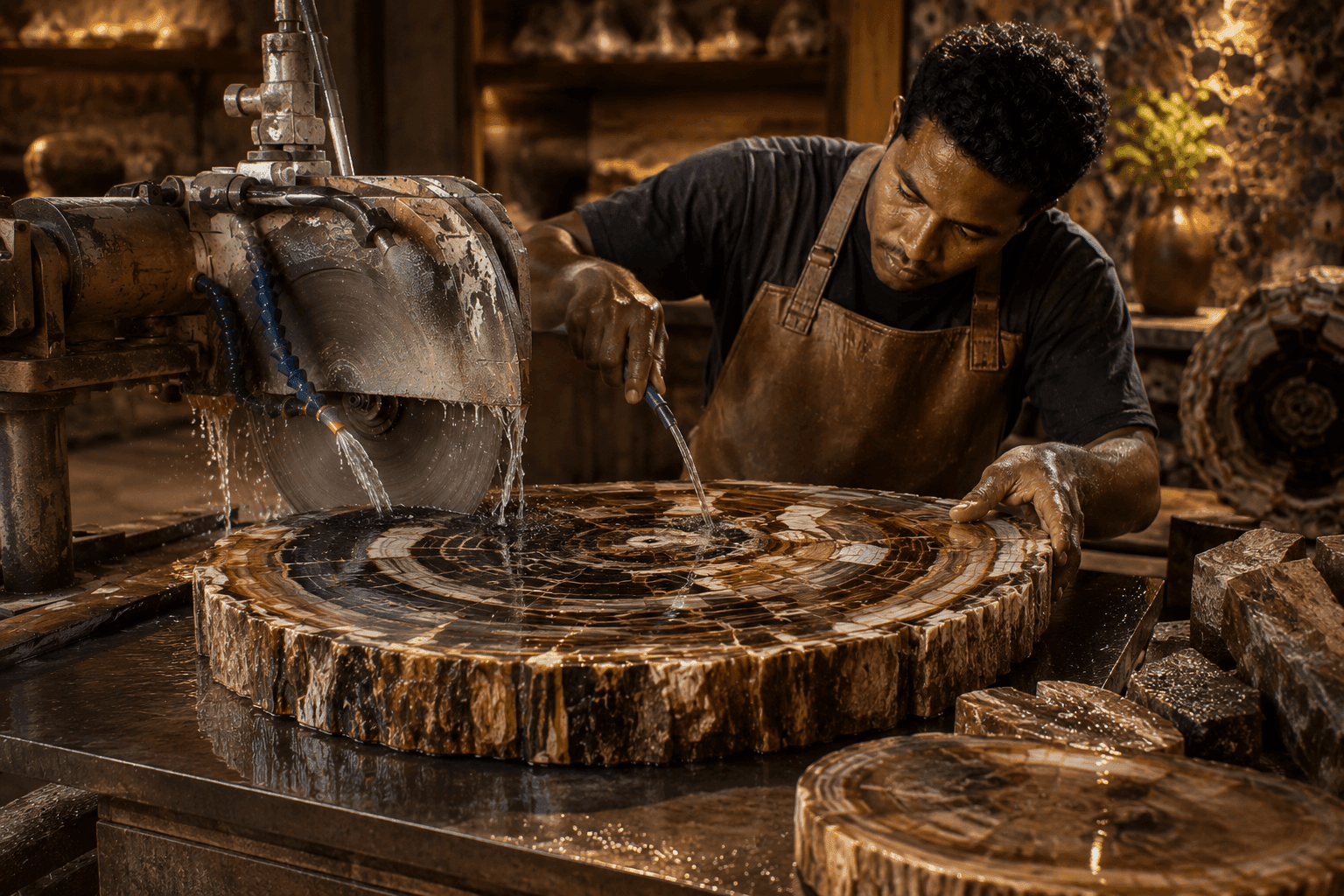
This is why we speak of trees and not stock. Each finished piece can be traced to one trunk, with one name and one colour that ended the moment it was opened.
Discover the trunks currently available, each named and one of a kind.
Explore the collectionPricing and Commissions
Because no two trunks are alike, there is no single price and no list. The value of a piece depends on the tree itself — its colour, its size, the rarity of its mineralisation — and on the form it takes. For anything you have in mind, whether a ready piece or a commission from a specific trunk, the right step is simply to consult us for a quote. We will tell you which trees are available and what each one can become.
Frequently Asked Questions
Is petrified wood decor real wood or stone?
Both, in a sense. It began as a living tree around 230 million years ago and has since turned entirely to quartz. It keeps the wood's grain, rings and bark, but it is genuinely stone — hard, heavy and cool to the touch.
Will a petrified wood table or basin be damaged by water or sunlight?
No. As quartz, petrified wood is indifferent to water, heat, UV and frost. A table holds its colour in full sun and a vasque handles daily use without swelling, staining or fading.
Why does each Medusa piece have a name like Ambra or Viridis?
Because each name is an actual tree, not a category. Ambra, Argentea, Fusca, Umbra and Viridis describe the colour a particular trunk took on during fossilisation. Once that trunk is cut, its tone is gone, so the name marks a piece that cannot be repeated.
How much does a petrified wood piece cost?
It depends entirely on the trunk and the form. Because every tree is unique, we work by quote rather than a fixed price — consult us and we will guide you through the trees currently available.