
# Petrified Wood from Madagascar
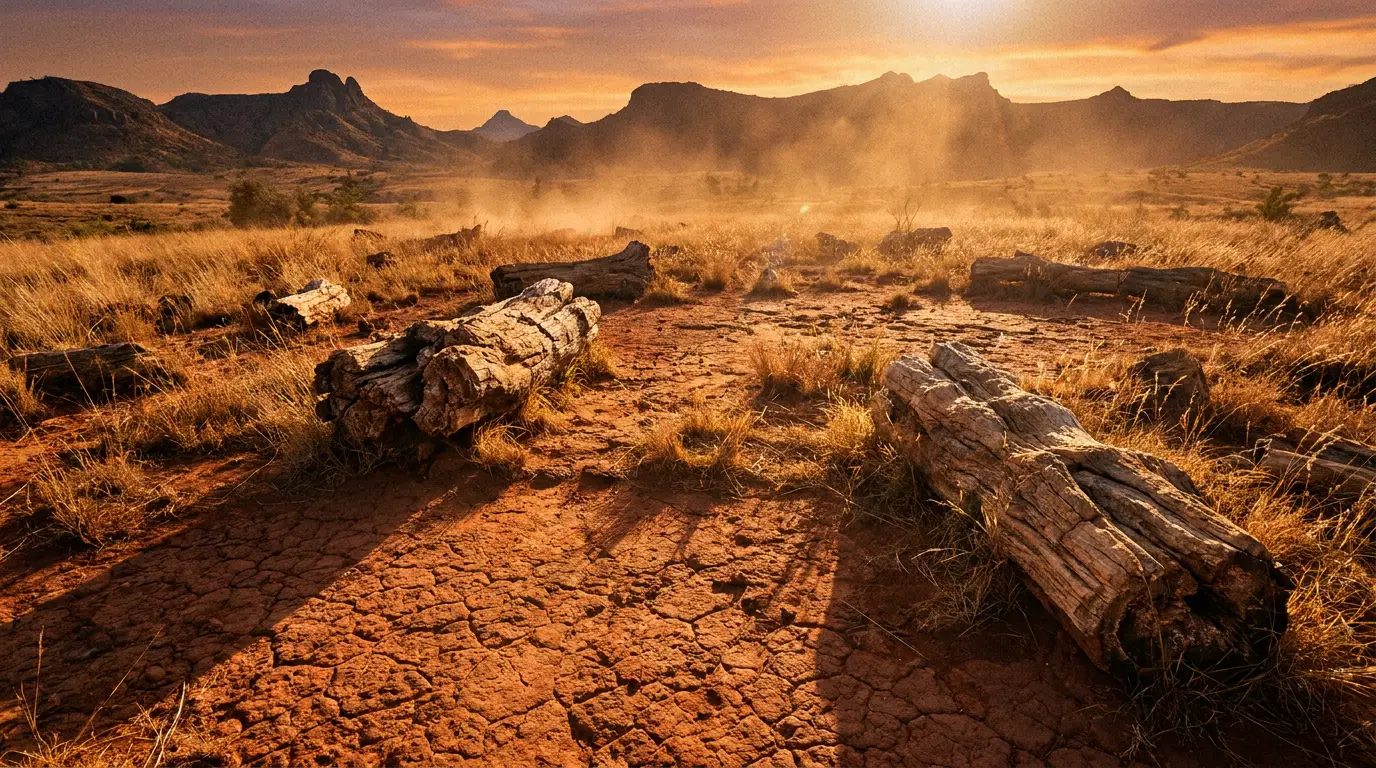
Most of what circulates online about petrified wood points east — vast deposits in Indonesia, sold by volume, often by the container. Madagascar tells a different story. Its southwestern basins hold trunks of comparable age and mineral richness, but the extraction there has stayed small, selective, and slow. Medusa works exclusively from this region, for a simple reason: the material rewards patience, and the place still allows it.
A Different Origin Point
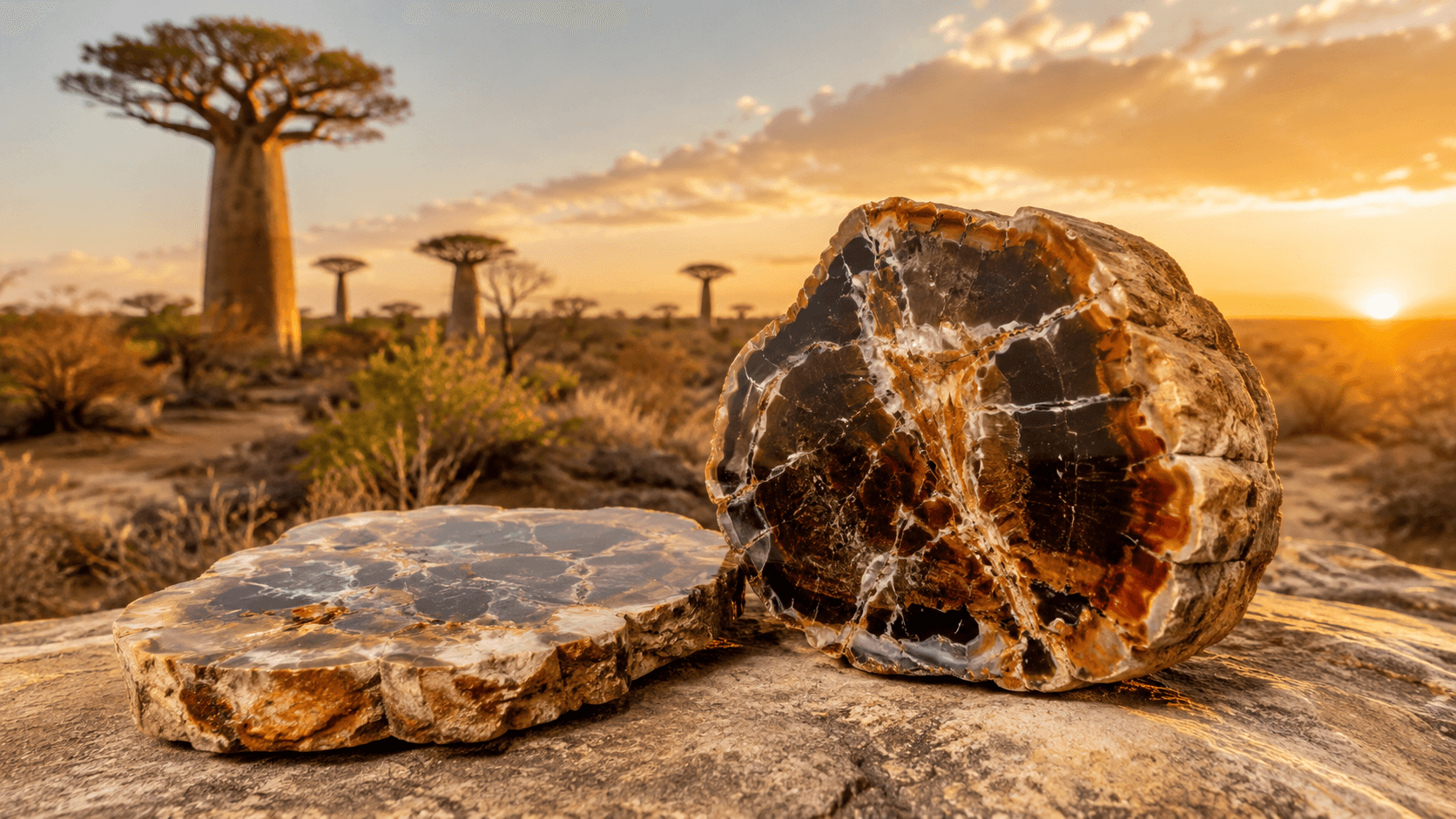
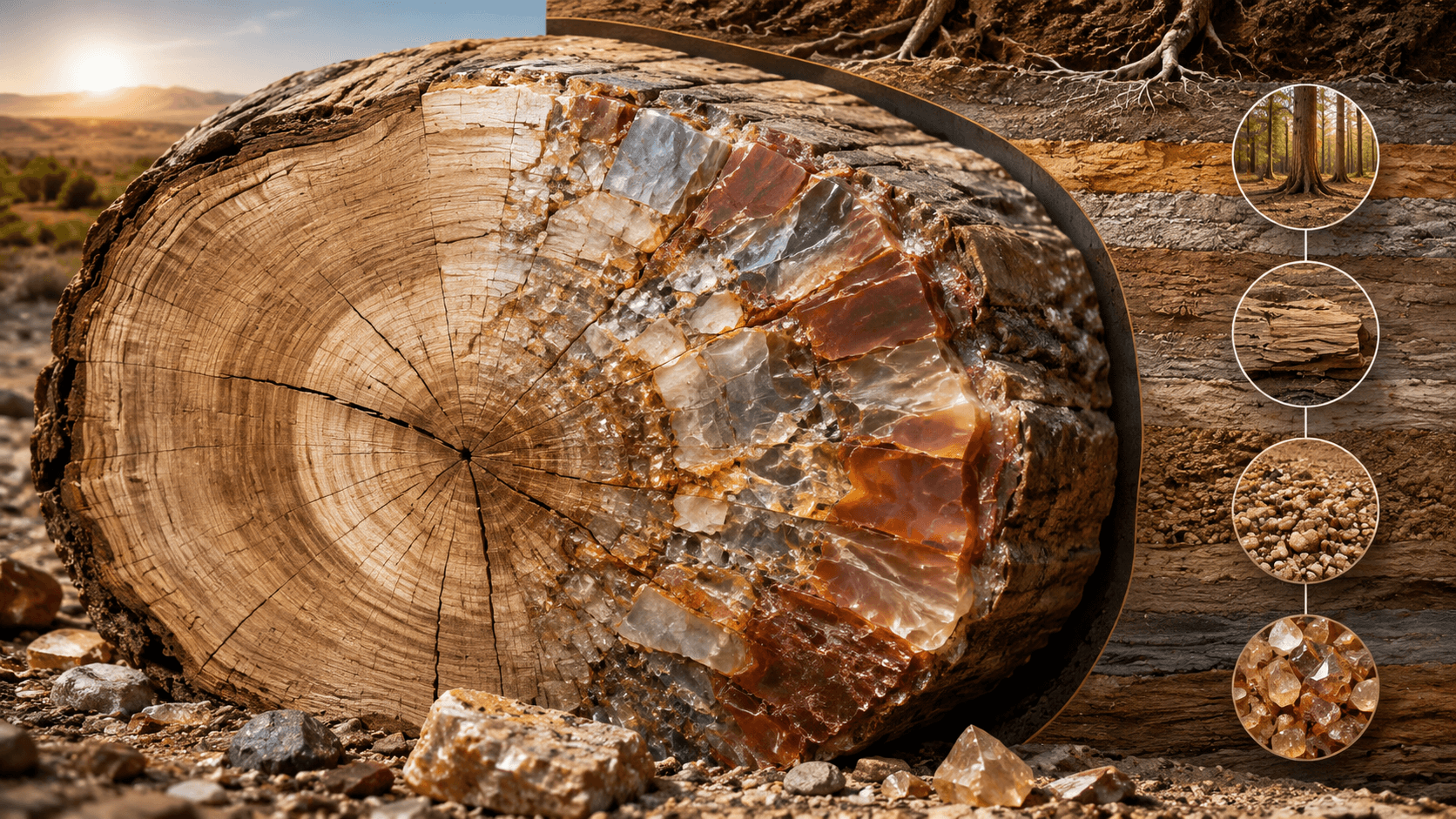
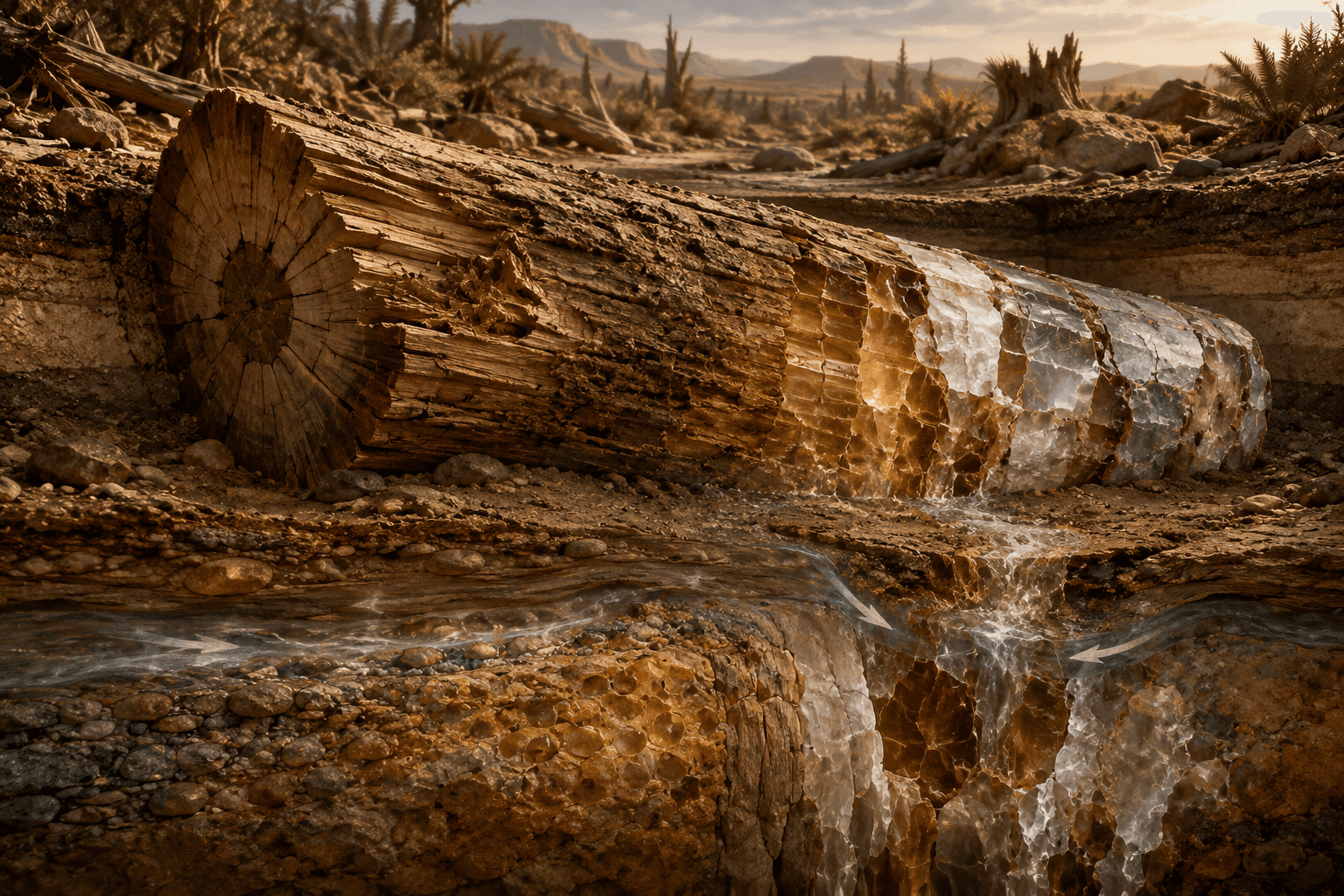
The forests that became this stone stood roughly 230 million years ago, in the Triassic. They fell, were buried under sediment and volcanic ash, and were sealed off from oxygen before they could rot. Groundwater rich in dissolved silica moved through the wood cell by cell, replacing organic tissue with quartz while preserving the original structure — growth rings, fiber lines, sometimes bark texture, all rendered in stone.
Madagascar's southwest holds trunks from this exact window, but the deposits are scattered rather than concentrated. There's no single quarry to strip. Each site yields a handful of trunks, sometimes one. That scarcity is precisely why the region has been overlooked by high-volume exporters — and why it matters to us.
One Tree, One Name
Indonesian operations typically sort output by size or grade. We name each trunk instead — Ambra, Argentea, Fusca, Umbra, Viridis — because each one is a distinct tree with its own mineral history, not a unit in a batch.
Color in petrified wood comes from trace metals present in the groundwater at the moment of mineralization:
- Iron produces reds and ochres
- Manganese produces blacks and violets
- Chromium and cobalt produce greens and blues
No two trunks absorbed the same combination in the same proportion. A trunk named Ambra carries an amber warmth no other tree will repeat — because the water chemistry that produced it existed at one place, at one moment, 230 million years ago. Once it's cut, that particular palette is gone.
A trunk is not a supply. It's a single event in stone, and it happens once.
What the Stone Actually Is
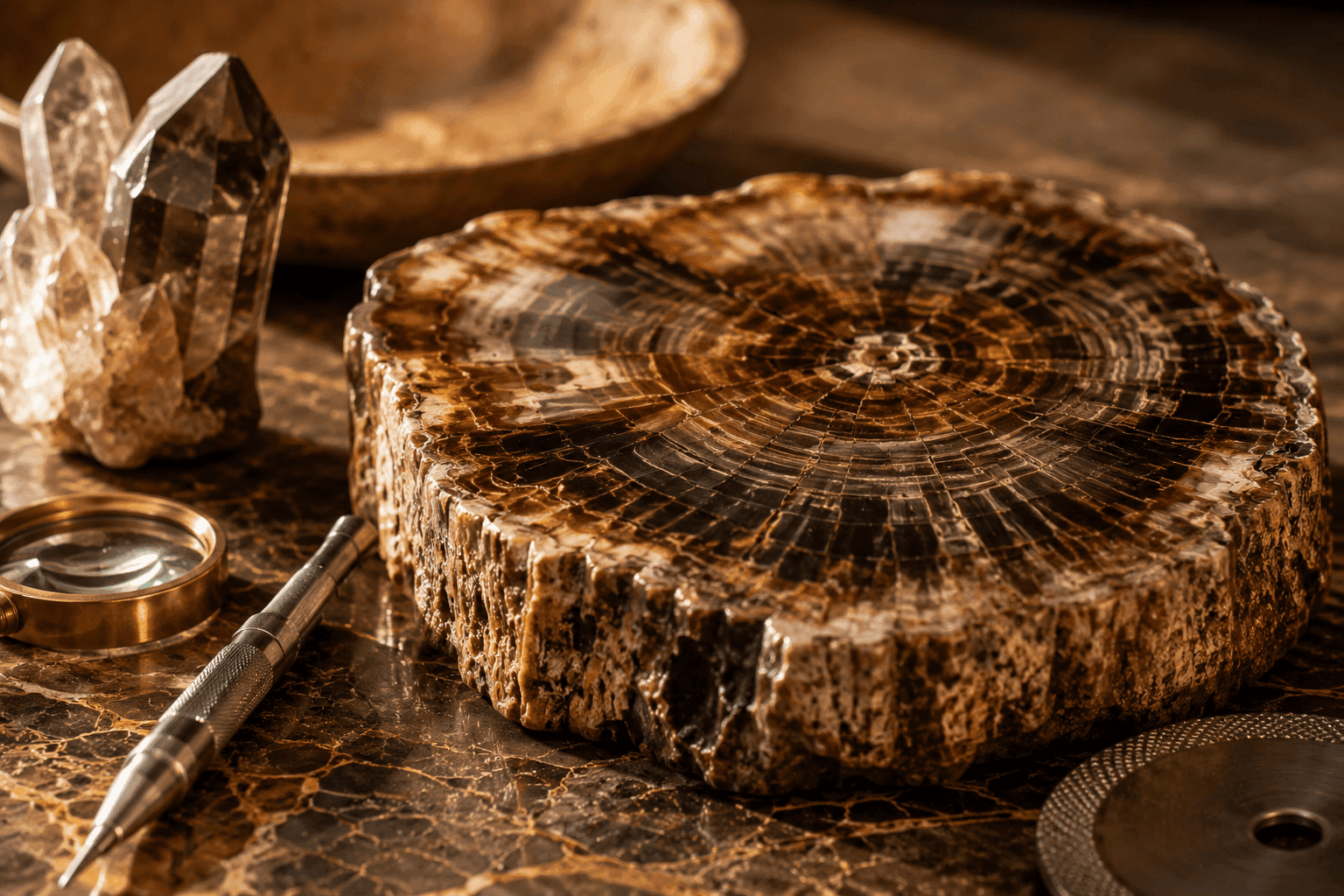
Petrified wood is quartz — full silica replacement of the original organic matter. That gives it properties no traditional wood surface can match:
- Hardness 7 on the Mohs scale — resistant to everyday scratching
- Water-insensitive — no swelling, no warping, no sealing required
- Heat-stable — indifferent to hot cookware, sun exposure, or frost
- UV-stable — color holds under direct light indefinitely
It's heavy, cold to the touch, and permanent in a way wood never is. That's the trade a client makes: a piece that won't move, won't fade, won't need re-oiling every season.
From Deposit to Interior
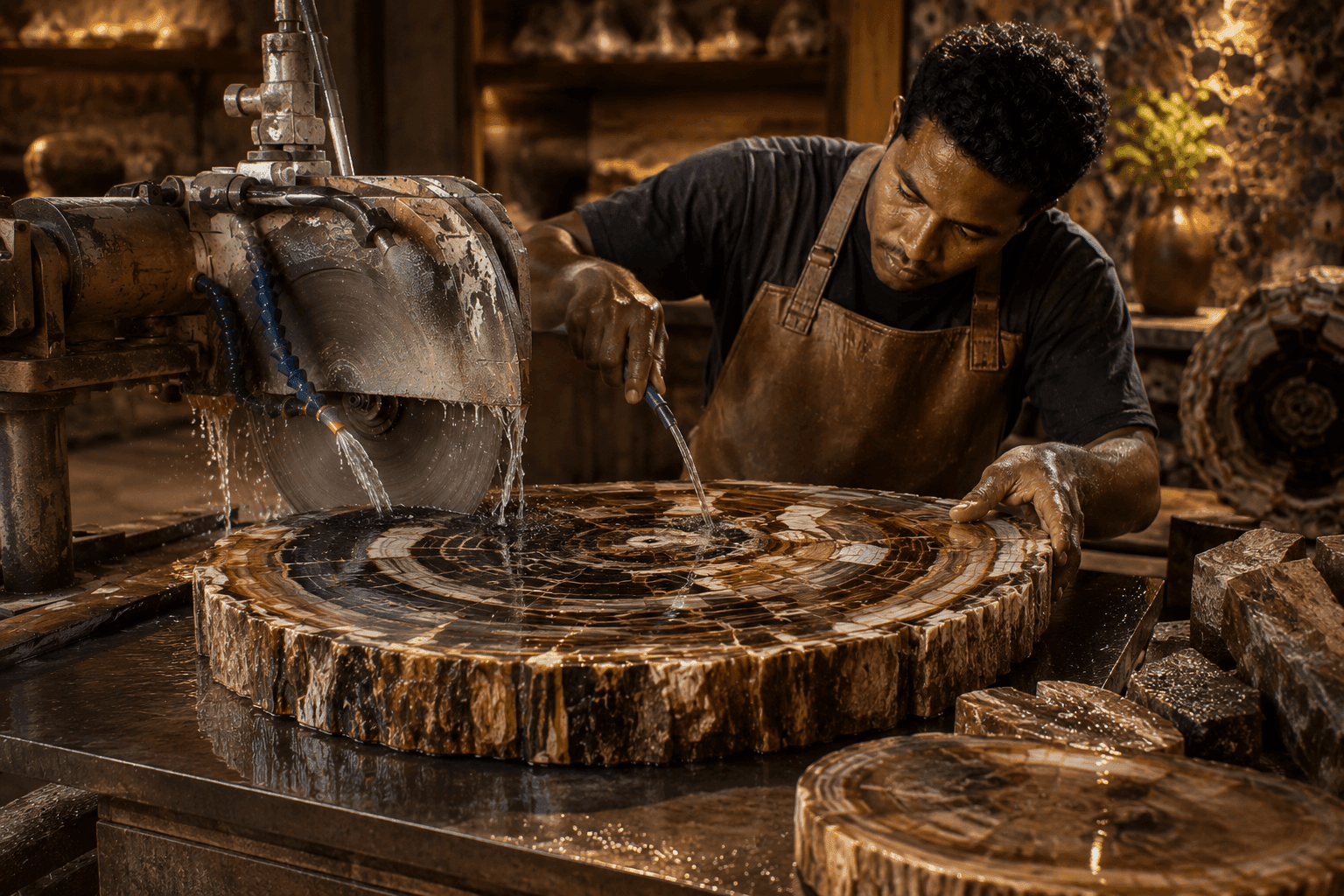
Every trunk we work is transported whole from its deposit and assessed before a single cut is made. The decision on how to slice it is irreversible — a wrong angle can waste a color pattern that took a quarter-billion years to form. Polishing follows, done in stages to bring out the mineral banding without erasing the natural texture at the edges.
This is why our pieces are never uniform. A table surface, a vessel, an object — each carries the specific fingerprint of the tree it came from. The cross-section photograph below shows what a single trunk reveals once opened: growth rings translated entirely into stone.
Living With It
Because the stone is chemically inert, it integrates into daily use without the caretaking that wood or soft stone demands. A vasque holds water without staining. A tabletop takes direct sun without discoloring. Placed as a standalone object, it simply holds its ground — dense, quiet, resistant to time in a literal sense.
Discover the named trunks currently available.
Browse the ShopFrequently Asked Questions
Is Madagascar petrified wood different from Indonesian petrified wood?
Both formed through the same silicification process and share comparable age. The difference lies in sourcing: Madagascar's deposits are smaller and more scattered, which keeps extraction selective rather than industrial.
Why does Medusa give each trunk a name instead of a category?
Because each trunk is an individual tree with a unique mineral composition and color result. A name reflects that it is one specimen, not a product line.
Can petrified wood be used outdoors or near water?
Yes. As fully mineralized quartz, it is unaffected by water, frost, or UV exposure, making it suitable for basins, exterior surfaces, and sun-exposed placements.
How is the price of a piece determined?
Each trunk and each cut is unique, so pricing is assessed individually. Please consult us or request a quote for a specific piece.