
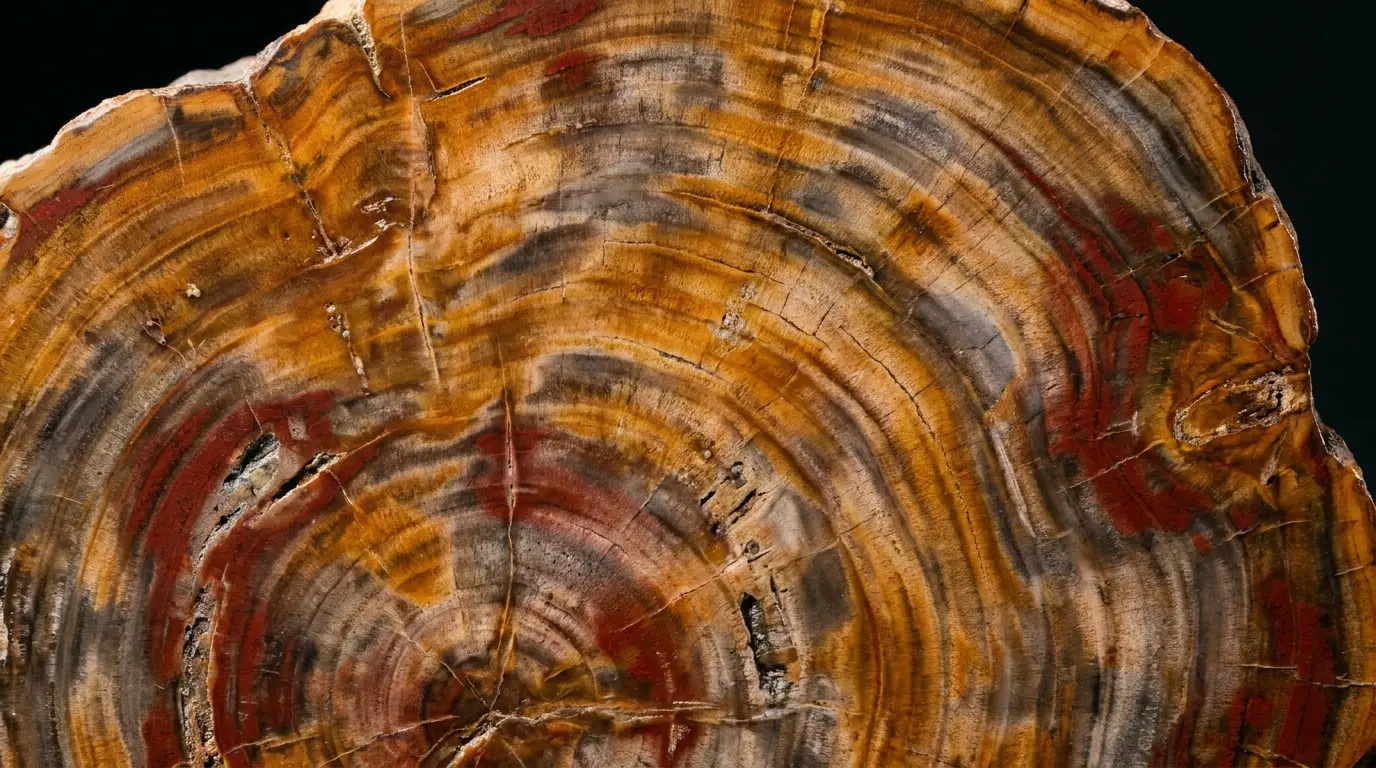
Two Deposits, Two Legends
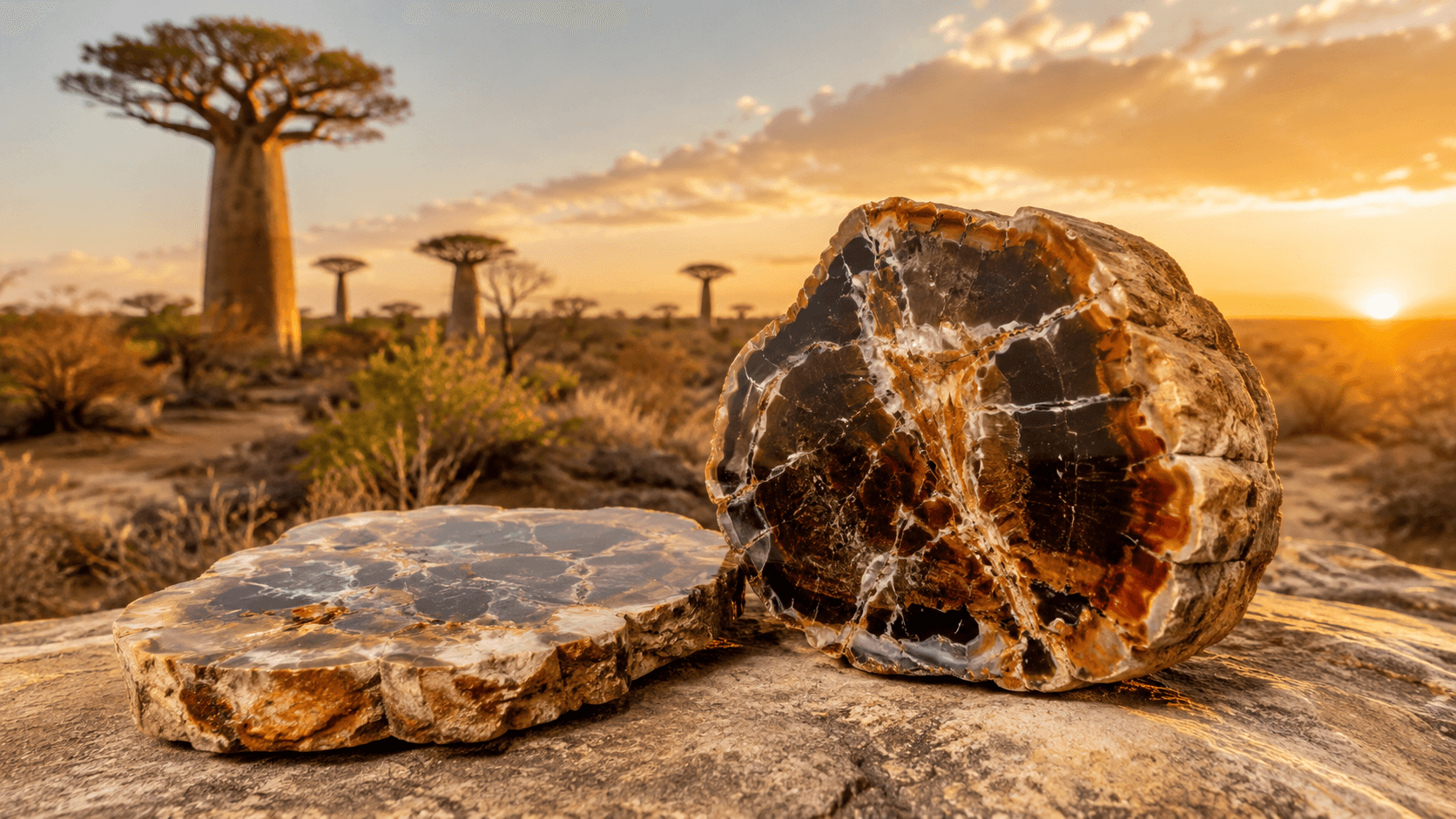
Ask any collector of petrified wood about blue tones and the name Blue Forest, Wyoming, comes up almost immediately. It is one of the most cited American localities, prized for trunks that turned soft grey-blue under the combined action of silica and time. Madagascar tells a different story — one written in ochre, amber, near-black and, occasionally, in the cool greys and greens that echo what American deposits are known for. At Medusa we do not sell Blue Forest wood. We work exclusively with trunks recovered from the south-west of Madagascar, and we believe the comparison is worth making honestly: two deposits, two geological histories, two aesthetics — and, for those drawn to the blue-grey register, a Malagasy alternative that stands on its own merits.
What Makes Blue Forest Wood Sought After
Blue Forest earned its reputation for a narrow, distinctive palette: cool greys shading into blue, sometimes streaked with white or pale ochre. The material is scarce, the deposit long-known and heavily worked, and pieces with strong blue saturation command real attention among specialist buyers. That scarcity is precisely the point — the blue tones associated with this variety are the product of a specific mineral environment, and they cannot be reproduced or matched by intention. A trunk either carried the right conditions during fossilization, or it did not.
Madagascar's Register: Wider, Just as Unrepeatable
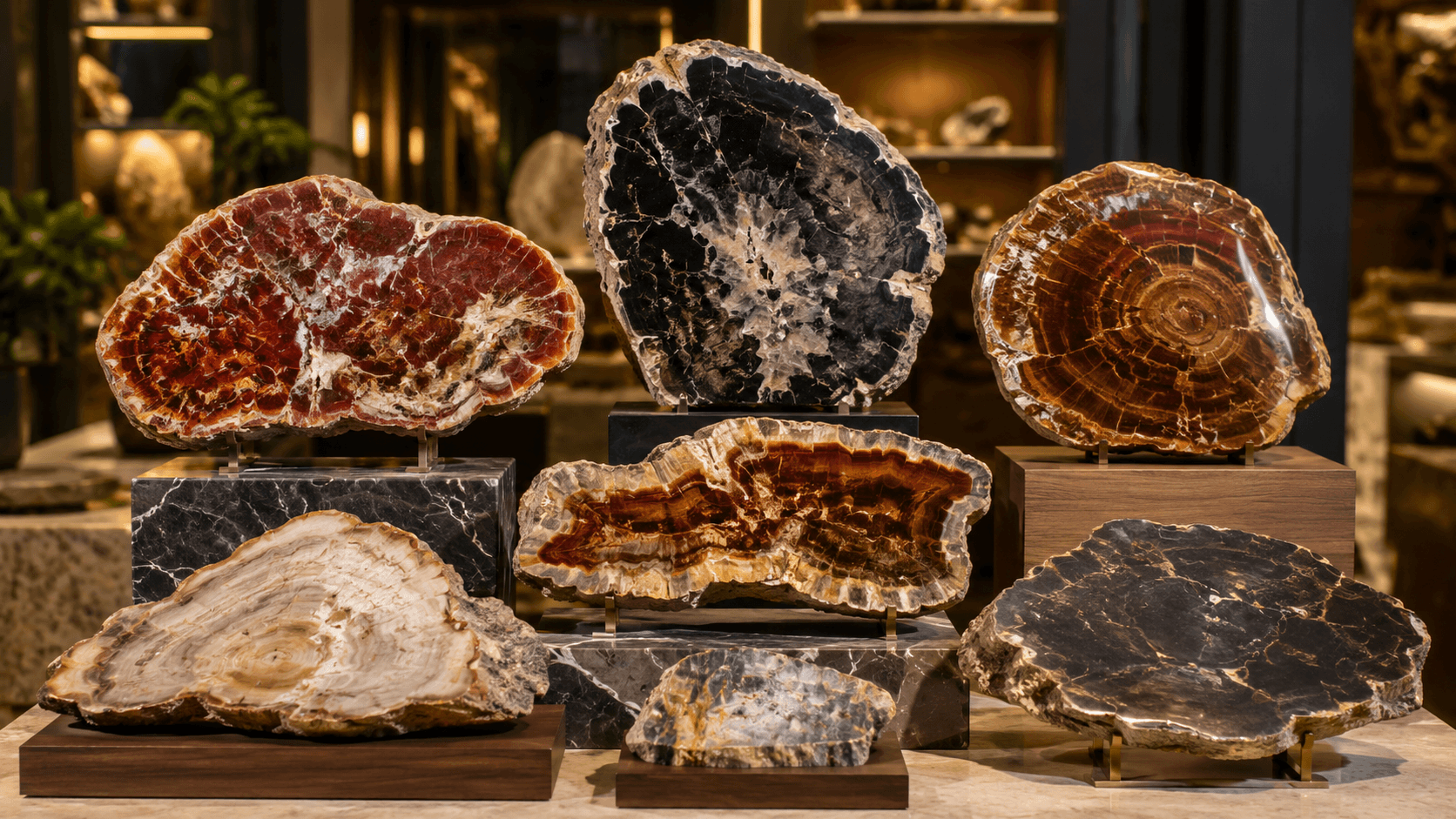
The trunks we bring back from the south-west of Madagascar date to the Triassic, roughly 230 million years ago. Buried in silica-rich sediment, each one absorbed a different mix of trace metals as it turned to stone: iron for reds and ochres, manganese for blacks and violets, chromium or cobalt for the rarer greens and blues. The result is not a catalogue of finishes we choose from — it is a set of individual outcomes, fixed millions of years before anyone thought to name them.
This is why Medusa does not sell "petrified wood" as a generic material. We sell trunks — Ambra, Argentea, Fusca, Umbra, Viridis — each recovered whole, each named for what its own mineralization produced. A trunk with the cool, slightly blue-grey cast that recalls the American reputation exists in our stock, but as one individual tree among others, not as a manufactured category.
A tree does not choose its color twice. Once it is cut, that particular shade of stone is gone.
Every Trunk Has a Name — and It Is Never Repeated
The naming is not decoration. It reflects how we work: each trunk is extracted, logged, and followed individually from the ground to the workshop. Nothing is blended, dyed, or standardized to fit a swatch. What this means in practice:
- Two trunks pulled from the same hillside can differ entirely in hue and grain.
- A trunk's dominant tone is fixed the moment its silica crystallized — no later process changes it.
- Once a trunk is fully cut into slabs, tables, or basins, that exact vein pattern and color balance cannot be sourced again.
Anyone drawn to the blue-grey character of Blue Forest wood is, in effect, responding to the same phenomenon we build our entire offer around: rarity that is geological, not commercial.
The Material Itself: Quartz, Regardless of Origin
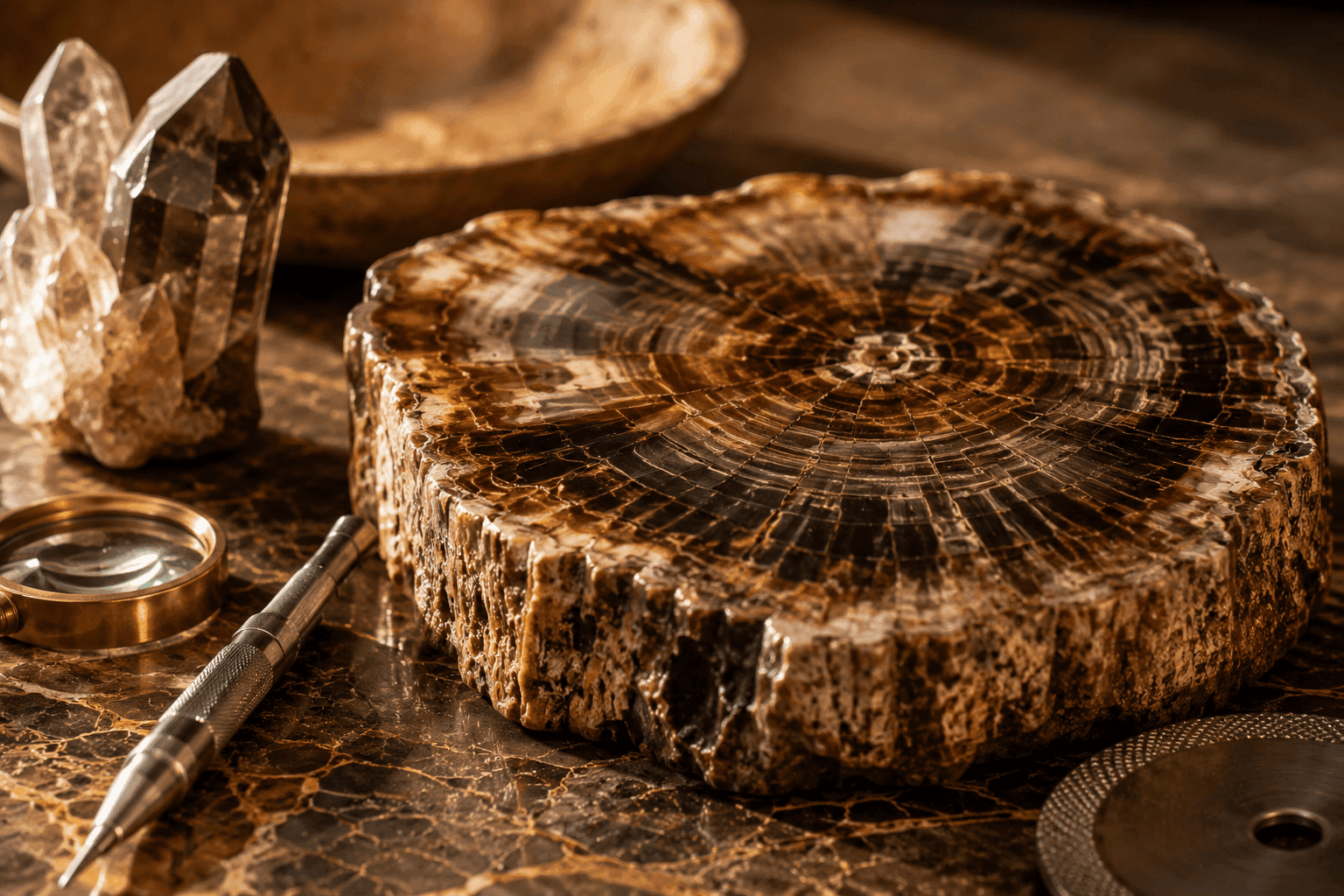
Wherever it is found, properly fossilized wood has gone through the same transformation: organic tissue replaced, cell by cell, with silica. What Madagascar's trunks share with any well-known American deposit is the physical outcome — a stone rated 7 on the Mohs hardness scale, denser and colder to the touch than any timber, indifferent to water, heat, UV exposure, or frost. This is what allows a Medusa table or vasque to live outdoors, near a pool, in direct sun, without the maintenance a living wood surface would demand. The color is the signature of the deposit. The resistance is a property of quartz itself, and it does not vary.
From Trunk to Object
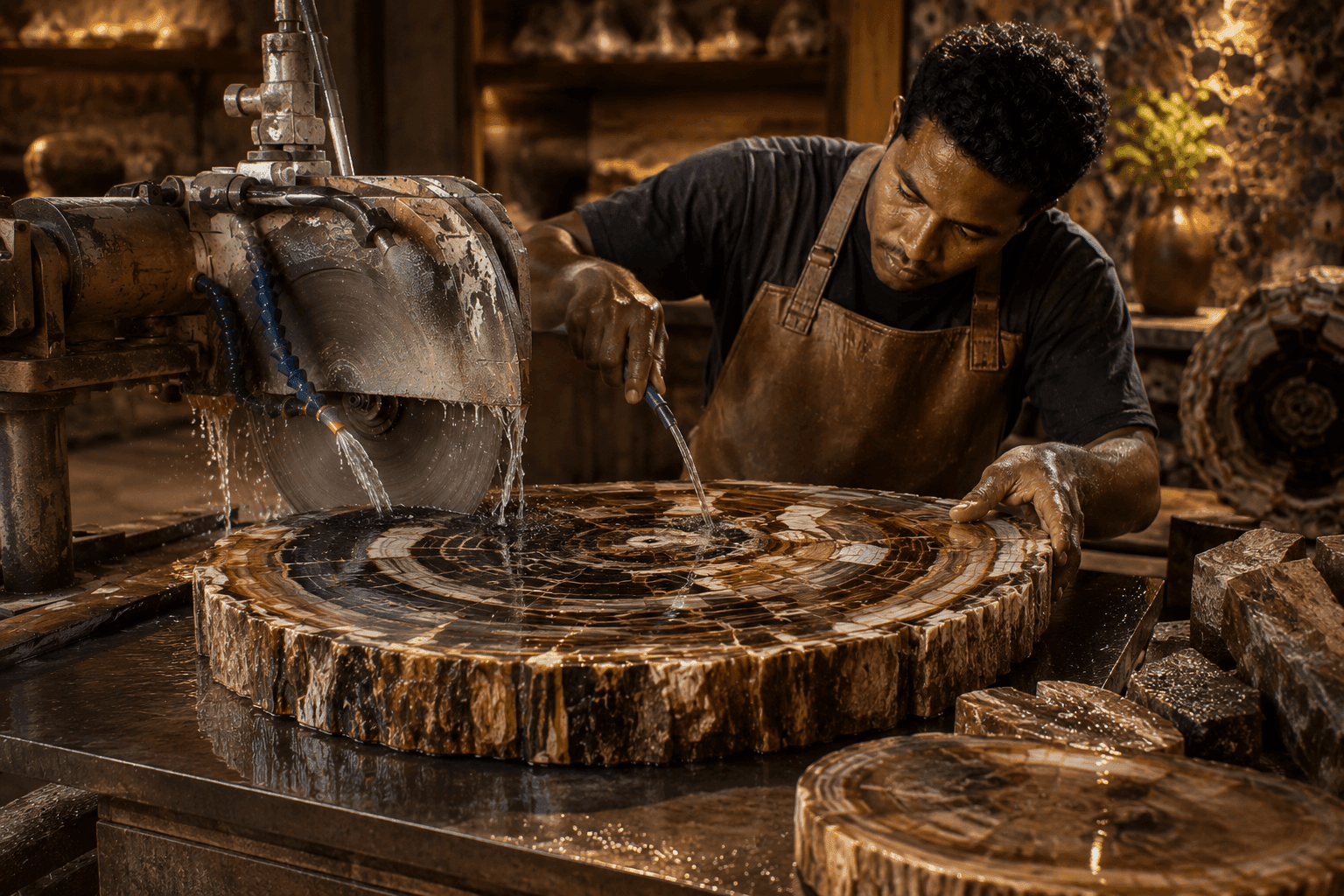
Once a trunk reaches our workshop, the work is one of revelation rather than transformation. Cutting follows the grain the fossil already dictates; polishing brings out contrasts that were buried, not applied. A basin, a low table, a sculptural block — each piece is planned around what a specific trunk offers, which is why no two finished objects, even from trunks of similar color, read identically once installed.
See which trunks are currently available and request a tailored quote for your project.
Visit the ShopFrequently Asked Questions
Is Medusa's petrified wood the same as Blue Forest wood from Wyoming?
No. Blue Forest is a distinct American deposit known for grey-blue tones. Medusa works exclusively with trunks recovered from the south-west of Madagascar; some of our trunks share a comparable cool palette, but each comes from its own geological context.
Why is every Medusa trunk given a name?
Because each trunk is an individual tree, extracted and followed on its own — not a batch of generic material. The name (Ambra, Argentea, Fusca, Umbra, Viridis) reflects the specific mineralization and color that trunk developed over roughly 230 million years.
Is petrified wood suitable for outdoor use, regardless of its color?
Yes. As silicified quartz rated 7 on the Mohs scale, it withstands water, heat, UV light, and frost equally well no matter which trunk or hue it comes from.
Can I get a piece in the exact same blue-grey shade as a photo I've seen?
Only if the specific trunk that produced it is still available. Since each trunk's color is fixed by its own mineral history, once it is fully worked, that precise shade cannot be sourced again. We recommend checking current availability or requesting a quote directly.