
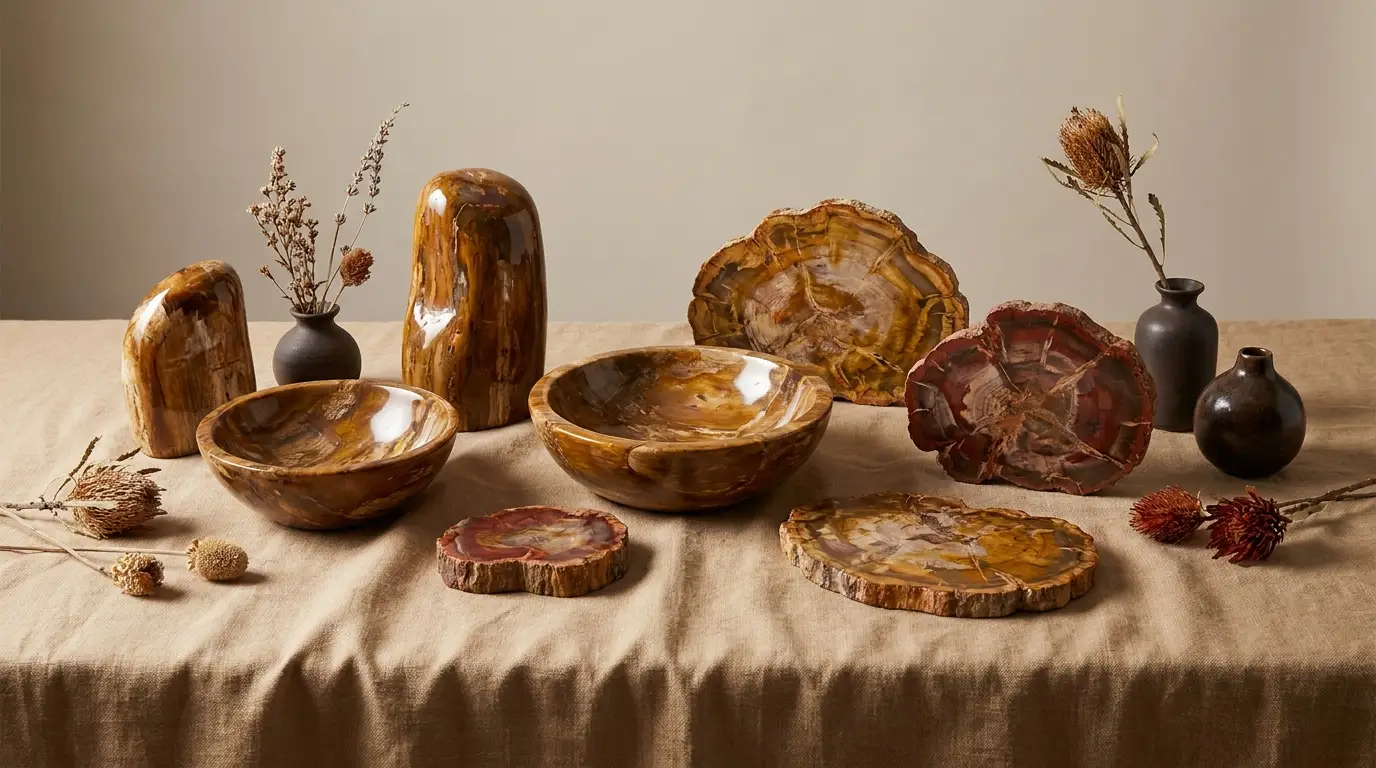
Blue Opalized Petrified Wood: A Rare Trunk, A Rare Color
Blue is the color petrified wood almost never wears. Most trunks pulled from the soil of southwestern Madagascar settle into ochre, brown, black, sometimes a deep aubergine. Blue is different — it demands a precise mineral accident, repeated over 230 million years, and it survives in only a handful of the trunks we recover. When we find one, we don't call it a category. We call it a name.
Where the Blue Comes From
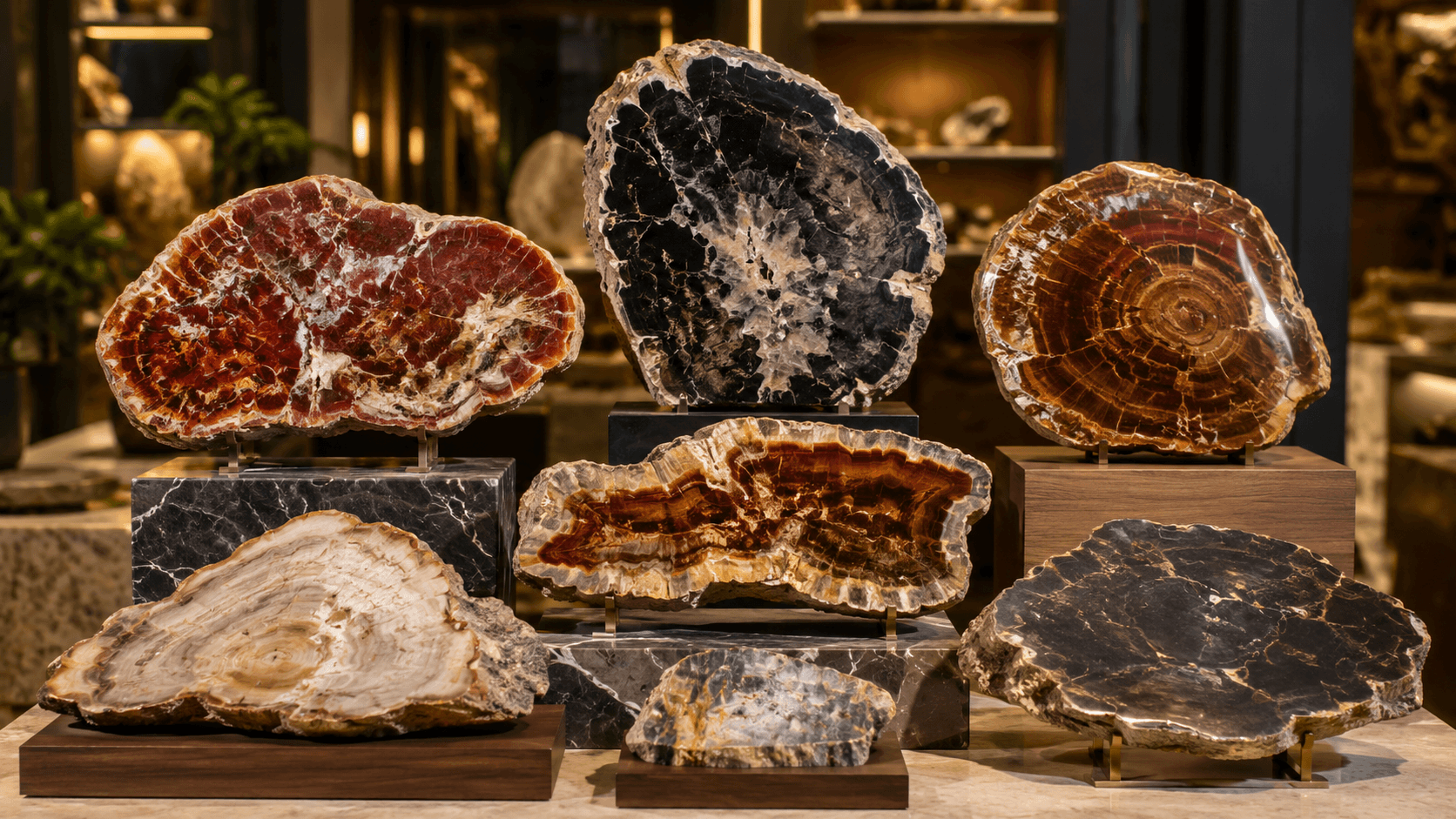
Every petrified trunk is silica first — groundwater rich in dissolved minerals infiltrated the wood cell by cell, replacing organic tissue with quartz before it could decay. The color that results depends entirely on which trace metals were present in that water, at that place, at that moment. Iron gives red and ocher. Manganese gives black and violet. Chrome and cobalt — far rarer in the sediment — give green and, more rarely still, blue.
A blue opalized trunk is therefore not a variation someone chose. It's a signature left by groundwater chemistry a quarter-billion years ago, locked into stone and never repeated the same way twice.
One Tree, One Name, One Color
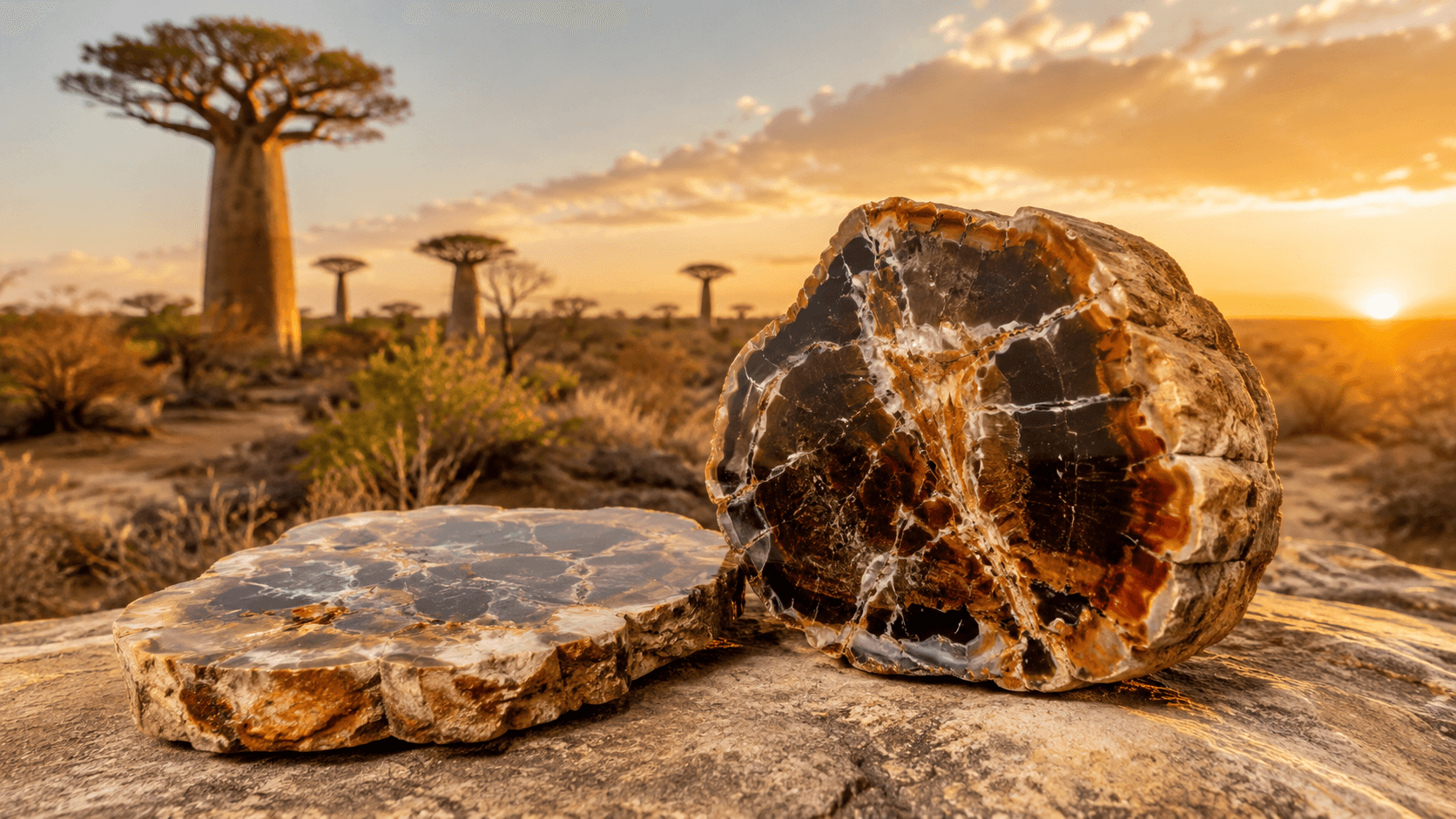
We don't sell "blue petrified wood" as a product line. We sell a tree. Each trunk raised from the ground in southwestern Madagascar is an individual we've named — Viridis for the greens, Ambra for the ambers, Umbra for the darkest browns, and on the rare occasions the mineralization tips toward blue, that trunk carries its own identity from the moment it's freed from the earth.
This matters practically, not just poetically. Once a blue-toned trunk is cut into slabs — for a table, a vasque, a decorative block — that particular vein of color is gone from our stock. There is no reorder. No matching piece waiting in a warehouse. What you see in a blue opalized trunk is the entire visible supply of that tree's color, distributed across however many pieces its volume allowed.
A blue trunk isn't restocked. It's finished the day it's cut.
Quartz Under the Blue: Hardness and Permanence
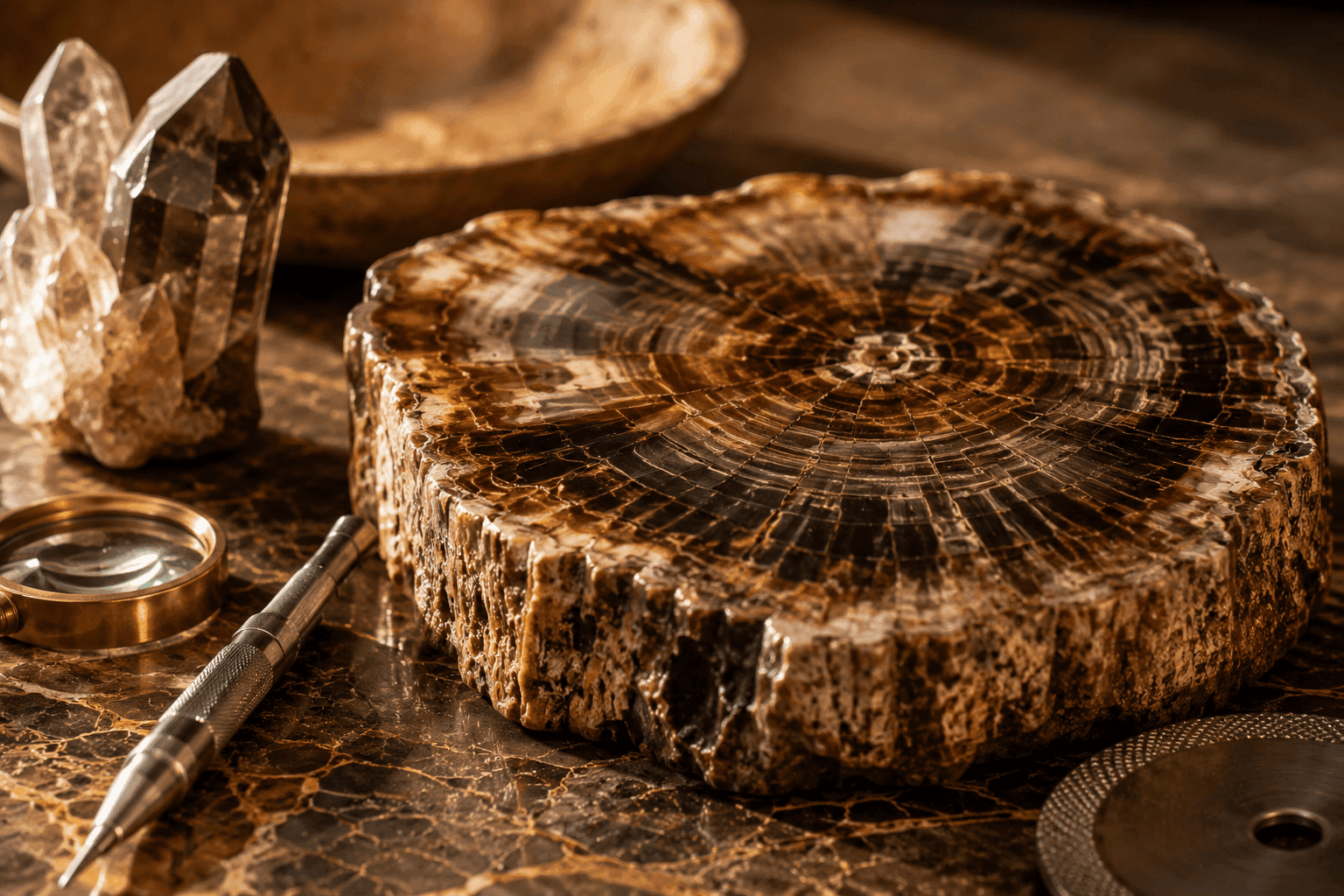
Whatever its color, petrified wood from Madagascar is chemically quartz, rated 7 on the Mohs hardness scale. That's the material reality behind the blue tones — not a surface treatment, not a dye, but silica crystallized through and through. Practically, this means:
- Indifference to water — a blue-toned vasque can hold water indefinitely without staining or absorption.
- No sensitivity to heat, cold, or UV — the blue will not fade in direct sunlight, unlike dyed stones or resins.
- Resistance to scratching in daily use, thanks to the same hardness that makes cutting and polishing slow, deliberate work.
- Genuine weight — these are dense mineral objects, not lightweight replicas.
The blue you see is the blue the trunk will keep. It was set 230 million years ago, and quartz doesn't change its mind.
From Trunk to Object
Once a blue opalized trunk reaches our workshop, the approach shifts from geology to craft. Each trunk is studied before a single cut is made — the color distribution, the density of the veining, the natural fractures inherited from millions of years underground all dictate how it can be worked. A slab destined to become a table top is chosen differently than one meant for a small vasque or a standalone sculptural block. The aim is always the same: let the trunk's own color decide the final form, rather than forcing a design onto the stone.
Polishing brings out the depth of the blue — matte cuts read as pale and clouded, whereas a full polish lets the quartz reveal its saturation, sometimes shifting from slate blue to something closer to teal depending on the light.
Living With Blue Opalized Wood
Blue opalized petrified wood tends to anchor a room rather than blend into it. In interiors built on neutral tones — stone, linen, raw wood — a blue trunk piece reads as a deliberate accent, a mineral object with a color history no synthetic material can replicate. It suits a single striking table as easily as a small vasque placed where light catches it directly, morning or evening.
Because each trunk is unique, no two blue pieces from Medusa will match exactly — which is the point. This is not a finish you specify from a catalog. It's a trunk you choose because you've seen it.
Discover the blue opalized trunks currently available and request a tailored quote.
Visit the ShopFrequently Asked Questions
What causes the blue color in opalized petrified wood?
Trace minerals — chiefly chrome and cobalt — present in the groundwater during fossilization. Iron produces reds and ochers, manganese produces blacks and violets; chrome and cobalt, being far less common in the sediment, produce the greens and blues that are rarest among Madagascar's petrified trunks.
Is blue opalized petrified wood as durable as other colors?
Yes. Color has no bearing on structure. All petrified wood from Madagascar is quartz, rated 7 on the Mohs scale, whatever its hue. Blue pieces are just as resistant to water, heat, cold, and UV exposure as ochre or black ones.
Why is blue opalized petrified wood rarer than other colors?
Because the specific minerals responsible for blue tones — chrome and cobalt — occur less frequently in the sediment than iron or manganese. Among the trunks recovered from southwestern Madagascar, only a small proportion show genuine blue mineralization.
Can I get a piece that matches a blue opalized item I've already purchased?
Not identically. Each trunk is an individual tree with its own mineral history; once it's cut and its stock is used, that exact color and veining cannot be reproduced. We can, however, help you select another blue-toned trunk with a comparable character — contact us for a personalized consultation.