
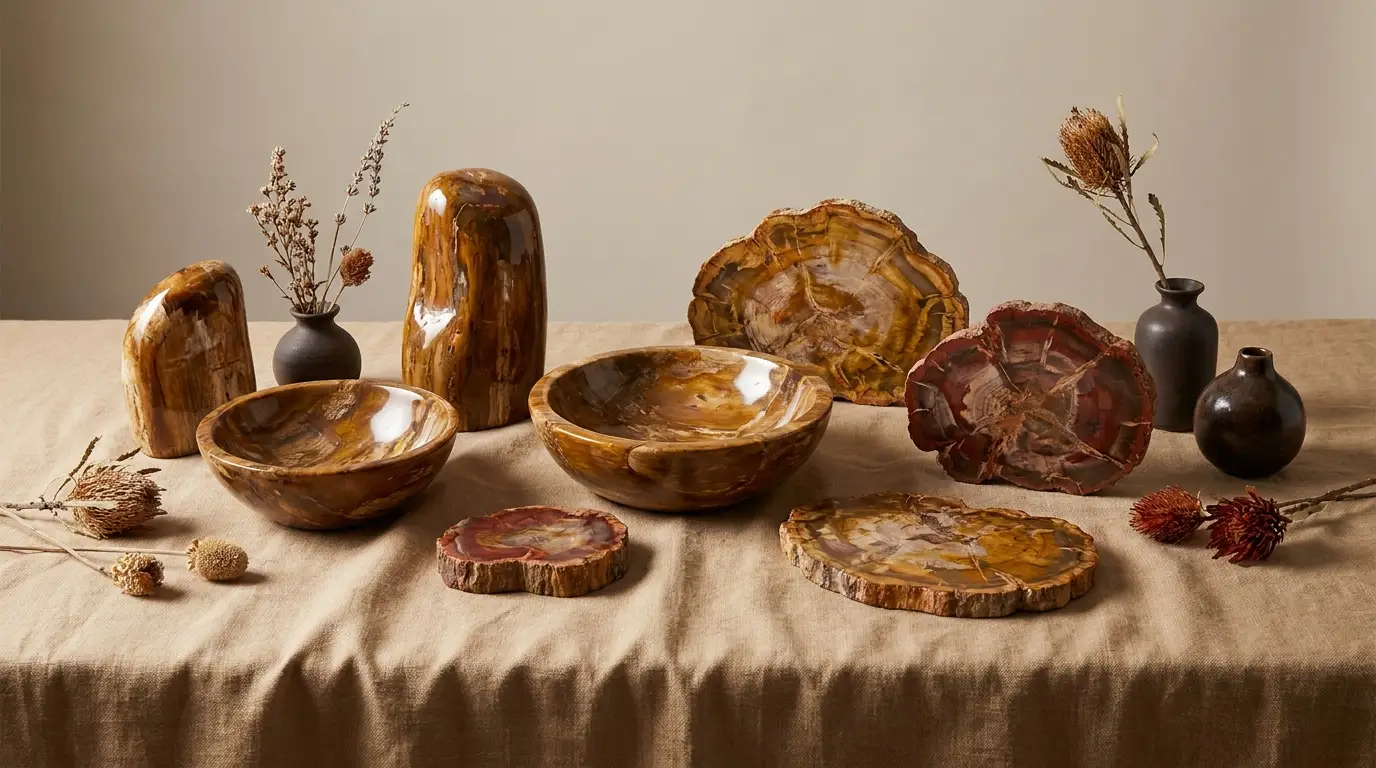
The Stone Behind the Name
Search for "opalized petrified wood jewelry" and you'll find a wide range of stones described this way — some genuinely opal, most simply silicified wood with an opal-like sheen. At Medusa, precision matters more than a pretty label. What we set into pendants, cuffs, and rings is quartz: fossilized wood from the Trias, roughly 230 million years old, hardened to 7 on the Mohs scale. True opal sits closer to 5.5–6.5 and stays soft, prone to crazing over time. Our material doesn't crack, cloud, or dull. It's the difference between a stone you protect and a stone you wear.
One Tree, One Color, No Repeats
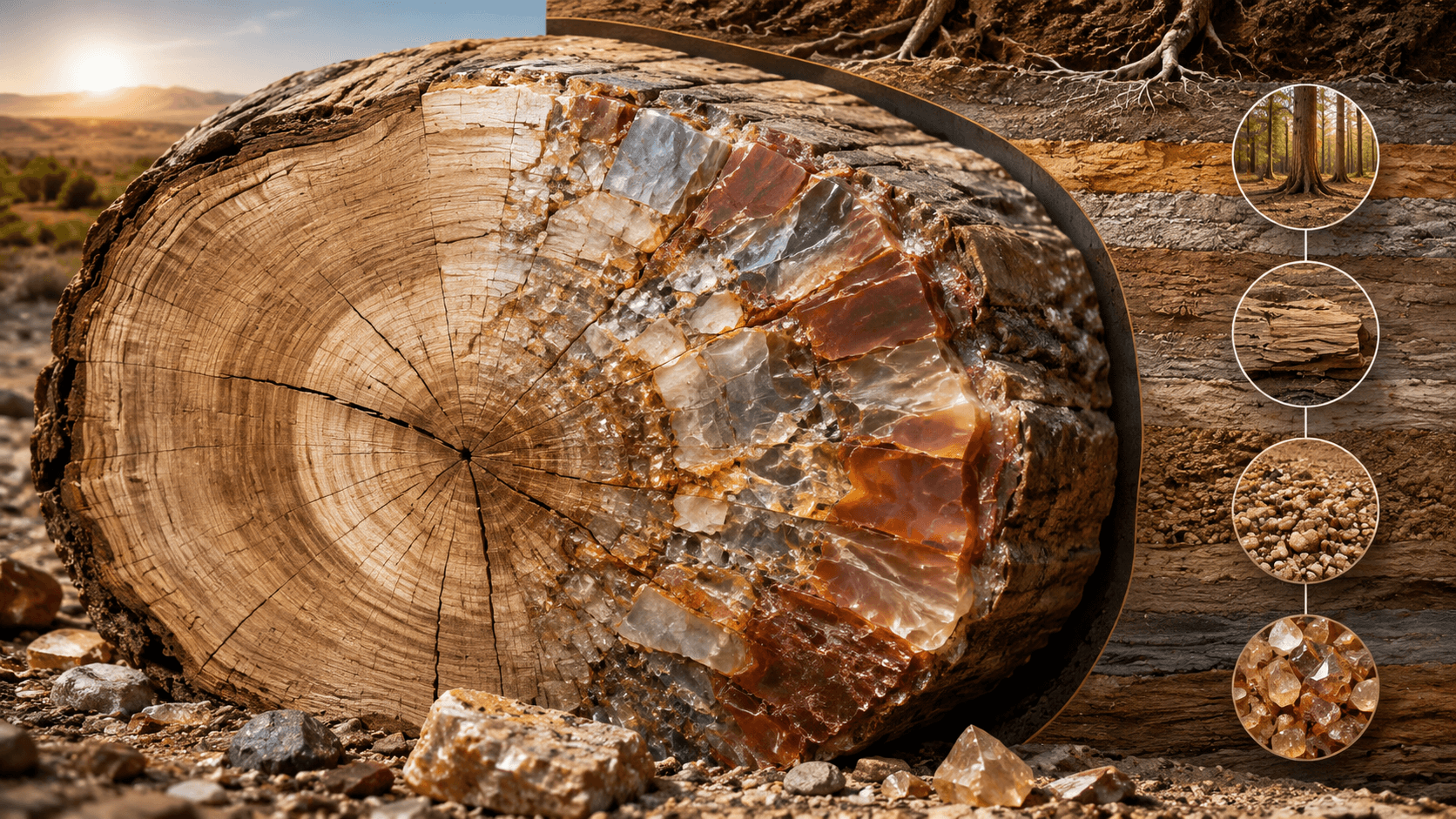
Every piece of jewelry we cut starts as a named tree, not a category. Ambra was raised the color of dried honey. Argentea came up pale and metallic. Fusca sits in warm brown, Umbra in near-black, Viridis in the rare greens that chromium and cobalt produce underground. Each name marks a single trunk, brought up one at a time from the sud-ouest of Madagascar, with its own mineral signature and its own limit. When Ambra is fully cut, there is no more Ambra — only what remains in the pieces already made.
This matters for jewelry more than for any other object we produce. A pendant carries a fragment of one specific tree. Buy it, and you own a piece of a story that stops being written the day the trunk runs out.
A tree doesn't repeat itself twice. Neither does the stone it left behind.
What Gives the Stone Its Color
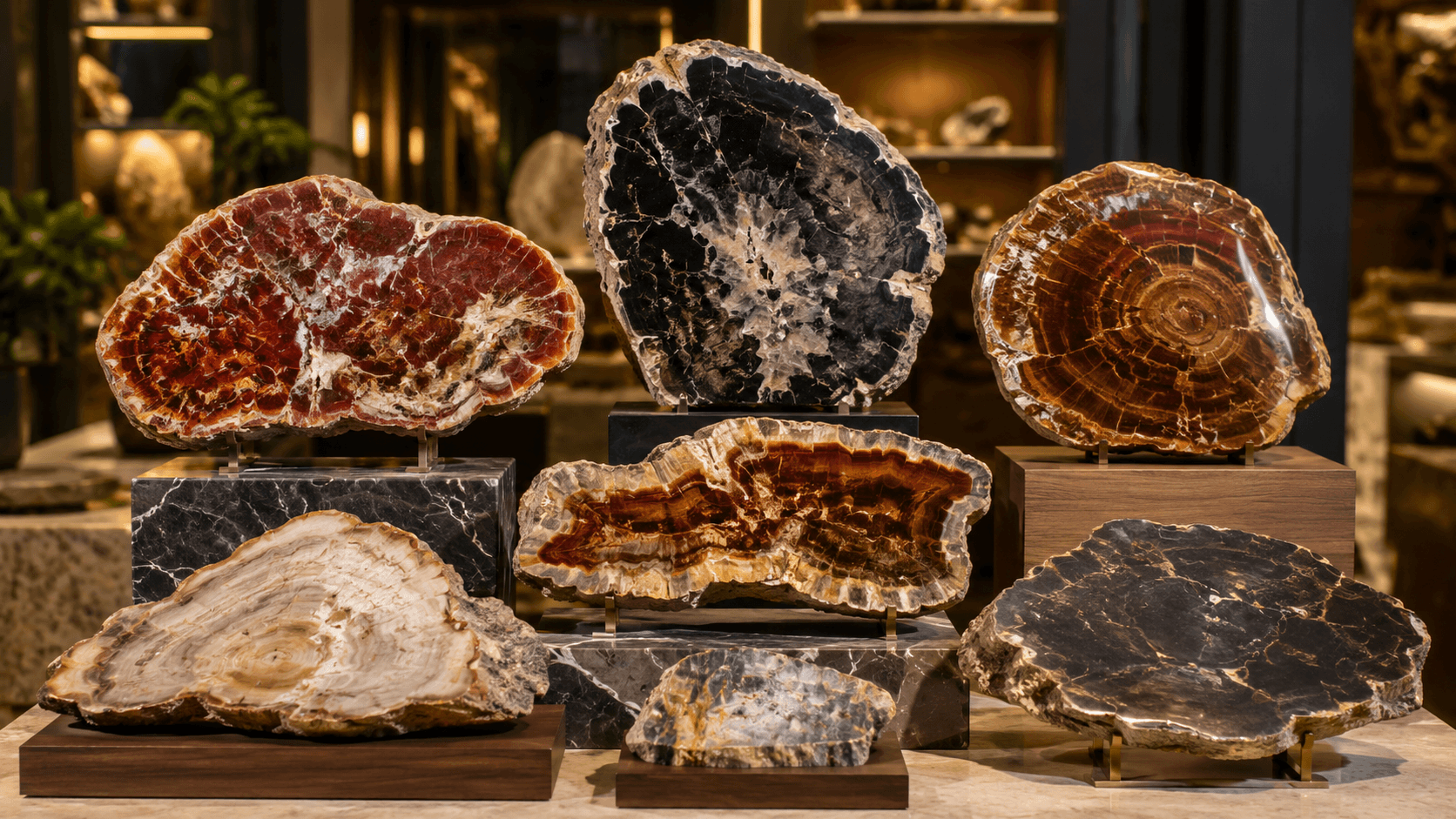
The colors aren't dyed, treated, or enhanced. They come from the same minerals that colored the earth around each tree as it turned to stone:
- Iron produced the reds and ochres — Ambra's warmth traces back to this.
- Manganese darkened the wood into black and violet tones, visible in Umbra.
- Chromium and cobalt, far rarer, gave certain trunks their greens and blues — Viridis among them.
Silica replaced the organic wood cell by cell, over millions of years, preserving grain, rings, and fracture lines exactly as they were. A jewelry piece cut from this material isn't polished to imitate a mineral pattern — it is the mineral pattern, fixed the moment the tree stopped being wood and became stone.
From Trunk to Wearable Piece
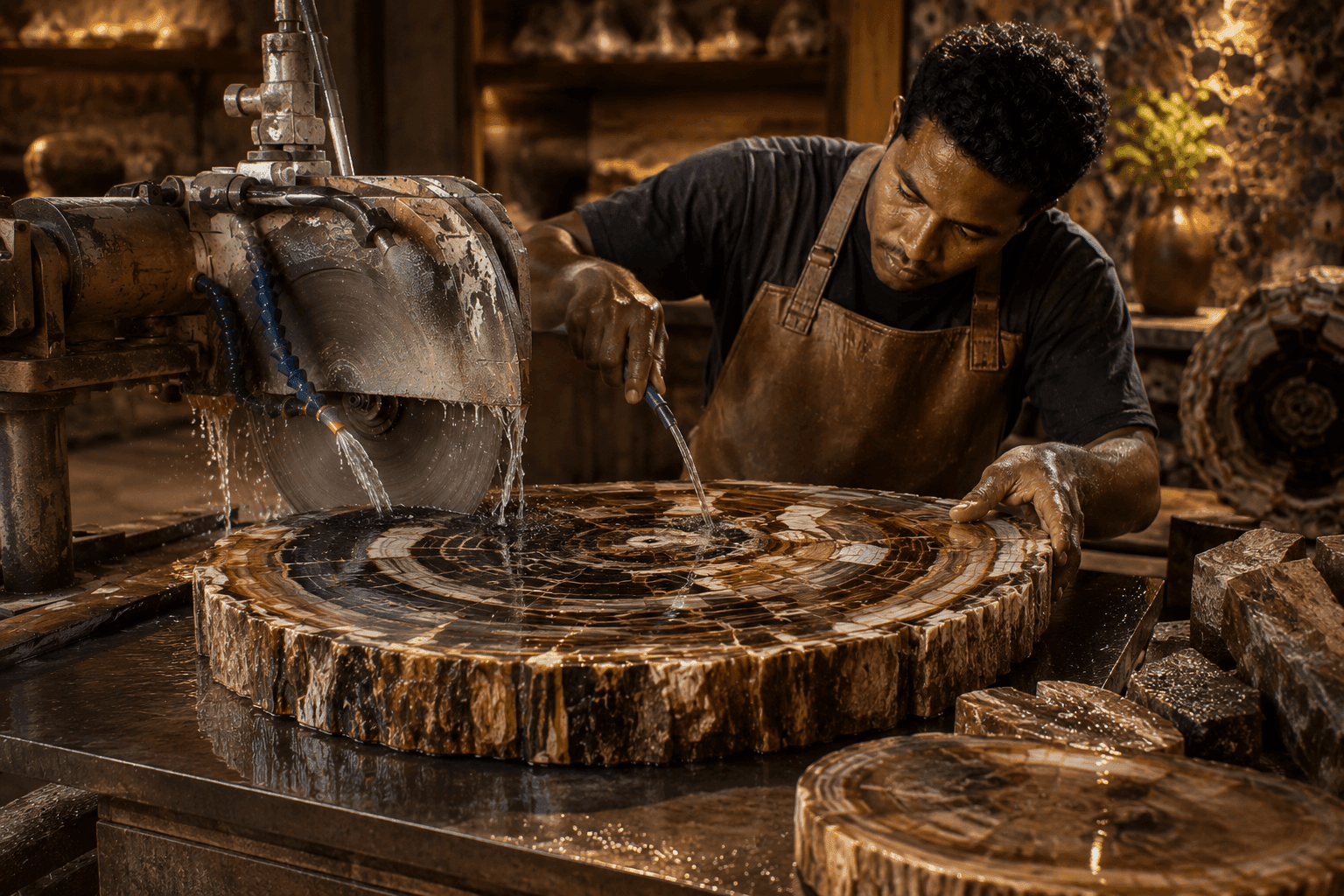
Turning a fragment of a 230-million-year-old trunk into a ring or a pendant is slow, deliberate work. Quartz doesn't forgive haste. Each piece is cut along the grain the tree left behind, polished by hand to bring out the cross-section's natural pattern rather than erase it, then set with discretion — the stone stays the subject, the metal stays the frame.
We don't standardize cuts across a batch. Because no two trunks minéralized the same way, no two cross-sections read the same either. A cabochon cut from Fusca will never quite match one cut from Argentea, and that's the point: this is jewelry built around a specific tree, not a repeatable template.
Built to Be Worn, Not Just Displayed
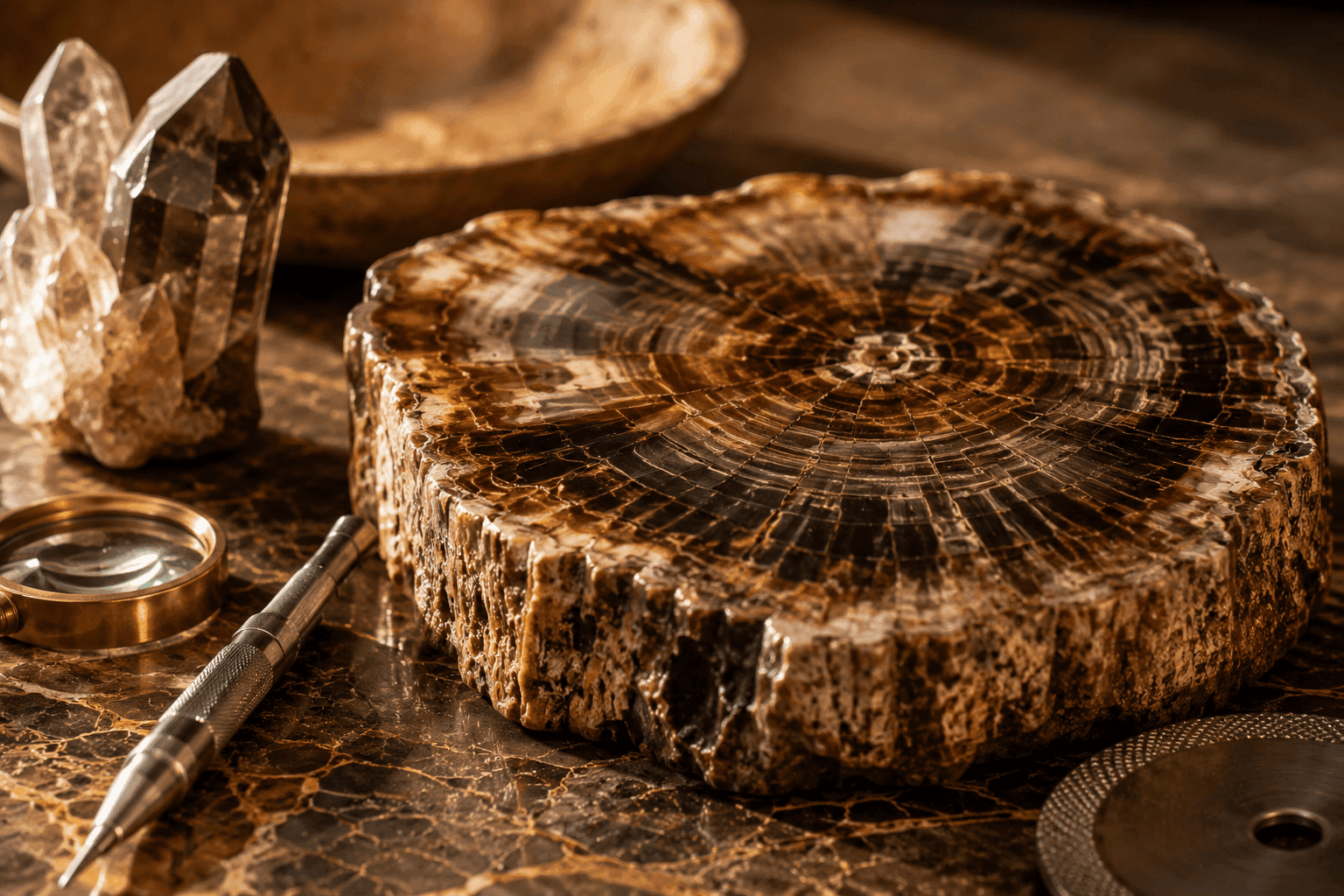
A piece of jewelry gets knocked against doorframes, dropped on tile, splashed, left in the sun on a windowsill. Most gemstones ask for a degree of caution. Ours doesn't:
- Scratch-resistant — quartz at 7 Mohs shrugs off steel and most everyday abrasion.
- Water and heat stable — no fading, no clouding, no reaction to sweat, showers, or sunlight.
- Cold to the touch, permanently — a quiet, tactile reminder that this is mineral, not resin or treated stone.
- Stable across decades — nothing about the color or structure changes with wear.
It's jewelry designed for daily use rather than a drawer. The stone that took 230 million years to form isn't going to degrade over a lifetime of being worn.
Living With a Piece of Stone This Old
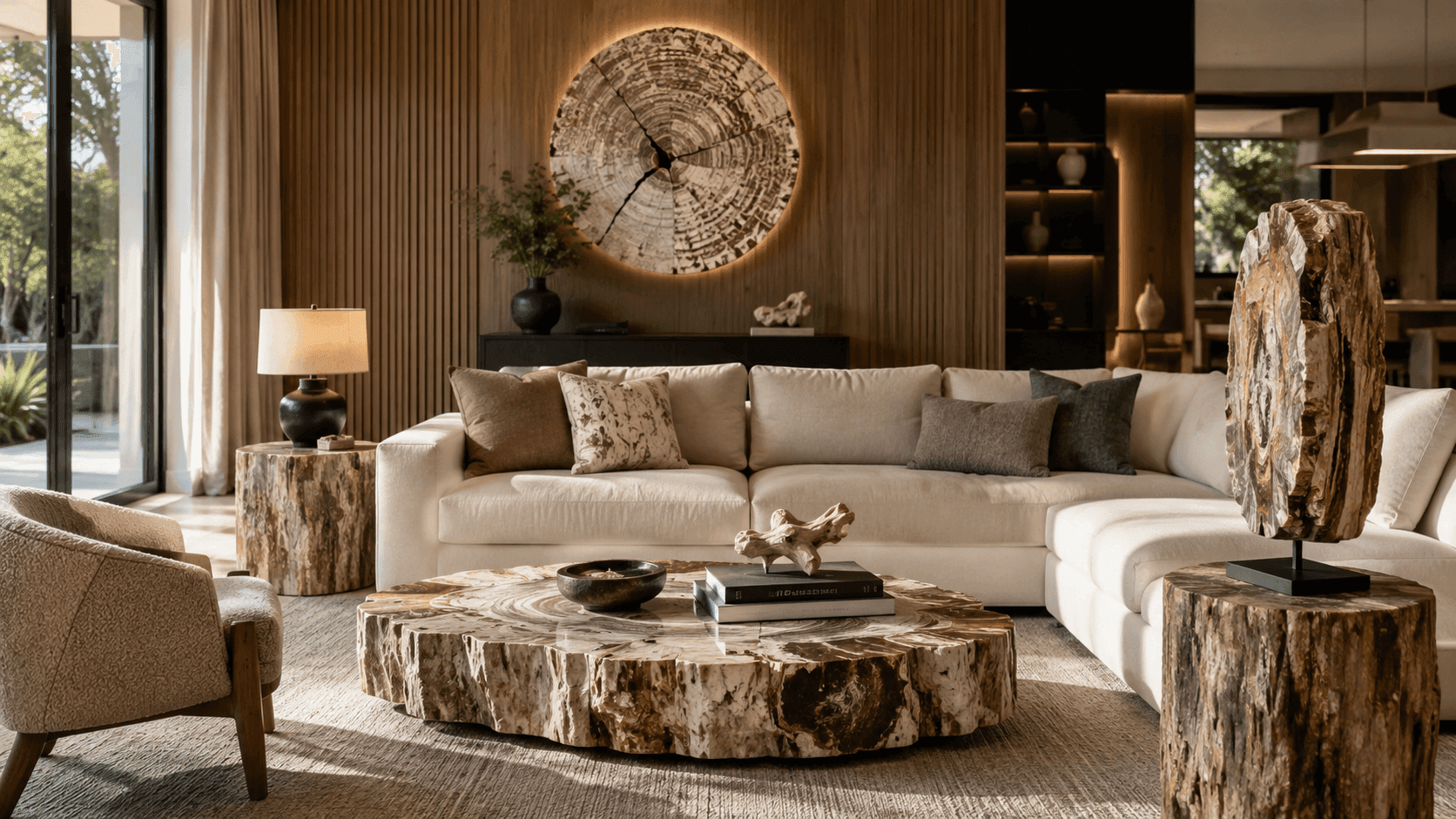
Most people who acquire a piece of Medusa jewelry already know the material through a table, a vasque, or an object at home. The jewelry is often the smaller, more personal counterpart — a fragment of the same tree, or the same lineage of colors, carried rather than placed. It travels well precisely because it asks nothing of the wearer: no polishing routine, no fear of water, no fading with light exposure. The stone simply holds.
Discover which named tree your piece will come from.
Explore the BoutiqueFrequently Asked Questions
Is opalized petrified wood the same as opal?
No. True opal is a softer, hydrated silica (around 5.5–6.5 Mohs) that can craze over time. Medusa's material is quartz — fully crystallized silica at 7 Mohs — which is why it resists scratching, water, and heat far better than opal itself.
Where does the wood come from?
Every trunk is raised individually from the sud-ouest region of Madagascar, an area known for exceptionally well-preserved Triassic-era fossilized wood.
How old is the stone in each piece?
Roughly 230 million years, dating to the Trias period — long before the wood turned to stone through silica replacement.
Can I wear this jewelry every day, including in water or sun?
Yes. Quartz at 7 Mohs is insensitive to water, heat, and UV exposure. It won't fade, crack, or dull with regular wear.
Why does the color vary so much between pieces?
Each tree minéralized with a different mix of trace metals — iron, manganese, chromium, cobalt — producing its own palette. Since every tree is named and finite, its exact coloring can't be reproduced once the trunk is fully cut. For pricing, availability, or a piece from a specific named tree, please consult us directly or request a devis.