
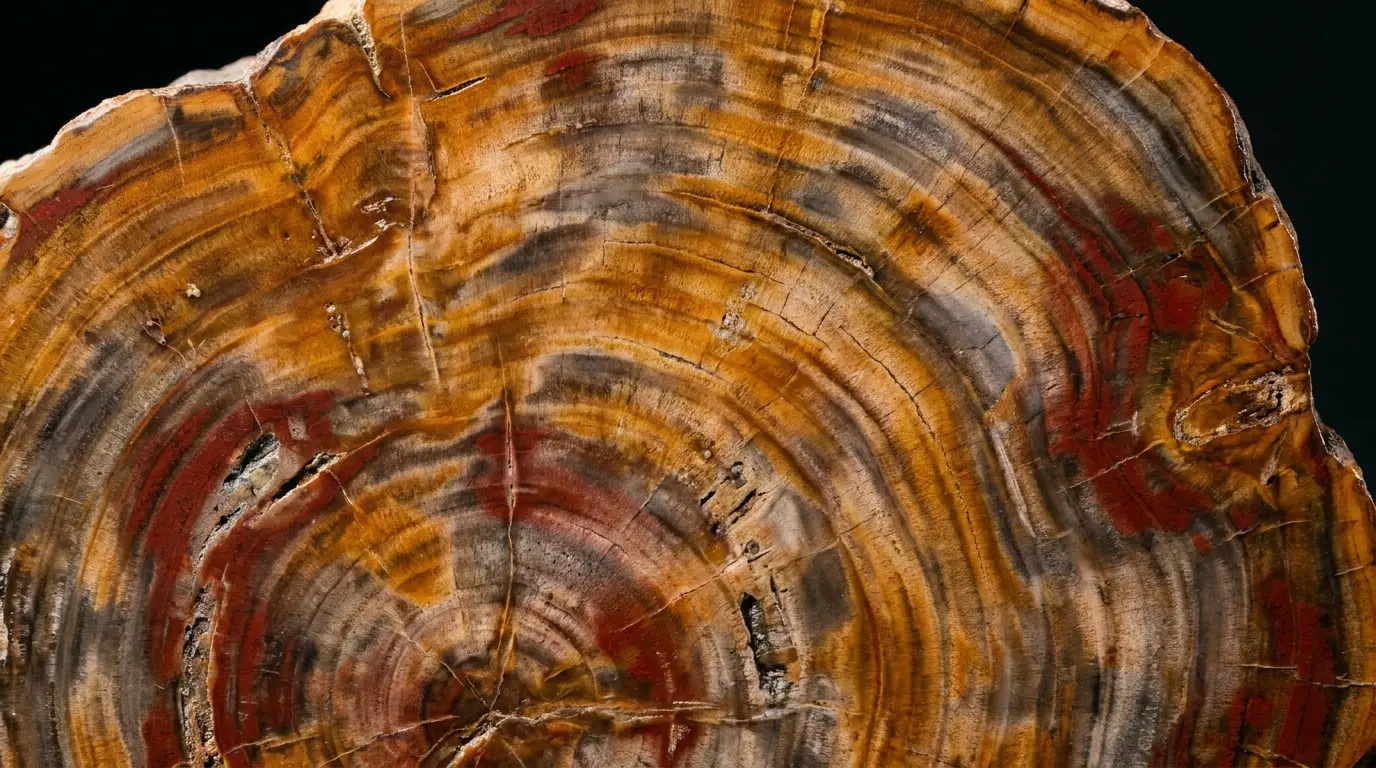
What Agatized Petrified Wood Actually Is
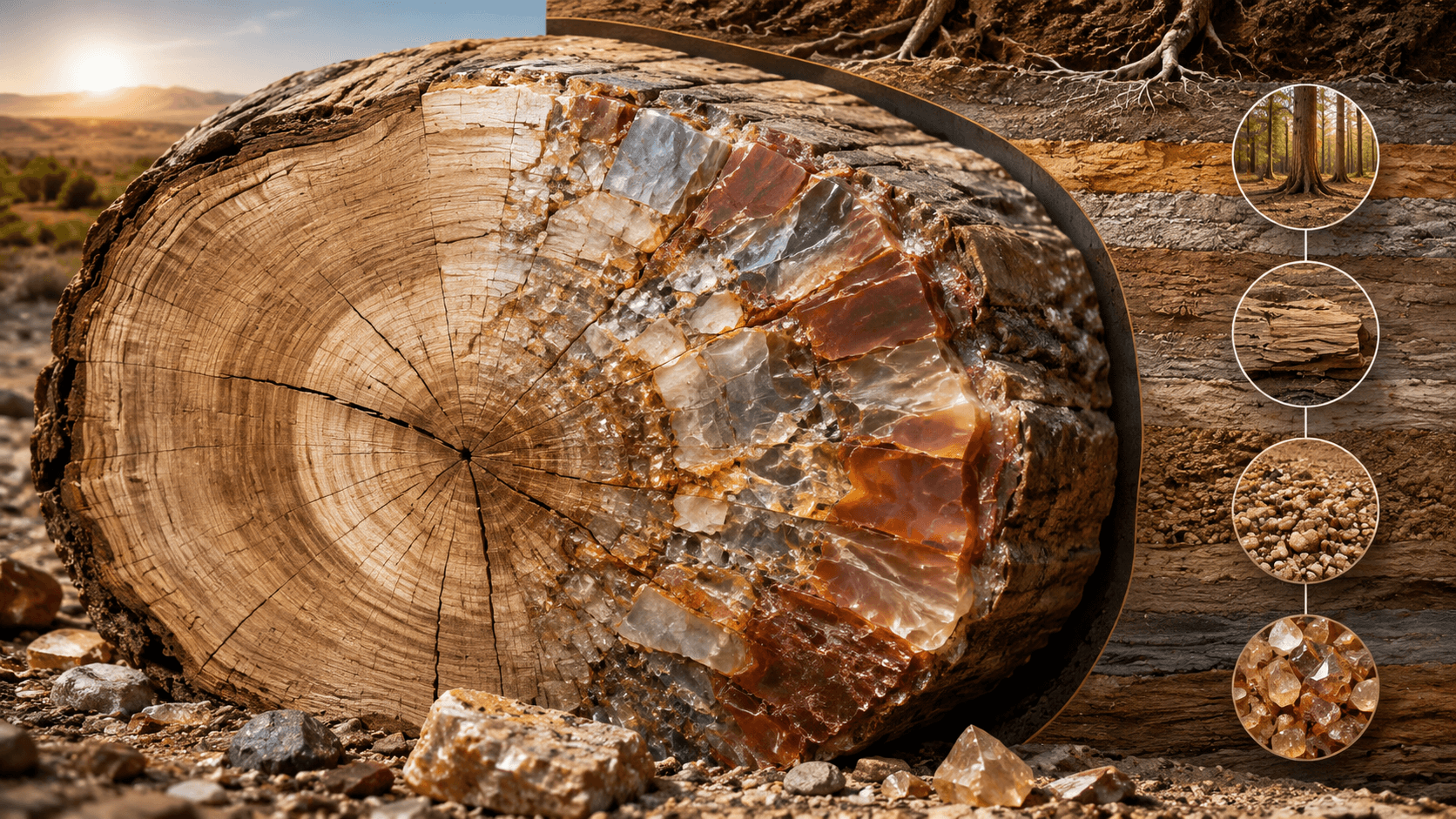
Agatized petrified wood is not a separate species of stone. It is petrified wood in which the silica that replaced the original cellulose crystallized as agate — a fine-grained, banded variety of quartz known for its translucency and its concentric or flowing patterns. Where ordinary petrified wood tends toward opaque, matte mineralization, agatized specimens often let light travel a few millimeters into the stone before scattering it back in soft, layered color.
The process starts the same way for every trunk: a tree falls, sediment and volcanic ash bury it before oxygen can rot the wood away, and groundwater rich in dissolved silica seeps through the cell structure for millions of years. Cell by cell, the organic tissue is replaced by silica, preserving the wood's original architecture — rings, grain, sometimes even insect galleries — in stone. When the silica settles as microcrystalline quartz in agate form rather than as coarser chalcedony or common opal, the result is agatized wood: denser bands, sharper contrast, and a slight glow when backlit.
Agatized vs. Petrified: What's the Difference?
The two terms are often used loosely, and the confusion is understandable. Here is the precise distinction:
- Petrified wood is the umbrella term. It describes any wood whose organic matter has been fully replaced by minerals — usually silica, sometimes calcite or pyrite. The wood's original texture survives; its chemistry does not.
- Agatized petrified wood is a specific outcome within that process. It occurs when the replacing silica crystallizes specifically as agate, producing the characteristic banding, translucency, and chalcedony-like sheen agate is known for in jewelry and mineral collecting.
In short: all agatized wood is petrified wood, but not all petrified wood is agatized. A trunk can be fully mineralized — hard, heavy, fossilized — without ever developing agate's optical qualities. Whether it does depends on the silica concentration, the flow rate of groundwater, and the mineral impurities present during crystallization, factors that vary from one buried log to the next, and even from one section of the same trunk to another.
This is why, at Medusa, we never promise agatization as a category you can order. We describe what a given trunk actually shows once it is cut and polished — some reveal only dense, opaque mineralization; others open onto banded, faintly luminous agate. The stone decides, not the catalog.
One Tree, One Name, One Color
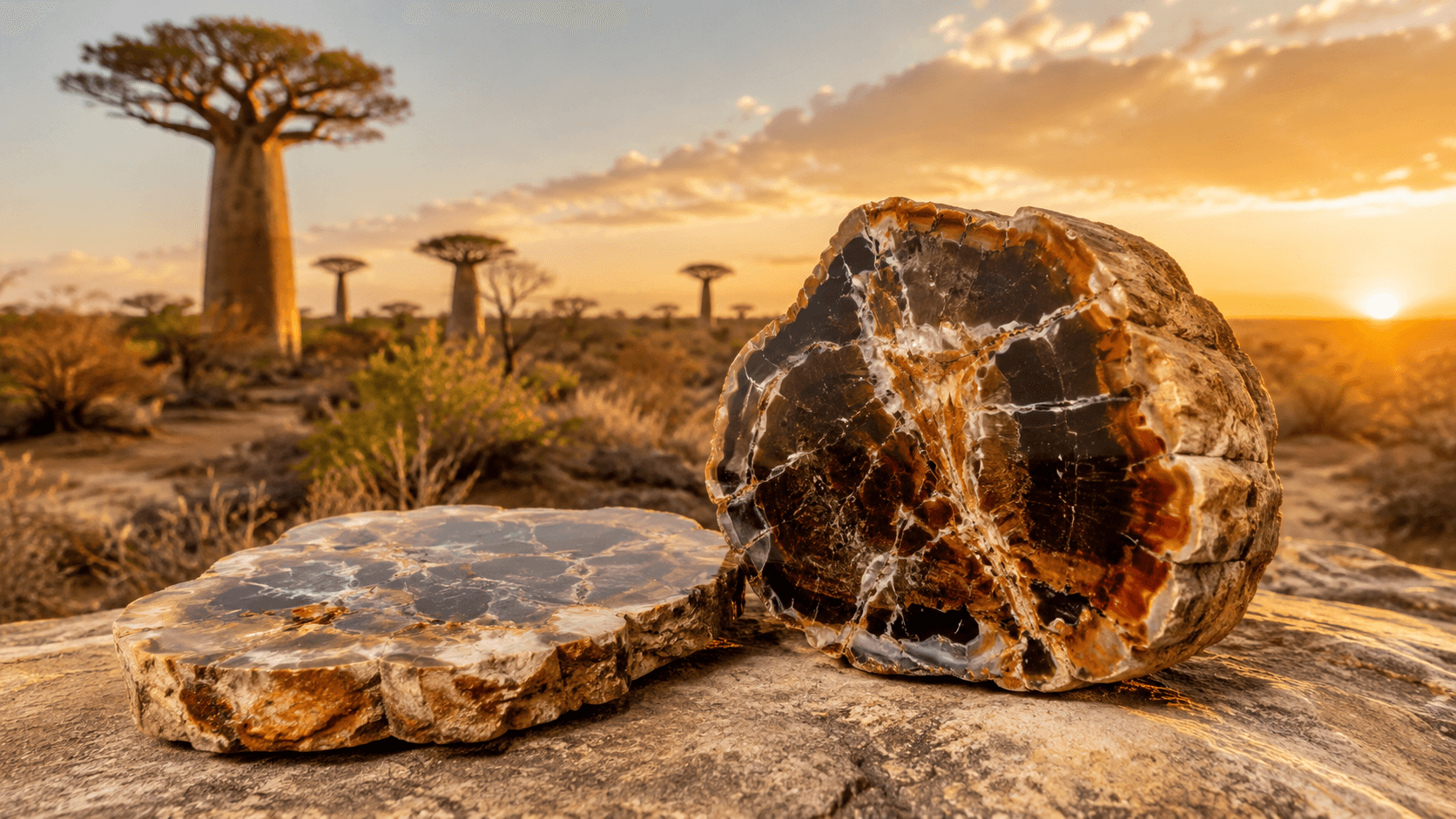
Every trunk we bring up from the ground in southwestern Madagascar is treated as an individual, not a batch. Each one receives a name — Ambra for amber tones, Argentea for silvered grays, Fusca for deep browns, Umbra for near-black density, Viridis for the rare greens — because each one earned it through 230 million years of solitary mineralization. Iron gave it red or ochre. Manganese gave it black or violet. Chromium or cobalt, when present, gave it blue or green. No two trunks were buried in exactly the same sediment, at exactly the same depth, exposed to exactly the same silica-rich water for exactly the same span of time.
That means when a trunk shows agatized banding, that pattern is unrepeatable. Once it is cut into slabs for a table or a vasin, the specific vein you saw in the raw block will not reappear in the next piece — even one from the same tree. We name our trunks because we want you to know you are not buying "petrified wood agate" as a commodity. You are buying a cross-section of one particular tree that lived once, fell once, and mineralized once.
An agatized trunk does not repeat itself. What you see in the slab is the only time this pattern will exist.
Reading the Stone: Colors and Bands
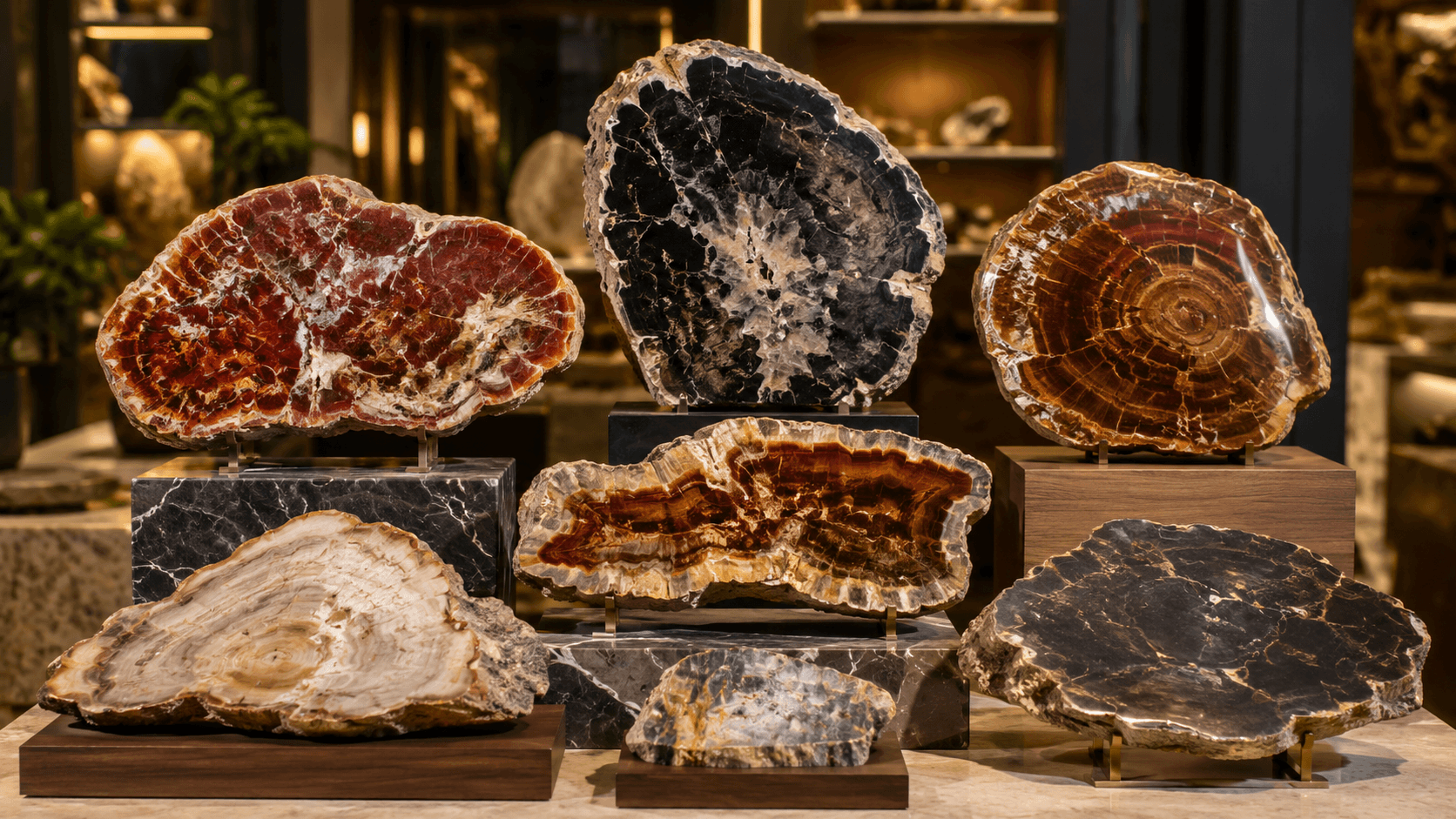
The banding in agatized wood follows the same chemistry as color in any petrified log, but often with more visual layering because agate deposits in fine, successive bands rather than in a single uniform mass.
- Iron oxide produces the warm register — amber, rust, ochre — frequently the base tone in Ambra trunks.
- Manganese oxide produces black and violet-brown streaks, dominant in Umbra and Fusca pieces.
- Chromium and cobalt traces, far rarer, produce the green and blue casts seen in Viridis trunks.
- Silica purity and crystal size determine translucency — the clearer and finer the quartz, the more agate-like the glow when the slab is held to light.
None of this is applied or enhanced. It is the trunk's own mineral history, fixed the moment crystallization stopped.
Why the Hardness Matters for Daily Use
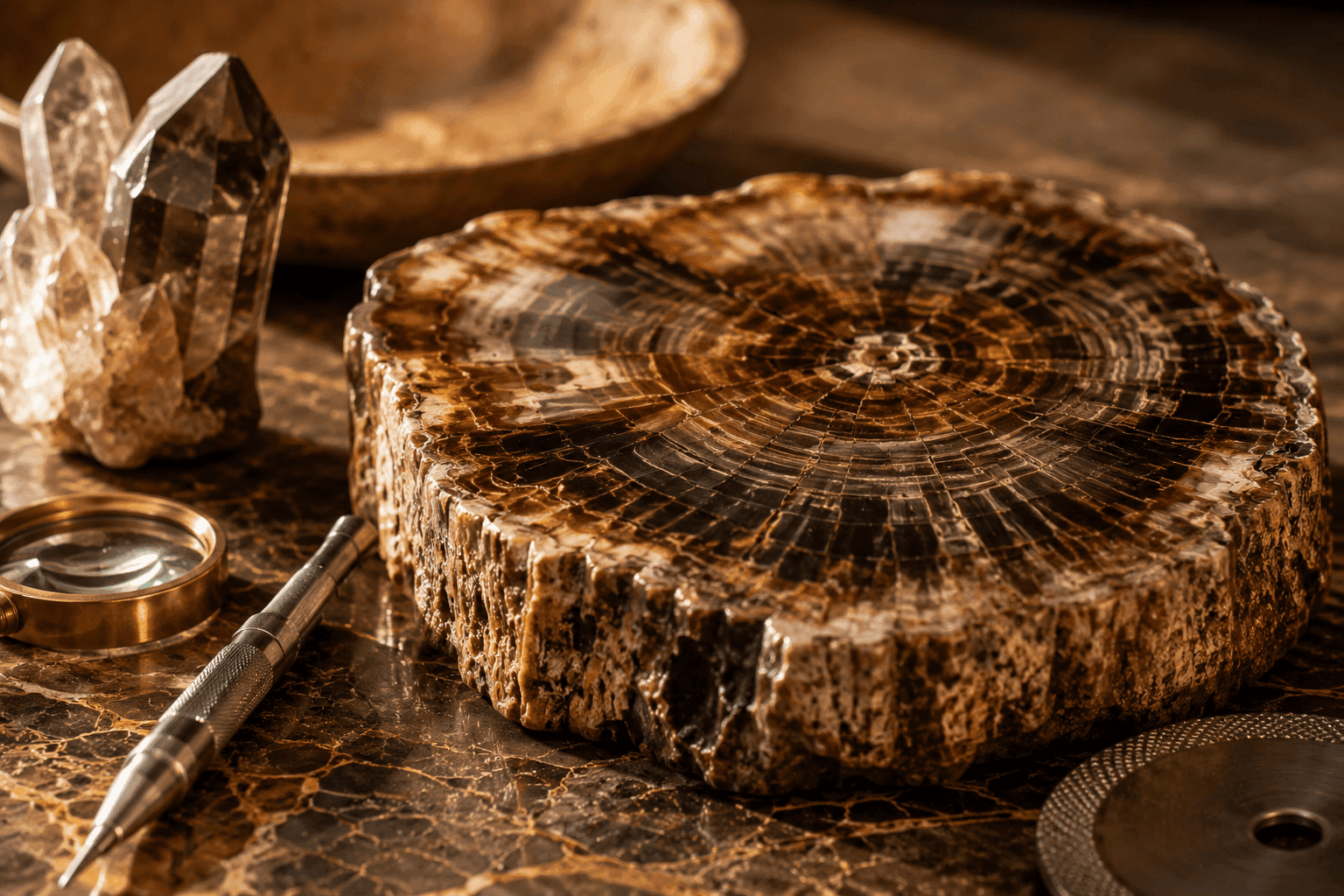
Agatized petrified wood is quartz, full stop — rated 7 on the Mohs scale, the same hardness as the agate found in jewelry, but here in slabs large enough to become a table or a basin. That single fact governs everything about how the material behaves in a home:
- It will not scratch under normal daily use — knives, keys, and cutlery leave no mark.
- It is inert to water. A vasin carved from agatized wood can hold water indefinitely without staining, swelling, or degrading.
- It is unaffected by heat, cold, UV exposure, or frost, making it suitable for both interior pieces and covered outdoor settings.
- It carries genuine weight. A trunk section this dense announces itself the moment you try to move it — this is stone, not a wood veneer imitation.
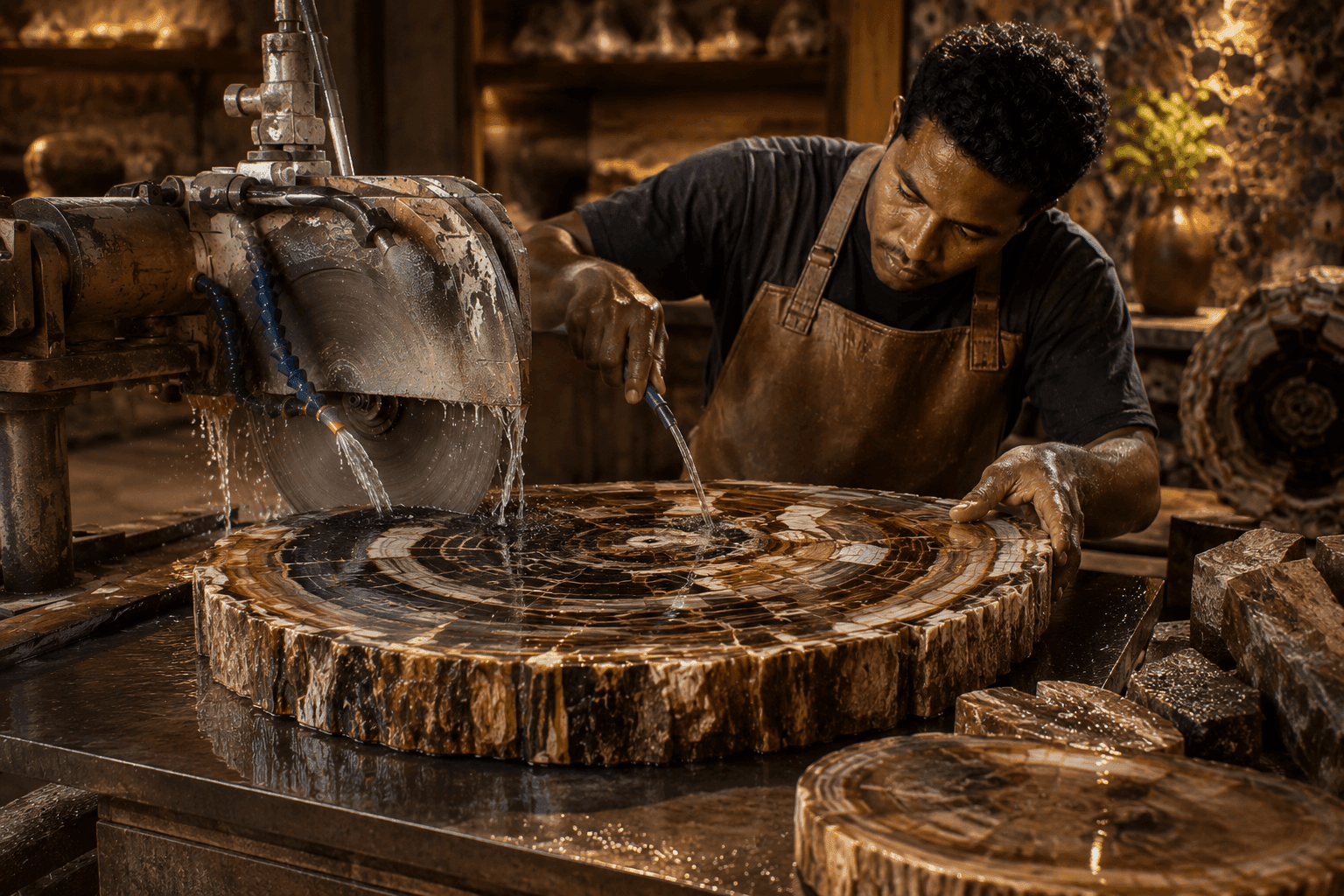
This is also why cutting and polishing agatized sections demands real patience. Because agate bands can vary in density even within the same trunk, an artisan has to read the stone as it's worked, adjusting to harder and softer zones to bring out the banding without fracturing it.
Living With an Agatized Piece
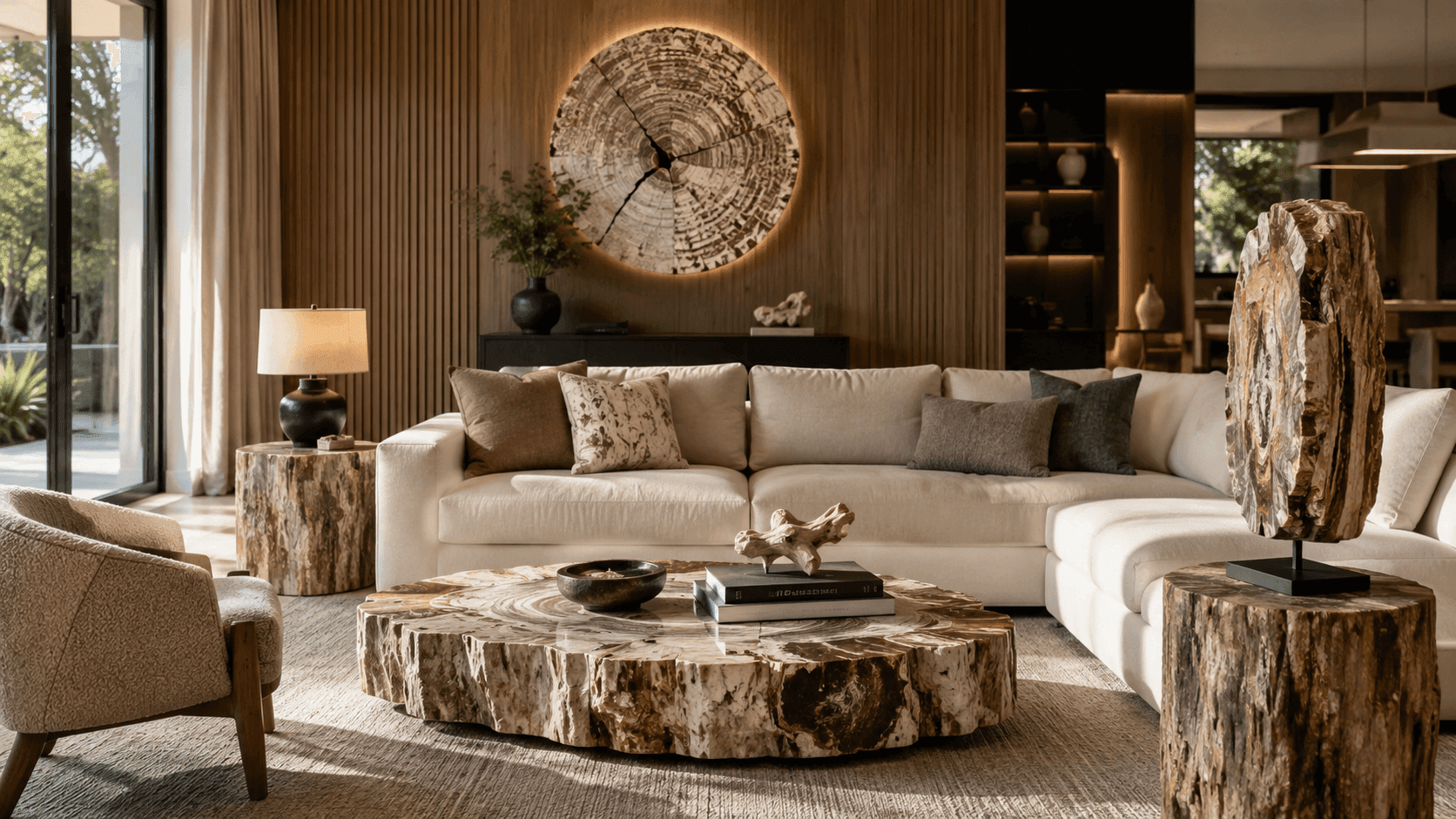
Because agatized sections often carry more translucency than standard petrified wood, they respond distinctly to light. Positioned near a window or under a low lamp, the bands can shift from opaque stone to a faint inner glow — a quality most petrified wood doesn't offer. This makes agatized pieces particularly suited to low tables, side consoles, or freestanding sculptural blocks where the light can reach the surface from an angle, rather than large dining tables meant to be seen mostly from above.
Care is minimal by design: quartz does not need sealing, oiling, or special cleaners. A damp cloth is sufficient. The stone was built to survive geological time; a living room asks very little of it in comparison.
See the agatized trunks currently available and request a tailored quote.
Visit the ShopFrequently Asked Questions
Is agatized petrified wood more fragile than regular petrified wood?
No. Both are quartz at Mohs hardness 7. Agatization affects color and translucency, not structural durability.
Can I identify an agatized trunk before it's cut?
Only partially. Surface weathering can hint at banding, but the true pattern — and whether agate formed at all — is only fully visible once the trunk is sectioned and polished.
Does the color of an agatized piece fade over time?
No. The color comes from stable mineral inclusions — iron, manganese, chromium, cobalt — fixed within the quartz structure. It does not fade with light or age.
Why does Medusa name each trunk instead of selling by type?
Because no two trunks mineralized identically. A name marks a specific tree, from a specific spot in southwestern Madagascar, with a coloration that will not recur once that trunk is fully used.