
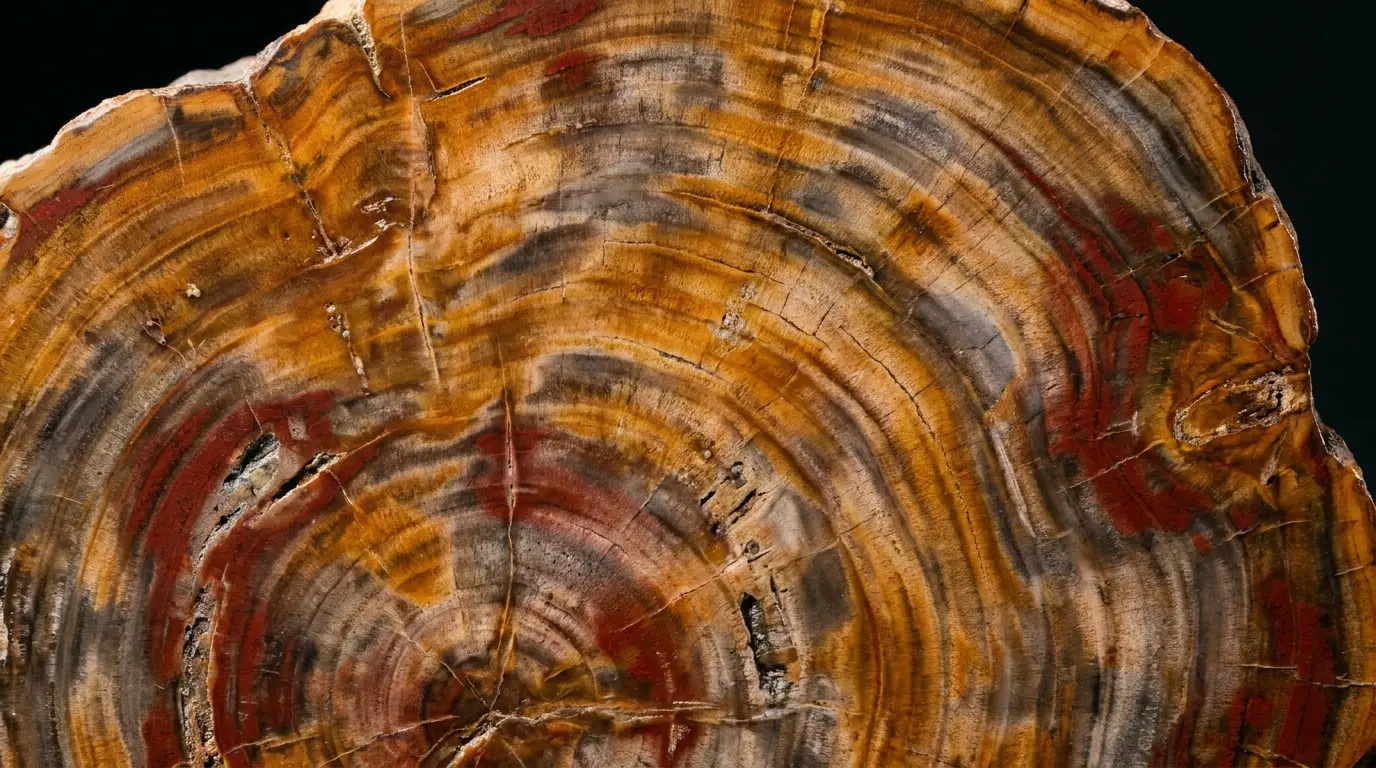
A Stone That Remembers Being a Tree
Feng shui has always paid close attention to what an object once was. A river stone carries the memory of water. A piece of driftwood carries the memory of wind. Petrified wood carries something rarer: the memory of a living tree that stopped being wood roughly 230 million years ago and became stone instead — quartz, hard as a blade, cold to the touch, indifferent to sun and rain.
This double nature is exactly why petrified wood holds a particular place in feng shui thinking. It is Wood and Earth at once: the form, the grain, the growth rings of a tree, held inside the density and permanence of mineral. In a discipline built on the interplay of elements, that is not a curiosity — it is the whole point.
Wood and Earth, Combined
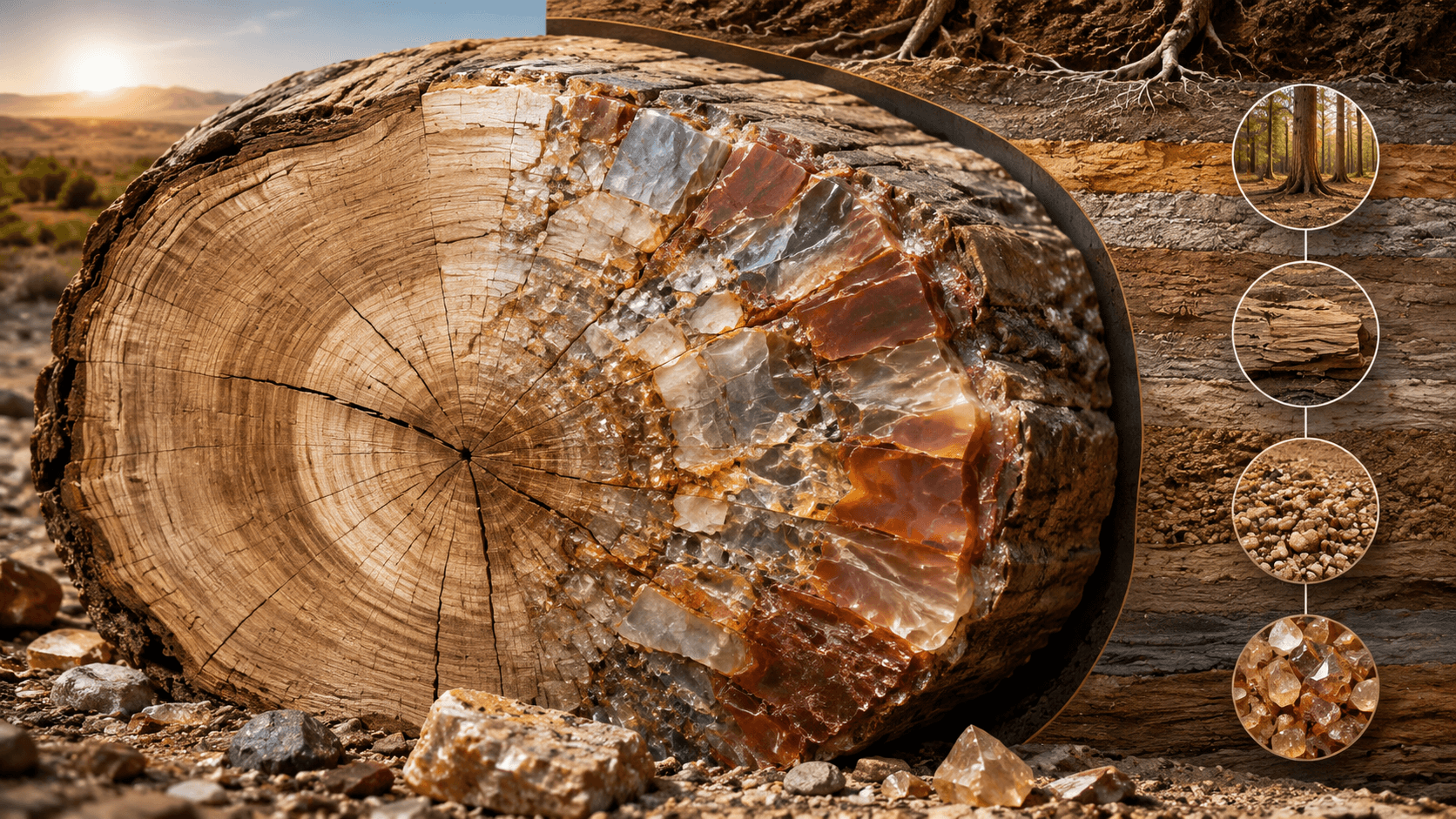
In feng shui, Wood governs growth, ambition, renewal. Earth governs stability, patience, nourishment. The two elements don't usually share a single object — a bamboo plant is Wood, a ceramic bowl is Earth. Petrified wood does both, because it is a tree that finished growing and then, slowly, mineral by mineral, became stone.
Each trunk we bring up from southwestern Madagascar shows this transformation in its own cross-section. The rings are still there. The bark line is still there. But the substance answering to the touch is quartz, at 7 on the Mohs hardness scale — harder than steel, unaffected by water, heat, UV light or frost. A tree's history, fixed permanently in a material built to outlast the tree by millions of years.
- Wood aspect: shape, rings, organic history — associated with growth and forward motion.
- Earth aspect: mineral density, weight, permanence — associated with grounding and stability.
- Result: a piece felt to anchor a room rather than animate it — steadiness rather than movement.
Each Trunk, Its Own Color, Its Own Energy
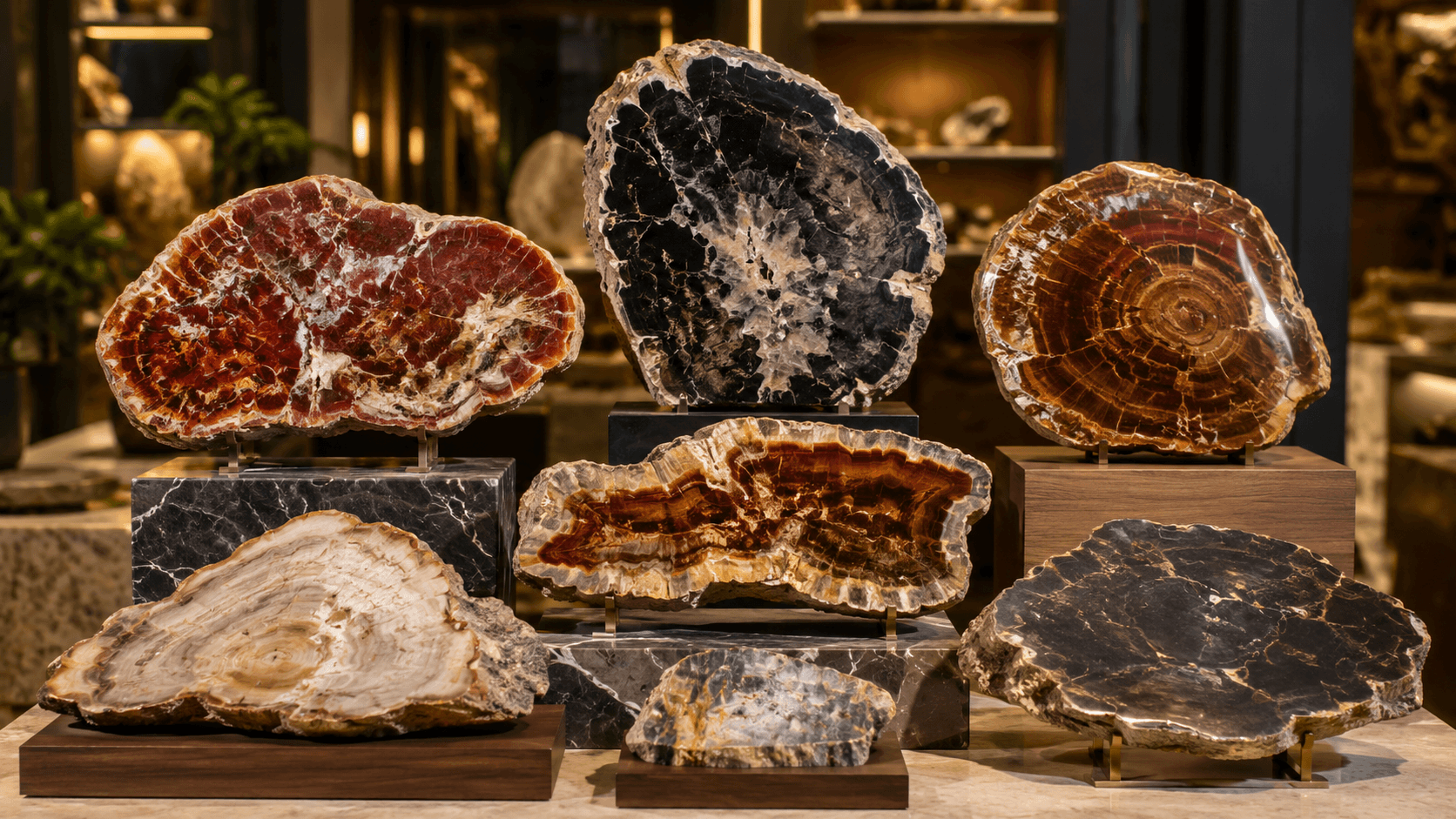
No two Medusa trunks are alike, and this matters in feng shui as much as in décor. The color of a petrified trunk depends entirely on which metal infiltrated it during fossilization: iron produces red and ochre tones, manganese produces black and violet, chromium and cobalt produce green and blue. These are not dyes or finishes — they are geological accidents, unrepeatable, sealed inside the stone before it ever reached the surface.
We name each tree individually rather than sorting it into a product category, because that is closer to the truth of the material:
- Ambra — amber and honey tones, associated in feng shui with warmth and welcome.
- Argentea — silvered, pale grey, read as clarity and calm.
- Fusca — deep brown, tied to grounding and continuity.
- Umbra — near-black, associated with depth, protection, quiet authority.
- Viridis — green-toned, evoking renewal and the original Wood element most directly.
Once a trunk is cut, its particular palette is gone for good. There is no second Umbra waiting in reserve.
Where to Place a Petrified Wood Piece
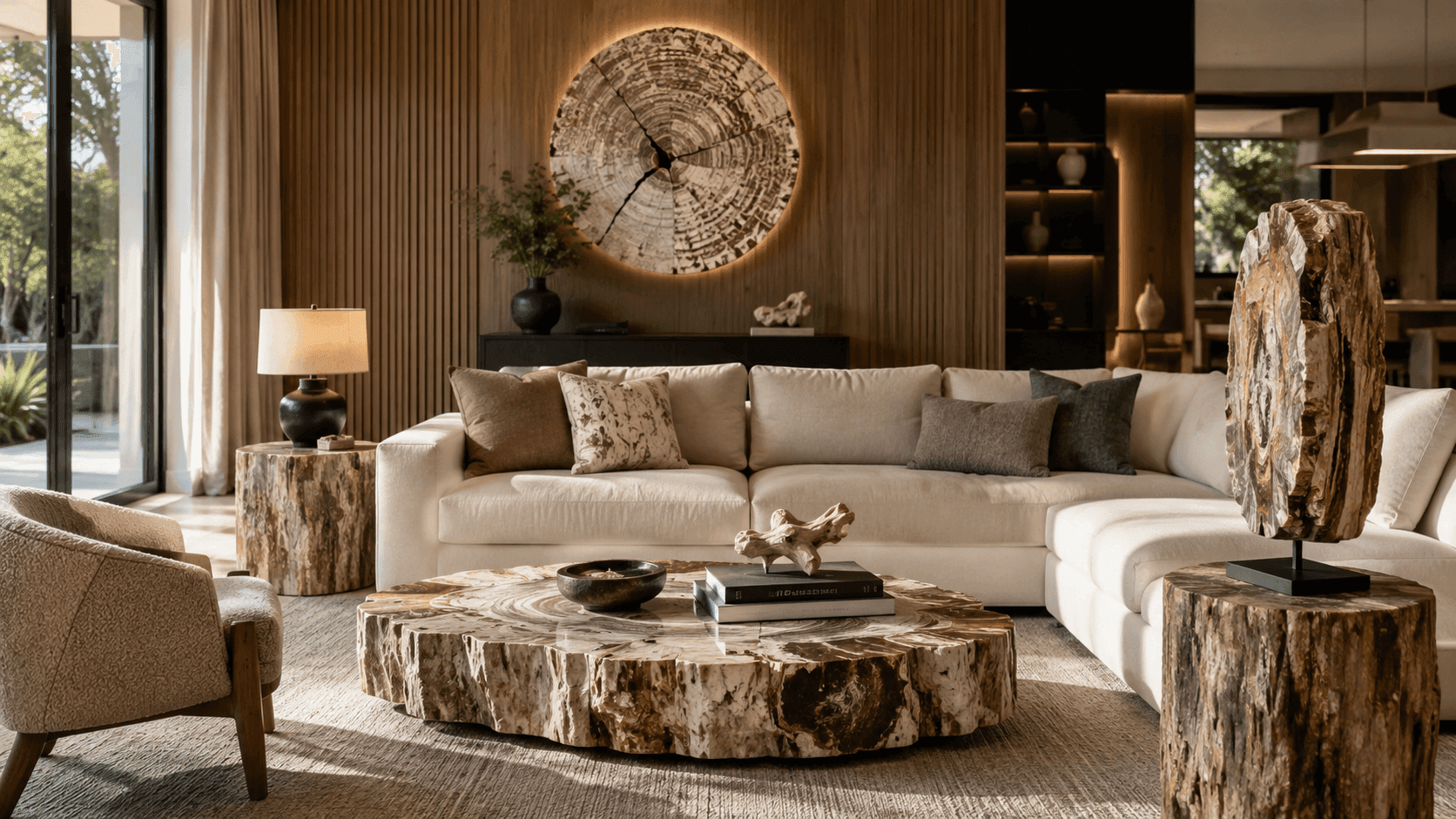
Feng shui practice generally favors petrified wood in spaces meant for stability rather than speed: an entryway, where its weight signals a household that isn't easily unsettled; a living room, where its stillness balances busier, faster elements like screens or glass; a study or office, where Earth energy is traditionally linked to focus and long-term thinking rather than sudden bursts of activity.
Because the stone is genuinely inert — no moisture absorption, no reaction to temperature swings, no fading under light — it can sit near a window, above a heat source, or in a humid entryway without concern. Placement can follow intention rather than caution.
- A trunk table near an entrance: grounding for those who pass through daily.
- A vasin or bowl in a bedroom: quiet, private stability, away from bright light.
- A raw or lightly polished piece in an office: Earth energy positioned for concentration.
A tree finishes growing once. A stone that remembers being a tree never stops holding its ground.
Choosing the Right Trunk
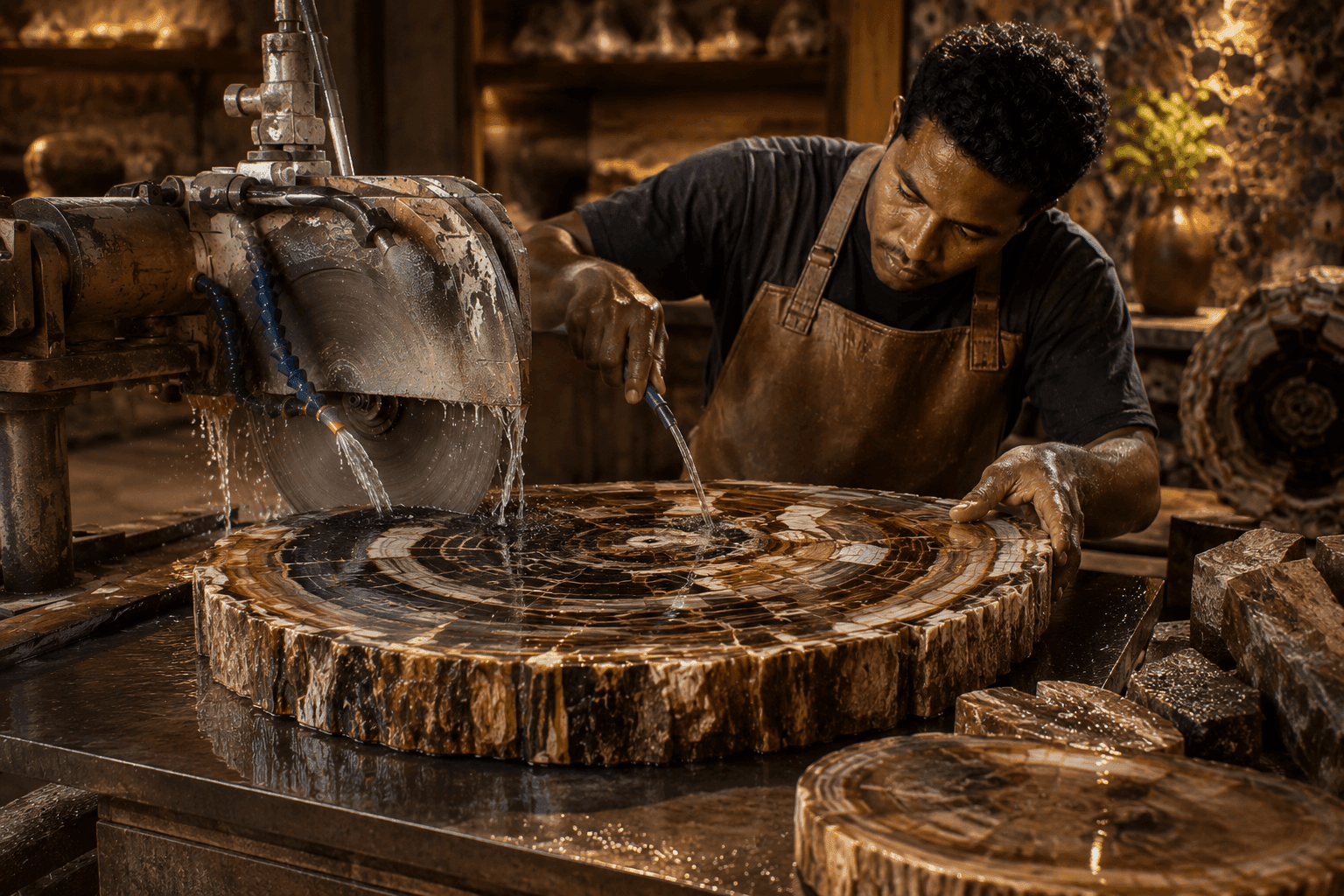
There is no universal answer to which color or trunk "belongs" in a given room — feng shui traditions vary, and personal intention matters more than a fixed rule. What stays constant is the origin: every piece we work with is a single trunk, raised individually from the sud-ouest of Madagascar, cut and finished by hand rather than mass-processed. The rarity is not a marketing angle; it is a geological fact. A given color, once the trunk that produced it is gone, will not reappear in exactly the same way.
Choosing a piece, in practice, means choosing a color that matches the intention for the room — warmth, clarity, depth, calm, renewal — and trusting that the stone's permanence will do the rest.
Explore the trunks currently available and find the one suited to your space.
Discover the CollectionFrequently Asked Questions
Does petrified wood really belong to two feng shui elements at once?
Yes, in practical terms: its form and rings come from a living tree (Wood), while its physical substance is fully mineralized quartz (Earth). This dual nature is precisely why it is treated differently from ordinary stone or wood objects in feng shui practice.
Where is Medusa's petrified wood from, and how old is it?
Every piece originates in southwestern Madagascar, where ancient trees were buried and mineralized roughly 230 million years ago, during the Triassic period.
Is the color symbolic, or does it change over time?
The color is fixed permanently by the metal that infiltrated the wood during fossilization — iron for reds and ochres, manganese for blacks and violets, chromium or cobalt for greens and blues. It does not fade with light, heat, or humidity.
Can petrified wood be placed anywhere in the home, including humid or sunny spots?
Yes. As quartz at 7 on the Mohs hardness scale, it is unaffected by water, heat, UV exposure, or frost, which gives real freedom in placement — a rare quality among decorative materials.