
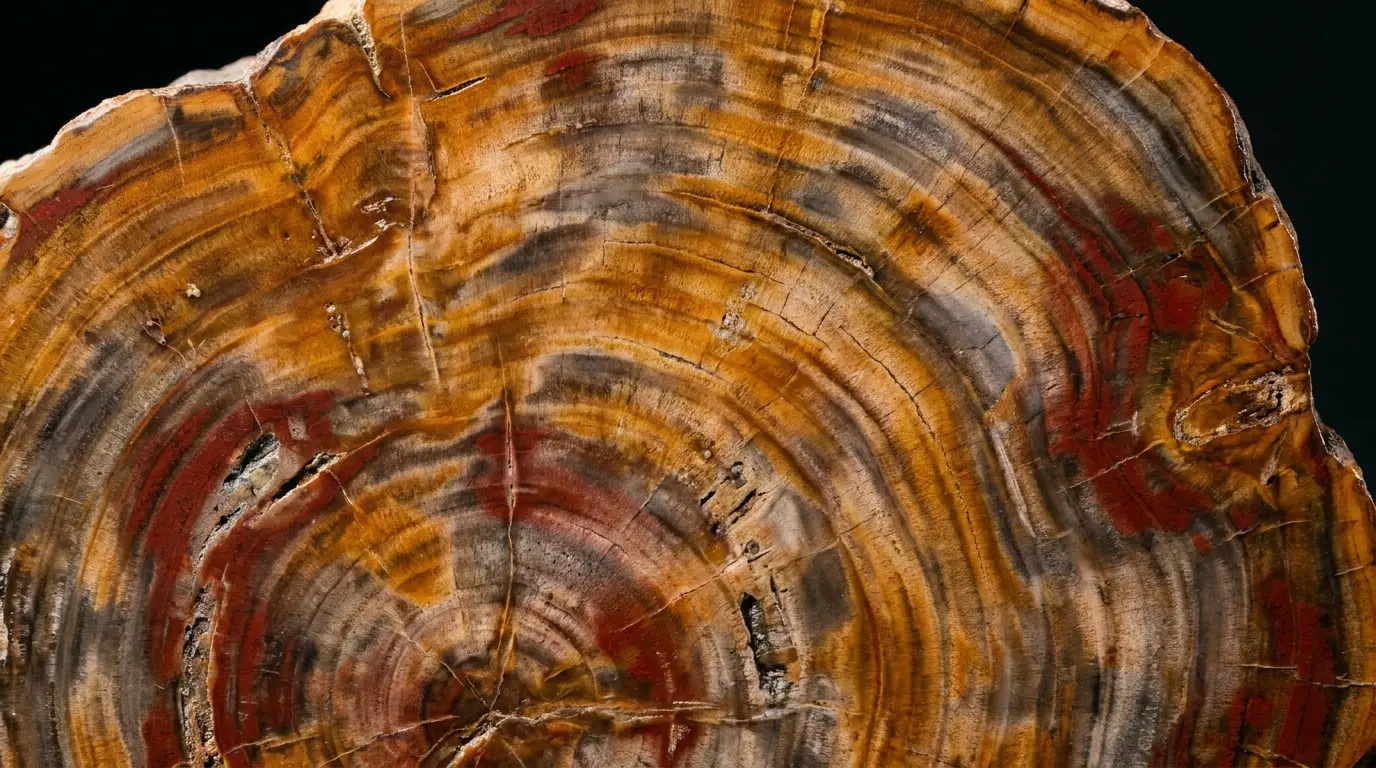
Where Petrified Wood Colors Come From
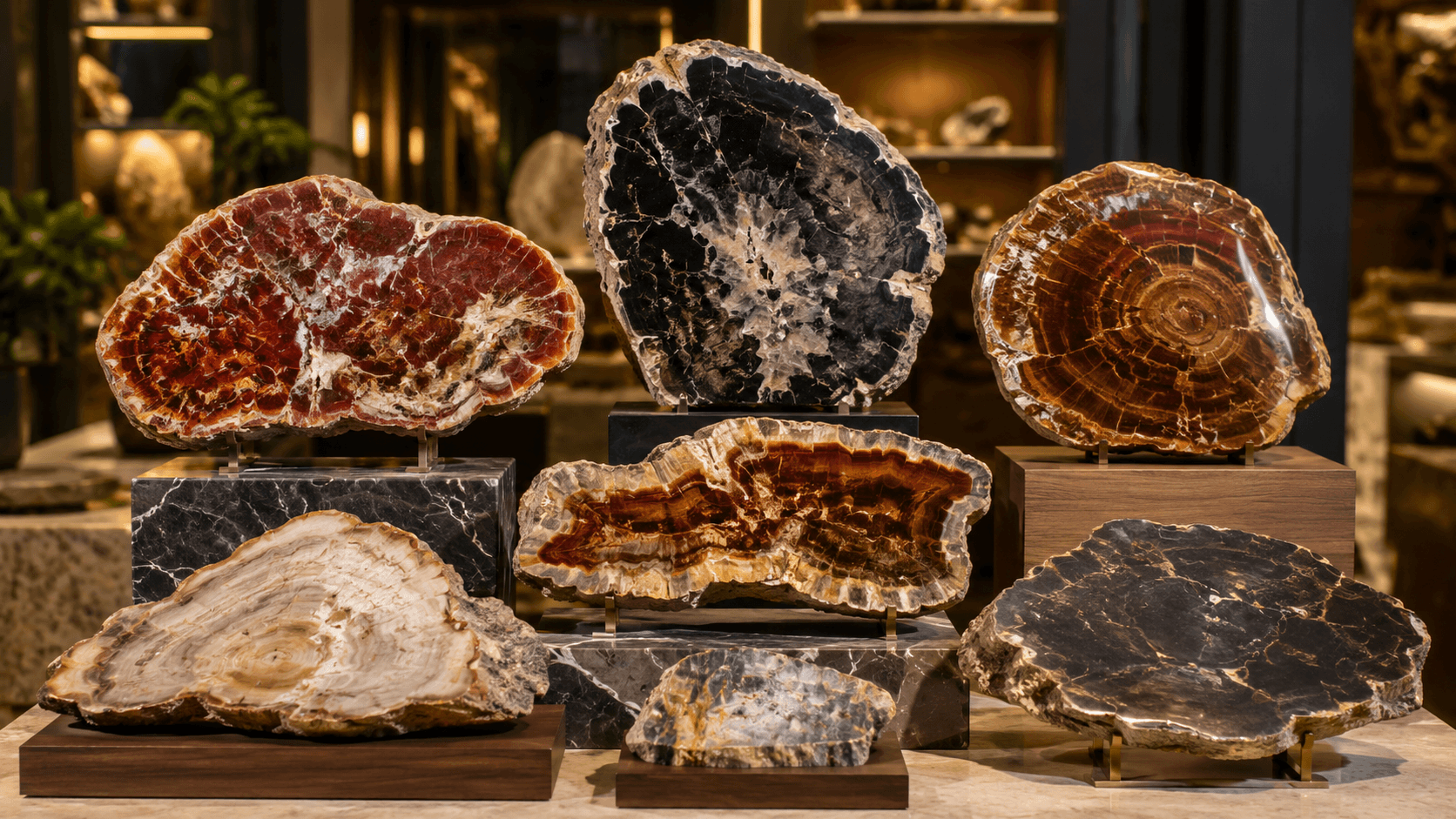
No pigment, no dye, no surface treatment. Every color you see in a piece of petrified wood was written into it 230 million years ago, atom by atom, as groundwater carrying dissolved minerals seeped into a fallen tree and replaced its organic tissue with silica. The wood's original cell structure — its rings, its fibers, its growth pattern — survived the process almost intact. What changed was the material itself: cellulose became quartz, hardness 7 on the Mohs scale, and the tree's color became a mineral signature rather than a biological one.
This is why two trunks from the same forest, buried in the same period, can emerge with entirely different palettes. Color in petrified wood is not decoration. It is chemistry, recorded permanently in stone.
The Minerals Behind Each Hue
Each color family traces back to a specific trace element present in the groundwater at the moment of fossilization:
- Iron produces the reds, oranges, and ochres — the most common palette in petrified wood, formed as iron oxides settled into the wood's cellular structure.
- Manganese produces blacks, deep purples, and blue-black tones, often appearing as dense veining rather than uniform color.
- Chromium and cobalt produce the rarer greens and blues, minerals far less abundant in groundwater, which explains their scarcity.
- Pure silica with minimal trace elements produces the pale creams, grays, and translucent whites — the "cleanest" mineralization, closest to the color of quartz itself.
The concentration, distribution, and combination of these elements — not just their presence — determine whether a trunk reads as a warm amber, a smoky charcoal, or a striated mix of several tones across a single cross-section.
Every Trunk, Its Own Palette
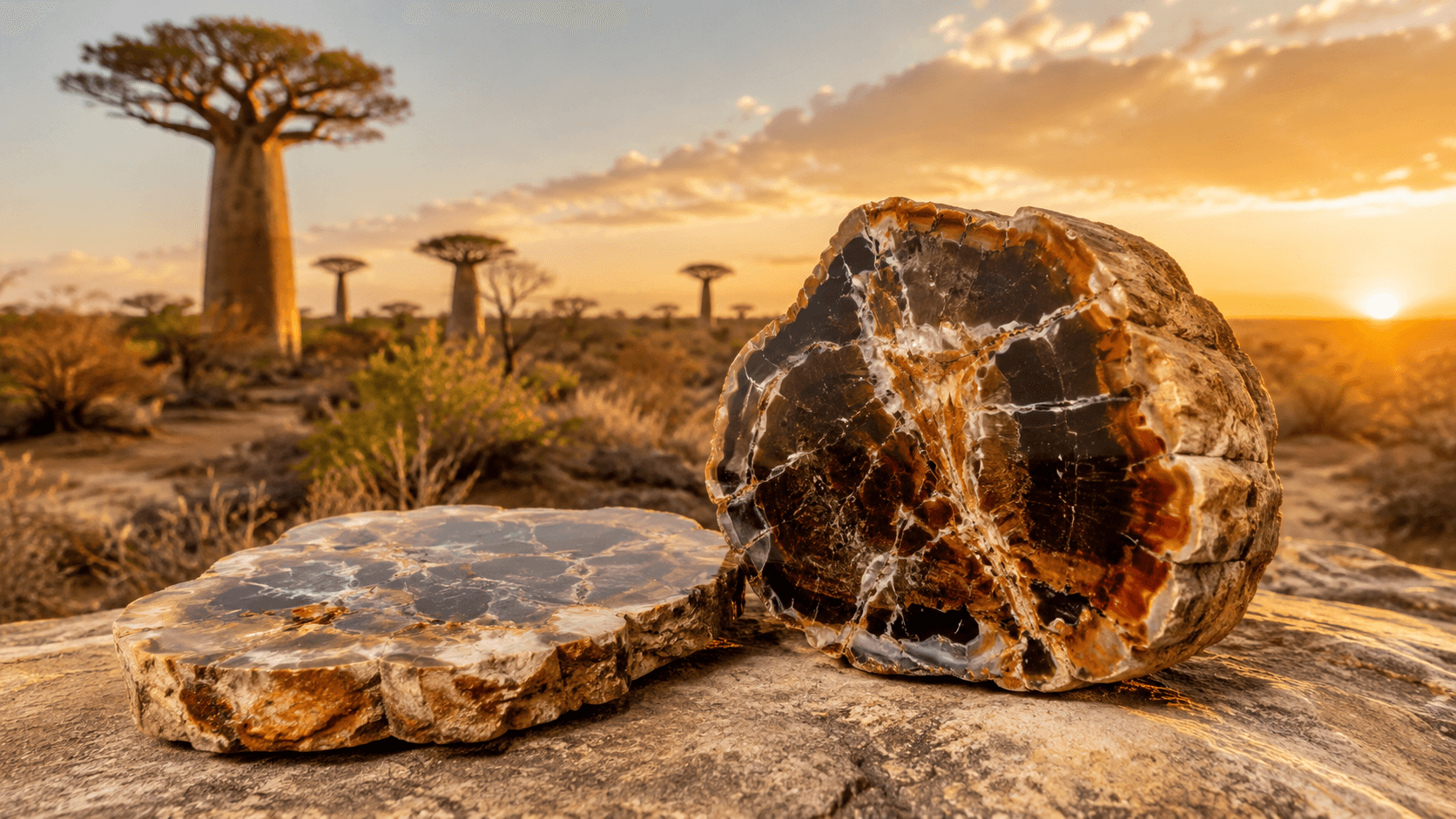
At Medusa, we don't sell "petrified wood" as an interchangeable material. We recover individual trees, one at a time, from the sedimentary basins of southwestern Madagascar — and we name each trunk: Ambra for amber tones, Argentea for silvery grays, Fusca for deep browns, Umbra for near-black density, Viridis for the rare greens.
This naming is not branding for its own sake. It reflects a mineralogical fact: the color of a given trunk was fixed by the specific groundwater conditions surrounding that particular tree, in that particular pocket of sediment, 230 million years ago. No other trunk shares its exact chemistry. When we saw into a log and reveal its palette, we are not choosing a color — we are discovering one that has existed, hidden, for a quarter of a billion years.
A color that took 230 million years to form cannot be reordered once the trunk is gone.
What Survives the Cut
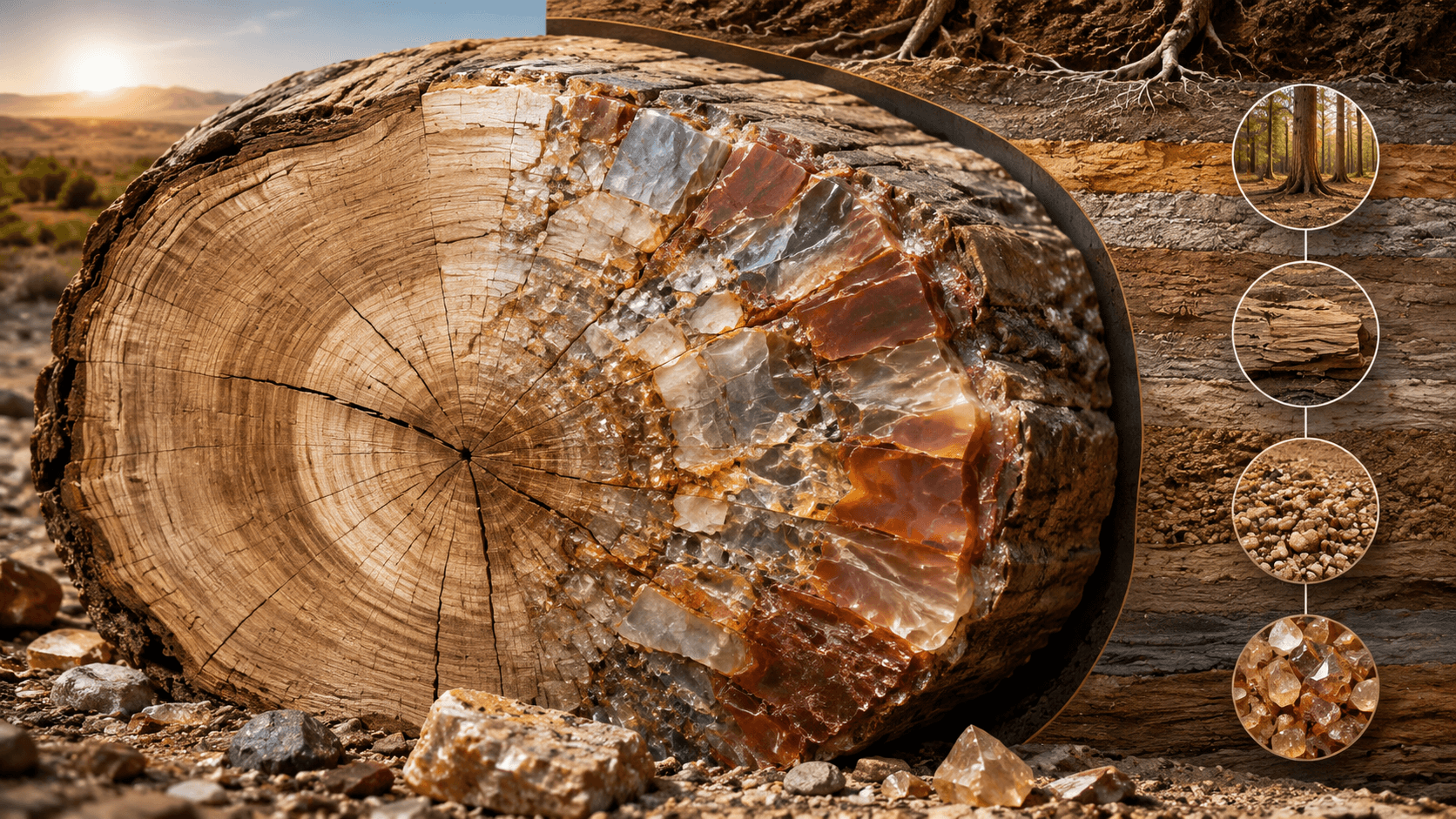
Slicing into a fossilized trunk is irreversible in a specific sense: the outer bark, the weathering patina, the exact vein pattern revealed at that cut, will never recur. This is quartz, not a manufactured slab — there is no second trunk with an identical grain to fall back on. Once Ambra is cut and its warm palette is committed to a set of tabletops or a vessel, that particular amber is finished. The next trunk we recover, even from the same region, will carry its own mineral history and its own name.
This scarcity is structural, not manufactured for effect. It follows directly from how the material forms: one tree, one burial site, one groundwater chemistry, one irreproducible result.
Why the Color Never Fades
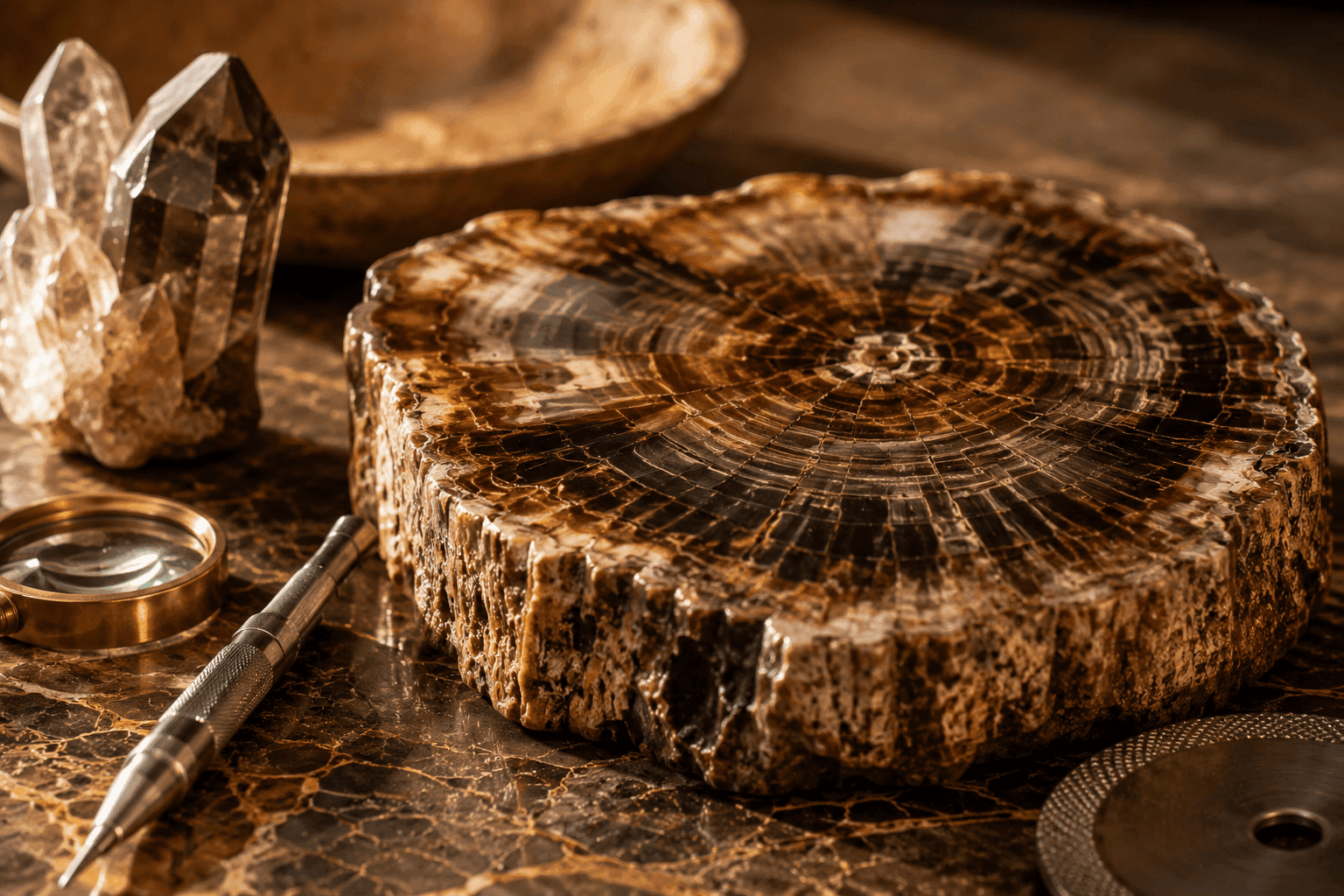
Because the color sits within a quartz matrix rather than on a painted or stained surface, it behaves like the color of any other mineral: it does not bleach under UV, soften with humidity, or dull with heat. At hardness 7 on the Mohs scale, petrified wood resists scratching from most everyday materials, and its coloration is unaffected by water, frost, or direct sunlight — properties that make it suitable for both indoor pieces and select outdoor installations.
- Fire and heat: no scorching, no fading
- Water and humidity: no swelling, no staining
- UV exposure: no bleaching over time
- Cold and frost: no cracking from thermal shock
The practical result: a tabletop or a vessel in Fusca or Umbra will show the same depth of color in twenty years that it shows on delivery.
From Raw Trunk to Finished Piece
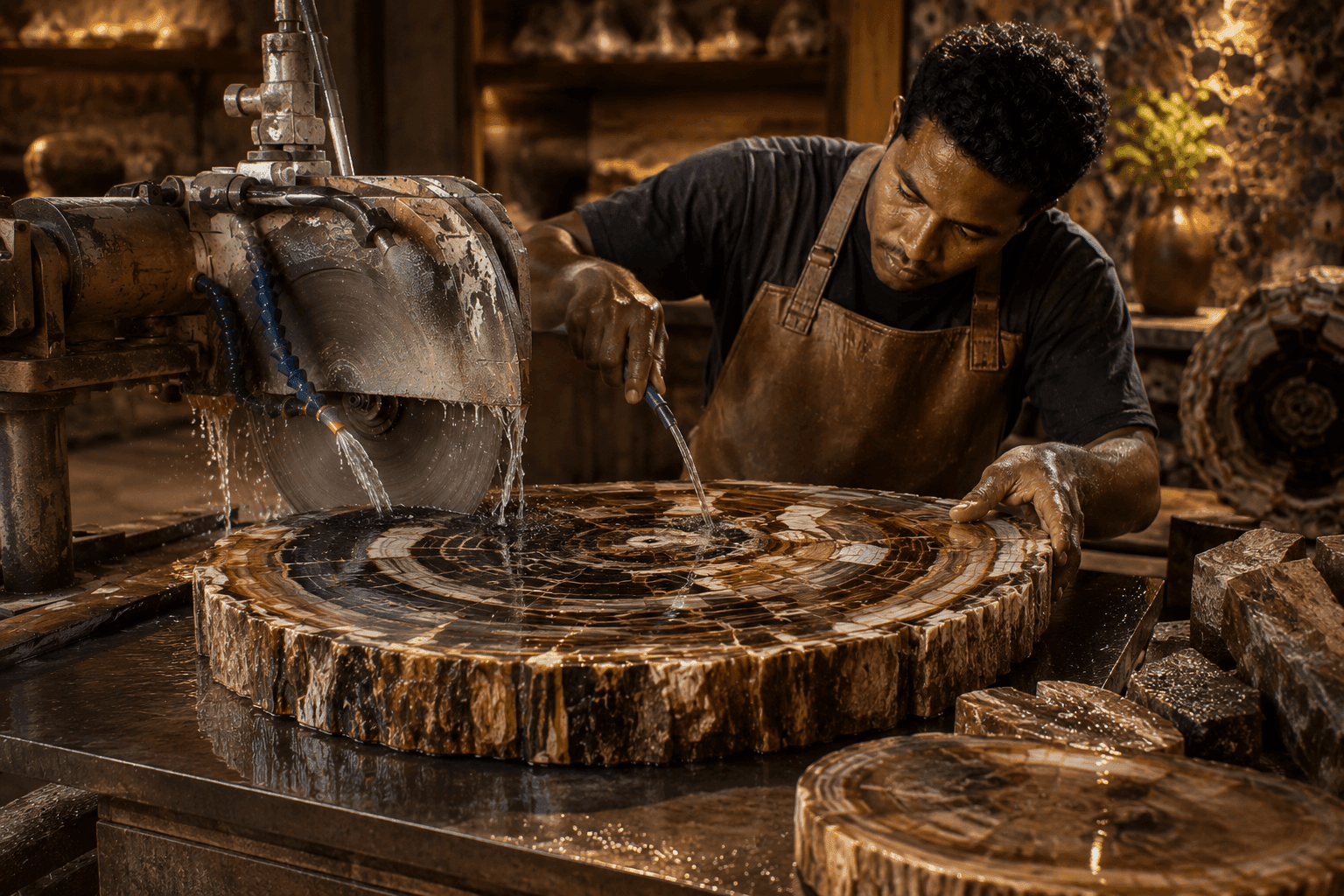
Color only becomes fully visible once a trunk is cut and polished — the weathered exterior of a fossilized log gives little indication of what lies inside. Our artisans work each trunk individually, orienting cuts to follow the grain and reveal the clearest expression of its particular mineral signature, whether that means a single dominant tone or a striated mix of iron reds and silica creams across one slab.
This is also where the naming becomes practical rather than poetic: knowing a trunk is Argentea or Viridis before cutting guides how it should be sliced, polished, and finished to show its color at its best.
Discover which named trunk suits your space.
View the CollectionFrequently Asked Questions
Why do petrified wood colors vary so much between pieces?
Color depends on which trace minerals were present in the groundwater during fossilization. Iron, manganese, chromium, and cobalt each produce distinct hues, and their concentration varies from tree to tree and even within a single trunk.
Is the color of petrified wood permanent?
Yes. The color is embedded in the quartz structure itself, not applied to the surface. It does not fade under UV light, degrade with water exposure, or change with heat or cold.
Which petrified wood color is rarest?
Green and blue tones are the rarest, since they require chromium or cobalt — minerals far less common in groundwater than iron or manganese, which produce the more frequent reds, ochres, and blacks.
Why does Medusa give each trunk a name instead of a color category?
Because color in petrified wood is not a product line — it's the unrepeatable result of one tree's specific mineral history. Naming each trunk (Ambra, Argentea, Fusca, Umbra, Viridis) reflects that each one is an individual find, not a standardized material.