
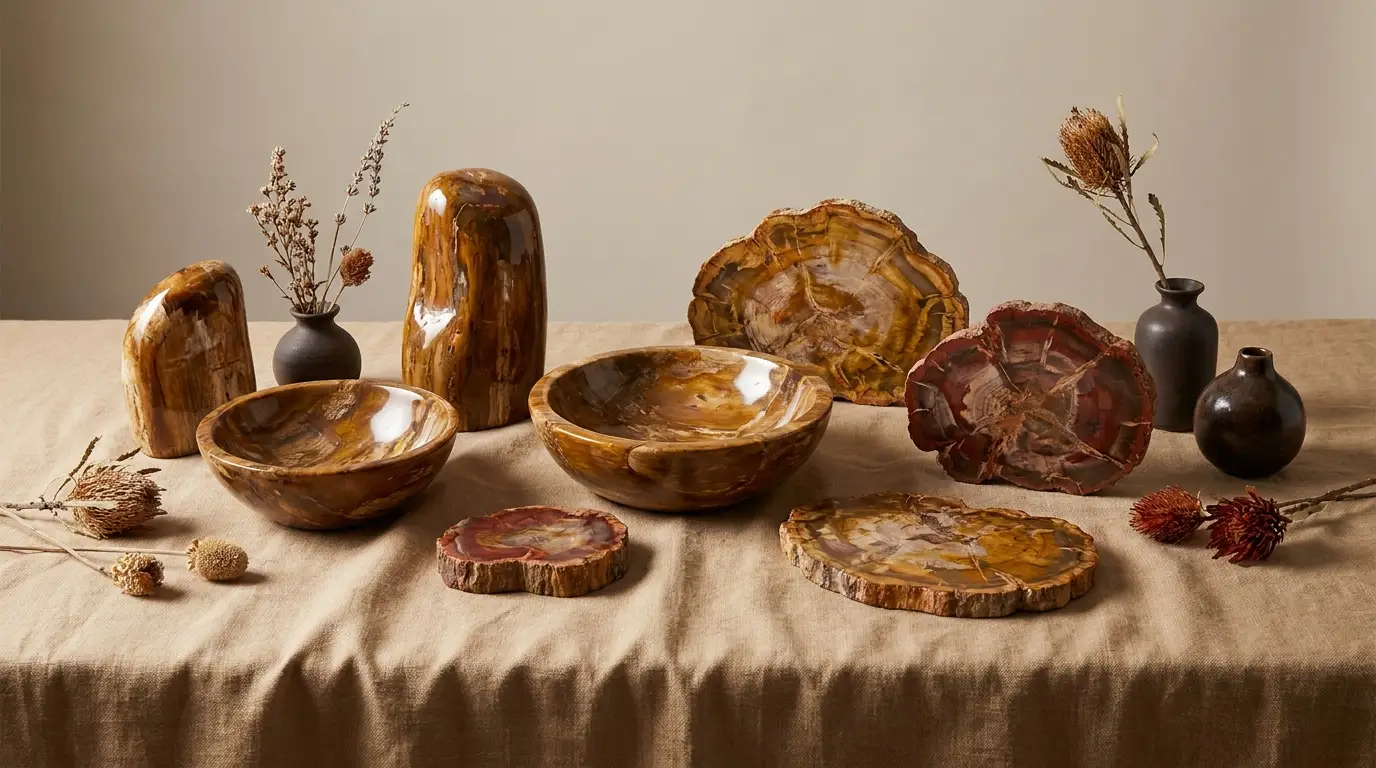
A Slice of Deep Time
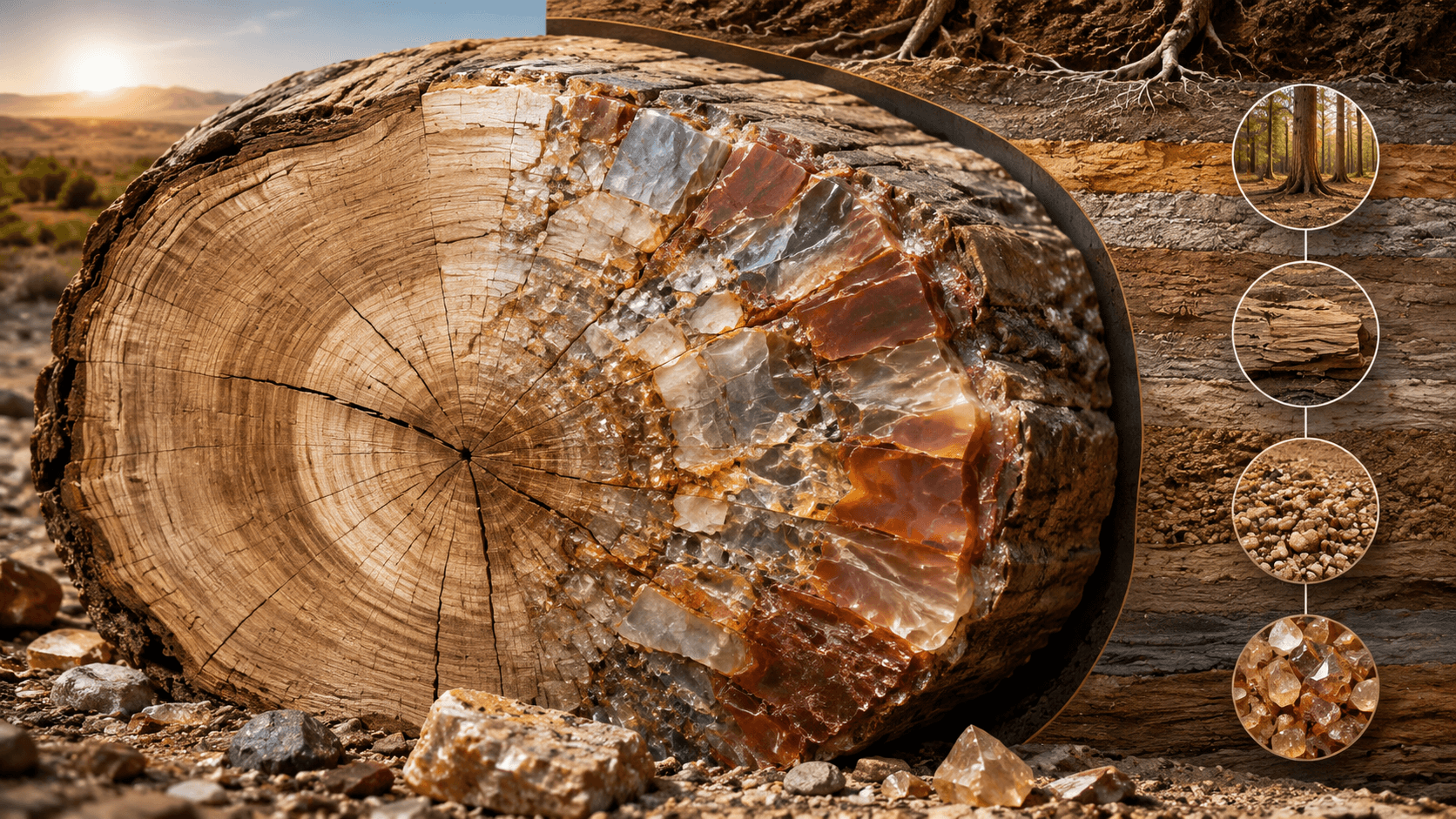
A coaster is usually an afterthought — cork, rubber, a printed tile bought by the dozen. Ours are cut from trees that stopped growing in the Triassic, buried in the sediments of southwestern Madagascar, and slowly replaced, cell by cell, with quartz. What you set your glass on is mineral, not wood, though the rings, the bark line, sometimes a fracture from the original trunk, are still there to read.
Each coaster is sliced from a trunk we've already named. Not a product line — an individual tree, given a name the day it was raised from the ground. The slice in your hand carries that tree's particular chemistry: the specific trace of iron or manganese that coloured it, millions of years before anyone thought to drink coffee from it.
One Tree, One Name
Medusa doesn't sell "petrified wood" as a generic material. We sell Ambra, Argentea, Fusca, Umbra, Viridis — trunks pulled one at a time from the Madagascan soil, each with its own mineral signature and its own name. A tabletop, a vessel, a set of coasters: all of it comes from a finite trunk, and once that trunk is fully cut, its exact shade is gone. There is no reordering the same colour twice.
Coasters are often the first point of contact with this idea, because they're small enough to hold two or three at once and compare. Set an Ambra slice next to a Viridis one and the difference isn't subtle — it's a different tree, a different burial, a different set of trace metals doing their slow work underground.
Every coaster is a cross-section of a tree that had already stopped growing before the first flowers existed.
The Stone Behind the Shine
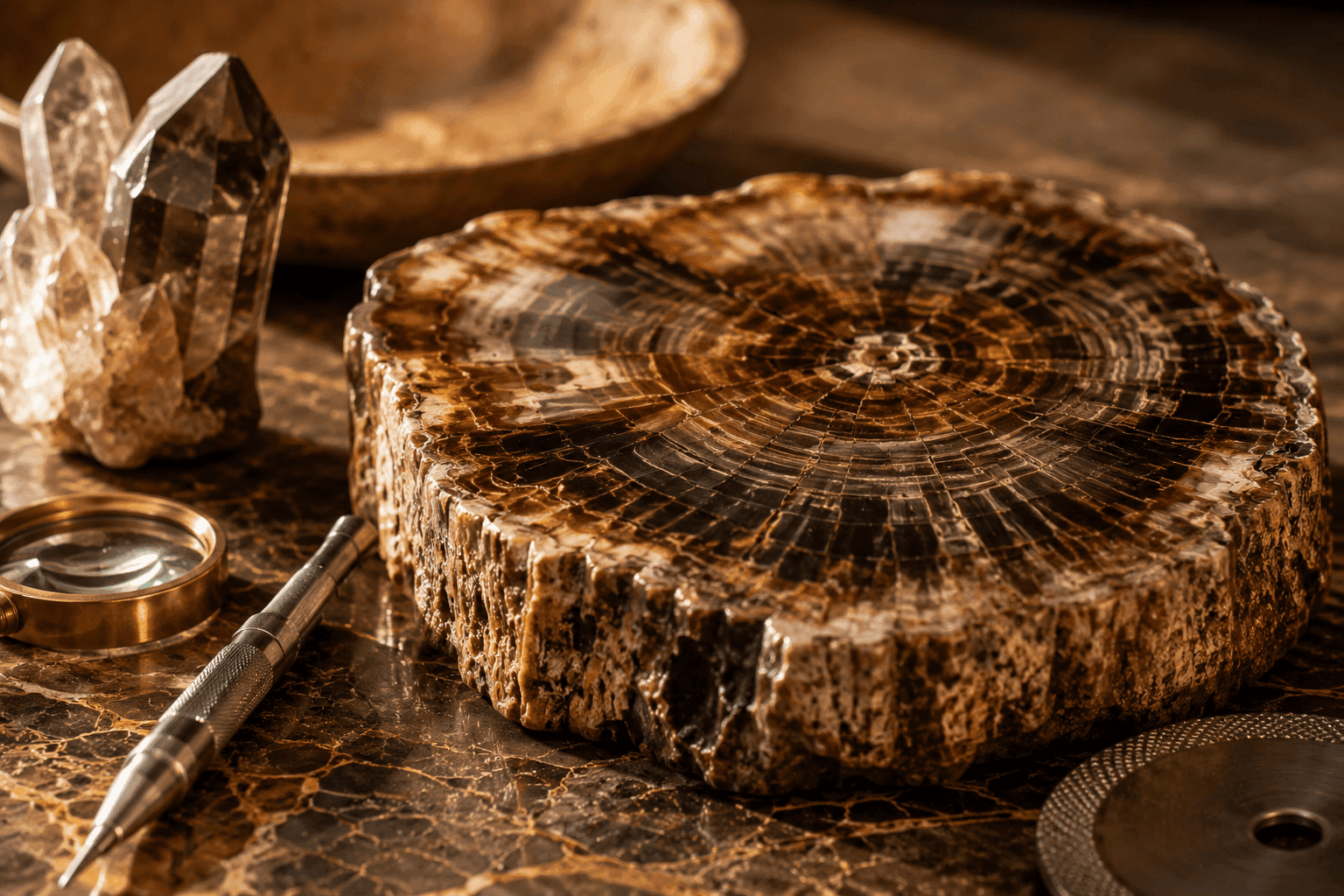
What replaced the wood's original cells is quartz — the same mineral, structurally, as many gemstones. On the Mohs scale it sits at 7, harder than a knife blade or a steel nail. Practically, this means the coaster underneath your glass:
- won't scratch under normal use, unlike lacquered wood or soft stone
- is unaffected by heat, so a hot mug leaves no mark
- doesn't absorb moisture, so condensation rings simply wipe away
- resists UV, so its colour won't fade in a sunlit room
- is entirely indifferent to frost, should it ever end up somewhere cold
None of this is a coating or a treatment. It's the nature of the stone. A petrified wood coaster behaves less like a piece of furniture and more like a small geological specimen that happens to be flat, polished, and exactly the right size for a glass.
Colour Is Never Repeated
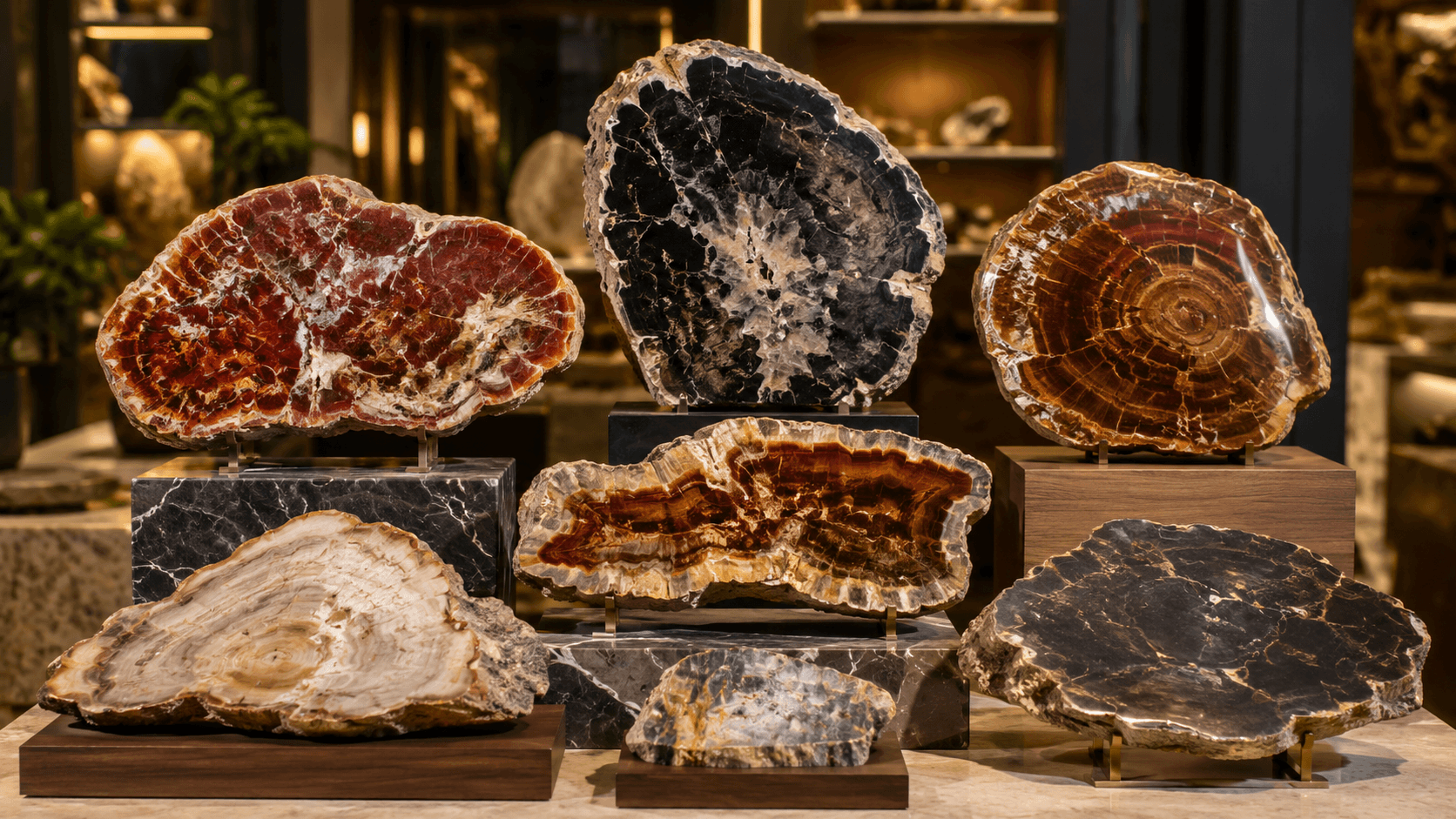
The colours you see are the fingerprints of specific metals present when the wood mineralised. Iron produced the reds and ochres. Manganese gave the blacks and violets. Chromium and cobalt, rarer, are behind the greens and blues. No dye, no pigment — just chemistry, locked in 230 million years ago.
This is why we don't describe our coasters by a catalogue number. We describe them by tree. A set cut from Fusca will carry the warm browns typical of that trunk's iron content; a set from Argentea leans toward the paler, silvered greys its name suggests. Buy a set today, and the tree it came from may already be fully worked by the time you return for a second one. The colour, quite literally, runs out.
Small Object, Considered Gift
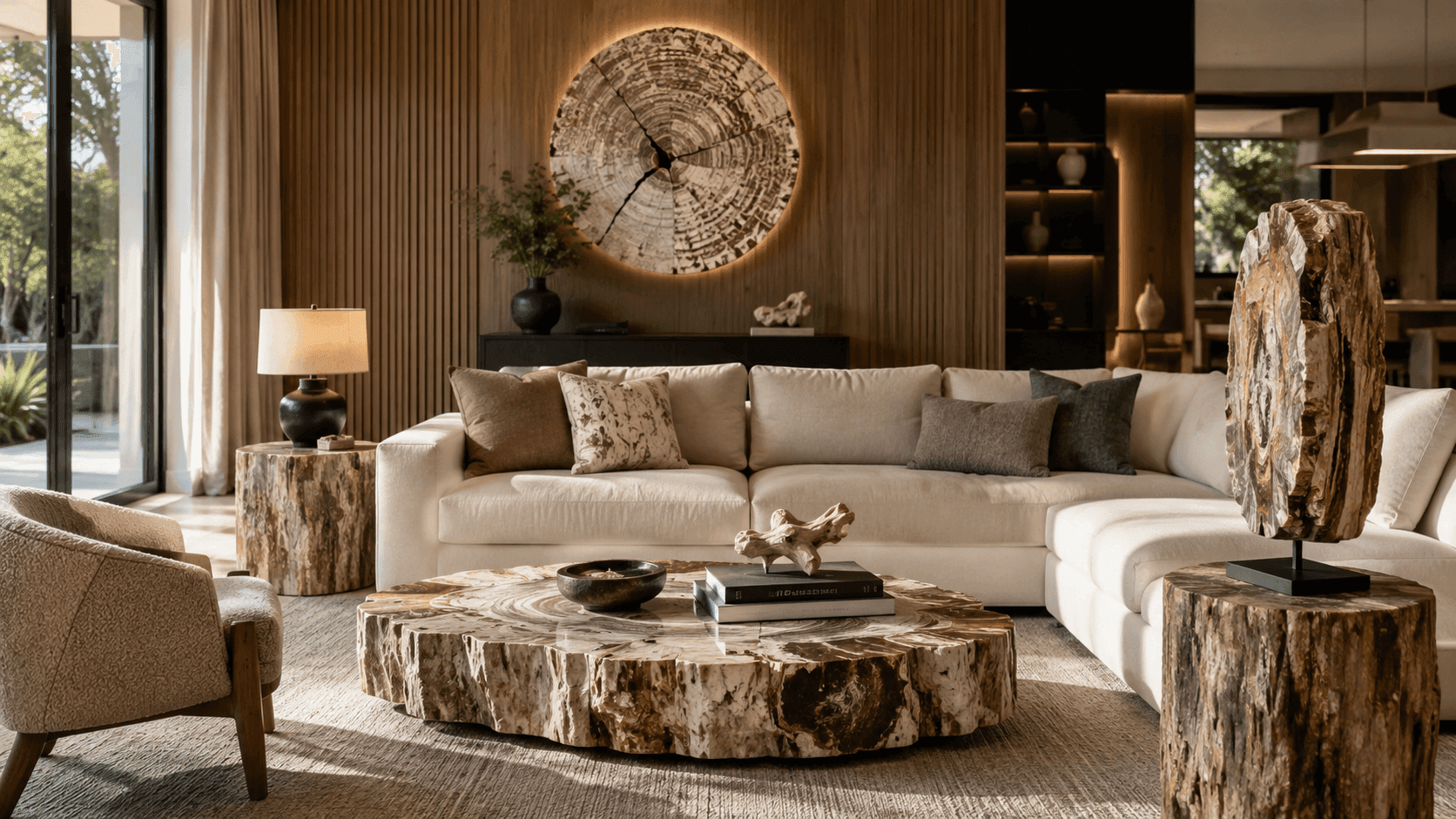
Coasters are among the easiest ways to bring a fossilised trunk into daily life without committing to a table or a vessel. They travel well as gifts precisely because they carry a story that doesn't need embellishing: this is stone, this is old, this came from one named tree in Madagascar, and no other set will look quite the same.
They also sit at the intersection of two things people rarely get in the same object — genuine geological rarity, and something you actually use, daily, without ceremony. A coaster that has survived 230 million years underground can certainly survive a dinner party.
Each piece is cut and polished by hand, following the grain and fracture lines of its particular slice rather than forcing it into a uniform mould. That's part of why no two coasters, even from the same trunk, are perfectly identical.
Discover the trunks currently available and find the coaster set that matches its story.
Visit the ShopFrequently Asked Questions
Is petrified wood actually stone or still wood?
Stone. Over millions of years, the original wood's organic material was replaced by silica, cell by cell, leaving quartz in the exact shape and structure of the original trunk — rings, grain, and all.
Will a hot mug or glass damage the coaster?
No. The material is quartz, indifferent to heat, cold, moisture, and UV exposure. A hot cup or a sweating glass leaves no trace.
Why do coasters from the same collection look different?
Because they're cut from different named trunks — Ambra, Argentea, Fusca, Umbra, Viridis — each with its own mineral composition and therefore its own colour. We don't standardise the palette; the stone dictates it.
Can I get a matching set from a specific tree?
Often, yes, depending on what remains of a given trunk at the time of your order. Since each tree is finite, we recommend confirming availability with us before choosing a set — sur devis, on a case-by-case basis.