
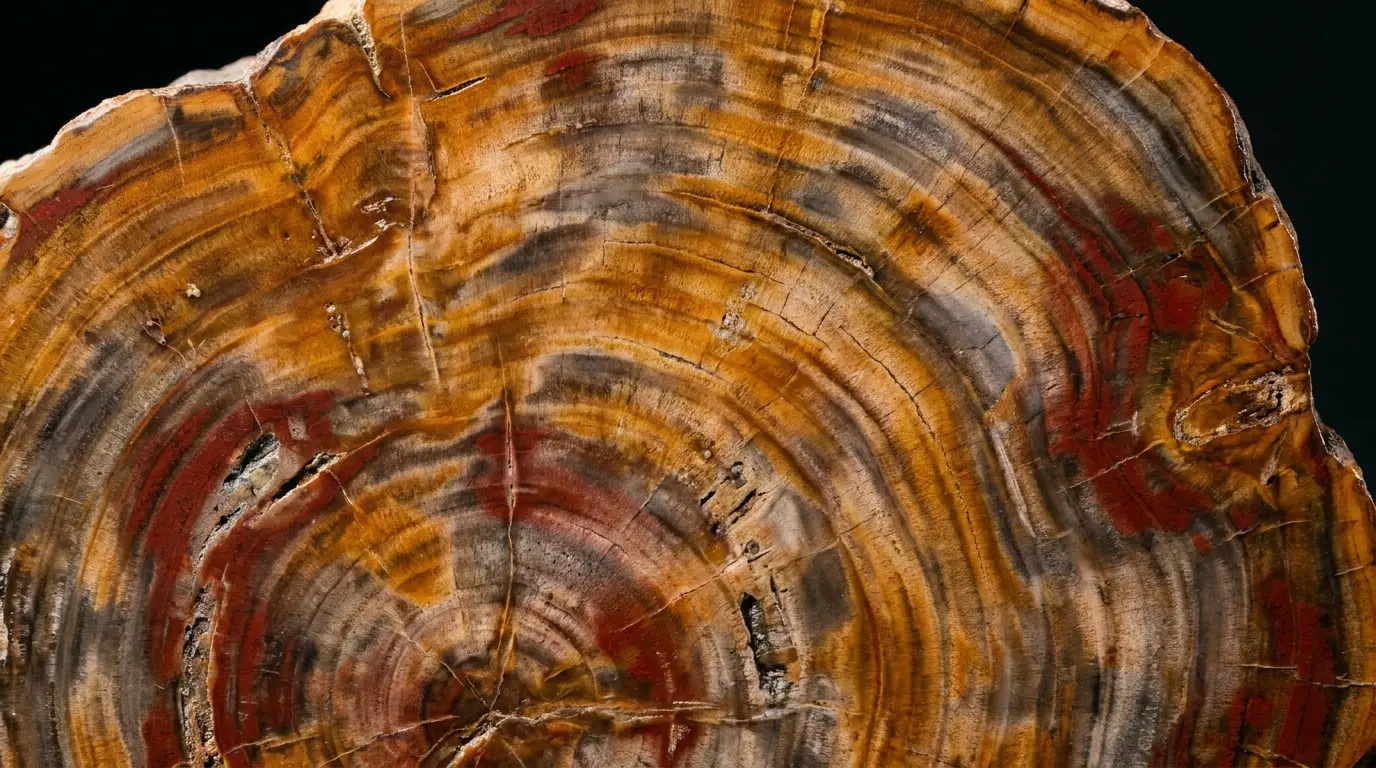
The Root Chakra and a Stone Born of the Earth
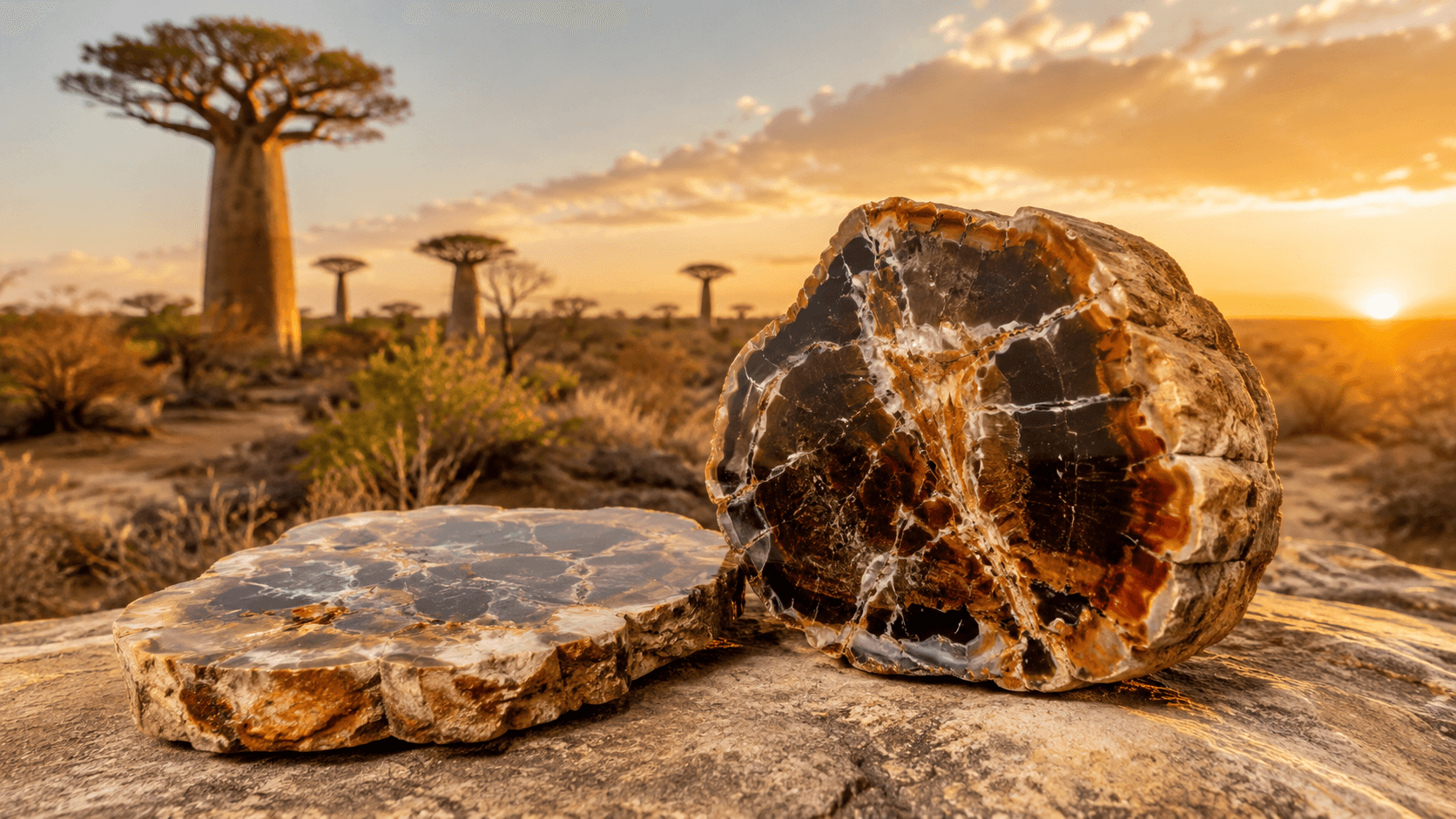
Long before it becomes a table or a vessel, petrified wood spends an unimaginable stretch of time doing one thing: sitting still, underground, absorbing minerals from the earth around it. In crystal lore, that history is precisely why petrified wood is associated with the root chakra, Muladhara — the energy center traditionally linked to stability, safety, and connection to the ground beneath our feet.
This is not a medical claim. It is a symbolic reading, passed down through generations of stone workers and collectors, built on something you can actually observe: the material itself is the physical embodiment of grounding. A tree that once stood in the sun spent millennia becoming stone. Few objects carry that story as literally.
Why the Stone Itself Suggests Grounding
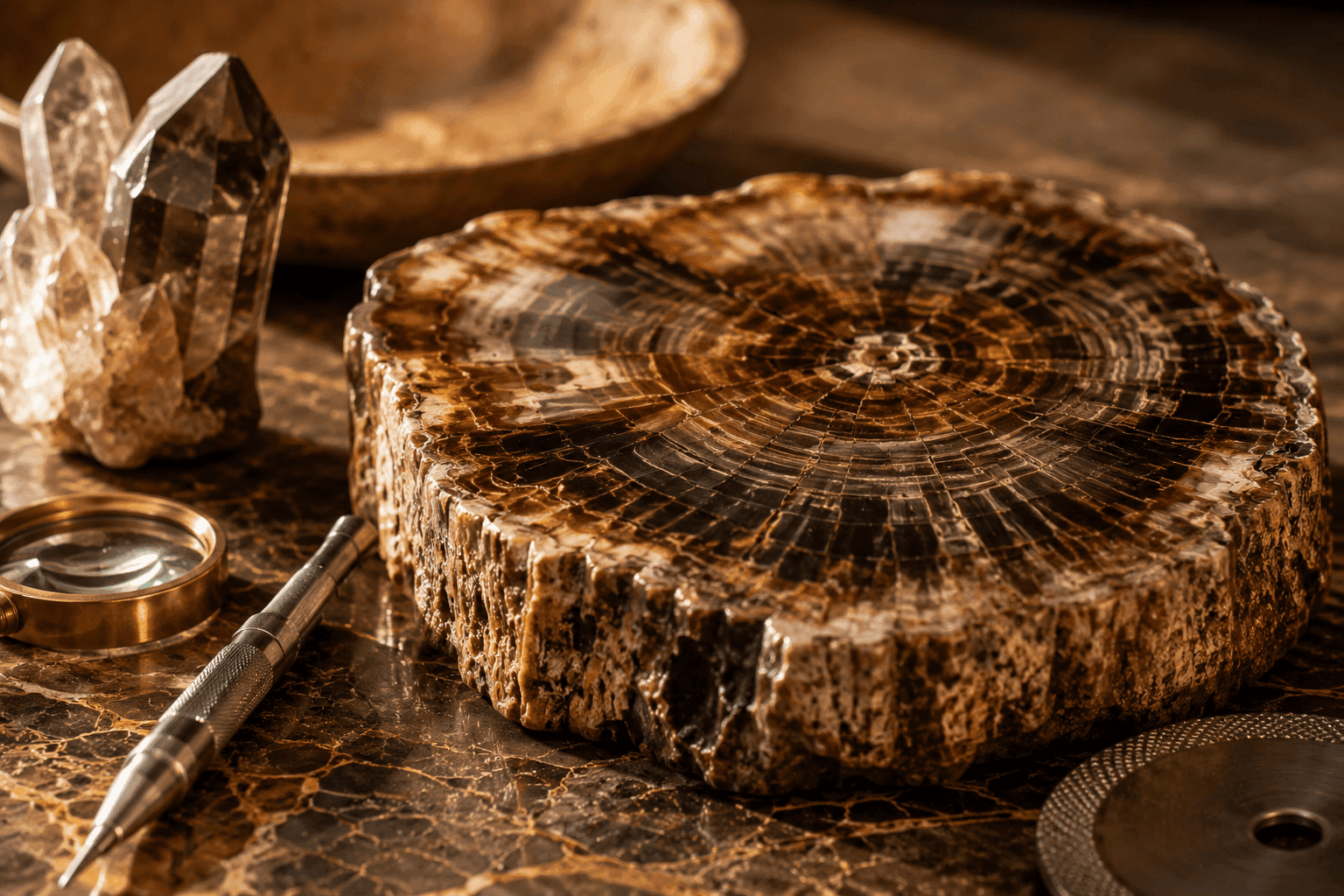
Petrified wood from Madagascar formed during the Triassic period, roughly 230 million years ago, when silica-rich water slowly replaced the organic tissue of fallen trees, cell by cell, until only quartz remained. What you hold today is not wood chemically — it is stone, rated 7 on the Mohs hardness scale, indifferent to water, heat, UV light, or frost.
That transformation is the entire basis of its symbolic weight:
- Density and permanence — a material that has resisted change for millions of years is, in traditional practice, read as an anchor against instability.
- Cold, mineral touch — unlike organic wood, it stays cool underhand, a sensory cue often associated with calm and clarity in crystal work.
- Literal connection to ancient ground — it was quite literally part of the earth for longer than almost any object we handle.
None of this constitutes therapeutic or medical benefit. It is a reading rooted in the object's own geological identity — which is, arguably, more honest than most claims made about "healing stones."
Color, Minerals, and the Chakras They Echo
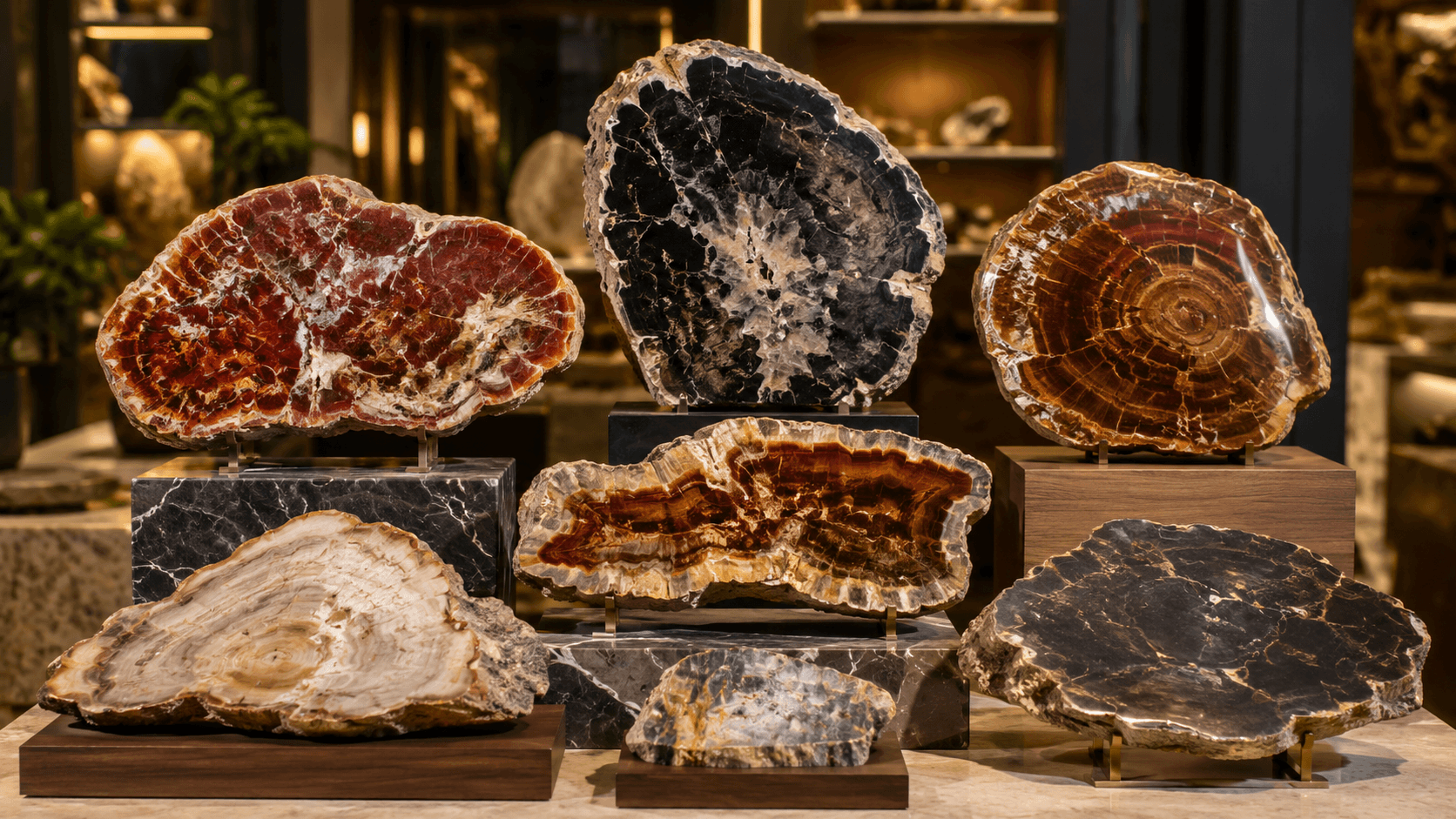
The colors of petrified wood are not decorative choices — they are chemical signatures. Iron oxides produce reds and ochres; manganese produces blacks and violets; traces of chromium or cobalt produce greens and blues. Crystal traditions often map these tones onto the classical chakra spectrum, though the correspondence is symbolic rather than scientific:
- Reds and ochres (iron) — associated with the root chakra, echoing stability and grounding.
- Deep browns and blacks (manganese) — linked to a sense of protection and containment.
- Greens (chromium/cobalt traces) — associated in some traditions with the heart chakra, balance and renewal.
- Ambers and golds — often connected to the solar plexus, read as confidence or steadiness.
Because Medusa names each trunk individually — Ambra, Argentea, Fusca, Umbra, Viridis — the mineral story and the symbolic one align naturally. Each name already describes the color born from that tree's specific chemistry; the chakra association simply follows the same logic, tree by tree.
Living With a Grounding Stone

Grounding stones are traditionally kept close — worn, carried, or placed nearby. A trunk of petrified wood is rarely small enough to pocket, but that scale is precisely what makes it effective as a fixed anchor in a room: a low table, a vessel by the entrance, a slab in a hallway you pass daily.
- Placed near an entryway, it is traditionally read as a threshold stone — settling energy as you cross from outside to inside.
- In a bedroom, it is associated with steadying rest.
- In a study or office, some readings link its density to sustained focus rather than scattered attention.
These are practices, not prescriptions. What is certain, materially, is that the object will not change: no fading, no warping, no wear. Whatever meaning you assign to it today will still find the same stone tomorrow.
One Tree, One Energy
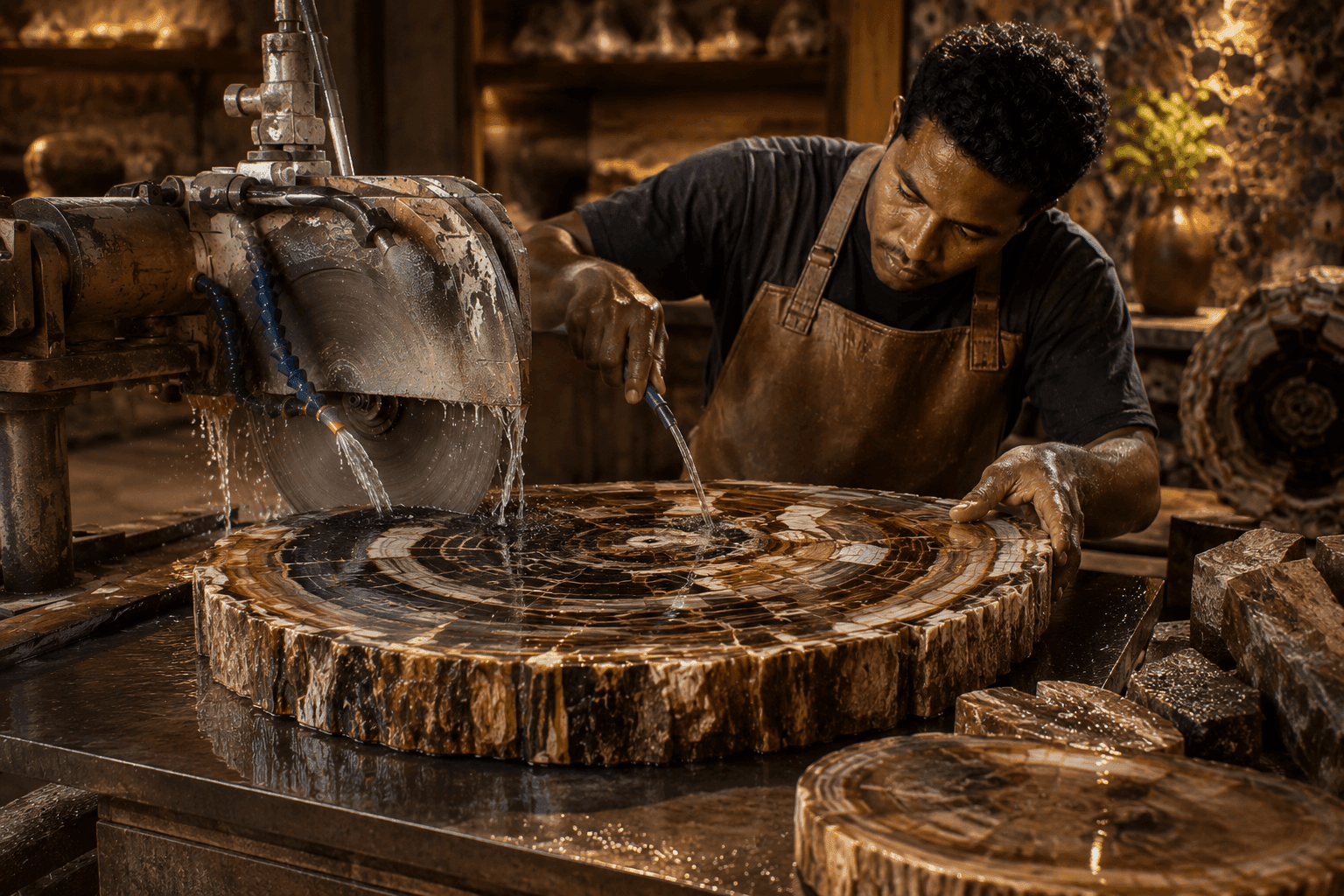
This is where the metaphysical reading meets Medusa's core fact: every piece began as one tree, not a category. Ambra was never a "type" of petrified wood — it is the name given to one specific trunk, whose iron content produced that exact amber tone. Once that trunk is cut and shaped, its particular mineral balance — and the color, and the symbolic association that follows from it — cannot be replicated by any other tree.
A grounding stone should have a history you can trace to a single root. This one does.
That singularity matters for anyone drawn to the chakra symbolism specifically. You are not choosing "root chakra petrified wood" from an inventory list. You are choosing the piece cut from Umbra, or from Fusca — a named tree, raised once from the soil of southwestern Madagascar, whose color and character exist nowhere else.
Discover the trunks currently available and find the one whose color speaks to you.
Explore the CollectionFrequently Asked Questions
Is petrified wood scientifically proven to affect chakras?
No. Chakra associations are part of traditional and symbolic crystal practices, not scientific or medical claims. Medusa presents this as cultural context, not therapeutic guidance.
Why is petrified wood specifically linked to the root chakra?
The association draws on the stone's density, weight, and its literal 230-million-year formation underground — qualities traditionally read as symbols of stability and grounding.
Does the color of the piece matter for its symbolic meaning?
In crystal lore, yes: reds and ochres (from iron) are typically linked to grounding, while greens (from chromium or cobalt) are associated with different chakras. Each Medusa trunk's unique mineral color determines which reading applies.
Can I use petrified wood for meditation or wellness practice?
Many people do, as part of personal or traditional practice — placing a piece nearby during meditation, for instance. This is a matter of personal ritual, not a guaranteed effect, and should never replace medical or therapeutic care.