
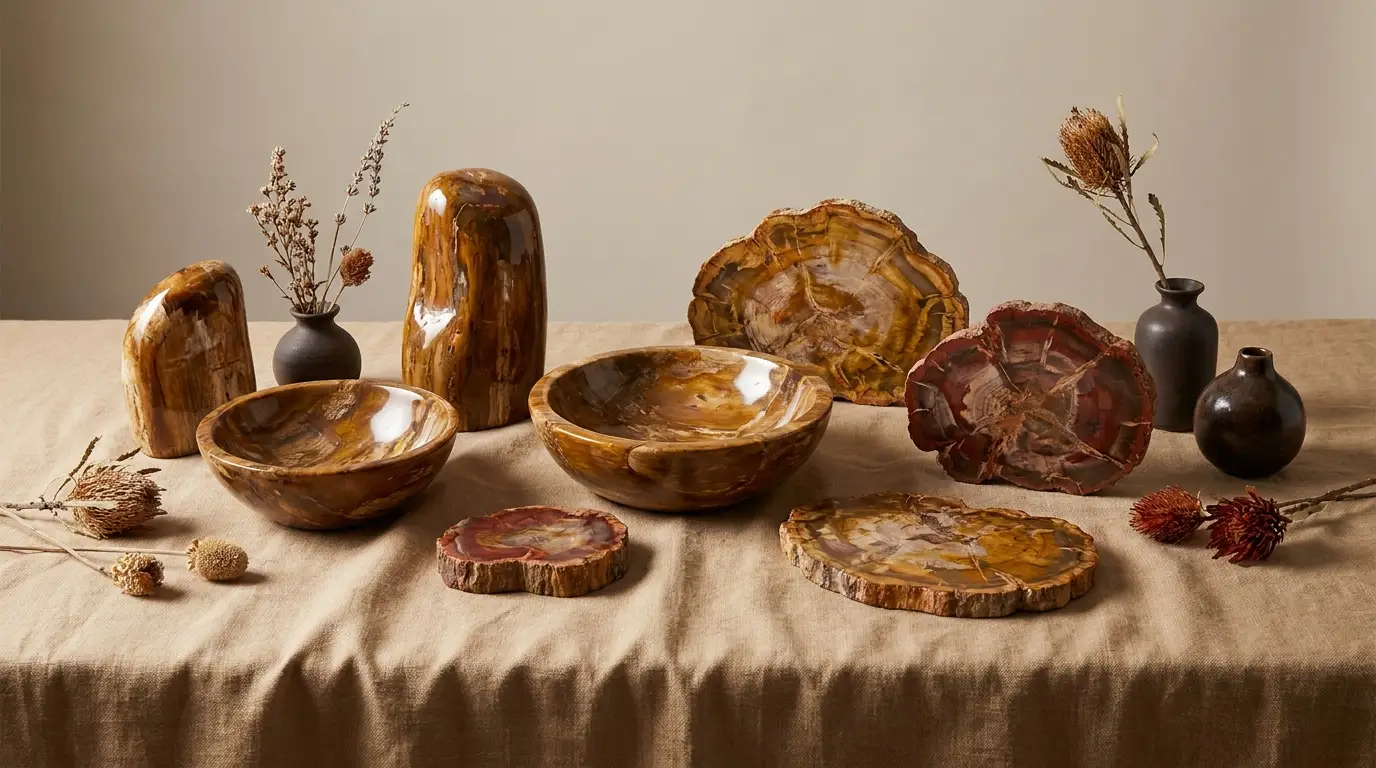
A Small Object, a Vanished Forest
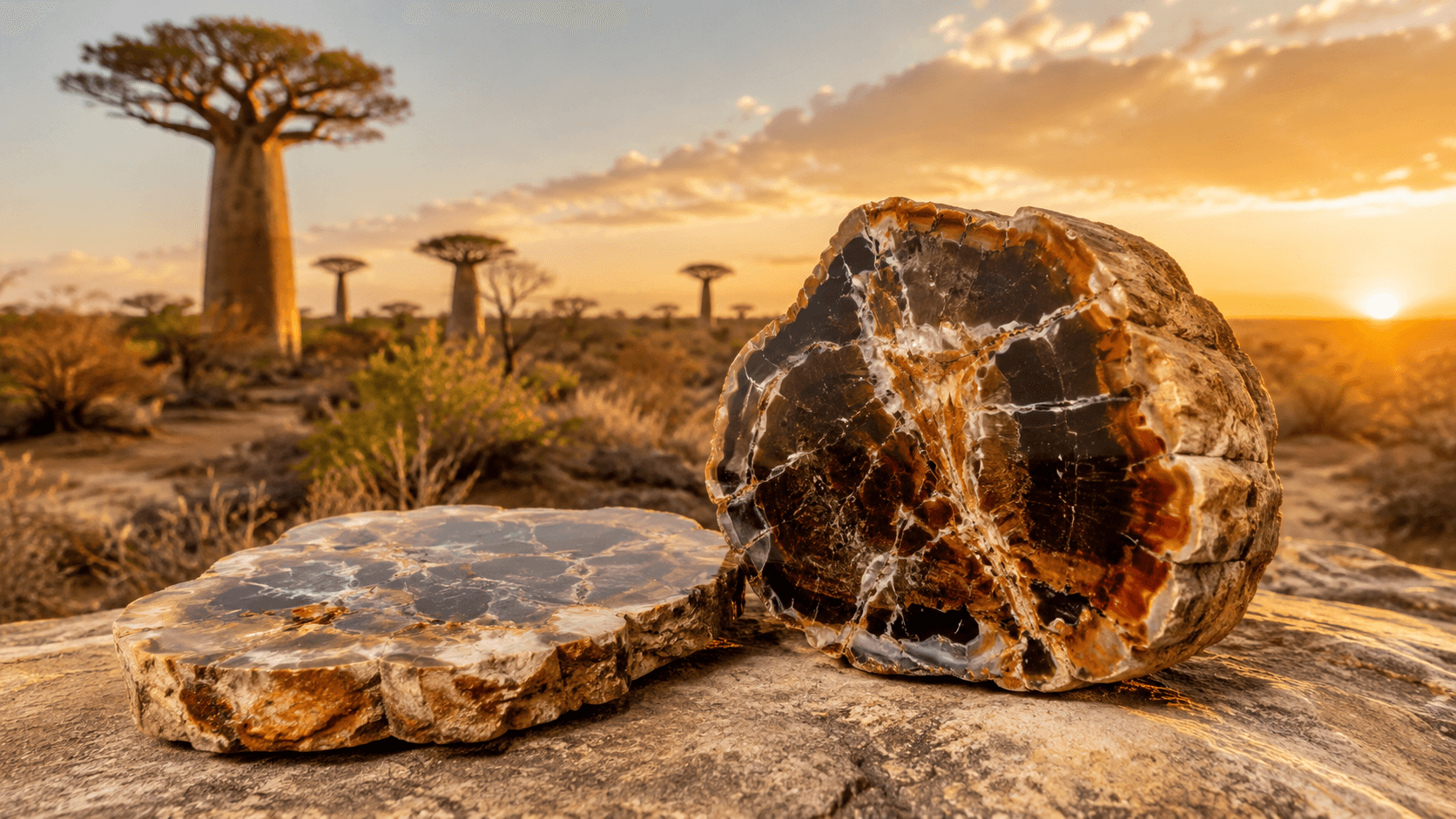
A candle holder is usually the smallest thing in a room. Ours happens to be the oldest. Each piece is cut from a trunk that grew in the forests of southwestern Madagascar during the Triassic, then lay buried until silica replaced its wood, cell by cell, and turned it to stone. What you set your candle on is not a carving of wood. It is wood, mineralized — quartz that still remembers the tree it once was.
We don't sell this as a curiosity. We sell it as what it is: a fragment of a specific, named tree, cut small enough to sit on a shelf, a desk, a nightstand — anywhere a flame deserves a base with some weight behind it.
One Tree, One Name
Every trunk that comes out of the ground in Madagascar gets a name before it gets a customer. Ambra for the amber-toned ones, Argentea for the silvered greys, Fusca for the deep browns, Umbra for the darkest, Viridis for the rare greens. This isn't a marketing device. It reflects something true about the material: no two trunks mineralized the same way, so no two trunks look alike.
A candle holder cut from Fusca will never again exist once that trunk is gone. There's no second batch, no reorder. The tree that produced it fell once, was buried once, and is being used once.
A candle holder like this doesn't imitate stone. It is the stone a tree became.
- Each trunk is extracted individually, not mined in bulk
- Colour comes from the specific minerals present when that tree fossilized
- Once a trunk is fully worked, its palette is retired for good
Quartz, Not Wood
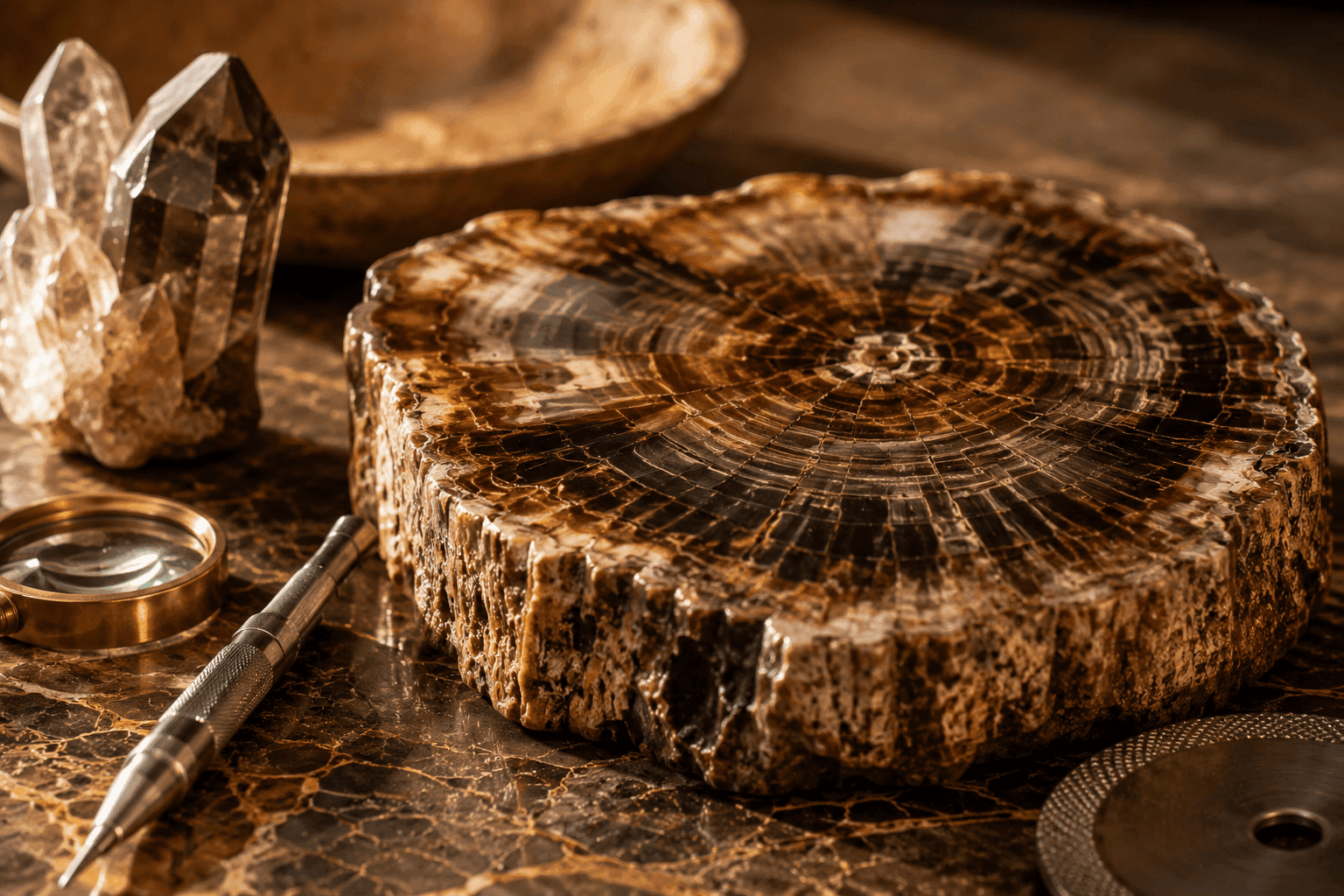
It helps to be precise about what's actually on your table. Petrified wood from Madagascar is quartz through and through, roughly 230 million years old, with a hardness of 7 on the Mohs scale. That number matters more than it sounds: it means the surface resists scratching from almost anything you'd normally set near it, doesn't fade under light, doesn't react to heat from a candle flame, and won't be marked by a spilled drop of wax or water.
The colour you see — ochre, near-black, olive, silvered grey — comes down to trace metals locked into the stone during fossilization: iron gives the reds and ochres, manganese the blacks and violets, chromium and cobalt the rarer greens and blues. Nothing is dyed or treated. The candle holder you receive is the colour that specific piece of earth decided on, a quarter of a billion years ago.
Shaped by Hand, Not by Machine
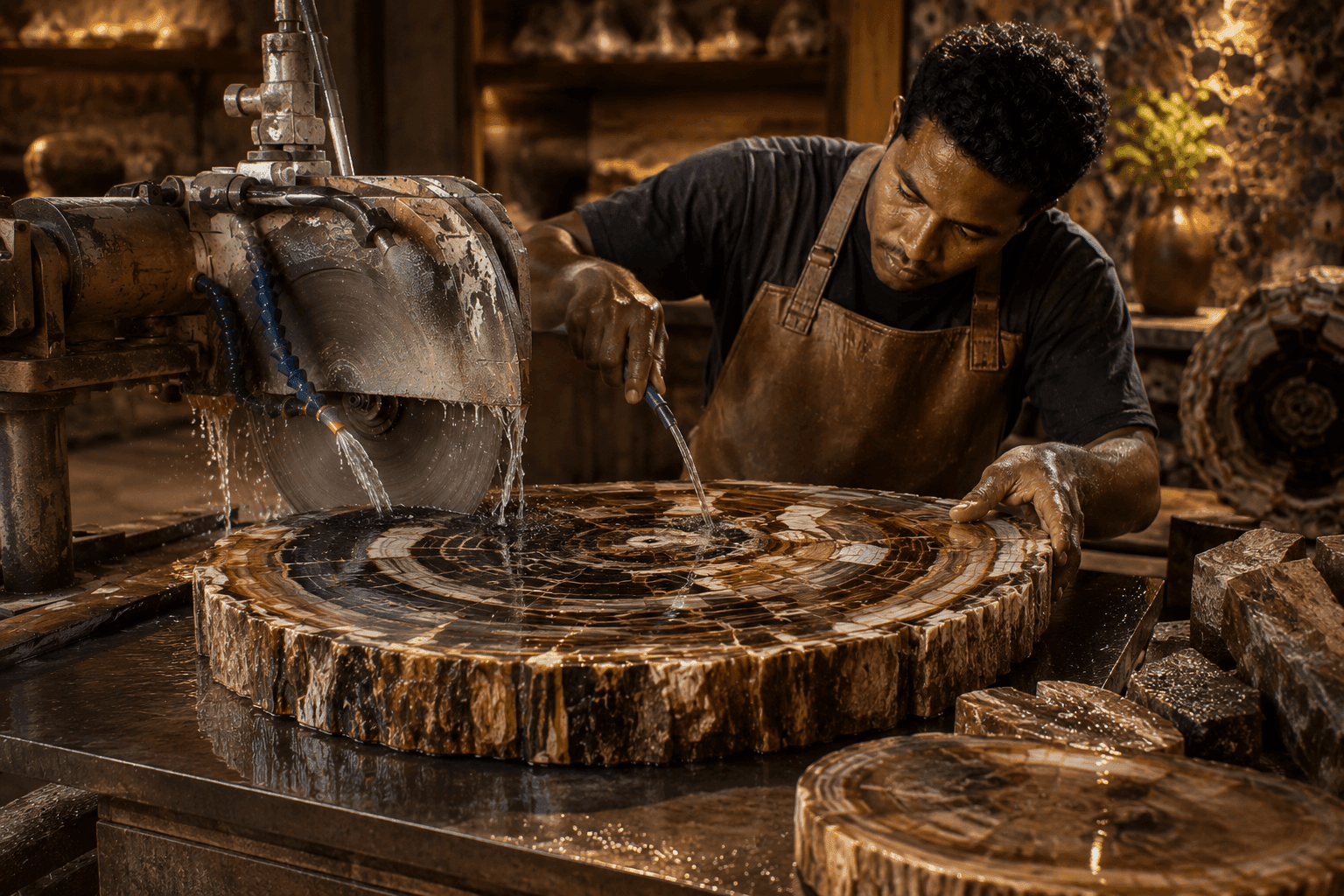
Quartz doesn't yield to a rushed hand. Each candle holder is cut from a slice of trunk, then patiently ground and polished to reveal the growth rings underneath — the same rings you'd find in living wood, now fixed in mineral. The socket for the candle is bored out with the same care, deep enough to hold it steady, shallow enough to keep the piece's natural form intact.
No two holders come out identical, even from the same trunk. The rings shift, the colour deepens or lightens across a few centimetres, and the polish catches the light differently depending on where the piece sat in the original log. That variation isn't a flaw to smooth over — it's the reason to choose one piece over another.
A Gift That Doesn't Fade
Most gifts age. Flowers wilt, candles burn down, even good leather eventually cracks. A petrified wood candle holder does none of that. It was already ancient when it arrived, and nothing about daily use — heat, light, water, time — touches it. Given as a gift, it reads less like an object and more like a fragment handed down, which is exactly what it is.
It suits occasions that call for something considered rather than convenient: a housewarming where the recipient already has candles but not a base worthy of them, an anniversary, a retirement, a gesture toward someone who has stopped needing more things but would still welcome one good one. Paired with its own candle or left to hold whichever the recipient prefers, it asks nothing and demands nothing — it simply sits, waits, and outlasts.
Living With It
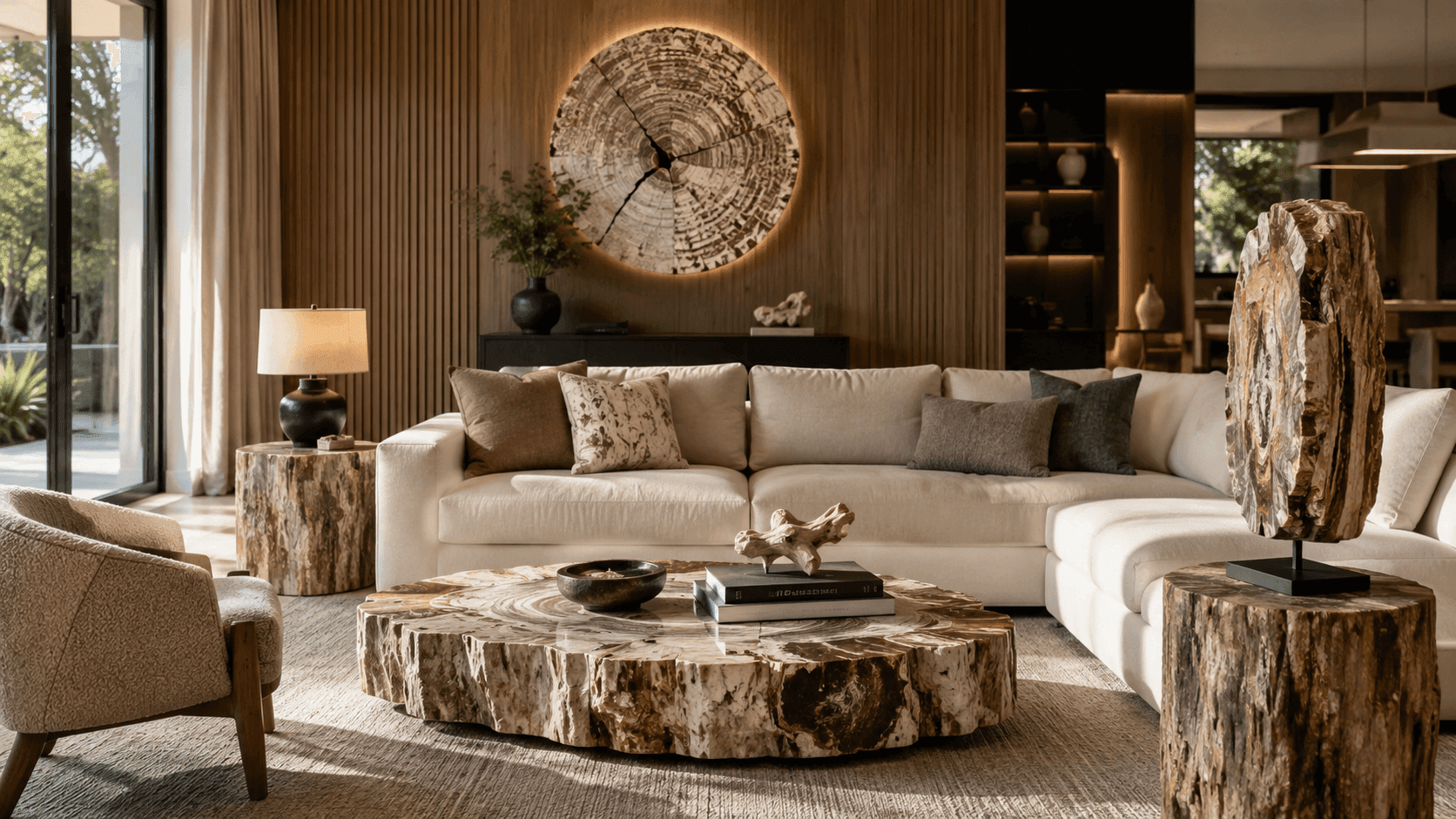
Because each holder carries its own colour and grain, it rarely needs company to make its point. One piece on a mantelpiece, a desk, or a dining table does more than a cluster of smaller objects competing for attention. Let the light catch the polished rings before you light the candle — the stone holds its own kind of glow even unlit.
Discover the petrified wood pieces currently available and request a quote for the one that speaks to you.
Visit the ShopFrequently Asked Questions
Is this actual wood or a stone replica?
It's stone — quartz — that formed by replacing the original wood's cells with silica over millions of years. No replica, no resin, no dye.
Will a candle flame damage it?
No. The material is heat-resistant quartz; a candle's flame poses no risk to the surface or its colour.
Why does each piece look different, even within the same range?
Because each candle holder is cut from an individual trunk with its own mineral history. Colour and grain vary trunk to trunk, and sometimes within a single trunk.
How do I know the price for a specific piece?
We don't list fixed prices, since every piece is unique. Reach out through the shop and we'll provide a quote for the exact holder you're interested in.