
Is Petrified Wood Aquarium-Safe?
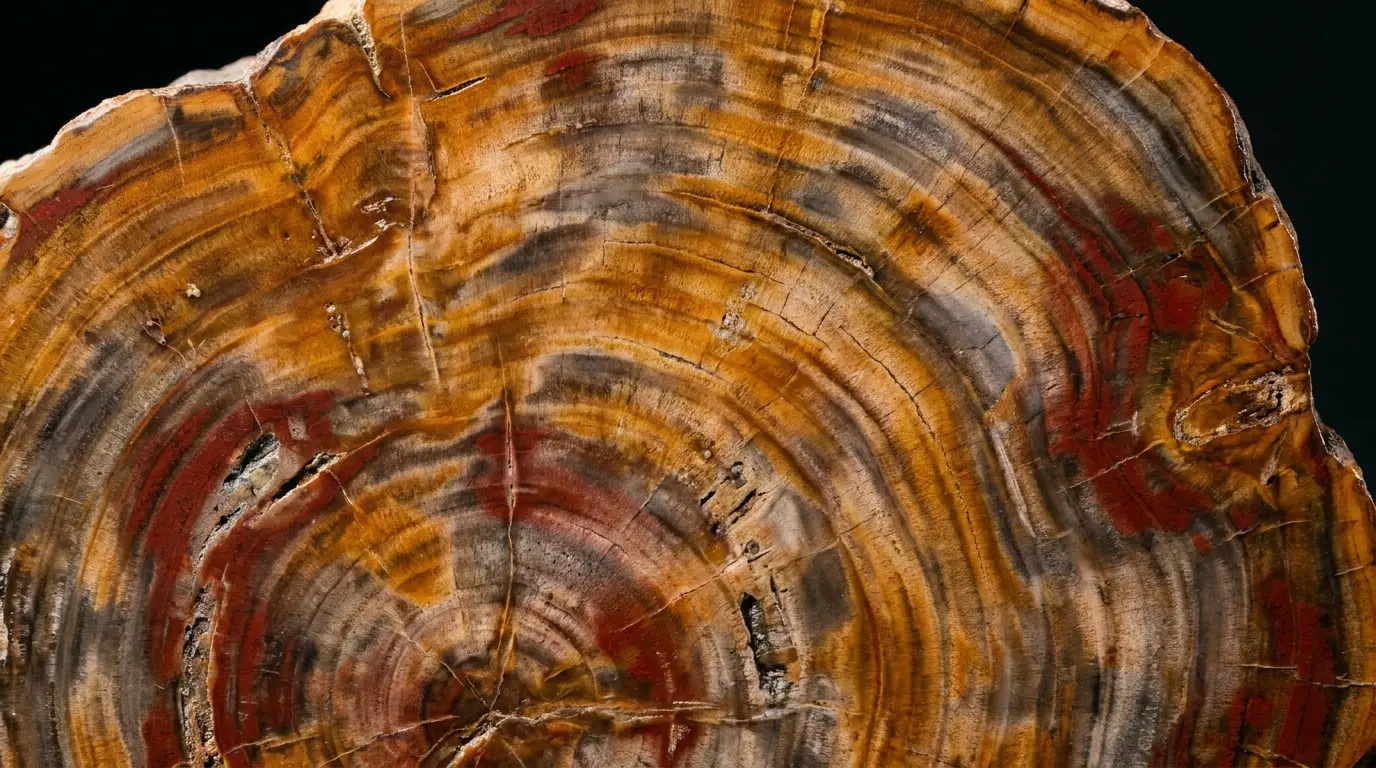
A question surfaces often enough in aquascaping forums: can petrified wood go into a freshwater or planted tank without upsetting water chemistry? The short answer is yes — with a few conditions worth understanding before you drop a piece into your aquarium. Petrified wood from Madagascar is not wood anymore. It is fossilized quartz, and that mineral identity is precisely what makes it compatible with aquatic life.
What Petrified Wood Actually Is
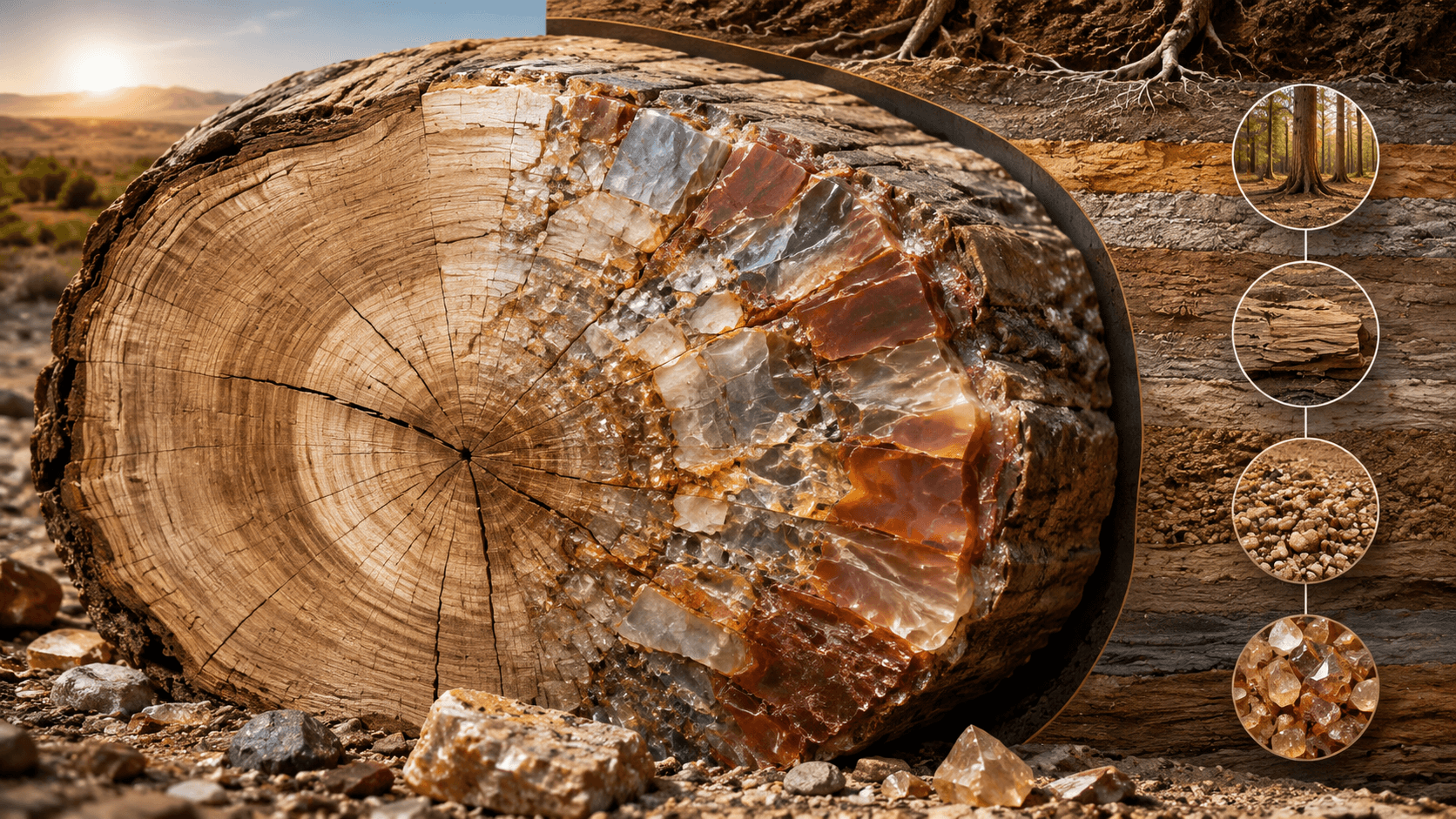
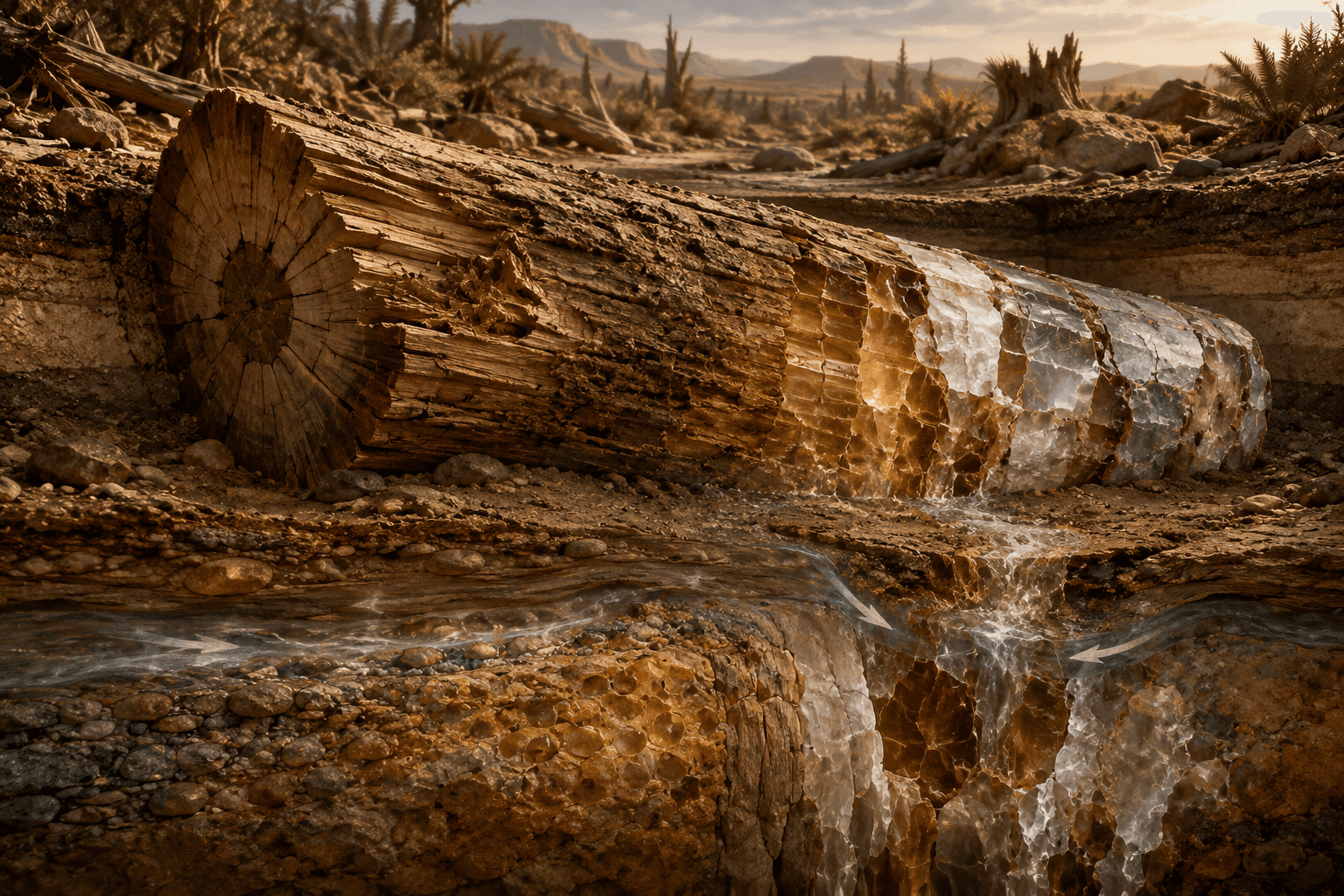
Roughly 230 million years ago, in the Triassic, trees fell in what is now southwestern Madagascar and were buried before they could decompose. Groundwater rich in dissolved silica infiltrated the wood cell by cell, replacing organic tissue with silicon dioxide — quartz. The result keeps the tree's original grain and growth rings but none of its original chemistry.
This matters for aquarium use because quartz is chemically inert:
- It does not dissolve or leach into water.
- It does not raise carbonate hardness (KH) the way limestone or calcite-based rock does.
- It will not shift pH over time, unlike driftwood, which releases tannins, or coral-based rock, which buffers water upward.
That inertness is the core reason petrified wood is considered safe for aquascaping — it behaves like an inert stone, not like organic material.
The Vinegar Test, and Why It Matters
Not every stone sold as "petrified wood" is pure silica. Some pieces, depending on their mineralization, can carry traces of carbonate minerals that will react with acidic water and slowly alter your parameters. The standard precaution among aquascapers is simple: apply a drop of vinegar to a discreet spot. If it fizzes, carbonate is present and the piece will affect your water hardness. If nothing happens, you are looking at pure quartz — inert, stable, and safe.
Genuine Malagasy petrified wood, formed through silica replacement rather than calcite deposition, consistently passes this test. It is quartz through and through, at 7 on the Mohs hardness scale — harder than glass, indifferent to the acids, tannins, and biofilms that develop in a planted tank.
Color, Veining, and What They Mean for Your Tank
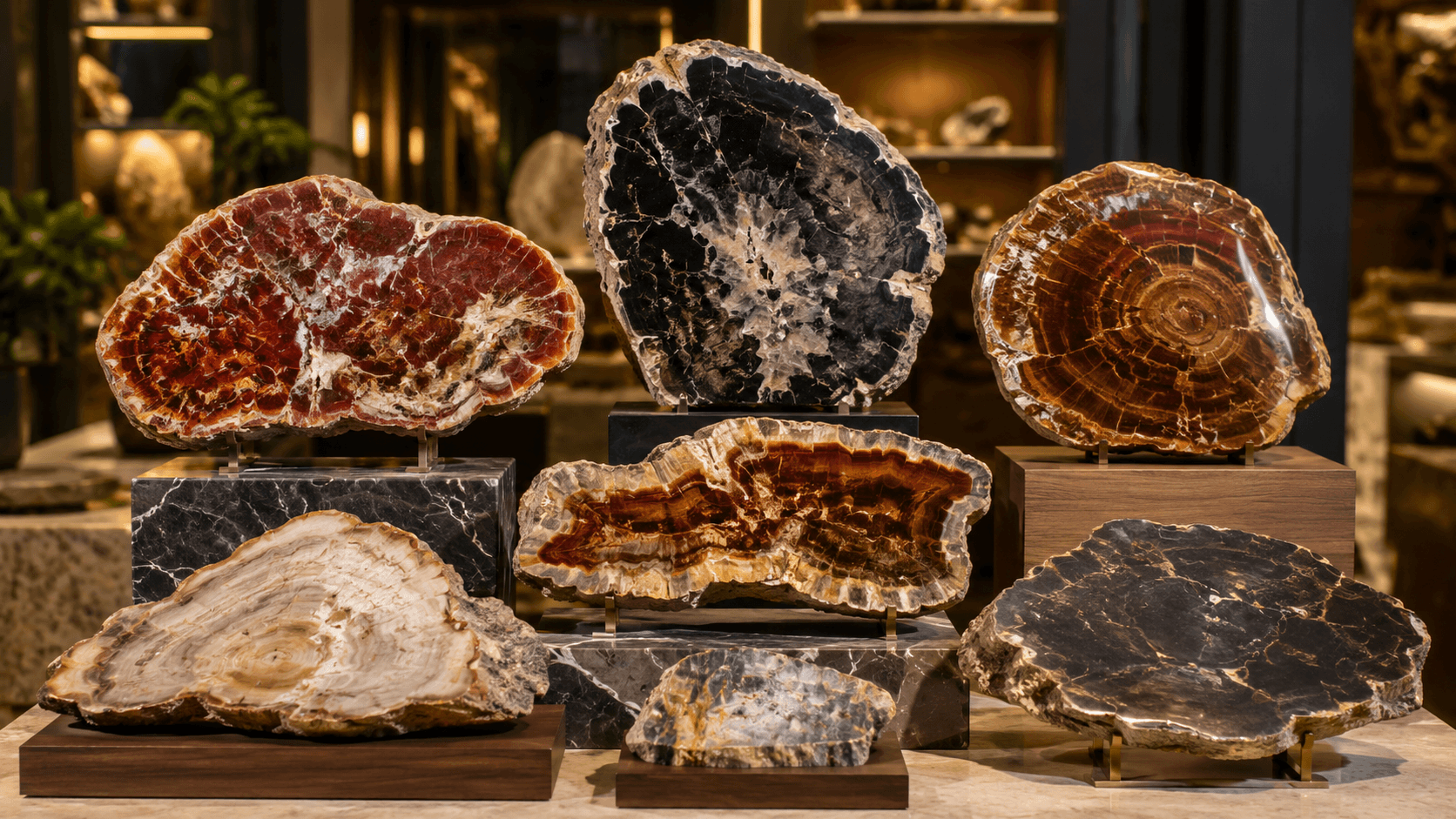
The colors that make petrified wood desirable for aquascaping — ochres, deep reds, blacks, occasional greens — come from trace metals locked into the silica during fossilization: iron for red and ochre tones, manganese for black and violet, chromium and cobalt for green and blue. These metals are bound within the crystalline quartz structure itself, not sitting on the surface as a coating or a soluble salt. They will not leach into your water column any more than the iron in a granite boulder would.
This is also why, at Medusa, each trunk carries its own name — Ambra, Argentea, Fusca, Umbra, Viridis — reflecting a mineralization that is unique to that specific tree and impossible to reproduce once the trunk has been cut. In an aquascape, that individuality becomes part of the composition: no two pieces will ever recreate the exact same vein pattern or tone.
A stone that has spent 230 million years becoming quartz has nothing left to give up to your water.
Practical Precautions Before Submersion
Safe does not mean maintenance-free. A few practical steps before placing petrified wood in a tank:
- Rinse thoroughly. Dust and rock debris from cutting or handling should be scrubbed off under running water.
- Inspect for sharp edges. Quartz fractures conchoidally, meaning cut or broken faces can be sharp enough to injure fish with delicate fins. Smooth or rounded pieces, or those with a polished face, are preferable near slow-moving species.
- Check for structural cracks. Natural fissures are common in fossilized material; a piece with deep internal cracks is better suited to display than to bearing the weight of tank decor or being climbed on by larger fish.
- Avoid pieces bonded with unknown adhesives or fillers. Any resin, glue, or filler used in shaping a piece should be aquarium-safe and fully cured before submersion.
None of this concerns the quartz itself — it concerns handling. The stone is inherently stable; the responsibility lies in preparing it properly.
Beyond the Tank: The Same Material, A Different Purpose
The qualities that make petrified wood trustworthy underwater are the same ones that make it a material of choice for Medusa's washbasins and tabletops: heavy, cold to the touch, indifferent to water, heat, UV, or frost. An aquascaper testing a fragment with vinegar is, in effect, confirming the same durability that lets a hollowed trunk hold water for a lifetime as a bathroom vasque. It is one material serving two very different tables — a fish tank and a home.
Explore fossilized trunks selected for their density, color, and character.
Visit the shopFrequently Asked Questions
Will petrified wood change my aquarium's pH or hardness?
No, if it is genuine silicified wood. Pure quartz does not dissolve in water and will not raise KH or shift pH. Always confirm with a vinegar test before submersion, since some stones sold under the same name contain carbonate minerals that will react.
Can shrimp or sensitive fish be kept with petrified wood?
Yes. Because the material is chemically inert, it poses no risk to shrimp, invertebrates, or pH-sensitive species, provided the surface has no sharp edges and has been rinsed of dust.
Does petrified wood need to be sealed before use in an aquarium?
No sealing is required. Unlike driftwood, it will not release tannins, mold, or organic compounds over time. Any treatment is purely for aesthetic finish, not safety.
How can I tell if a stone is truly petrified wood and not a look-alike?
Genuine fossilized wood shows visible growth rings or grain in cross-section and scores around 7 on the Mohs hardness scale — it will scratch glass. A vinegar test confirming no fizzing reaction further indicates pure silica content, consistent with authentic Malagasy petrified wood.