
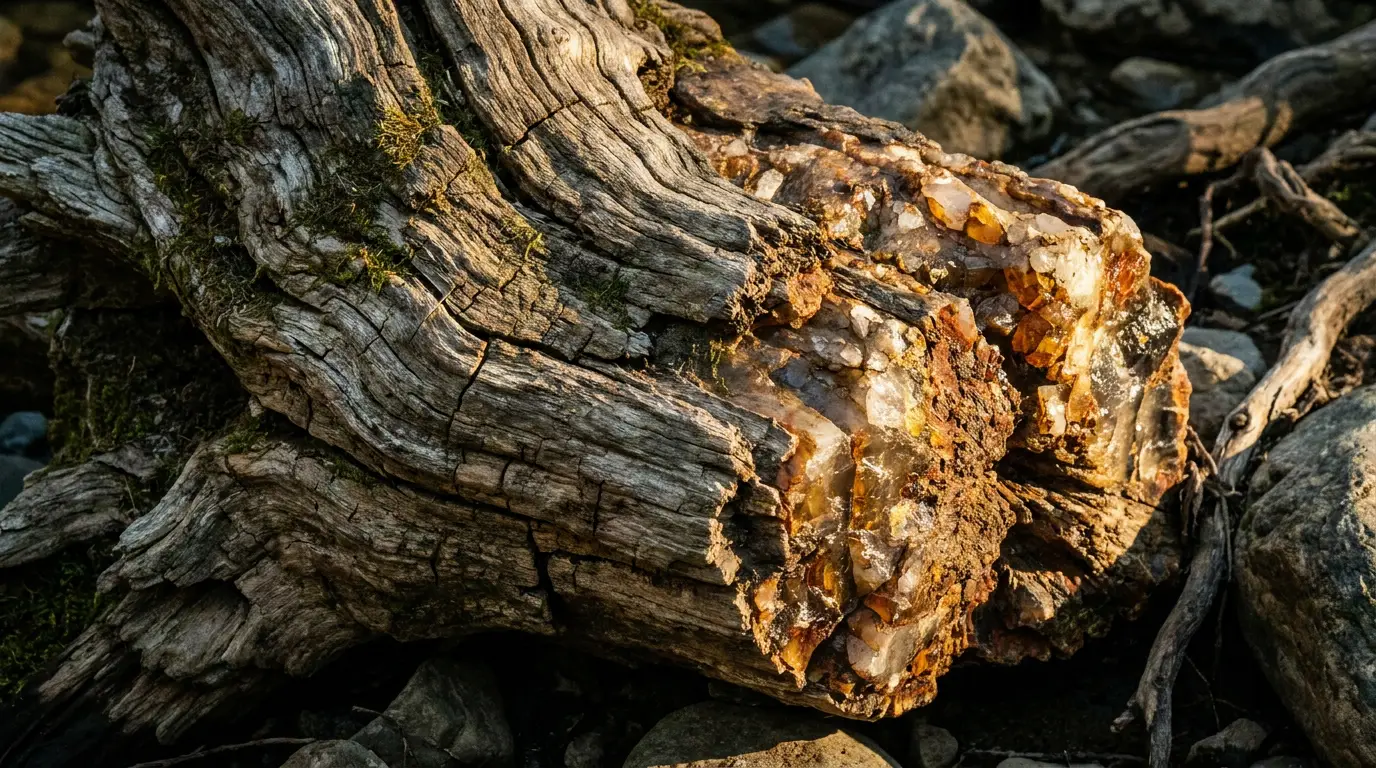
Why Petrified Wood Doesn't Behave Like Ordinary Stone
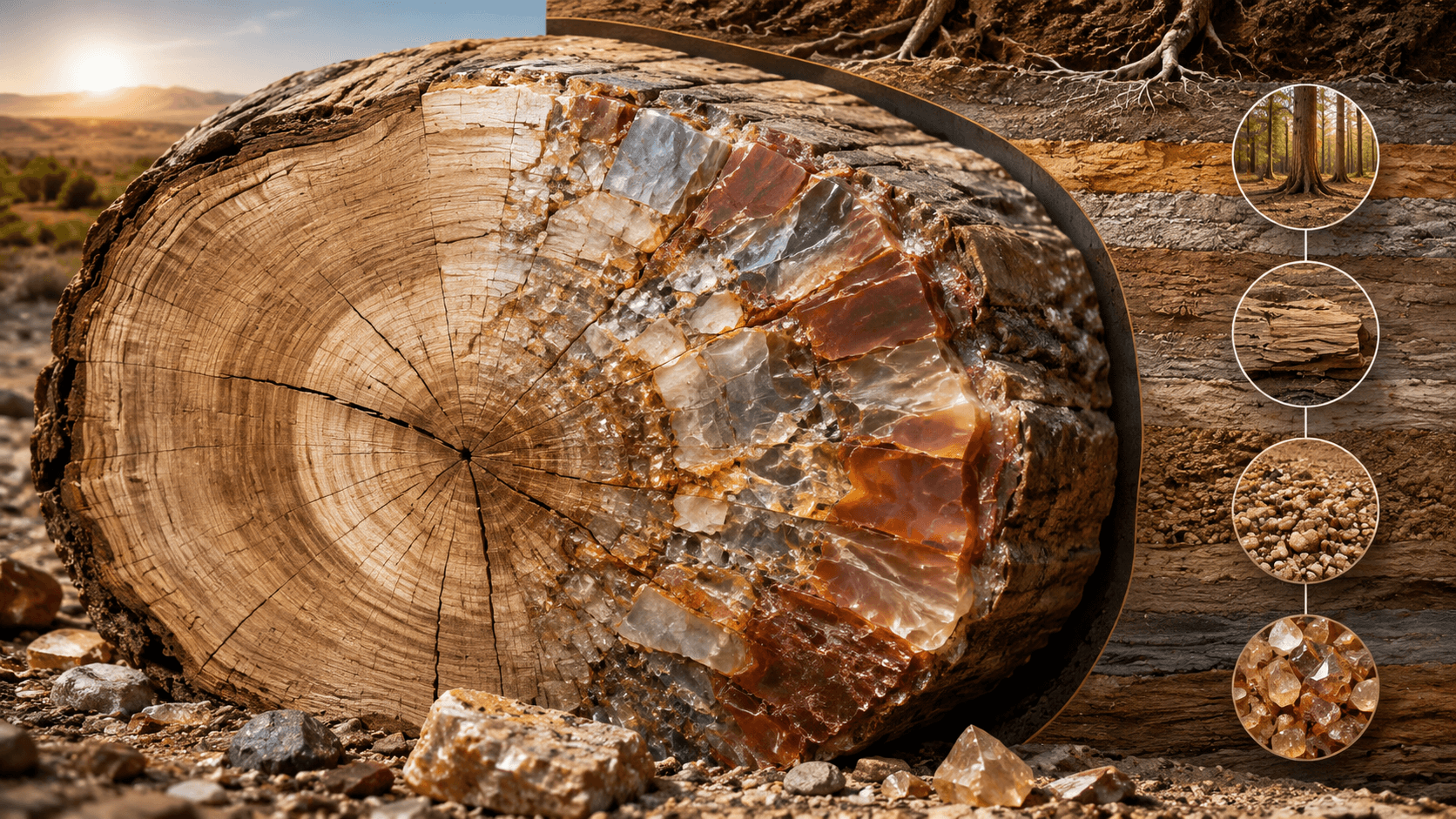
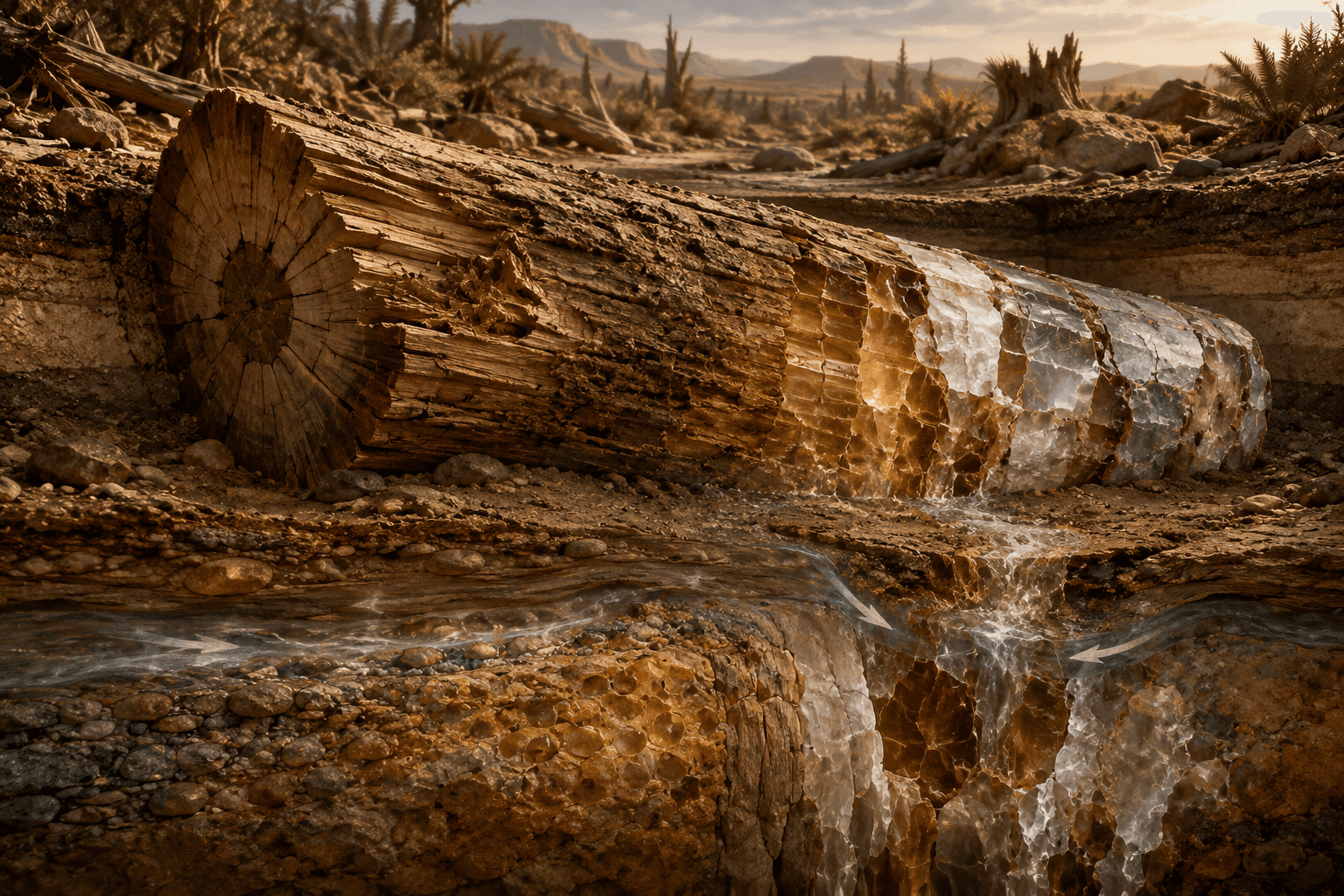
Marble absorbs. Limestone stains. Sandstone breathes. Petrified wood does none of this. What you hold in your hands is quartz — the same mineral as an agate or a rock crystal — that has replaced, cell by cell, the wood of a tree that grew in the southwest of Madagascar some 230 million years ago. The result is a stone with a wood's memory but a mineral's body: dense, closed, insensitive to water, heat, frost and UV.
This distinction matters, because most sealing advice you'll find online was written for porous stone. Applied to petrified wood, it's simply off-target. Before treating a trunk, it helps to understand what it actually is.
The Truth About "Sealing" Quartz
Sealing exists to solve one problem: porosity. A sealant fills microscopic pores so that liquids, oils and pigments can't penetrate a stone's surface. Petrified wood has essentially no porosity to fill. Its structure is silicified — solid quartz at a hardness of 7 on the Mohs scale, harder than steel, than glass, than most kitchen tools that might touch it.
So the honest answer to "how do I seal petrified wood" is: you don't, not in the way you'd seal granite or travertine. There is no impregnating sealant to apply, no annual re-sealing schedule to maintain, no risk of a wine glass leaving a ring on a table surface. What Medusa pieces need instead is something closer to finishing than sealing — a distinction we think is worth making clearly, because it changes how you care for the piece.
What Protection Really Means: Polish, Not Sealant
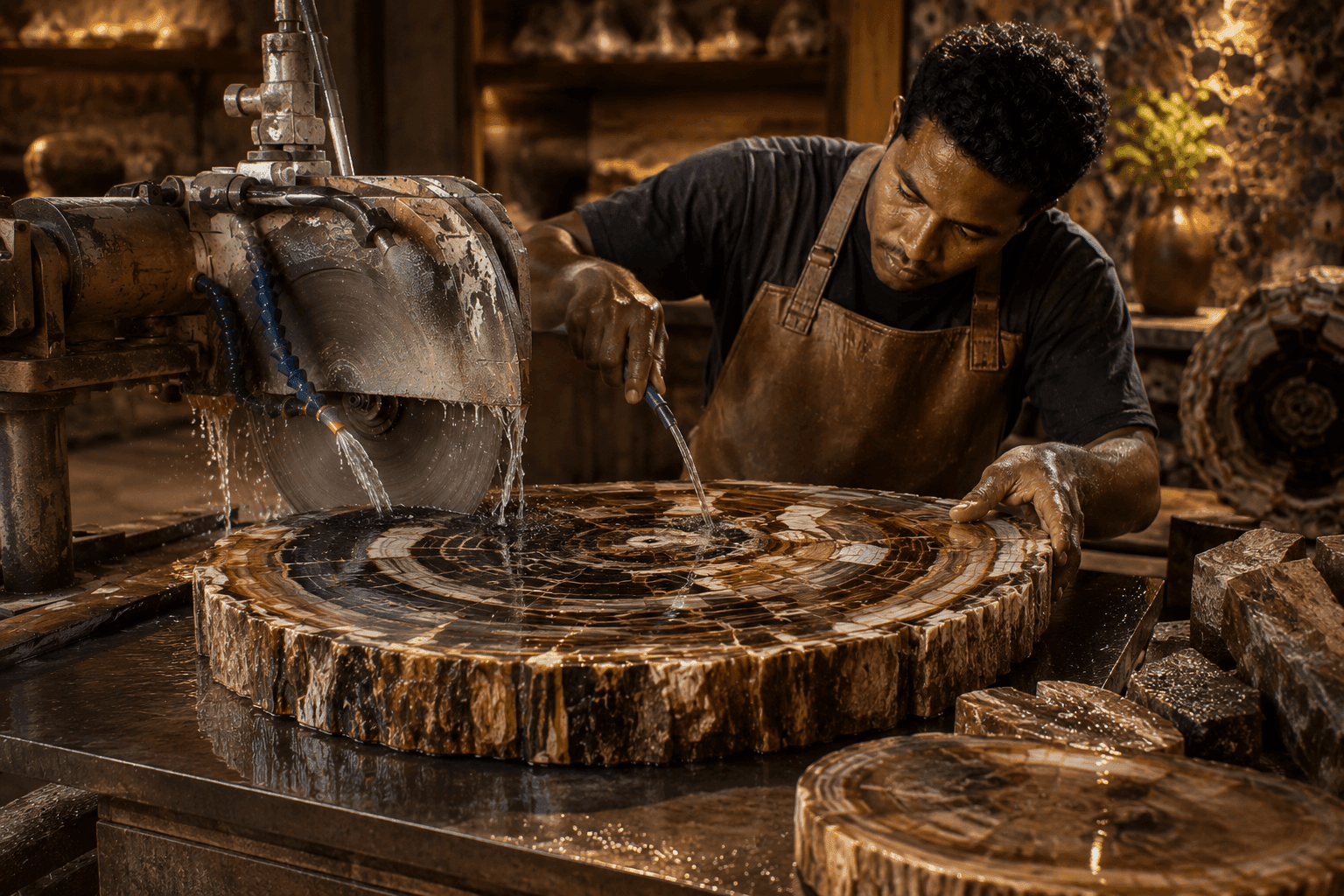
Every Medusa piece leaves our workshop with a finish already applied — polished, honed, or left in a raw state depending on the design. This finish is mechanical, achieved through progressive abrasion and polishing compounds, not chemical impregnation. Its role is aesthetic: it deepens color, reveals the internal structure, and gives the surface its particular sheen.
Over years of use, that sheen can dull slightly under dust, fingerprints, or repeated handling — not because the stone degrades, but because microscopic residue sits on a surface that never absorbs it. Restoring the shine is a matter of light abrasive polishing, occasionally paired with a mineral or furniture wax for interior pieces that see frequent contact.
- A soft cloth and mild soap handle daily dulling.
- A fine polishing compound (as used for other quartz and granite surfaces) restores shine on high-touch areas.
- A thin coat of neutral furniture wax deepens the finish on decorative pieces, purely for appearance, never for protection against damage.
- Avoid acidic cleaners; they won't harm the quartz itself but can dull polishing compounds left in fine surface texture.
None of this is sealing in the technical sense. It's maintenance of a finish on a material that was already, geologically speaking, sealed 230 million years ago.
Each Trunk, Its Own Finish
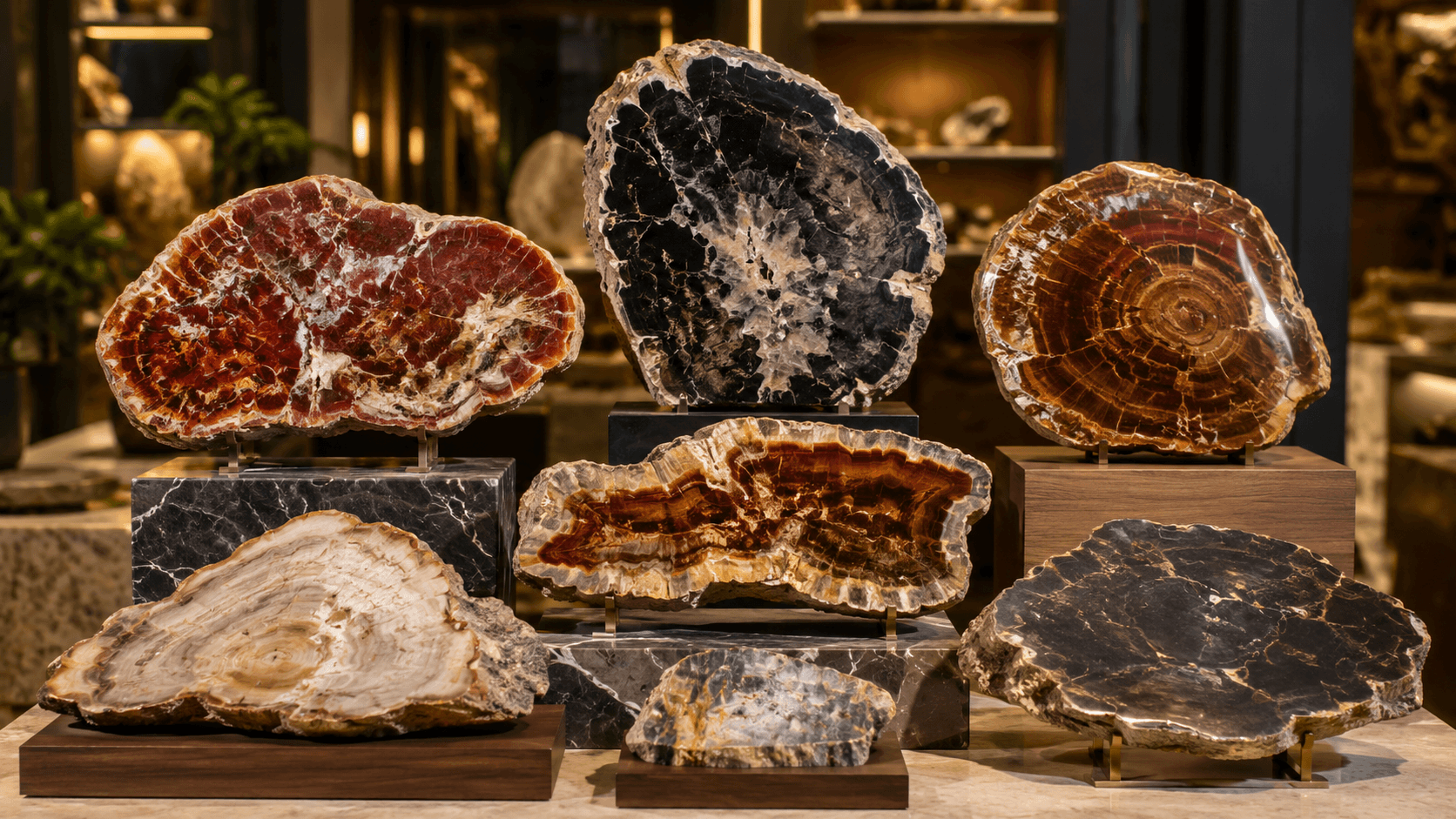
This is where the difference between trunks becomes practical, not just poetic. Ambra, with its warm iron tones, and Umbra, darker with manganese, don't merely look different — they can respond slightly differently to polishing depending on the density of their mineral banding. A trunk with tighter, more mineralized rings tends to hold a higher polish for longer; one with more porous fossilized fissures may show its texture more openly under raking light.
We name each trunk because each one arrived from the southwest of Madagascar as a single tree, extracted whole, and because the color it carries vanished the moment it was cut — no other trunk will replace it. Knowing which tree your table or vessel comes from tells you, in part, how it will age under your hands.
A stone this old was never going to need our protection. What it asks for is attention.
Advanced Care: Fissures, Cracks, and Structural Confidence
Some pieces show fine internal fissures — a natural consequence of the fossilization process, where the original wood shrank slightly before full silicification. These lines are cosmetic. At Mohs 7, the surrounding quartz body carries the structural load; a fissure does not compromise a tabletop's ability to bear weight or a vessel's ability to hold water. There is no filling, resin injection, or sealing required to "close" them — doing so would alter the piece's authenticity without adding real strength.
If you're inspecting a piece before purchase, run a hand across the surface: fissures should feel flush, not have any give, and a workshop-finished edge should never feel sharp or unstable.
Bringing a Piece Home
Whether you're placing a vessel in a bathroom, where it will meet water daily, or a tabletop in a living space that sees decades of use, the routine is the same: clean gently, polish occasionally, and trust the mineral. Petrified wood has already outlasted the tree it once was by 230 million years — it isn't asking modern chemistry for help.
See the current trunks available and discuss finishing options for your piece.
Visit the ShopFrequently Asked Questions
Do I need to seal my petrified wood table?
No. Petrified wood is solid quartz with essentially no porosity, so there's no surface to impregnate. Occasional polishing maintains shine; it does not protect against absorption, because there is none to prevent.
Can water or heat damage the surface?
No. Quartz at Mohs 7 is unaffected by water, heat, frost, or UV exposure. A petrified wood vessel can hold water indefinitely without staining or weakening.
Why does my piece have fine cracks?
These fissures formed naturally during fossilization, before the wood fully silicified. They are cosmetic and do not affect the strength of the piece, given the hardness of the surrounding quartz.
How do I restore the shine if it dulls over time?
A fine polishing compound, applied gently with a soft cloth, restores the original sheen. A light coat of neutral furniture wax can deepen the finish further on decorative pieces — this is a cosmetic step, not a protective seal.