
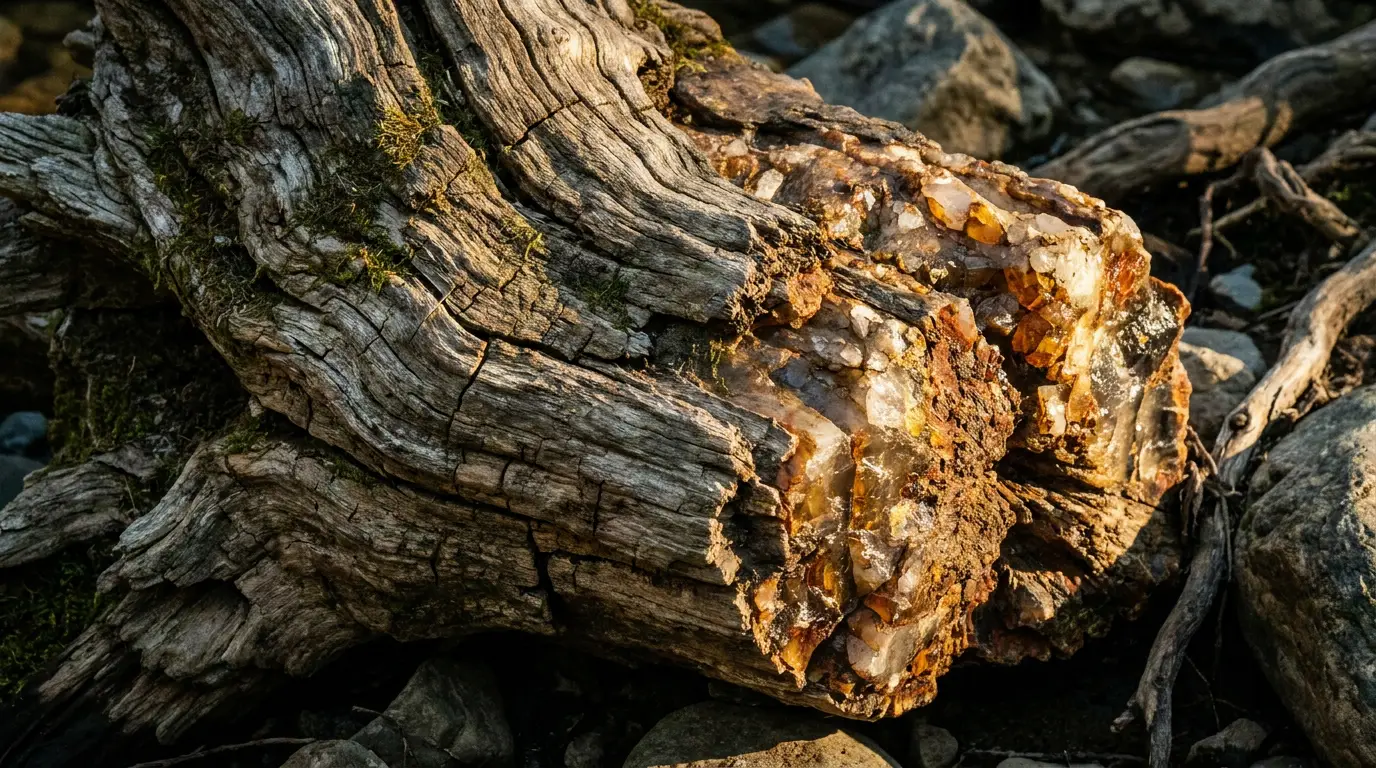
A Stone That Asks Almost Nothing of You
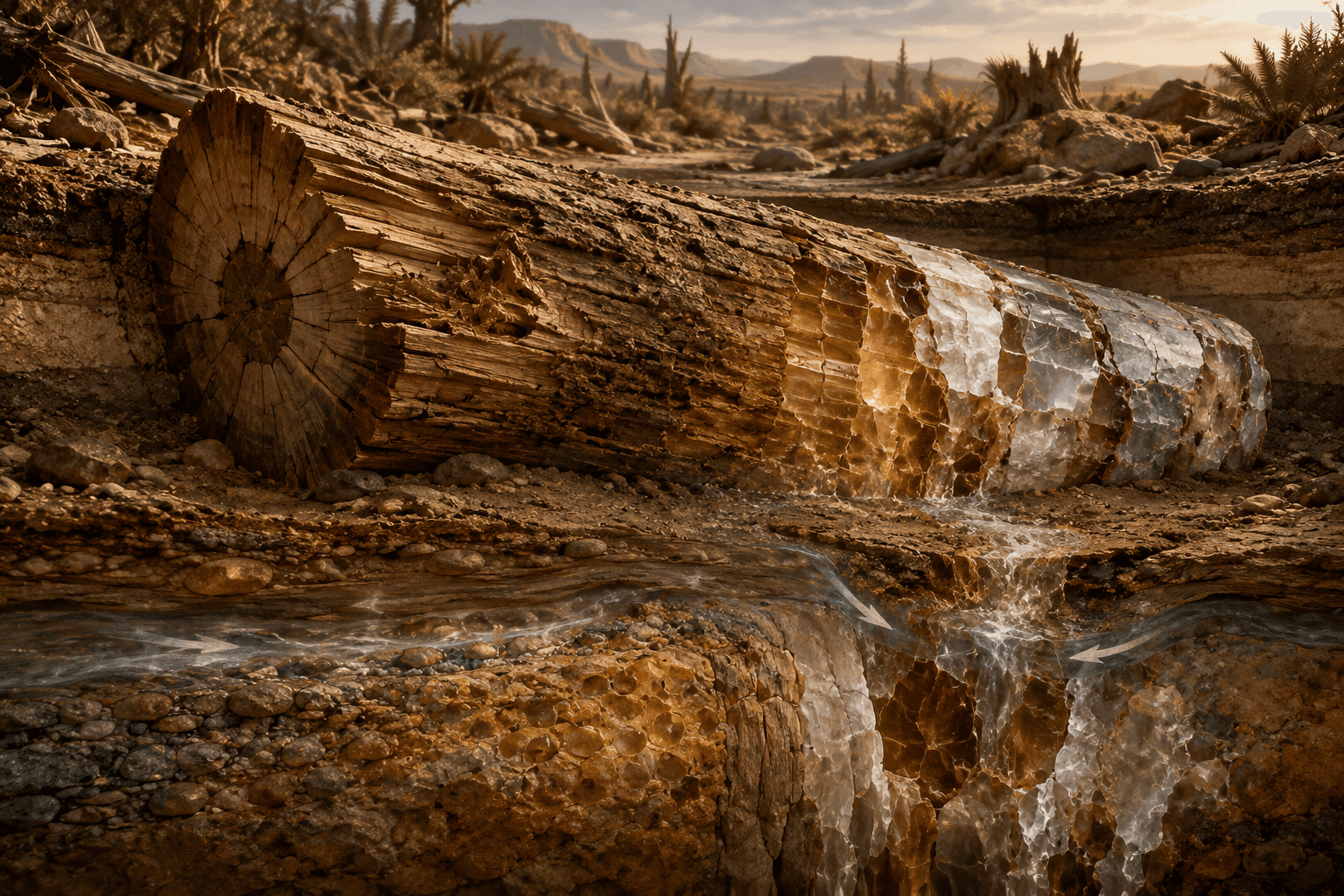
Petrified wood is not wood. It is quartz — silica that replaced organic tissue cell by cell, some 230 million years ago, in the forests of what is now southwestern Madagascar. What you own is mineral, rated 7 on the Mohs hardness scale, the same hardness as the sand that scratches glass. This single fact changes everything about how you should think of care: you are not maintaining a material that ages, warps, or absorbs. You are living alongside a fossil that has already survived everything geology could throw at it.
Caring for a Medusa piece is less about protection and more about respect — for the surface, the polish, and the particular tree it once was.
Daily Cleaning: What Actually Works
Quartz does not absorb water, oils, or odors. There is no porosity to worry about, no sealing to maintain. Cleaning a table, vasque, or decorative block from Madagascar is closer to cleaning a windowpane than to caring for wood furniture.
- Weekly dusting: a dry microfiber cloth removes surface dust without effort.
- Deeper cleaning: warm water and a neutral soap (dish soap works fine) applied with a soft cloth or sponge.
- Water spots on a vasque: wipe dry after use, or use a splash of white vinegar diluted in water for mineral buildup — quartz is entirely indifferent to it.
- Fingerprints on a polished top: a glass cleaner and a lint-free cloth restore the shine instantly.
There is no drying schedule to respect, no risk of water rings, no swelling. The piece dries the way a stone dries — completely, and without a trace.
What Petrified Wood Doesn't Fear
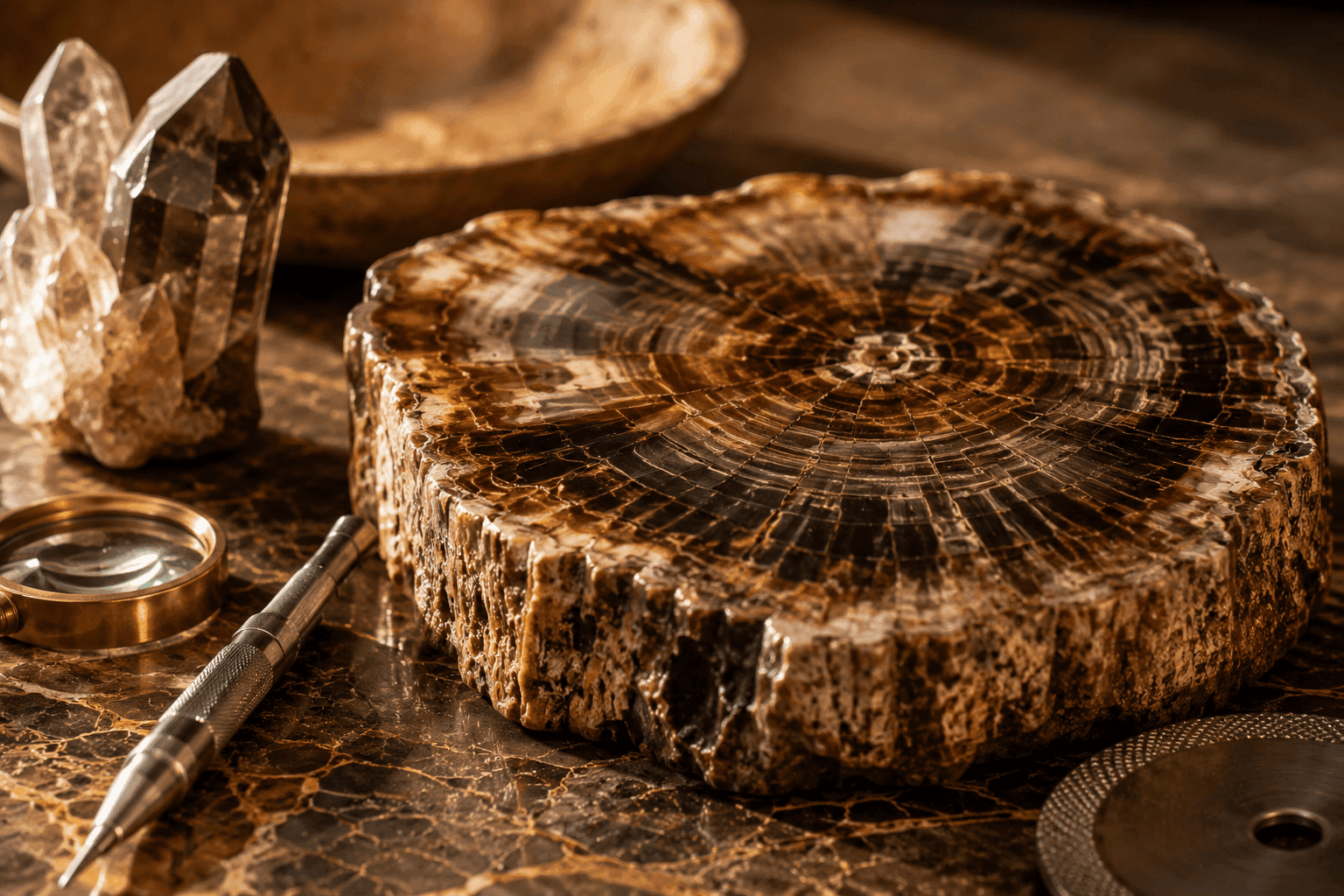
The mineralization that turned a living tree into stone also stripped away every vulnerability wood normally has. A Medusa piece is genuinely indifferent to:
- Heat: a hot pan or a scalding teapot leaves no mark. Quartz does not scorch.
- Water and humidity: no swelling, no rot, no warping — ever.
- UV exposure: colours do not fade in sunlight, indoors or on a covered terrace.
- Cold and frost: the material tolerates temperature swings that would crack wood or laminate.
A tree that survived 230 million years underground has nothing left to fear from a kitchen counter.
This is the quiet advantage of working in fossil quartz rather than wood: the object you place in your home today will look, in every material sense, identical in fifty years.
What to Avoid
Hardness is not invulnerability to impact, and a polish is not a coating. A few precautions preserve the piece's finish over the long term:
- Avoid abrasive scouring pads or powders. They won't scratch the quartz itself, but they can dull a mirror polish over repeated use.
- Don't drag heavy objects across a polished surface. Quartz can chip at sharp edges under a hard, concentrated blow — lift, don't slide.
- Skip harsh acids in concentrated form (undiluted descalers, industrial cleaners). They're unnecessary and can affect surrounding metal fittings or wood bases, even if the stone itself is unaffected.
- No need for oils, waxes, or sealants. Some sellers recommend them out of habit — they add nothing to quartz and only leave a film to clean off later.
Protecting the Colour of Your Tree
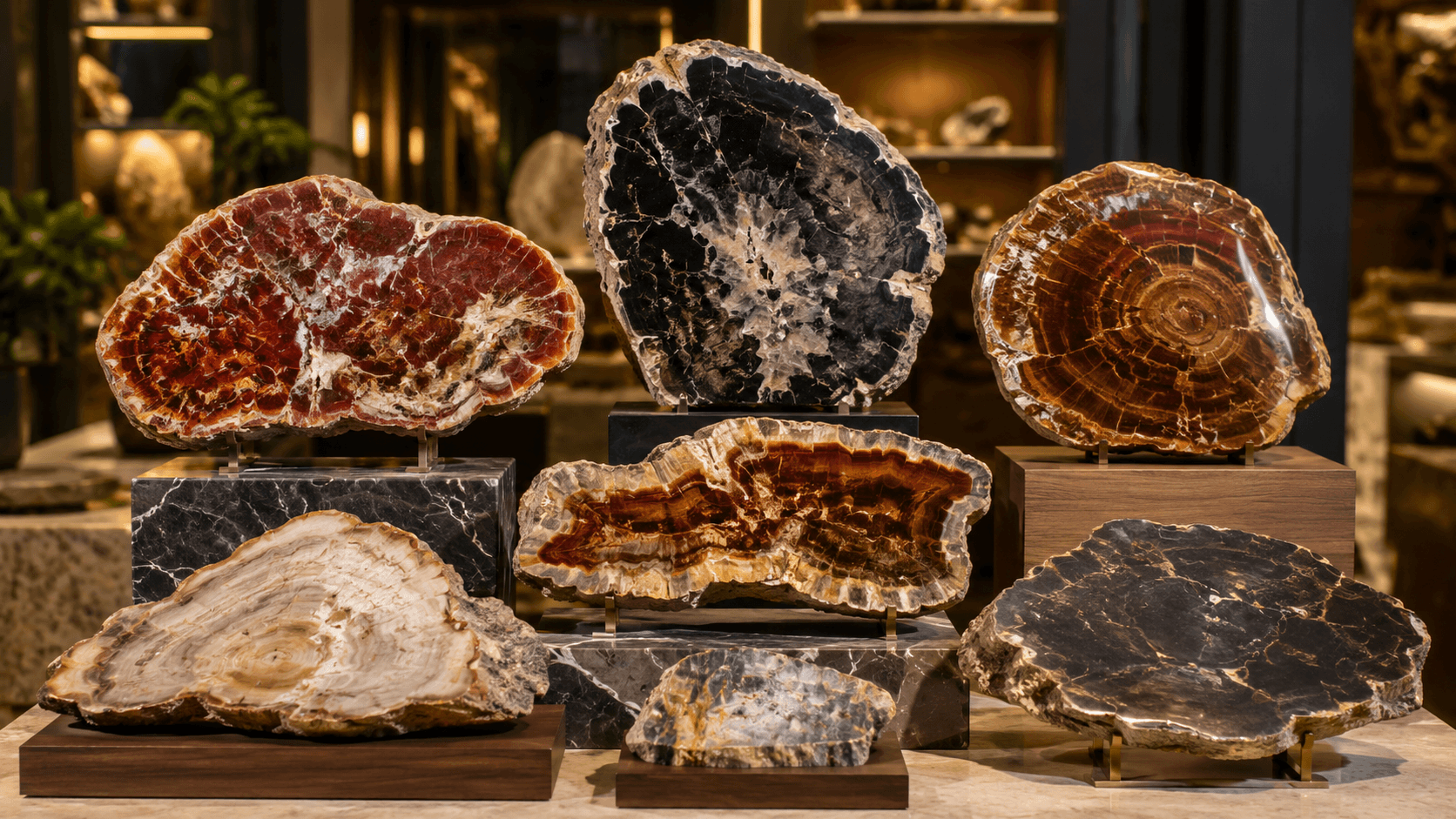
Every Medusa piece carries a name — Ambra, Argentea, Fusca, Umbra, Viridis — because it comes from one specific tree, not a category of product. The colour you see was set during mineralization: iron gave the ochres and reds, manganese the blacks and violets, chromium and cobalt the rarer greens and blues. Nothing you do in daily care will alter this palette — it is chemically locked into the stone, not painted or stained onto it.
What matters is choosing where a piece lives. While UV won't fade the colour, positioning a table or vasque away from constant abrasive contact (sand, grit, repeated dragging of ceramic or metal objects) keeps the surface's original polish — and therefore its colour depth — intact for the piece's entire life.
Living With a Piece from Madagascar
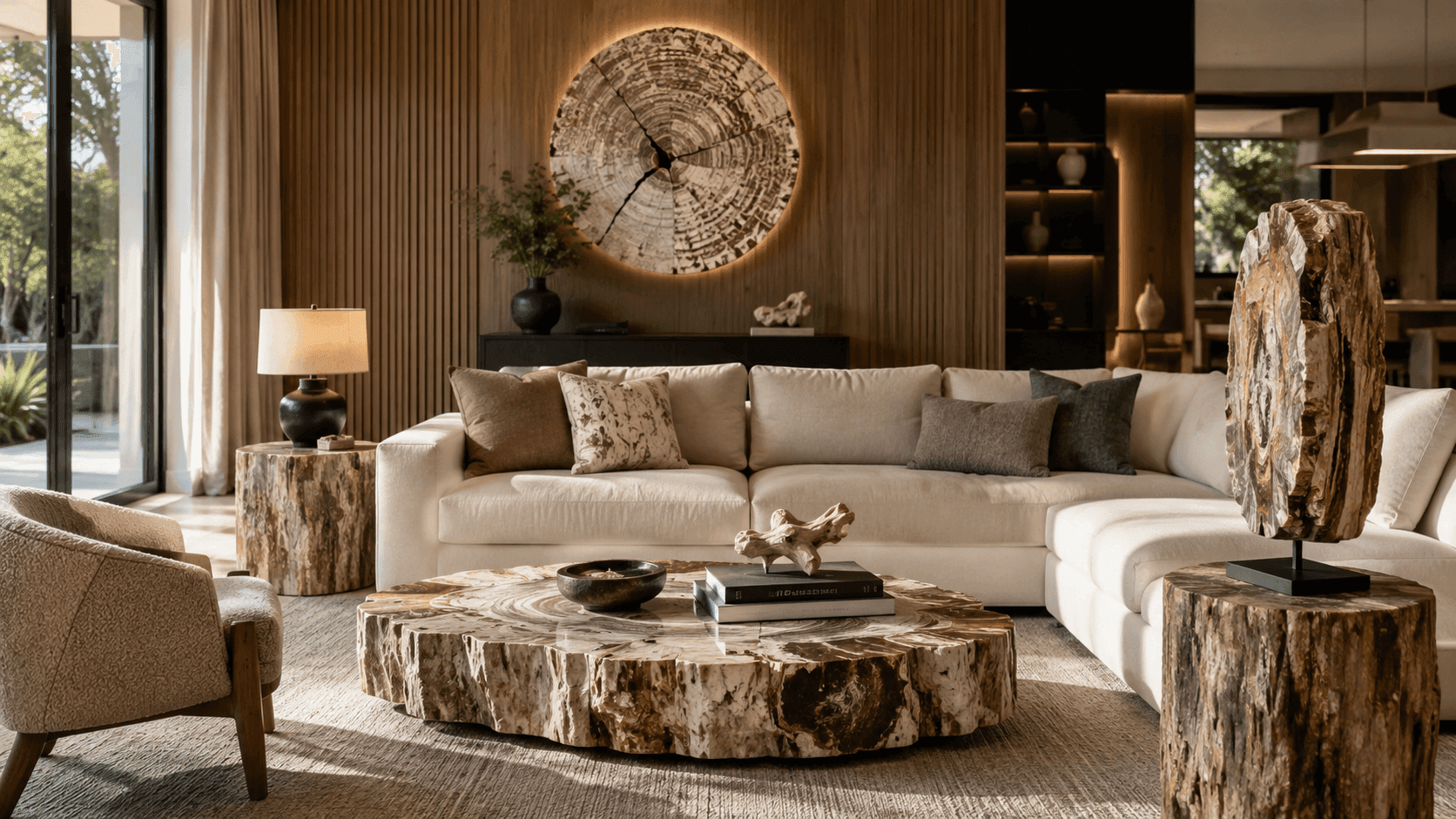
A Medusa piece was not manufactured. It was extracted as a single trunk from the southwest of Madagascar, cut, and polished by hand to reveal grain and colour that will never exist in another piece — because that specific tree, with that specific mineral history, is now gone. Caring for it well simply means letting it do what it has always done: endure, without asking for anything in return.
See the trees currently available and request a tailored quote for your space.
Visit the ShopFrequently Asked Questions
Can I put a hot pot directly on a petrified wood table?
Yes. Quartz does not scorch, melt, or discolour under heat. There is no need for trivets or protective mats, though a stable, flat surface is still recommended to avoid uneven pressure on edges.
Does petrified wood need sealing or oiling?
No. Unlike wood, quartz has no porosity to seal. Oils and waxes serve no functional purpose and only leave residue to wipe away.
Will the colour of my piece fade over time?
No. The colour comes from mineral inclusions (iron, manganese, chromium, cobalt) fixed during fossilization millions of years ago. Sunlight, heat, and time have no effect on it.
What's the safest way to clean a petrified wood vasque?
Warm water with a neutral soap and a soft cloth. For mineral deposits from hard water, a diluted vinegar solution is safe and effective — the stone is entirely unaffected by either.