
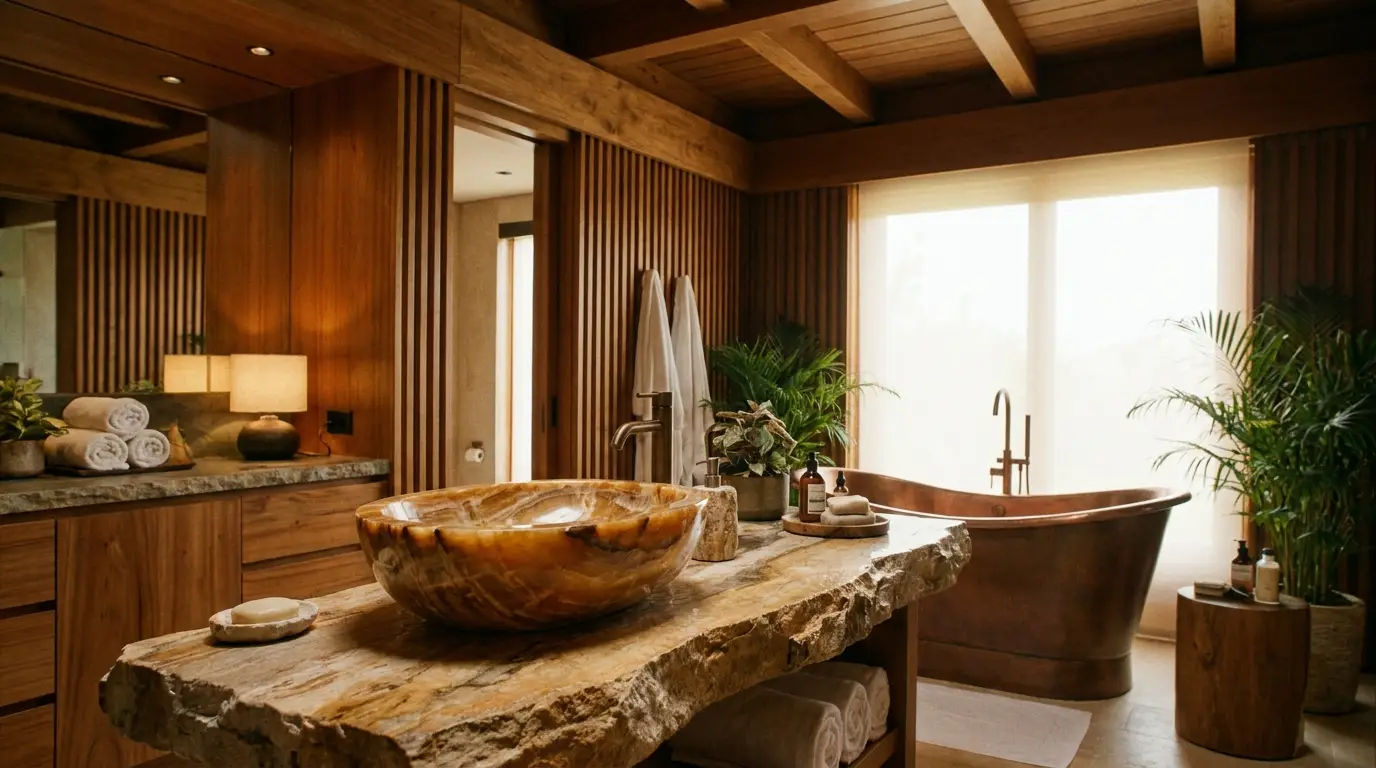
A Bathroom Fixture Cut From Deep Time
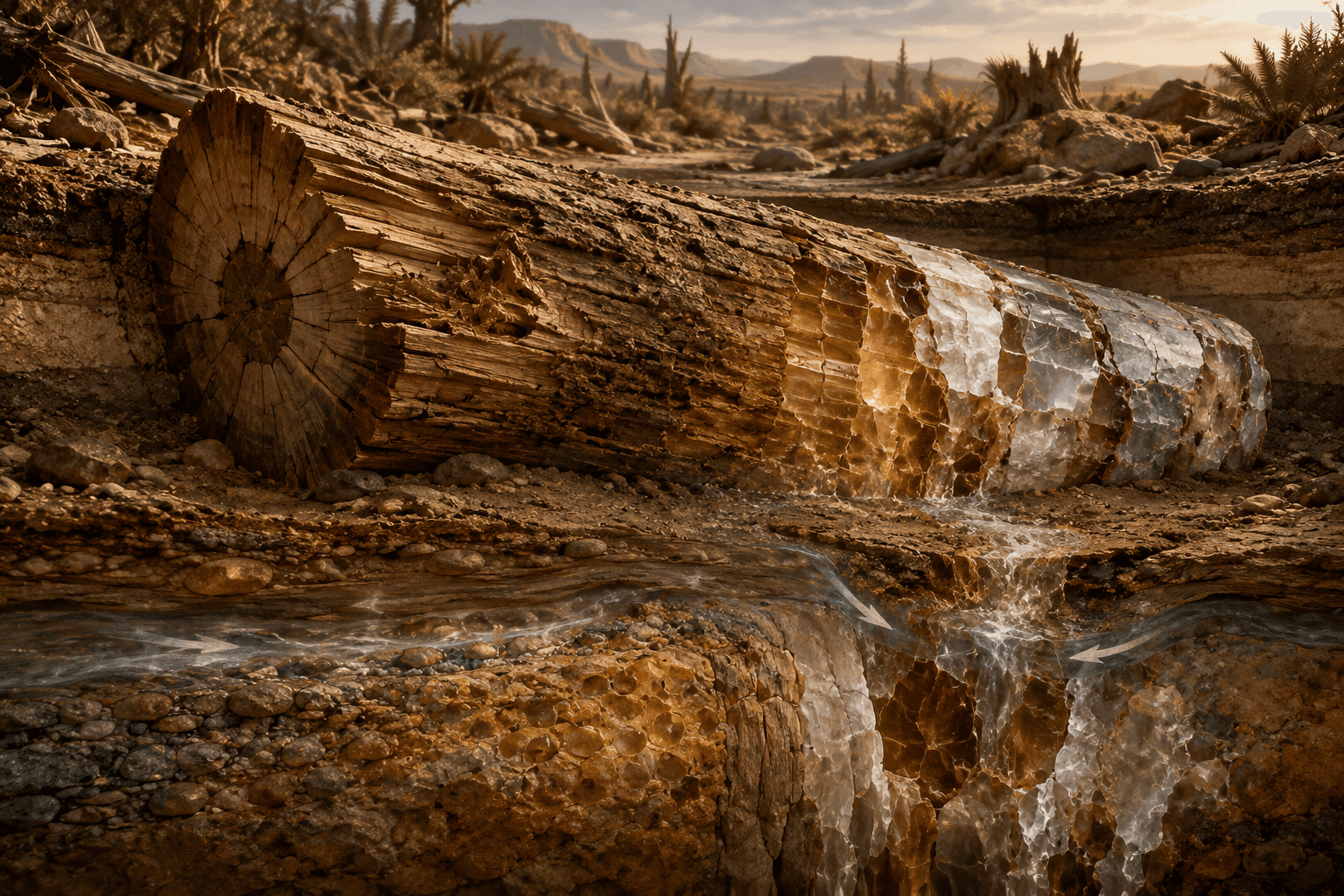
A vanity top asks a lot of a material: it must resist water, withstand daily contact, and still look considered after years of use. Petrified wood was never grown for this purpose — it was mineralized for it, over roughly 230 million years, in the soil of southwestern Madagascar. What began as a fallen tree became, through slow silica infiltration during the Triassic, a solid block of quartz. A vanity top made from it is not a decorative gesture. It is geology doing a plumber's job, and doing it better than most quarried stone.
One Tree, One Name, One Trunk
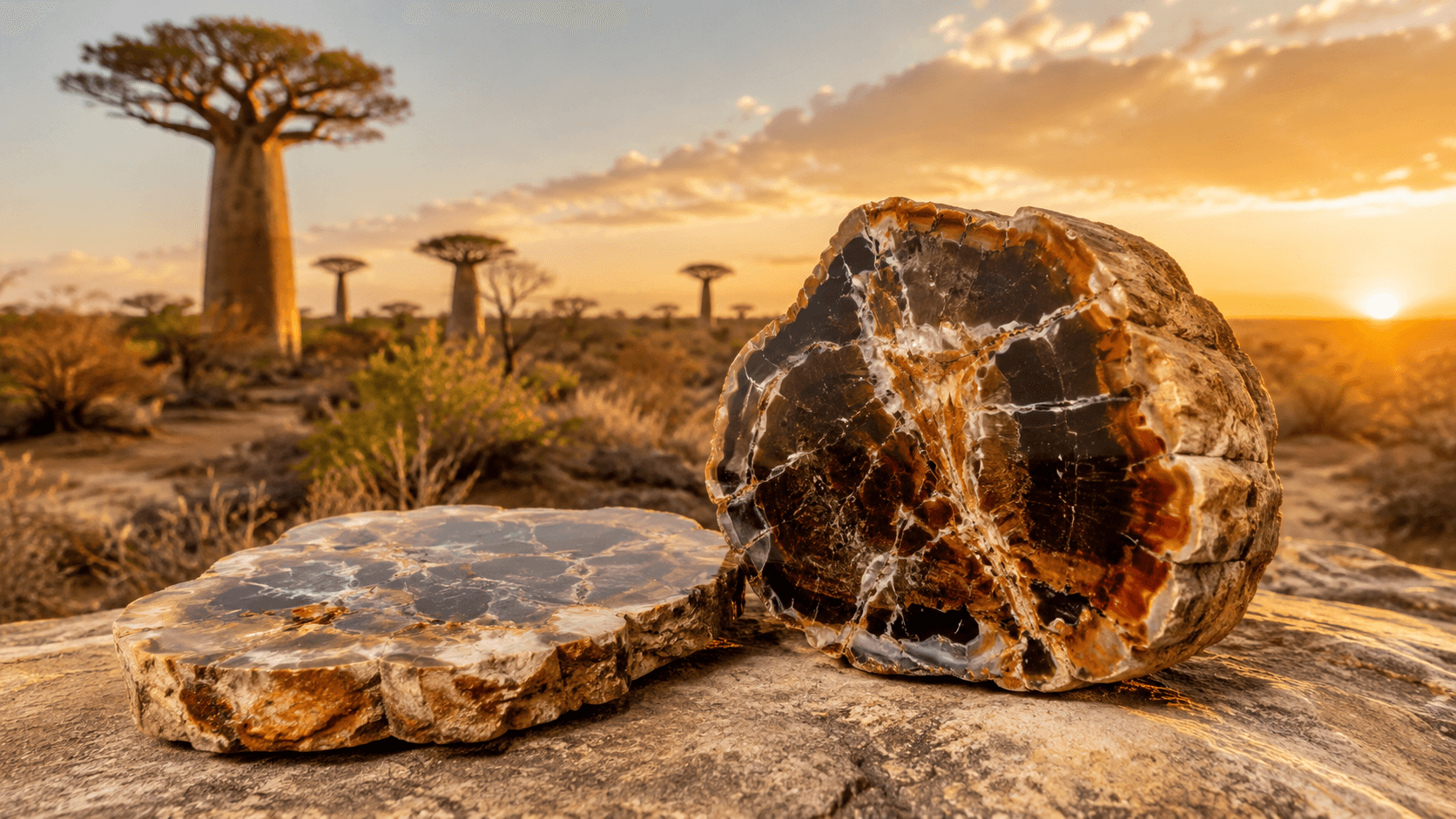
Every trunk we bring back from Madagascar is handled as an individual, not a unit of stock. Each one receives a name — Ambra, Argentea, Fusca, Umbra, Viridis — that reflects the color its own mineralization produced. No two trunks share the exact same chemistry, and therefore no two share the exact same result. Once a trunk is cut into vanity tops, that particular palette is gone. There is no second harvest of the same tree.
This matters more in a bathroom than almost anywhere else in the house. A vanity top sits at eye level, under direct light, touched daily. Buyers aren't choosing a finish from a catalog — they're choosing which tree's history will sit under their basin.
Why Quartz Belongs in a Bathroom
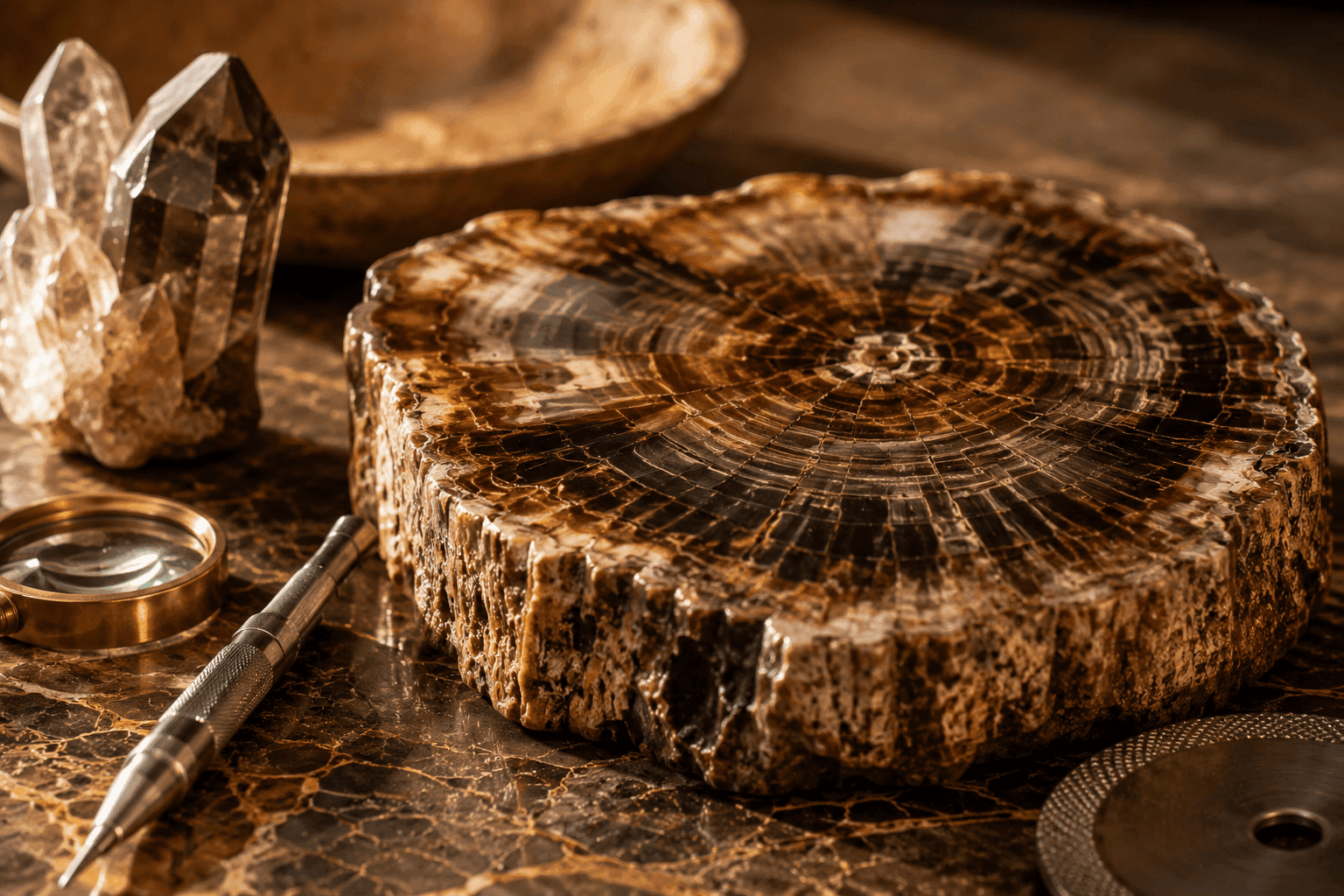
Petrified wood scores 7 on the Mohs hardness scale — the same as quartz, because that's precisely what it is. The organic wood structure disappeared long ago, replaced cell by cell with silica. What remains is stone that happens to remember the shape and grain of a tree.
For a vanity top, this translates into practical advantages that granite or marble can't always match:
- Total indifference to water — no sealing required against staining from splashes or standing moisture
- No sensitivity to heat, so hot water and styling tools pose no risk
- No UV fading, even under a skylight or south-facing window
- Resistance to scratching from daily grooming objects, glass, or metal fixtures
- A cold, dense touch that stoneware and composite tops simply don't replicate
The colors themselves come from the same minerals that give other stones their character: iron for reds and ochres, manganese for blacks and violets, chrome and cobalt for the rarer greens and blues. Nothing is dyed or treated to achieve these tones — they were set into the wood millions of years before anyone thought to use it as furniture.
A vanity top usually imitates stone. This one simply is stone — it was just a tree first.
Choosing a Trunk, Choosing a Character
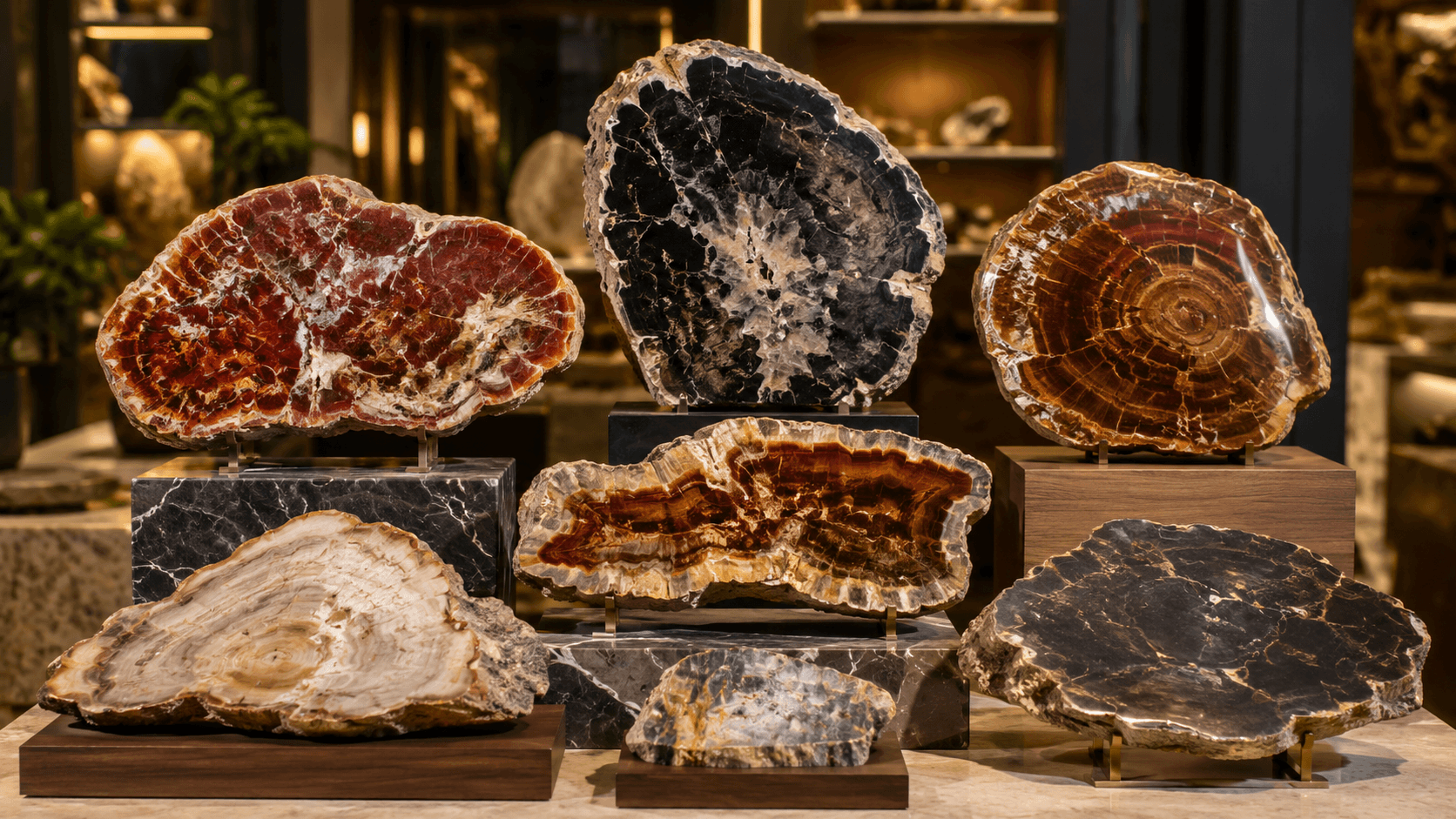
Ambra tends toward warm amber and honey tones, often with darker striations running through the grain. Argentea leans cooler, closer to grey and pewter, with a quieter presence suited to minimal bathrooms. Fusca sits in deep browns, almost like aged wood at first glance until the light catches its crystalline surface. Umbra goes darker still, near-black in places, dramatic against a pale basin. Viridis is the rarest — greens born of chromium or cobalt, appearing only in specific trunks and never guaranteed twice.
Choosing between them isn't a matter of matching a mood board. It's closer to selecting a piece of furniture whose main material is time itself.
From Trunk to Vanity Top
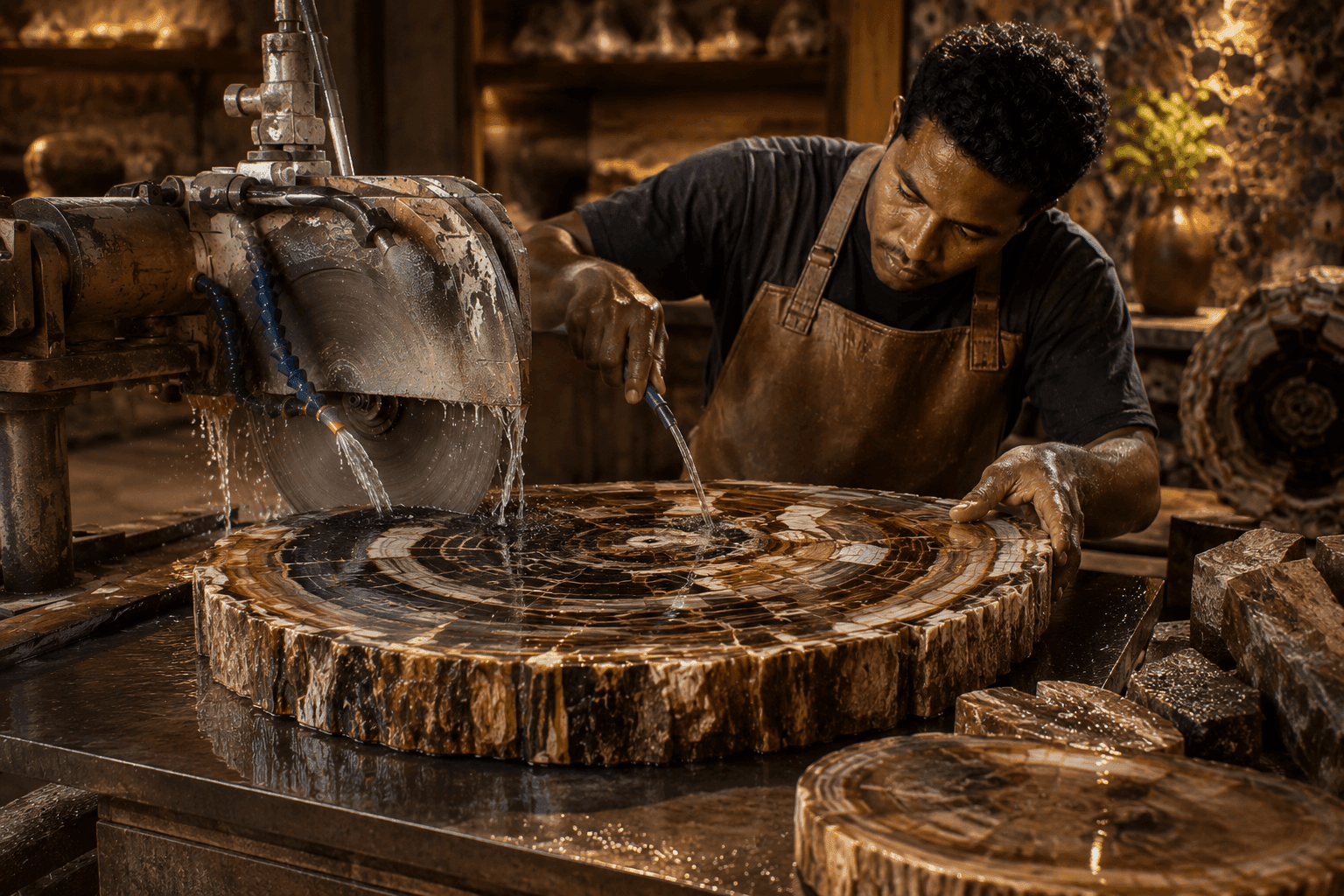
Working petrified wood is not comparable to working ordinary stone. Quartz doesn't yield — every cut, every polish pass, every basin cutout has to respect the hardness of the material rather than fight it. Our artisans study each trunk before cutting: the direction of the original grain, the density of mineral veining, the places where color concentration is strongest. A vanity top is planned to make the most of a trunk's specific pattern, not stamped out to a generic template.
The result carries visible growth rings, occasional fissures filled with contrasting minerals, and an edge profile that follows the natural form of the tree rather than an imposed geometry. No two vanity tops from the same trunk are identical, and none can be reordered once that trunk is used up.
Living With It
Installed under a stone or glass basin, a petrified wood vanity top reads less as a bathroom fixture and more as a piece that happens to be plumbed. Its weight demands proper support during installation — this is dense quartz, not engineered composite — but once set, it asks for almost nothing in return. No resealing, no fading, no wear pattern forming where water lands most often. What changes over years is the eye that looks at it, not the surface itself.
Every vanity top is unique to its trunk — talk to us before that particular color disappears.
Request a QuoteFrequently Asked Questions
Is petrified wood suitable for daily bathroom use?
Yes. At 7 on the Mohs scale, it resists water, heat, and scratching better than most stone or composite vanity tops, with no sealing required.
Will the color of my vanity top match a sample I've seen online?
Not exactly, and that's intentional. Each trunk has its own mineral composition, so tones vary from one Ambra or Umbra piece to the next. We can guide selection based on available slabs, but exact photographic matching isn't possible.
Can I get a custom basin cutout for my faucet and drain?
Yes, cutouts are made to your existing or planned fixtures. Because the stone is hard and dense, this work is planned in advance — details are handled with our team on a quote basis.
Where does the wood come from, and how old is it?
All our petrified wood originates from southwestern Madagascar and dates to the Triassic period, roughly 230 million years ago.