
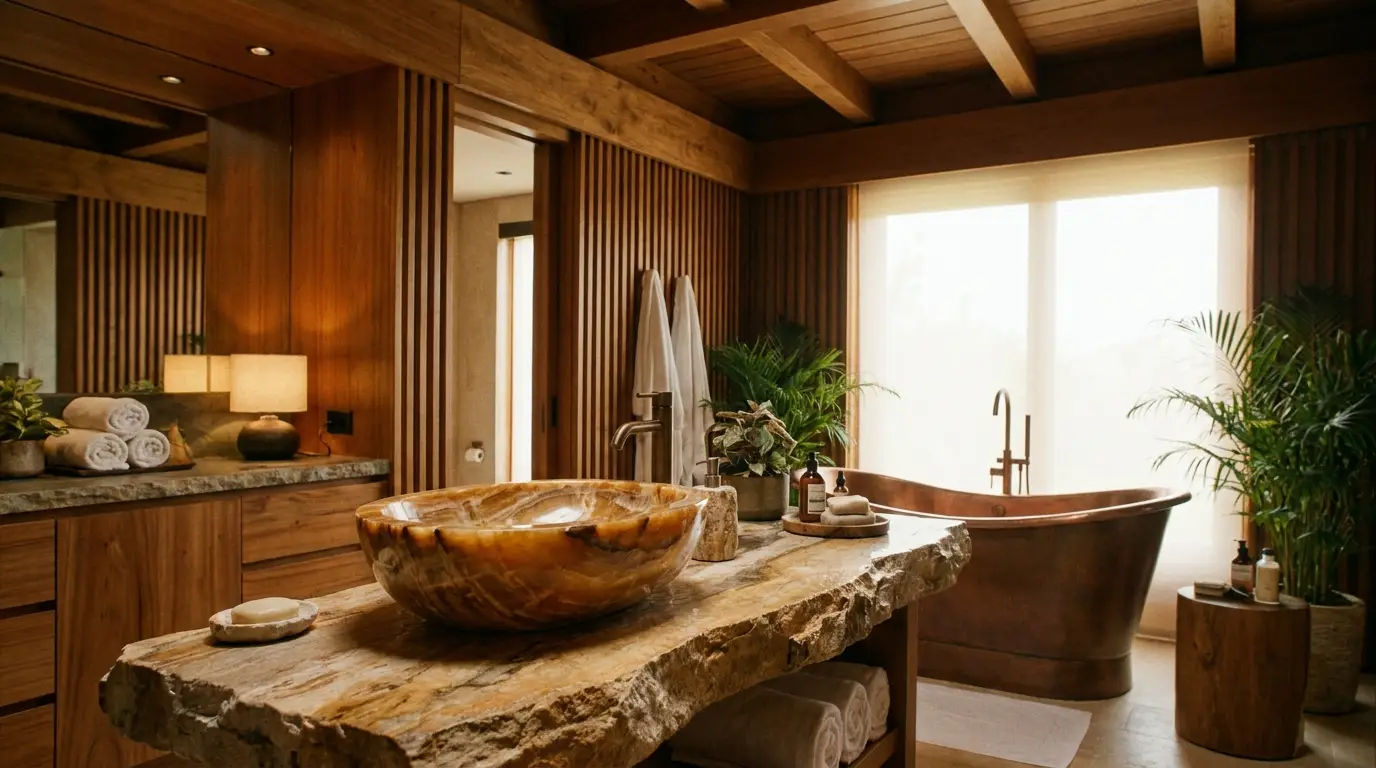
A Sink Basin Carved from a Single Fossilized Tree
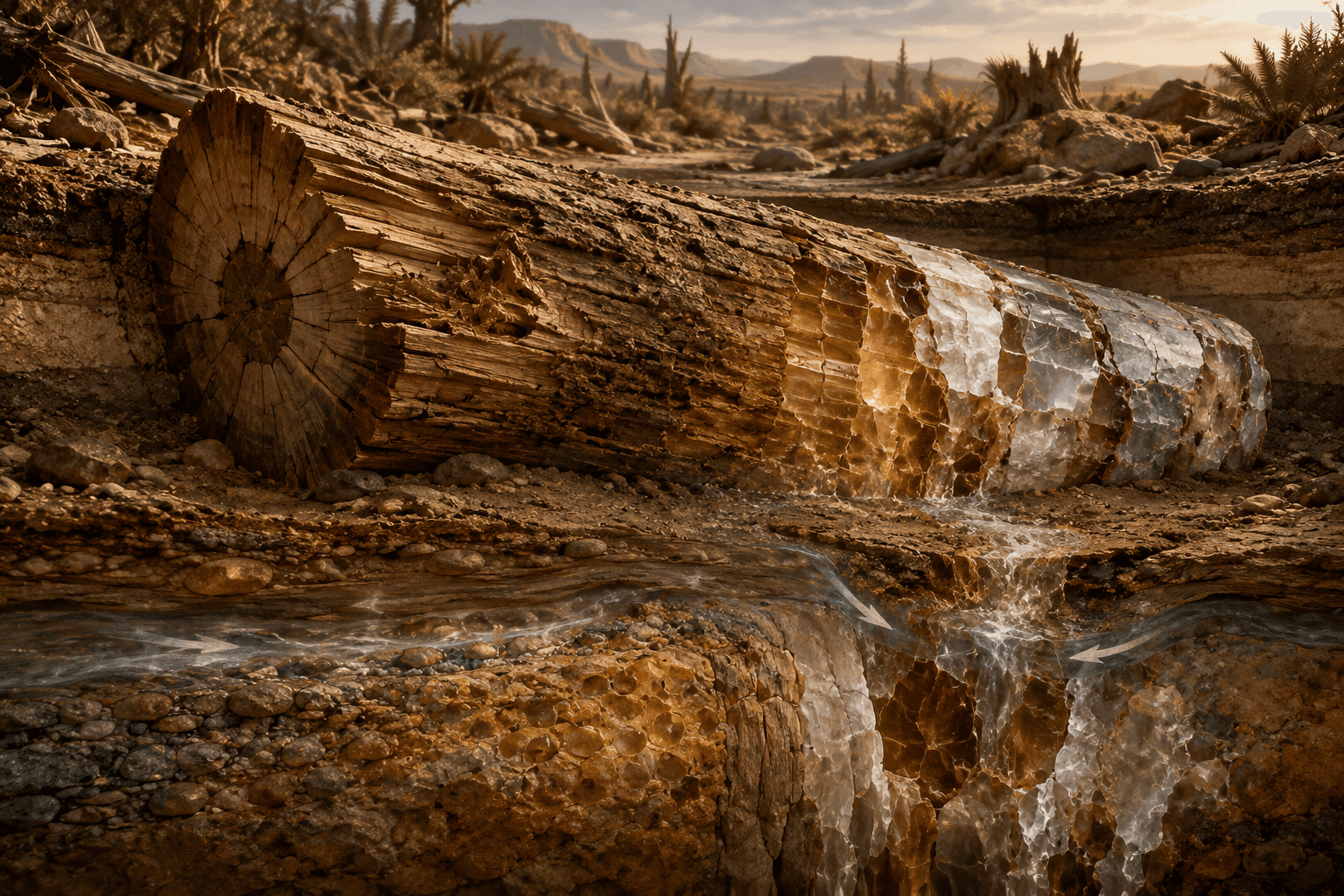
Long before it becomes a basin, it is a tree. A specific one — not a species, not a batch, but an individual trunk that grew in the southwest of Madagascar some 230 million years ago, fell, and was slowly replaced, cell by cell, with quartz. What comes out of the ground is not "petrified wood" in the generic sense sold by volume elsewhere. At Medusa, each trunk is named: Ambra for amber tones, Argentea for silvered grey, Fusca for deep brown, Umbra for near-black, Viridis for green. A sink basin cut from Umbra will never look like one cut from Ambra — and once a trunk is fully worked, that particular palette is gone. There is no second Umbra.
This is the starting point for anyone considering a petrified wood sink basin: you are not choosing a finish. You are choosing a tree.
Why Quartz Makes an Exceptional Basin
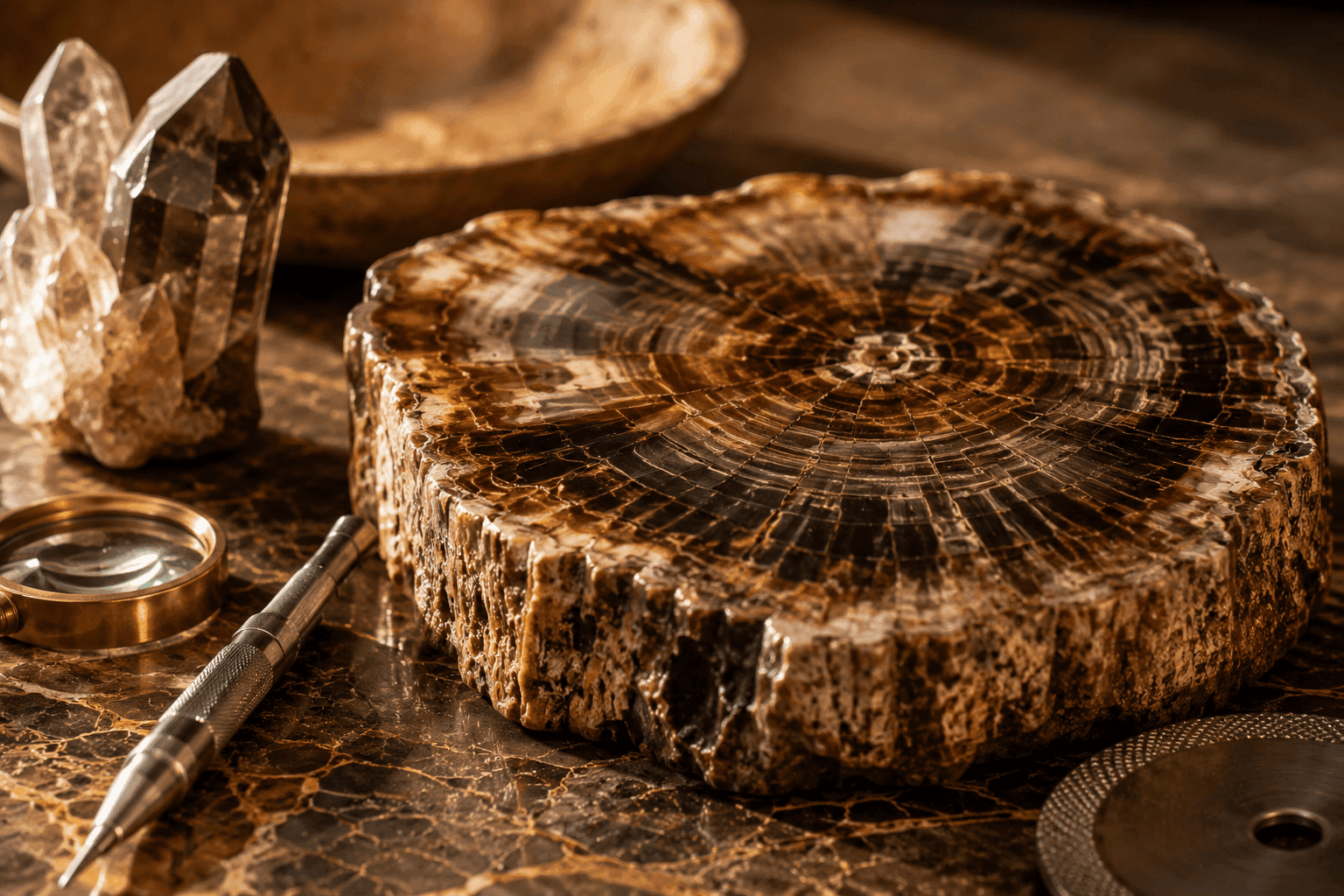
Petrification replaces organic wood tissue with silica. The result is, mineralogically, quartz — rated 7 on the Mohs hardness scale. For a basin, this is not a decorative detail; it is the entire argument.
- Water has no effect on it. Quartz does not absorb, swell, or stain the way porous stone or resin composites can.
- Heat and cold leave it unmoved. No thermal shock, no dulling, no fading from a hot tap or a cold winter bathroom.
- UV exposure changes nothing. A basin placed near a window keeps its color indefinitely.
- Scratches are rare. At 7 on Mohs, only a handful of natural materials can mark the surface.
- It is heavy — genuinely, reassuringly heavy. This is stone that was once a tree, and it carries the density of both.
A ceramic or resin basin is manufactured to resist water. A petrified wood basin was never vulnerable to it in the first place.
Where Color Comes From
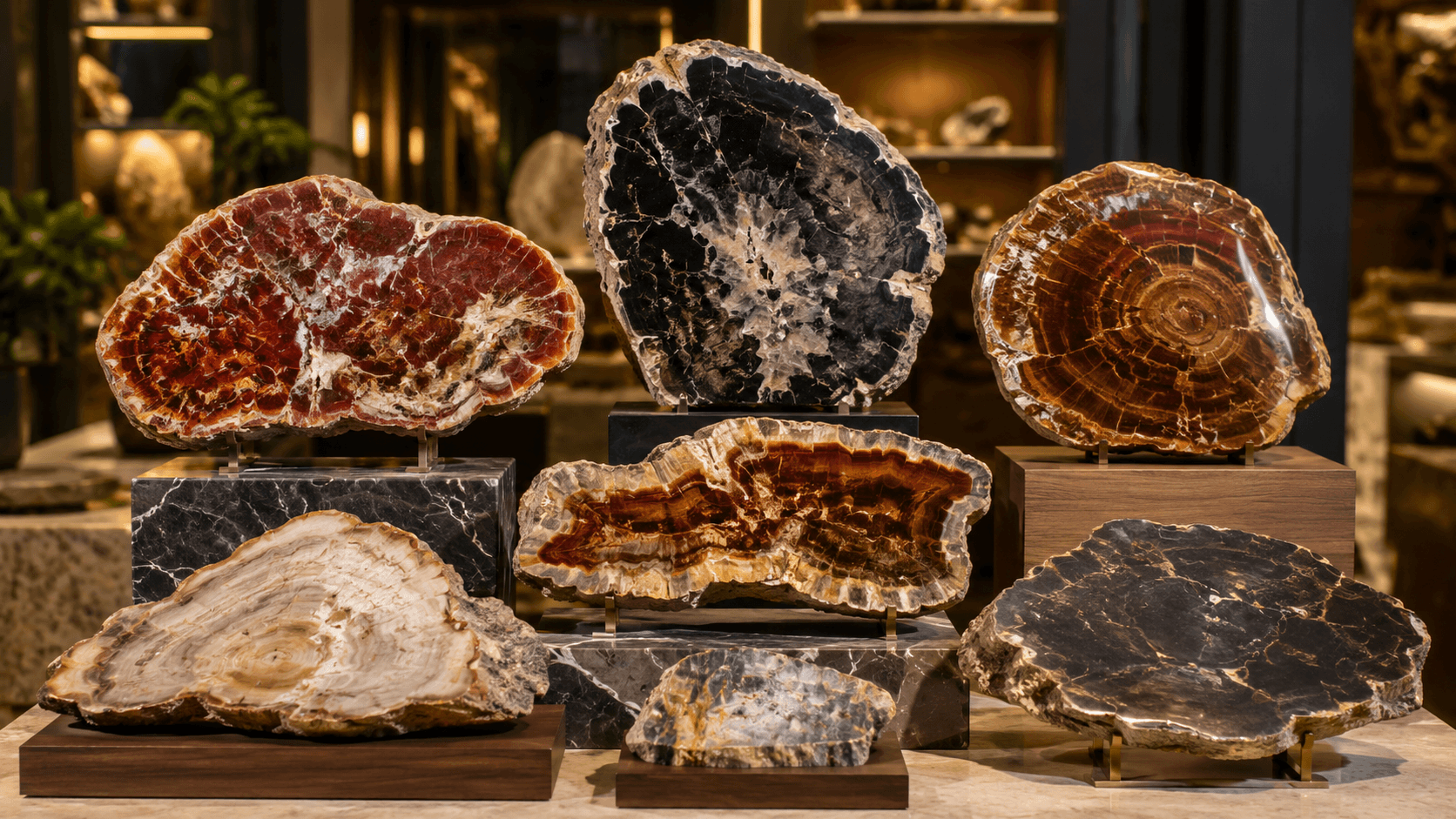
The five names Medusa gives its trunks are not arbitrary categories — they describe what minerals were present when silica replaced the wood, millions of years ago.
- Iron produces the reds and ochres — the warmth in Ambra and Fusca.
- Manganese produces blacks and violets — the depth in Umbra.
- Chromium and cobalt produce greens and blues — rare, and the source of Viridis.
No two trunks were exposed to identical mineral conditions, which is why no two basins, even from the same species of ancient tree, share the same coloring. The grain, meanwhile — visible as growth rings in a polished cross-section — is the tree's own structure, preserved exactly as it stood in the Triassic.
A basin does not imitate stone. It is stone that remembers having been a tree.
From Trunk to Basin: The Work Involved
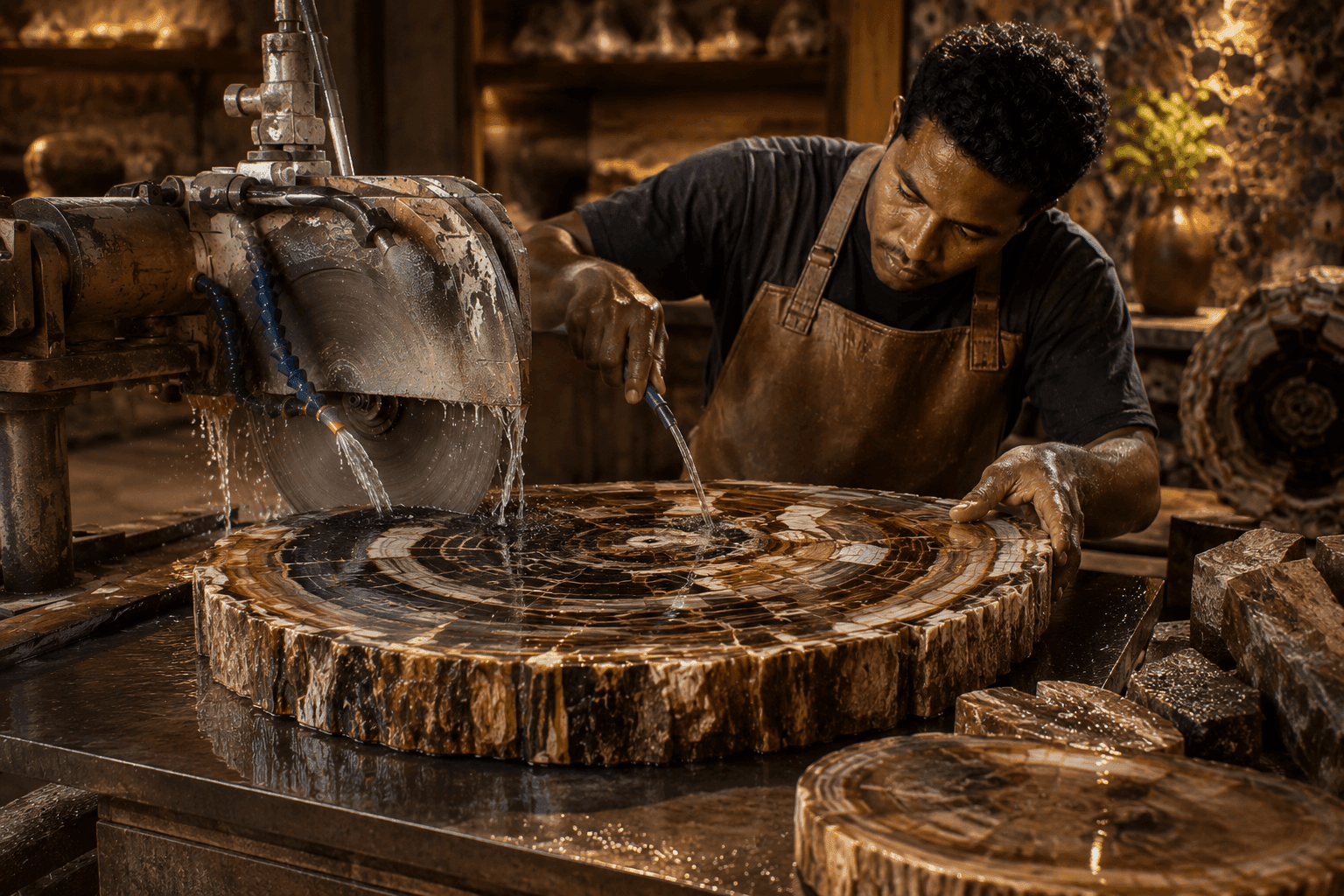
Turning a raw trunk section into a usable basin is slow, deliberate work. The material's hardness — the same quality that makes it durable — also makes it demanding to shape. Diamond tooling is required at every stage: hollowing the basin, smoothing the interior curve, polishing the exterior to reveal the grain beneath.
Each piece is approached individually. The artisan works with the trunk's natural form rather than against it — following existing fissures, respecting the density variations within the stone, choosing where the basin's rim falls based on how the material actually behaves. This is not a mold filled with resin. It is a single mineral mass, reduced patiently until a vessel emerges from it.
In the Bathroom: Presence Without Compromise
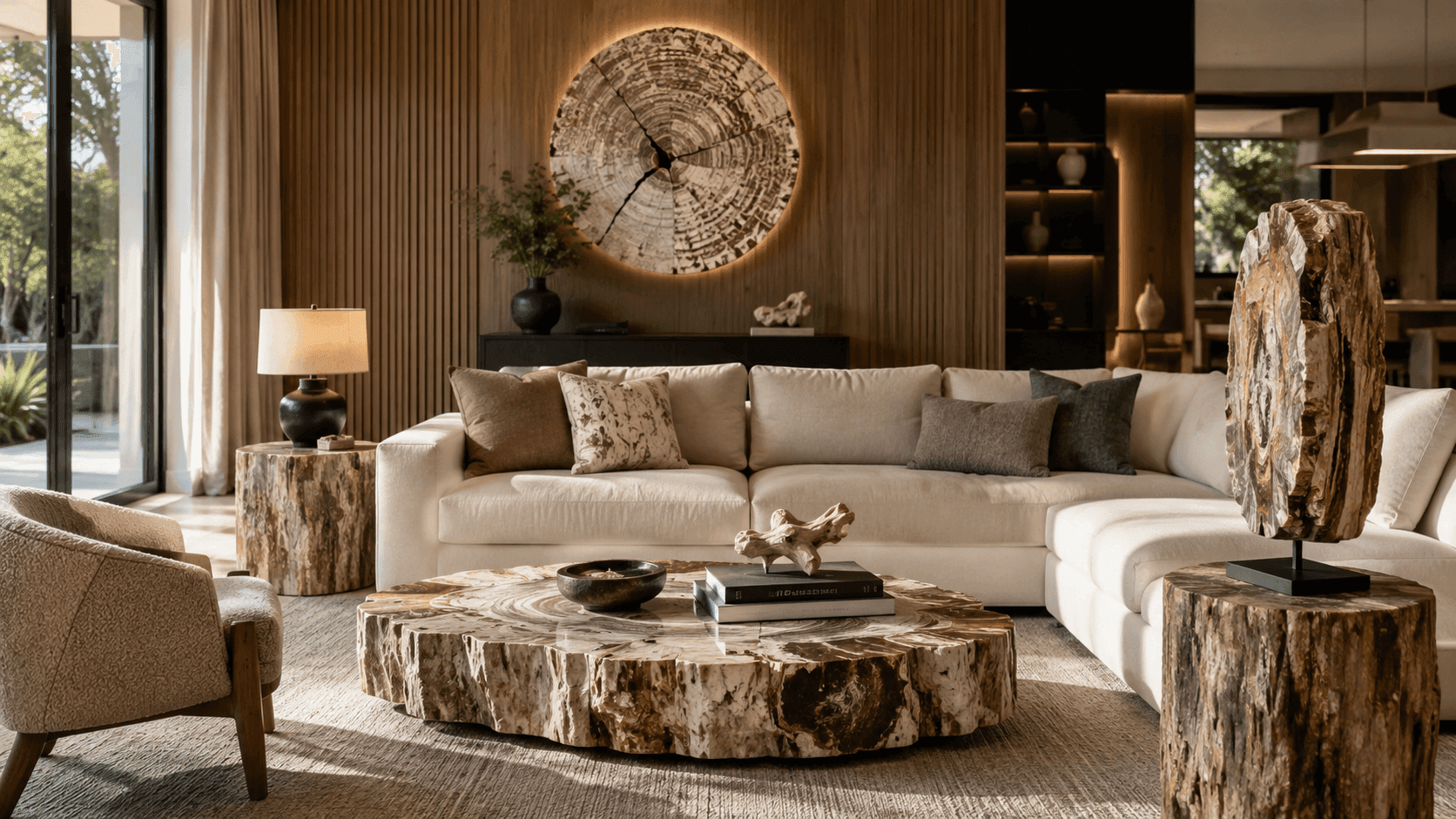
A petrified wood sink basin does not behave like a bathroom accessory. It behaves like a piece of furniture that happens to hold water. Its weight anchors a room; its surface catches light differently depending on the hour. Paired with a simple stone or wood counter, it becomes the room's single point of focus — no other element competes with 230 million years of mineral history sitting on the countertop.
Because the material is inert, there is no maintenance regimen to follow: no sealing, no special cleaning products, no anxiety about a splash of hot water or a dropped bottle of perfume. The basin asks nothing of its owner beyond being looked at.
See the available petrified wood basins and request a tailored quote.
View the CollectionChoosing Your Trunk
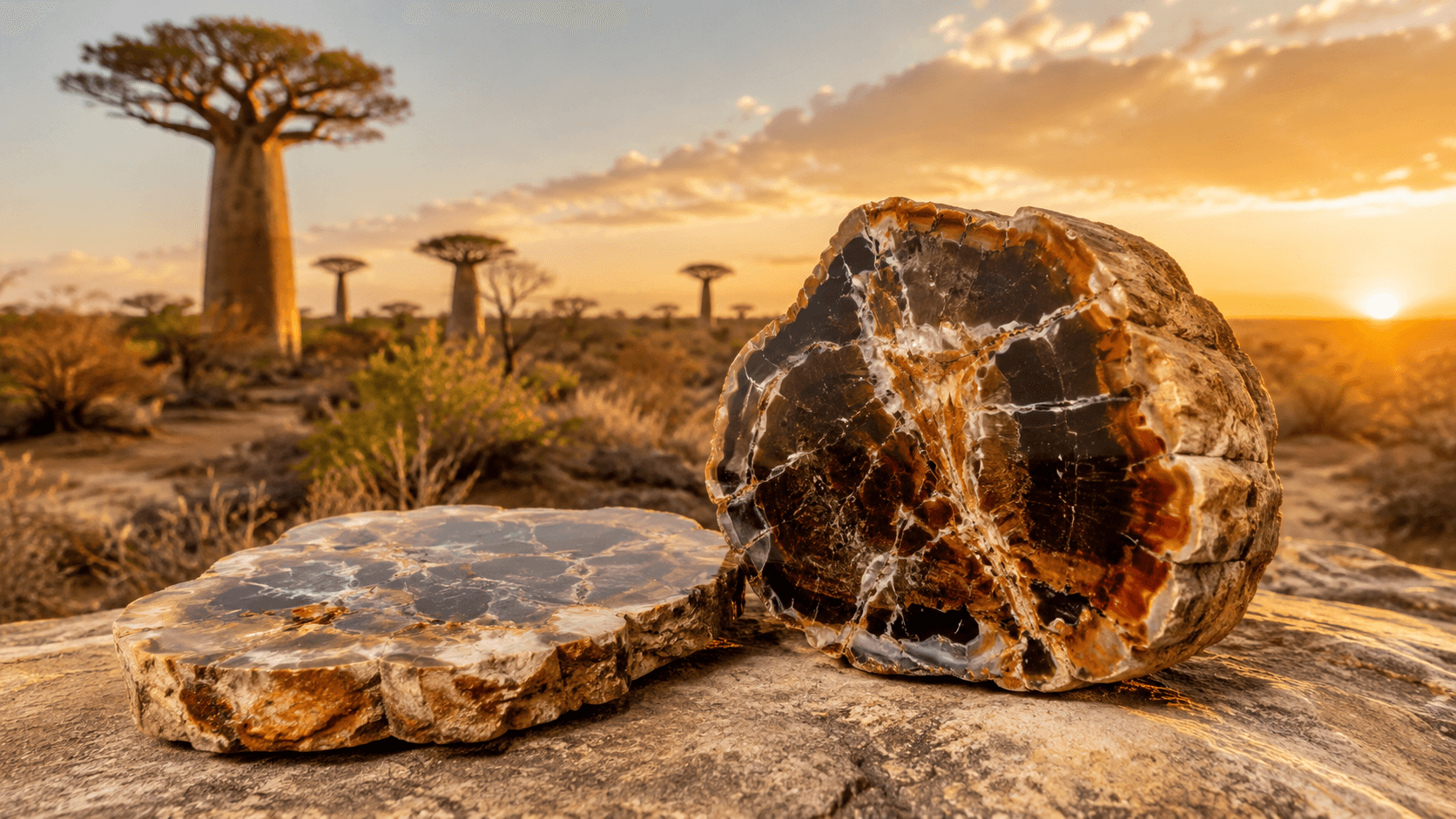
Because Medusa works trunk by trunk rather than from a standardized catalogue, availability shifts constantly. A given Argentea basin, with its particular silver-grey banding, exists once. When it sells, that exact configuration of mineral and grain does not return — a new trunk will yield a different one.
For clients drawn to a specific tone, we recommend viewing current pieces directly or requesting a consultation: dimensions, drainage configuration, and finish (raw edge or fully smoothed rim) are discussed per piece, on request, since each basin's final form depends on the trunk it came from.
Frequently Asked Questions
Is a petrified wood sink basin actually waterproof?
Yes, entirely. The material is fossilized quartz, not porous wood or treated stone. It does not absorb water and requires no sealant.
Can it be used with hot water without damage?
Yes. Quartz is unaffected by heat or cold; there is no risk of thermal cracking under normal domestic use.
Will the color of my basin fade over time?
No. The coloration comes from minerals — iron, manganese, chromium, cobalt — embedded in the stone itself, not from a surface treatment. UV exposure and time do not alter it.
How much does a basin like this weigh?
Petrified wood is dense quartz, considerably heavier than ceramic or resin of the same size. We advise on plumbing and countertop support requirements on a per-piece basis, since dimensions vary by trunk.