
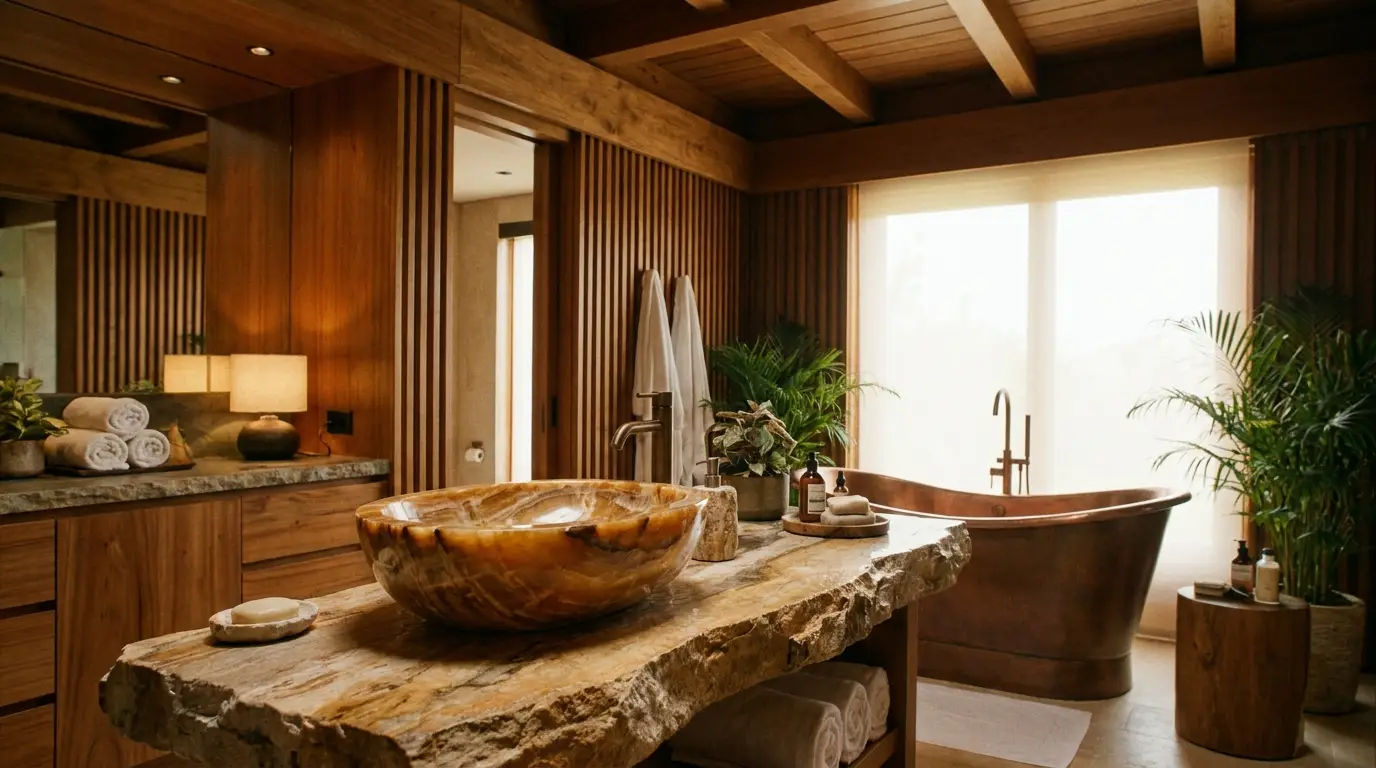
A Sink Carved From an Individual Tree, Not a Catalogue Item
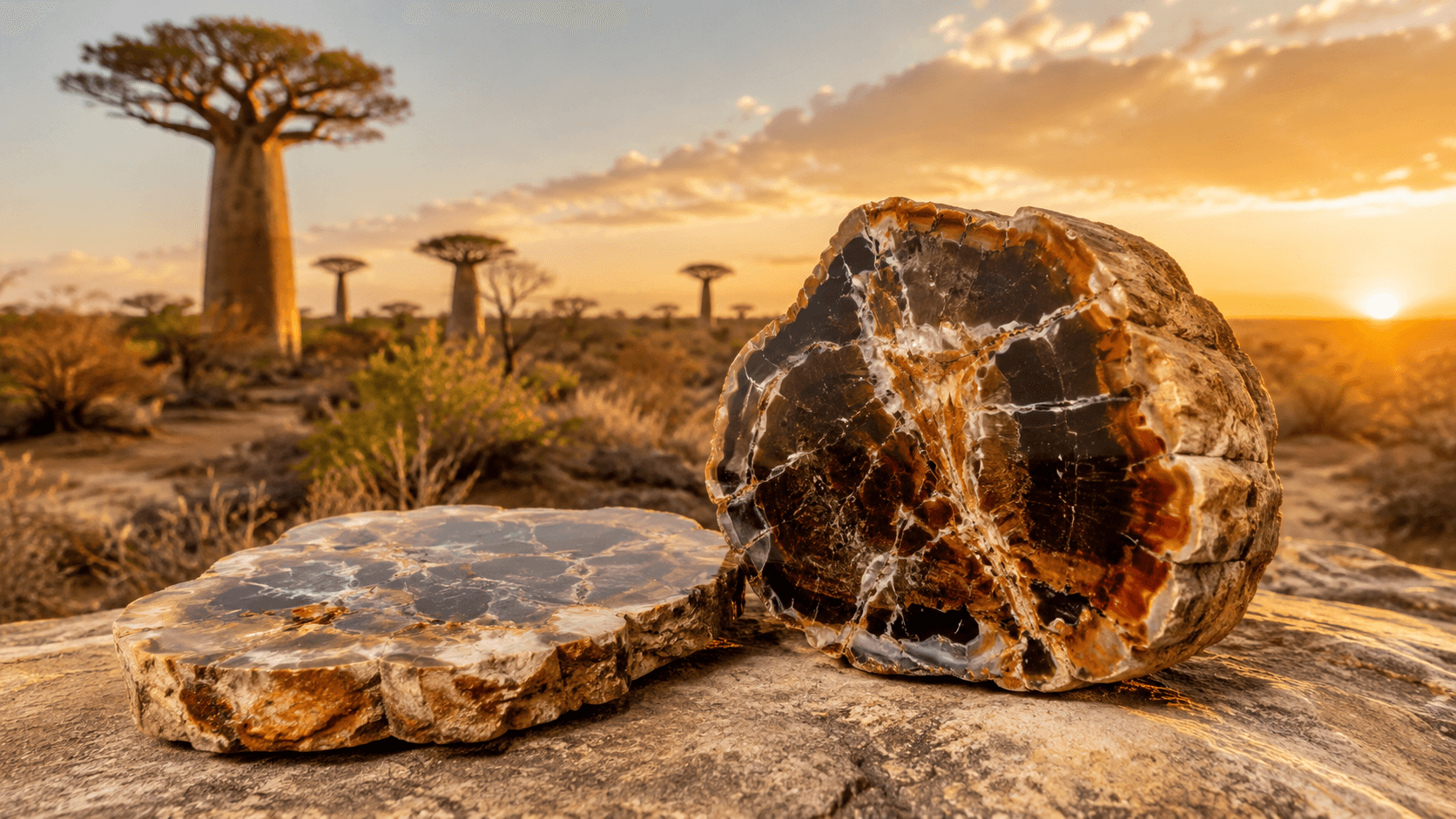
A petrified wood bathroom sink is not cut from a slab pulled off a shelf. Each basin at Medusa begins as a single tree, recovered from the ground in southwestern Madagascar and given a name before a single tool ever touches it. Ambra, Fusca, Umbra — these are not product lines. They are the trees themselves, each one carrying a mineral signature that no other trunk will ever repeat.
This matters more in a bathroom than almost anywhere else in the house. A vanity sink is handled daily, seen up close, touched with wet hands under changing light. The grain, the color banding, the way a vein catches the morning sun through a window — none of it is decoration in the abstract sense. It is the fossil record of a tree that stood roughly 230 million years ago, in the Triassic, long before it was buried, saturated with mineral-rich water, and slowly turned to stone.
From Living Wood to Solid Quartz
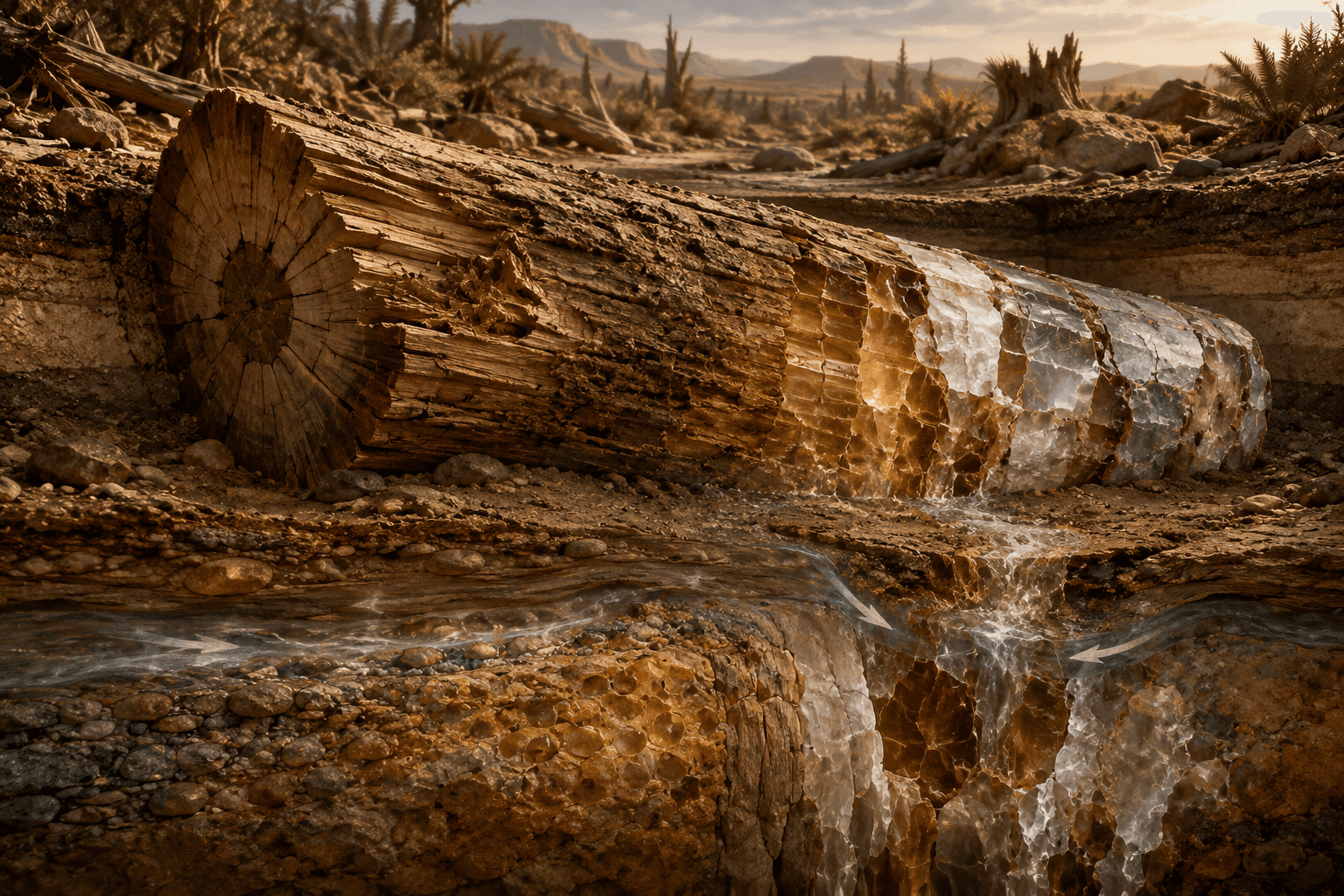
Petrification is a replacement process, not a coating. Groundwater carrying dissolved silica infiltrated the buried wood cell by cell, and over an immense span of time the organic tissue was replaced by quartz while the original cellular structure — the growth rings, the fractures, the knots — was preserved in stone. The result is a material that registers 7 on the Mohs hardness scale, the same hardness as the quartz it has become.
What this means in practical terms for a sink:
- It does not absorb water. There is no porosity to seal, no sealant to renew.
- It is indifferent to heat, cold, and the humidity cycles of a bathroom.
- UV exposure near a window will not fade it — the color is mineral, not pigment.
- It will not scratch under normal use, and it will outlast the fixtures around it.
The color itself is a matter of chemistry, not choice. Iron oxides produced the reds and ochres. Manganese produced the blacks and violets. Traces of chromium or cobalt, rarer, gave certain trunks their greens and blues. Each tree absorbed a different mineral cocktail from its burial site, which is why no two basins — even from trunks standing meters apart — ever match exactly.
Reading the Grain of a Single Tree
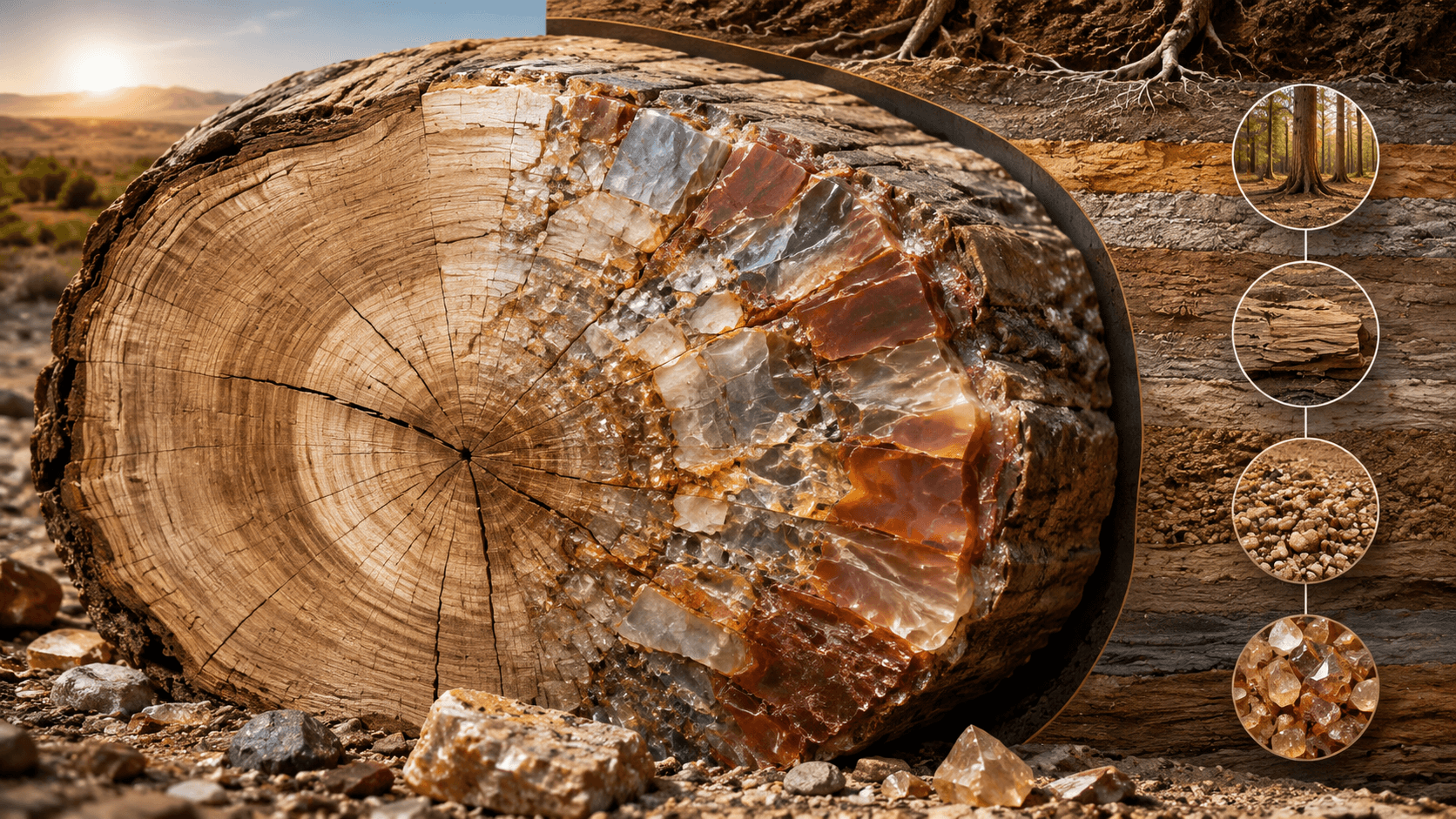
When a trunk is sliced to form a basin, what appears on the surface is the tree's actual anatomy — its rings, its scars, the pattern of a branch that once grew from that exact point. This is why Medusa treats each trunk as an individual rather than a batch: once a trunk is cut and its stock depleted, that particular palette of color and grain is gone. There is no reordering the same trunk. A client choosing a petrified wood bathroom sink today is choosing something that cannot be replicated once it is sold.
This is also why the naming convention exists. Ambra denotes the amber-toned trunks, warm and honeyed under light. Argentea carries silvered, cooler grays. Fusca runs deep brown, closer to aged leather. Umbra is the darkest of the range, almost black in places. Viridis, the rarest, shows the green cast left by trace chromium or cobalt. A client is not picking "a finish" — they are choosing which tree's story sits in their bathroom.
A sink like this does not imitate stone. It is the stone a tree became, still showing the rings it grew before it stood still for 230 million years.
Fitting a Fossil Into a Modern Bathroom
Despite its age, a petrified wood sink integrates cleanly into contemporary interiors precisely because its palette is mineral, not trend-driven. Paired with matte black fittings, it reads industrial. Set against pale oak cabinetry, it reads warm and organic. Against polished concrete, it becomes the single point of visual weight in the room — which is often the intended effect, since a basin like this rarely shares attention with anything else nearby.
Practically, each vanity sink is fashioned to accommodate standard drain and faucet fittings, with the interior basin hollowed to hold water without compromising the wall thickness that gives the piece its structural integrity. Given the material's density, installation typically calls for reinforced support — a detail our team addresses at the point of order, since the trunk's dimensions dictate the mounting solution rather than the reverse.
The Hands Behind the Basin
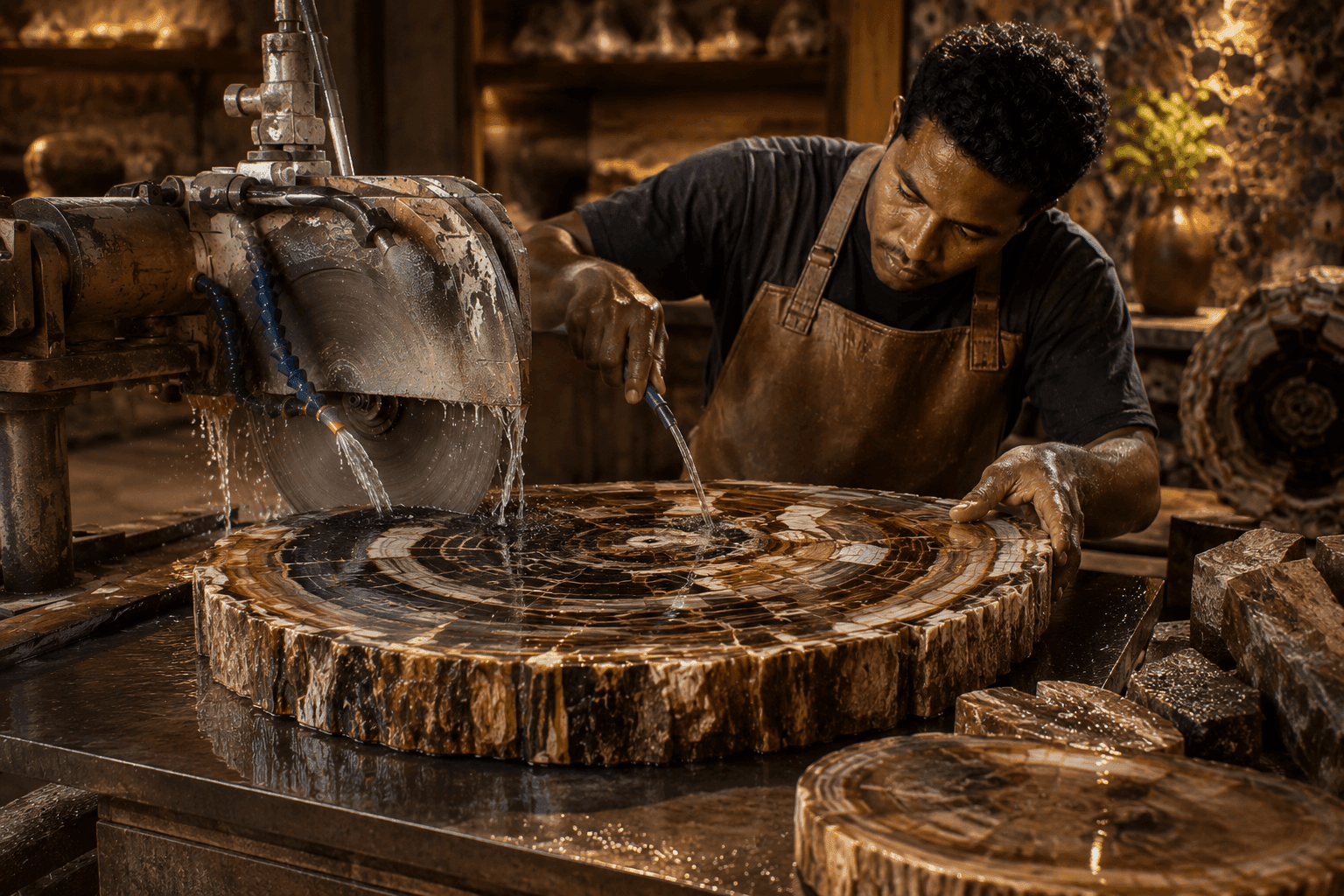
Quartz does not yield to the same tools as wood or standard stone. Shaping a basin means working with diamond tooling, patience, and a reading of the trunk's internal fault lines before the first cut is made — a misjudged angle can crack a piece that took millennia to form. The artisans who hollow and polish each sink work slab by slab, adjusting technique to the particular hardness and fracture pattern of that individual tree. No two basins take the same number of hours.
Discover the individual trunks currently available and request a tailored quote for your bathroom project.
Visit the shopQuestions Fréquentes
Is a petrified wood bathroom sink actually made of wood?
No. The organic wood has been entirely replaced by silica over millions of years. What remains is quartz, structured exactly like the tree's original cellular pattern, but chemically stone.
Will the sink withstand daily water and moisture exposure?
Yes. Quartz has no meaningful porosity, so the basin will not absorb water, stain, or degrade from repeated humidity — unlike untreated natural stone or wood.
Can the color fade over time?
No. The coloration comes from mineral elements (iron, manganese, traces of chromium or cobalt) embedded within the stone itself, not from surface pigment or dye, so it does not fade under light or use.
How is the price determined?
Each trunk is unique in size, color, and density, so every sink is priced individually. We invite you to consult us directly or request a quote for the specific piece you are considering.