
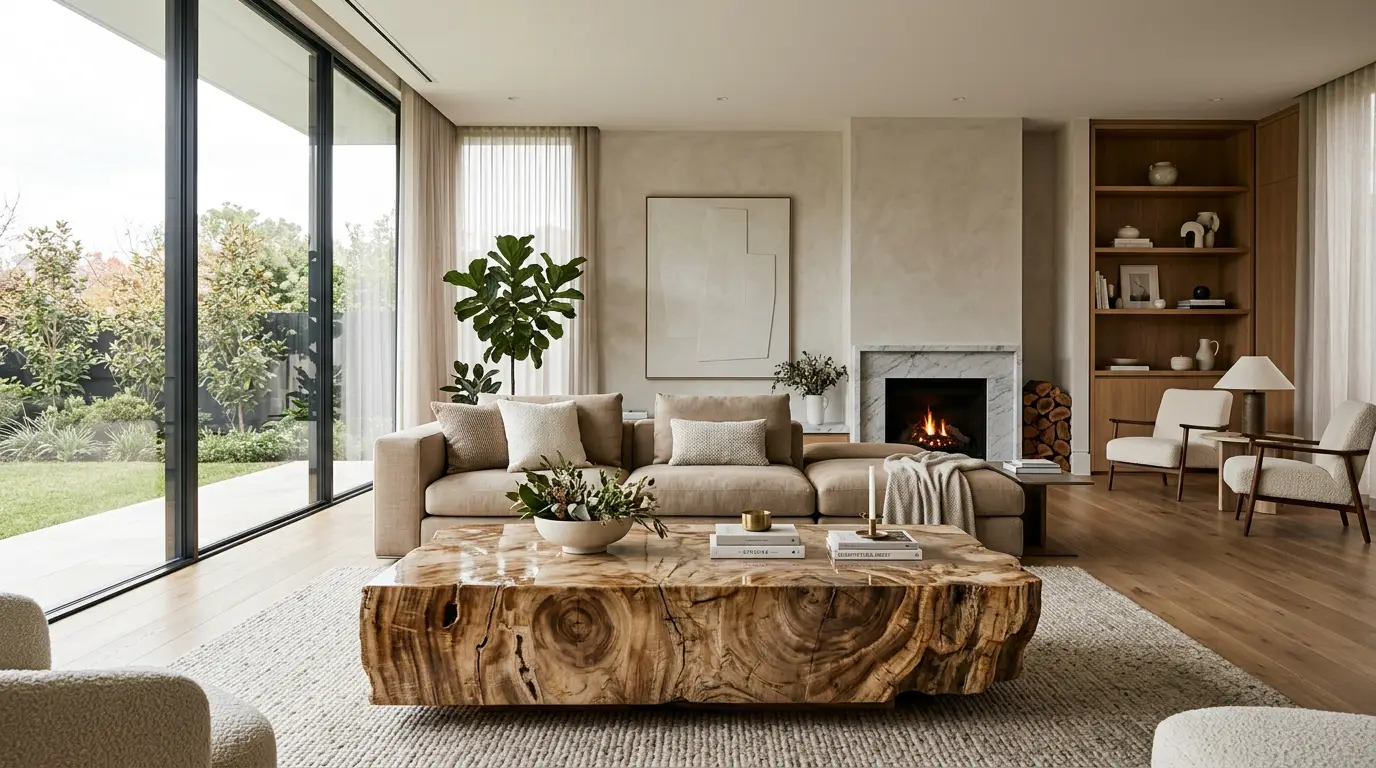
A Countertop Cut From a Single Tree, 230 Million Years Old
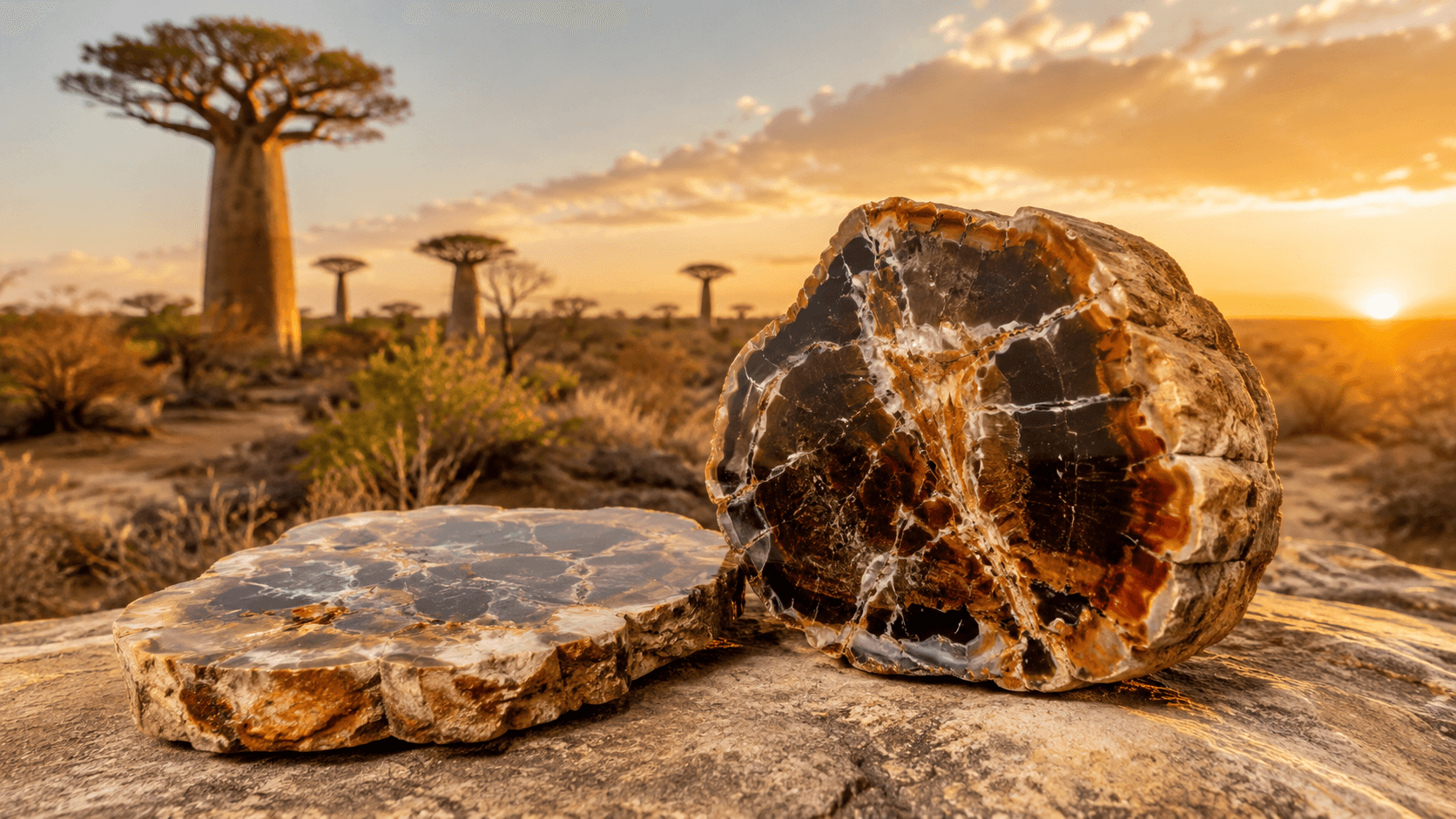
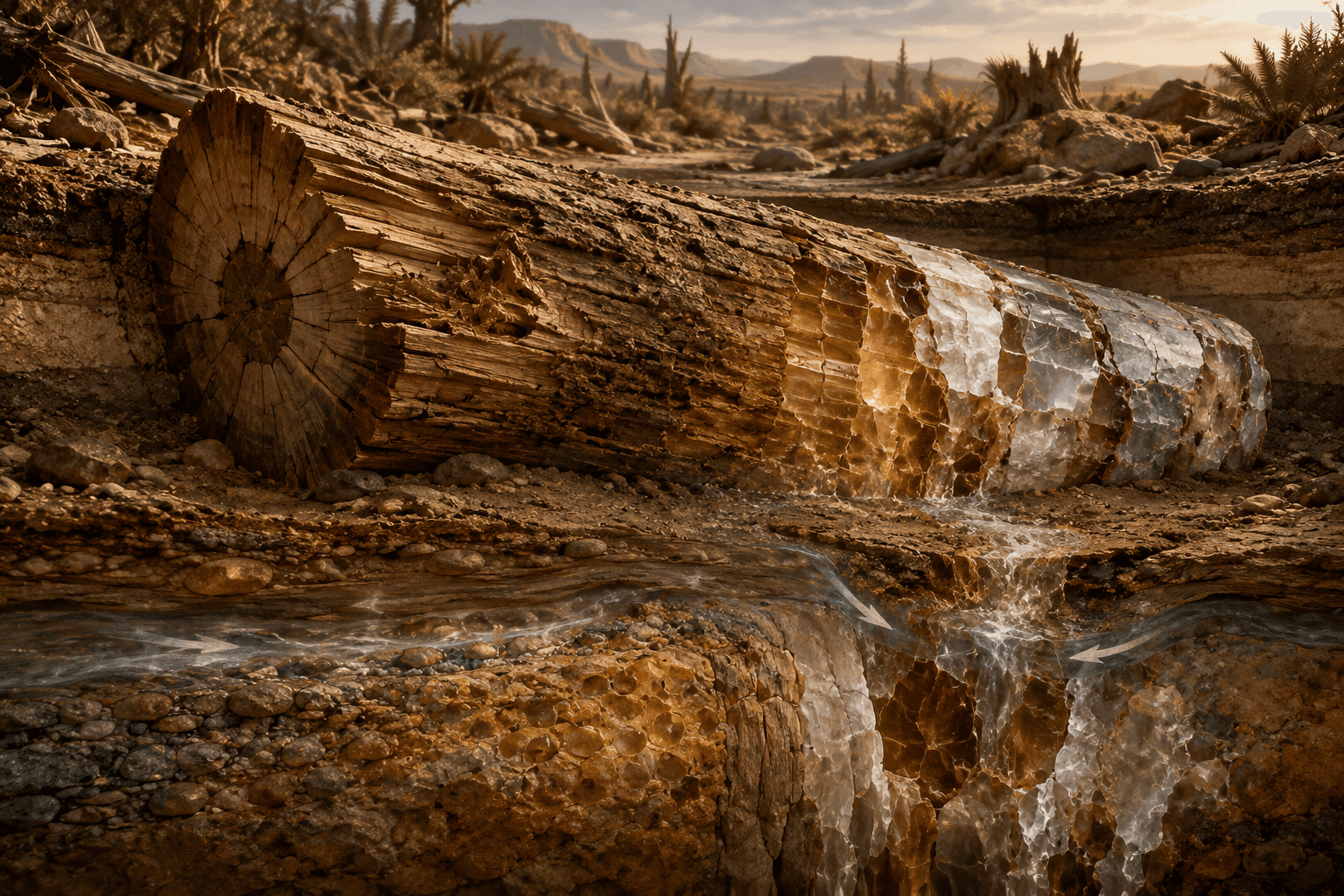
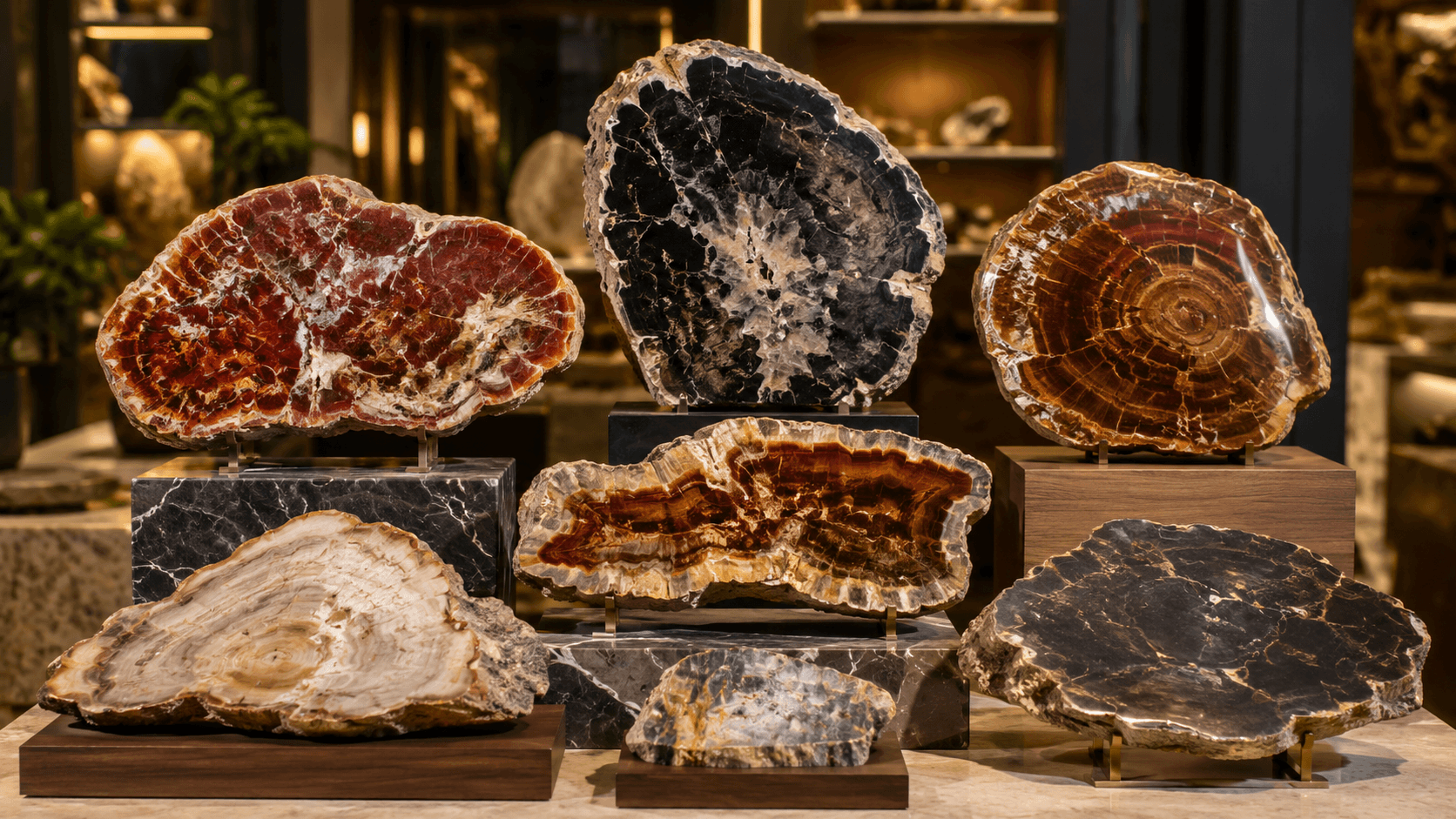
A petrified wood countertop slab is not quarried from a mountain. It is cut from a tree — one specific tree, felled by time rather than by hand, that grew in the forests of southwestern Madagascar during the Triassic and was later buried, saturated with mineral-rich water, and turned to quartz over roughly 230 million years. Every slab that leaves our workshop carries the identity of the trunk it came from. We name each one — Ambra, Argentea, Fusca, Umbra, Viridis — because each has its own color, its own grain, its own history underground. Cut it into a countertop, and that particular trunk's palette is gone for good. There is no second slab exactly like it.
This is the point that separates a Medusa countertop from a generic "petrified wood" surface sold by the ton: we are not offering a material category. We are offering a piece of a named, individual tree.
What Makes the Stone Itself
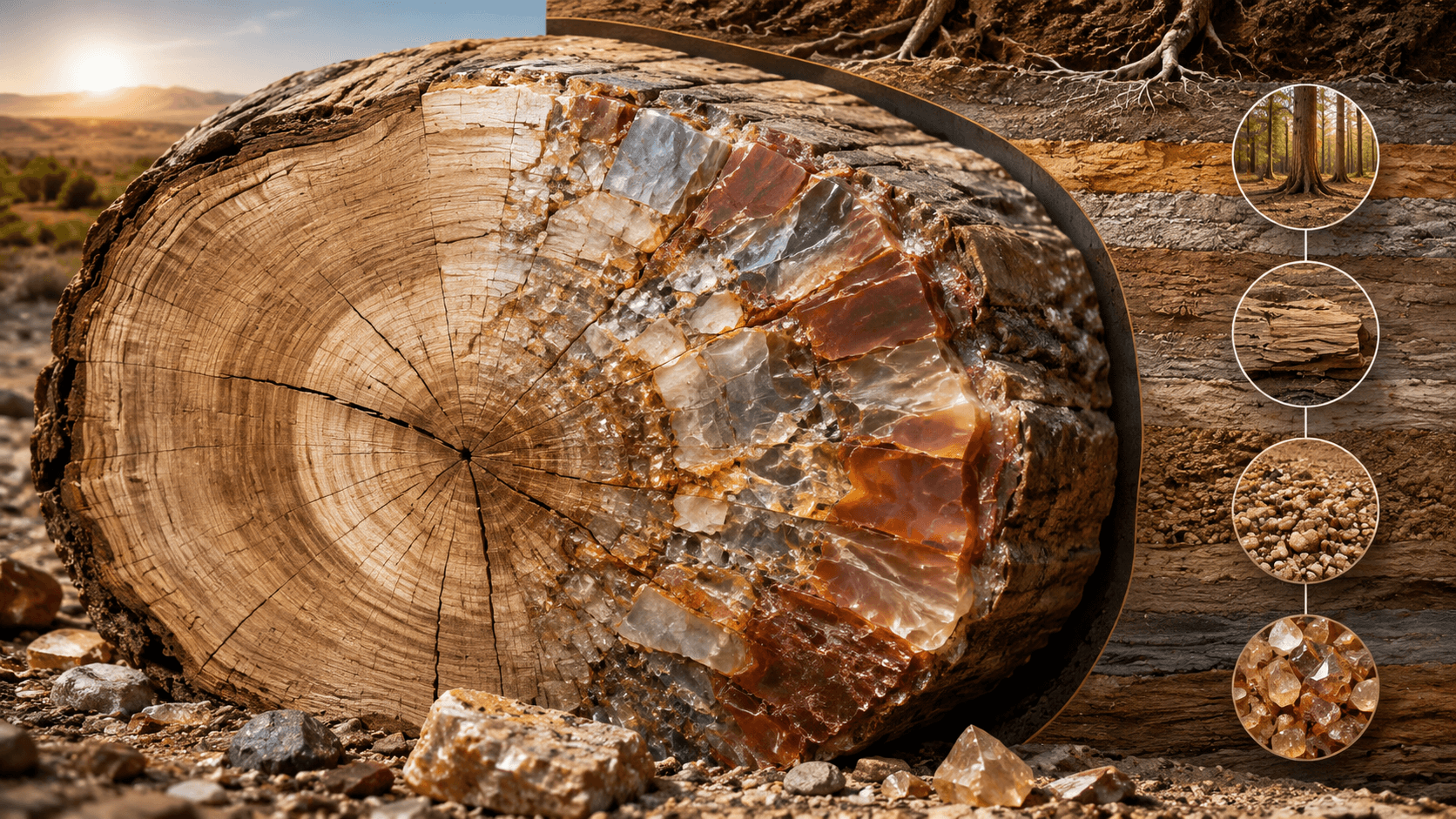
Petrified wood is quartz — the tree's original cellulose was replaced, cell by cell, with silica carried by groundwater. What remains is stone with the anatomy of wood still legible: growth rings, grain, sometimes the trace of bark or a knot. On the Mohs scale, this quartz sits at 7, harder than steel and most kitchen tools. Practically, that means:
- No etching from lemon juice, wine, or vinegar
- No damage from hot pans set directly on the surface
- Full indifference to water, humidity, or UV exposure — it will not fade or warp
- A cold, dense, mineral touch unlike any wood or laminate
Color comes from trace metals present in the water that petrified the tree: iron produced the reds and ochres of Ambra and Fusca, manganese gave the near-black and violet tones of Umbra, and chromium or cobalt trace elements are behind the rarer greens and blues found in Viridis. No two trunks were bathed in exactly the same mineral solution, which is why no two slabs read the same way under light.
Wood remembers its rings. Stone remembers nothing — except, in this case, its own past life as a tree.
From Trunk to Slab: How a Countertop Is Made
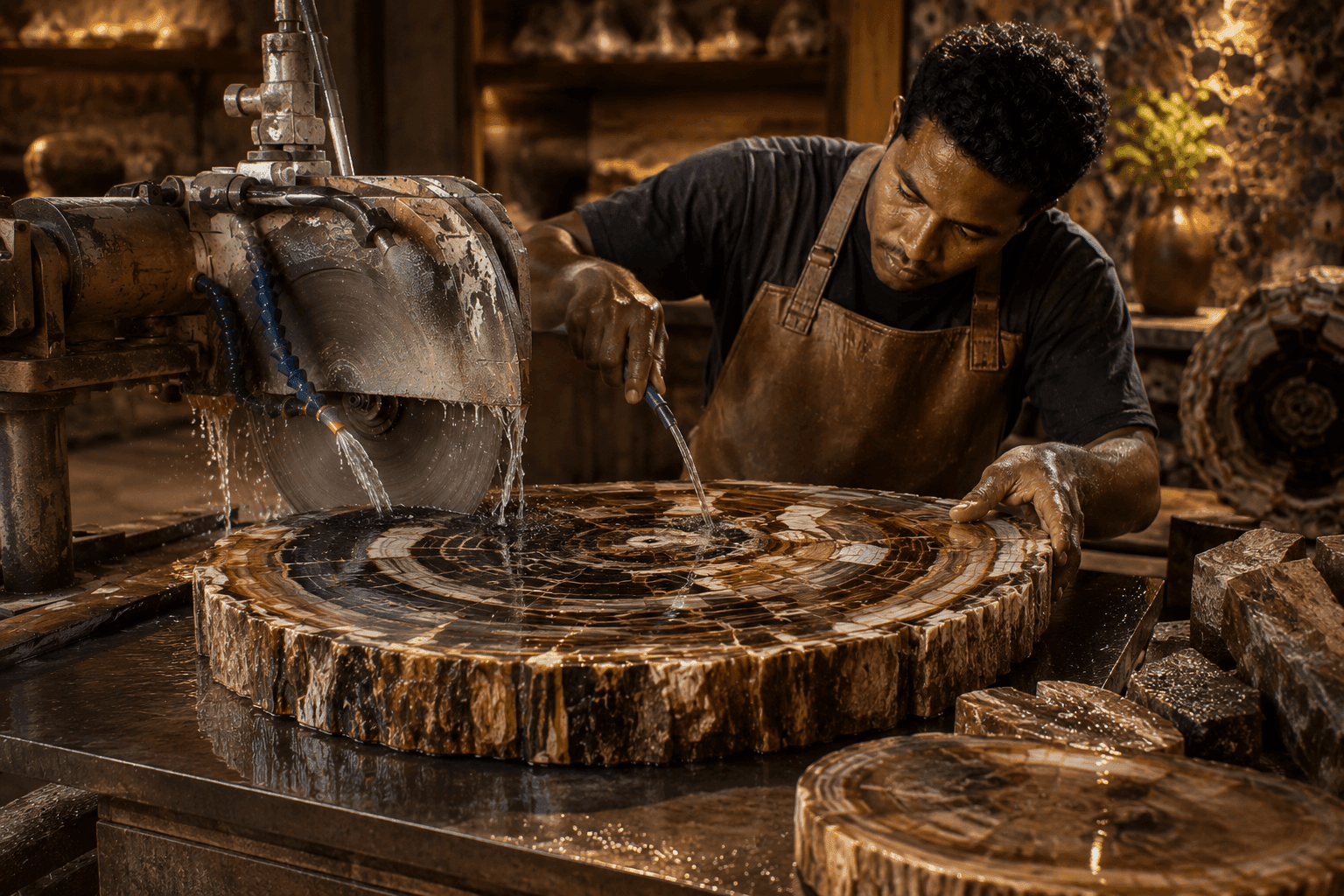
Each trunk is extracted from the ground in the southwest of Madagascar, then transported whole before any cutting decision is made. Because the stone is quartz, not sedimentary rock, sawing it is slow: diamond blades, controlled pressure, patience. A single trunk might yield one broad kitchen island top, or several smaller vanity slabs, depending on its diameter and the extent of any internal fracturing — a natural feature of a fossil this old, not a flaw introduced by cutting.
Once cut, the slab is ground flat and polished in stages to bring out the depth of the mineral banding. Edges can be left in a natural, irregular contour that follows the trunk's original silhouette, or squared off for a more architectural countertop. Both approaches are common; the choice depends on the room and the trunk itself.
Where a Petrified Wood Countertop Belongs
Because the material tolerates water, heat, and constant handling without any sealing routine, it suits rooms where surfaces work hard:
- Kitchen islands and countertops — heat resistance means no trivets required; hardness means no cutting-board discipline enforced out of fear for the surface.
- Bathroom vanities and vasque basins — permanent contact with water leaves no trace, and no polish or oiling is ever needed.
- Bar tops and reception counters — a slab wide enough to span a bar becomes, in effect, the single largest visible cut of one particular tree.
Each application asks a different question of the trunk: a kitchen island wants width and continuous grain; a vanity wants a compact, richly colored section; a bar top wants length. This is why we work slab by slab rather than from a fixed catalogue — the trunk decides what it can become.
Living With Stone That Was Once a Tree
A petrified wood countertop asks nothing of its owner. There is no oiling schedule, no sealing every few years, no anxiety about a forgotten glass of red wine. The maintenance is, essentially, none — you clean it as you would any hard stone surface, and it does not change.
What does change, over years of morning light and evening light, is how the piece is seen. Because the banding is mineral, not painted, the surface reveals slightly different depth depending on the angle and intensity of light — closer to how a cut gemstone behaves than how a wood or composite counter does.
See which trunks are currently available as slabs and request a quote for your project.
Browse the boutiqueFrequently Asked Questions
Is a petrified wood countertop actually stone, or is it wood?
It is stone — quartz, to be precise. Over roughly 230 million years, groundwater rich in silica replaced the tree's original organic material cell by cell, preserving the wood's structure while converting its composition entirely to mineral.
Can it withstand a hot pan or boiling water?
Yes. At 7 on the Mohs hardness scale and fully mineral in composition, the material is unaffected by heat, so trivets are a matter of preference, not necessity.
Why is each slab described as coming from a "named" tree?
Every trunk we extract from southwestern Madagascar is treated as an individual specimen with its own mineral history and color signature. We give each one a name — Ambra, Argentea, Fusca, Umbra, Viridis — to reflect that a slab is a portion of one particular tree, not an interchangeable stock material.
Does the color fade over time or with sun exposure?
No. The coloration comes from metallic minerals — iron, manganese, chromium, cobalt — locked into the quartz structure itself, not from a surface treatment, so it is unaffected by UV light, water, or age.