
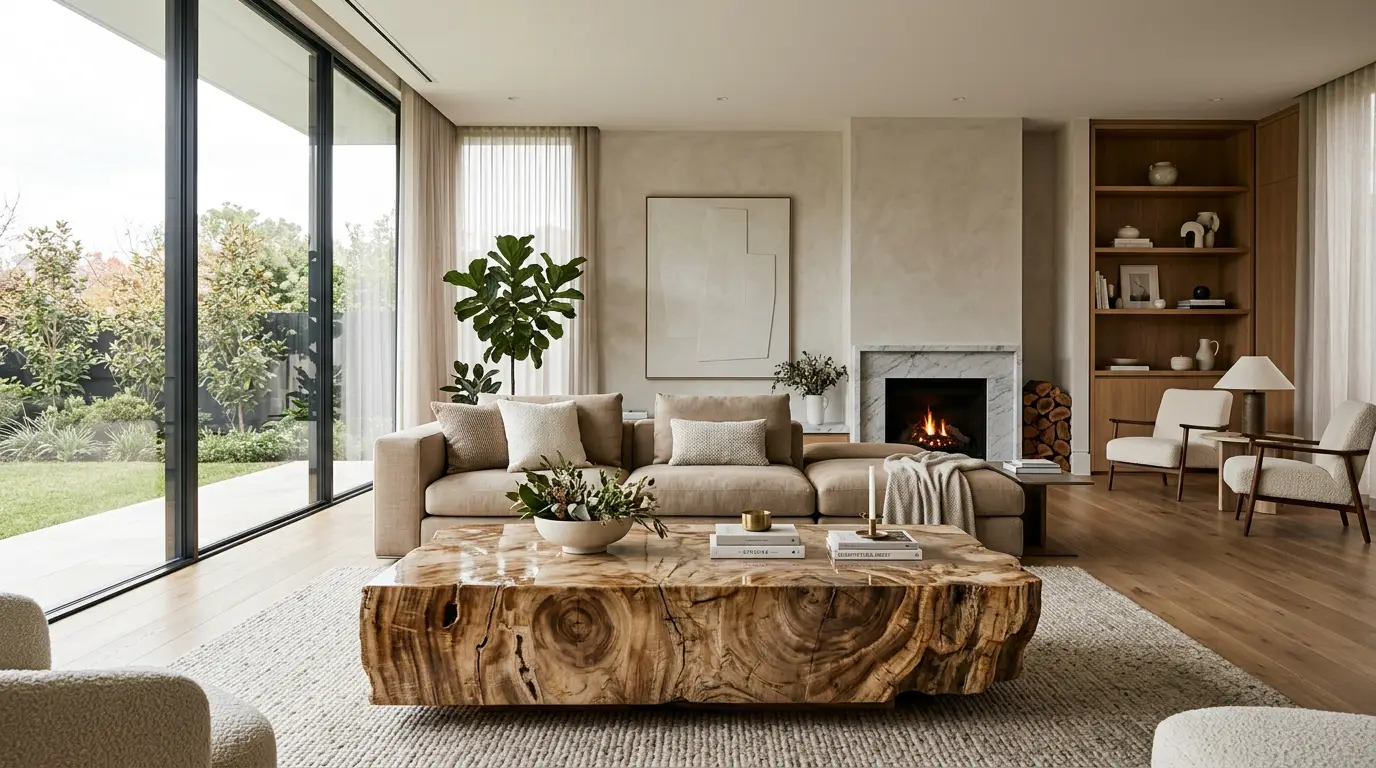
A Bar Built on Stone That Was Once a Tree
A bar top takes abuse no other surface in the house tolerates: ice dragged across it, citrus zest, condensation rings, the occasional dropped glass. Wood laminate wears under this. Marble stains. Petrified wood from Madagascar simply doesn't notice. It is quartz — hardness 7 on the Mohs scale — and it crossed 230 million years underground before it ever touched a cocktail shaker. What sits behind your bar isn't a countertop material. It's a cross-section of an individual tree, named, dated, and finished to serve.
Each Bar Top Comes From One Named Tree
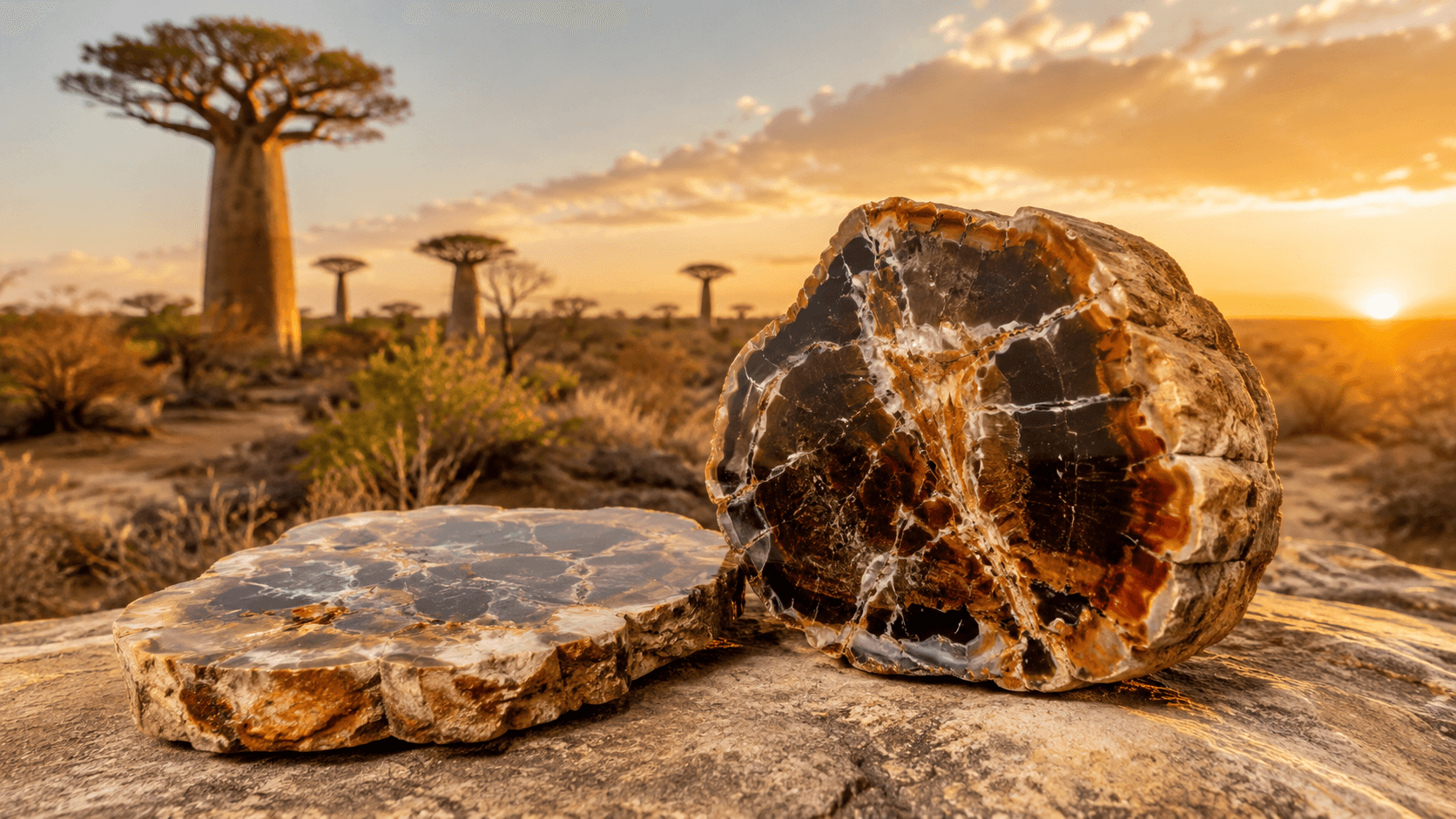
Every trunk we raise from the southwest of Madagascar is catalogued individually — never a batch, never a lot number standing in for identity. We give each one a name: Ambra for amber tones, Argentea for silvered grays, Fusca for deep browns, Umbra for near-black density, Viridis for the rare greens born of chromium and cobalt. A bar top cut from Umbra will never be replicated, because Umbra no longer exists as a standing trunk — it exists as the pieces already cut from it, and nothing more will follow.
This matters practically, not just poetically. When you commission a bar top, you're not choosing a finish from a catalog. You're choosing a specific tree, and what remains of it once your piece is cut is what's left for anyone else.
- Origin: southwest Madagascar, sourced trunk by trunk
- Age: approximately 230 million years, Triassic period
- Composition: fully silicified wood — quartz, not organic fiber
- Color logic: iron produces reds and ochres, manganese produces blacks and violets, chromium and cobalt produce the rare greens and blues
What the Stone Actually Endures
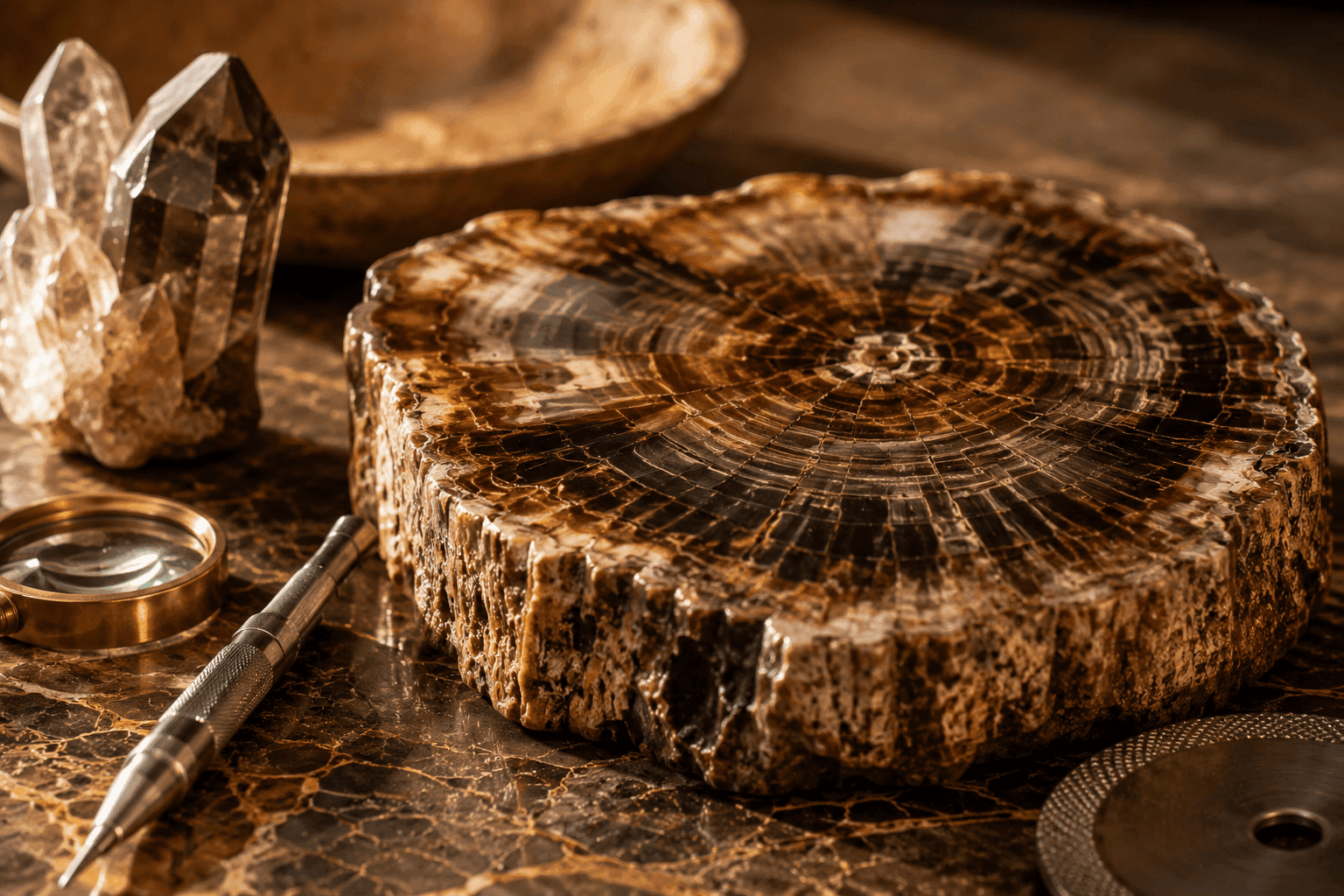
A bar top has to survive things a decorative table never faces. Petrified wood's mineral structure makes the question almost moot:
- Heat: a hot pan or a lit cigarette leaves no mark — the stone doesn't scorch.
- Water: standing liquid, melted ice, spilled wine — none of it penetrates or stains the surface.
- Cold and frost: the material is indifferent to temperature swings, making it viable even for outdoor or semi-outdoor bars.
- UV: direct sun does not fade or alter the coloration, unlike stained wood or synthetic composites.
- Scratching: at 7 on the Mohs scale, only a handful of natural materials can mark it, and none of them are found behind a bar.
The trade-off is honest: this is a heavy, cold, unyielding material. It does not flex, warm to the touch, or forgive careless handling during transport. What you gain in return is a surface that will outlast the building it's installed in.
From Trunk to Counter
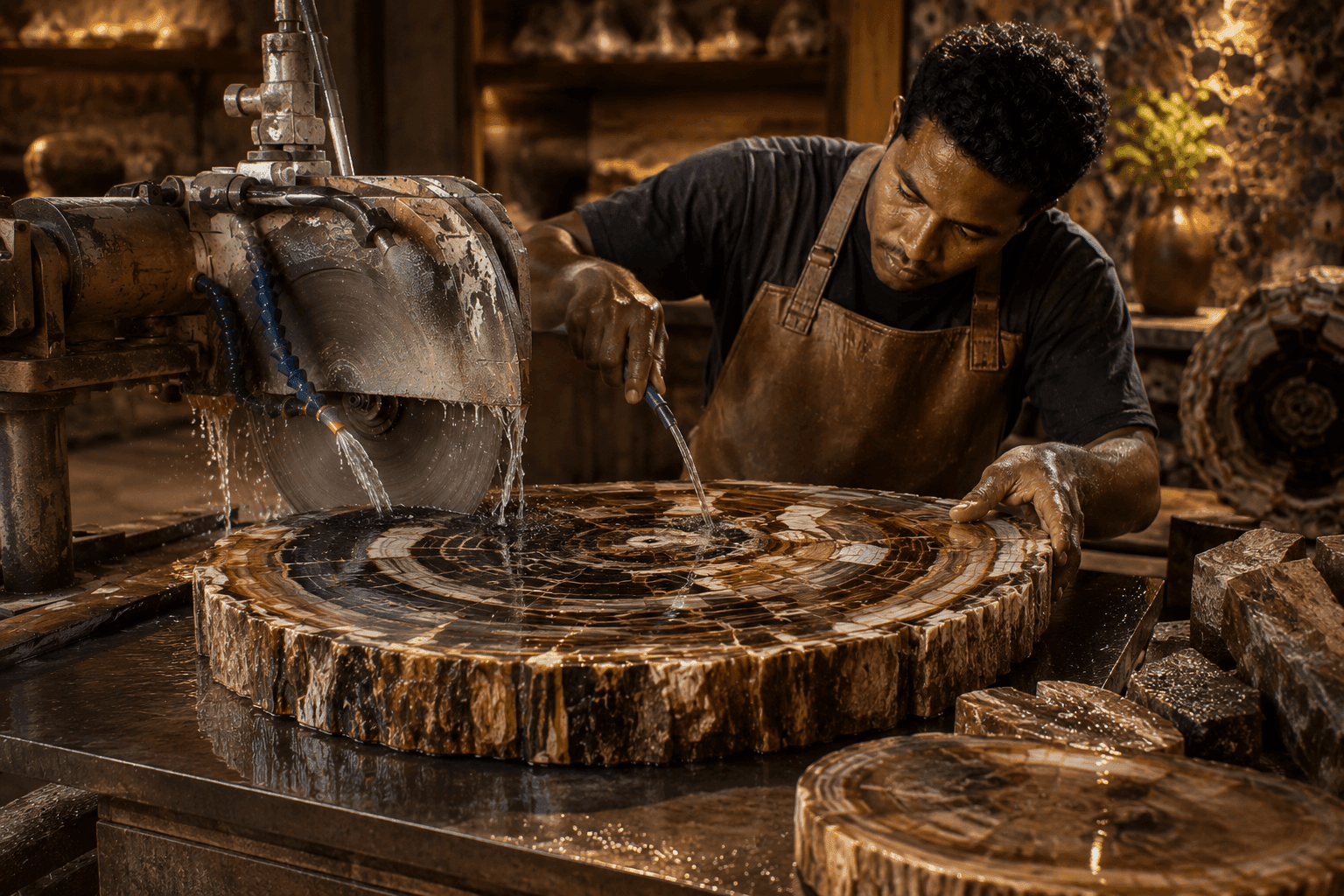
Turning a fossilized trunk into a functional bar top is slow, deliberate work. The trunk is first assessed for its internal structure — cracks, density variations, the natural cross-section that will determine the final cut. Slicing silicified quartz requires diamond tooling and patience; rushing it fractures the stone.
Once cut, the surface is polished in stages, revealing the growth rings and mineral veining that were sealed inside for 230 million years. No two polishes reveal the same pattern, because no two trunks mineralized the same way. Edges are finished to match the intended installation — waterfall edges, bullnose profiles, or a raw natural edge left uncut, depending on the design brief.
Because every bar top is sized and shaped to its installation — length, depth, sink cutouts, footrail supports — each project is handled as a bespoke commission rather than a standard-dimension product.
A bar top in petrified wood doesn't age. It was already old before it was ever a surface.
Designing the Bar Around the Stone
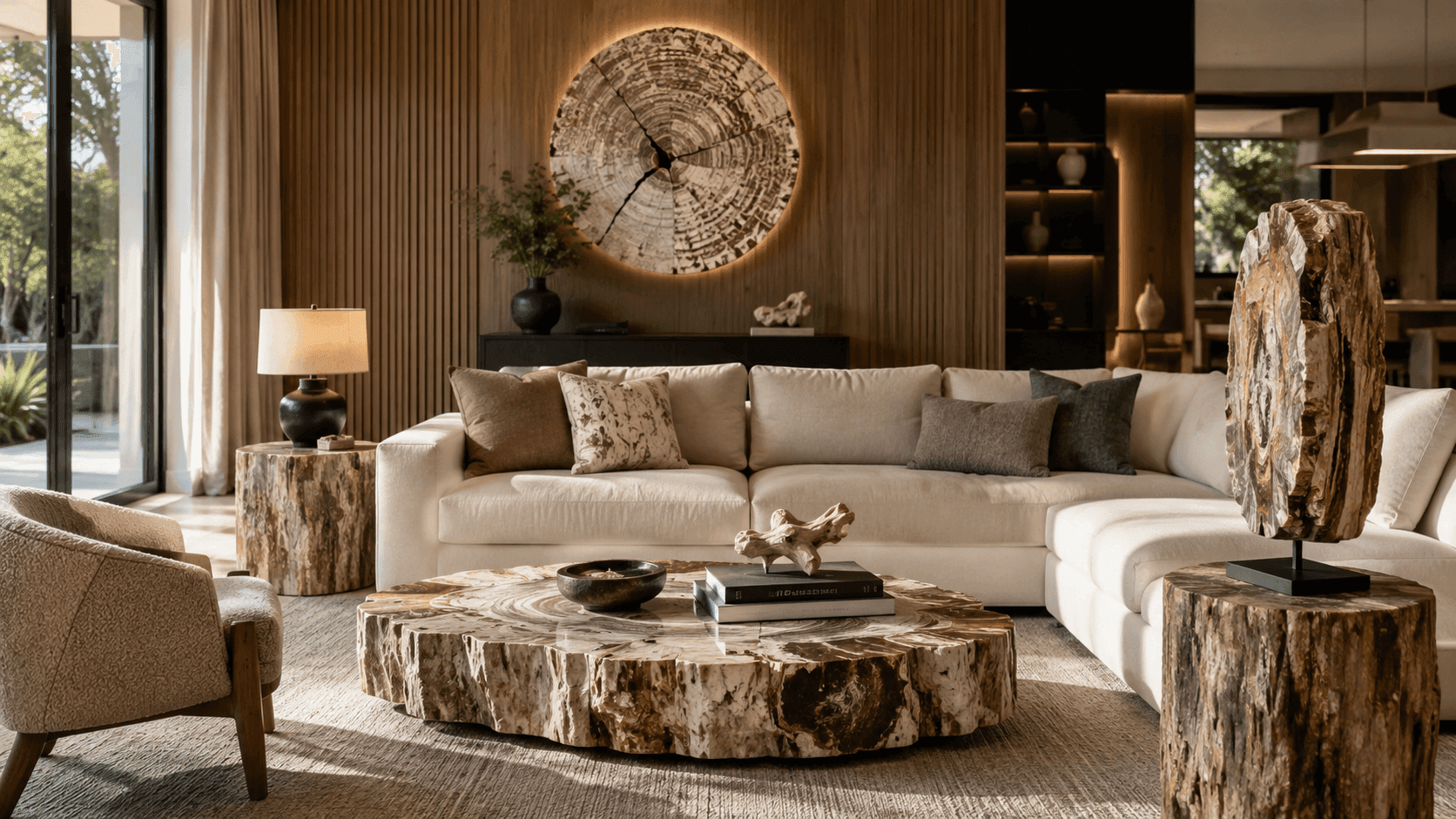
Most materials are chosen to disappear into a design. Petrified wood tends to reverse that logic — the bar gets built around the slab, not the other way round. Its coloration, whether the warm ochre of Ambra or the smoked grays of Argentea, sets the palette for the room: lighting warms or cools to match the veining, barstool upholstery pulls a secondary tone from the mineral bands, shelving behind the bar is kept spare so the counter remains the visual anchor.
Because the material is genuinely one-of-a-kind, we work directly with architects, designers, and private clients to match trunk selection to the space — reviewing available slabs by color, size, and grain before any cutting begins.
Discuss your bar top project with us and receive a tailored quote.
Request a QuoteFrequently Asked Questions
Is petrified wood suitable for a functional bar top, not just decoration?
Yes. Its hardness (7 on the Mohs scale) and mineral composition make it fully resistant to water, heat, and scratching — better suited to daily use than most natural stones or woods.
Can I choose the color and pattern of my bar top?
Yes. Each trunk is named and its coloration is fixed by its own mineralization — shades range from Ambra's amber to Umbra's near-black. We help you select an available trunk that matches your project before cutting.
How long does a custom bar top take to produce?
Timelines depend on the trunk's condition, the size of the piece, and the finishing required. We provide a schedule alongside your quote once the design is confirmed.
What is the price of a petrified wood bar top?
Pricing depends on dimensions, trunk selection, and finishing work. We don't publish fixed rates — contact us for a quote tailored to your project.