
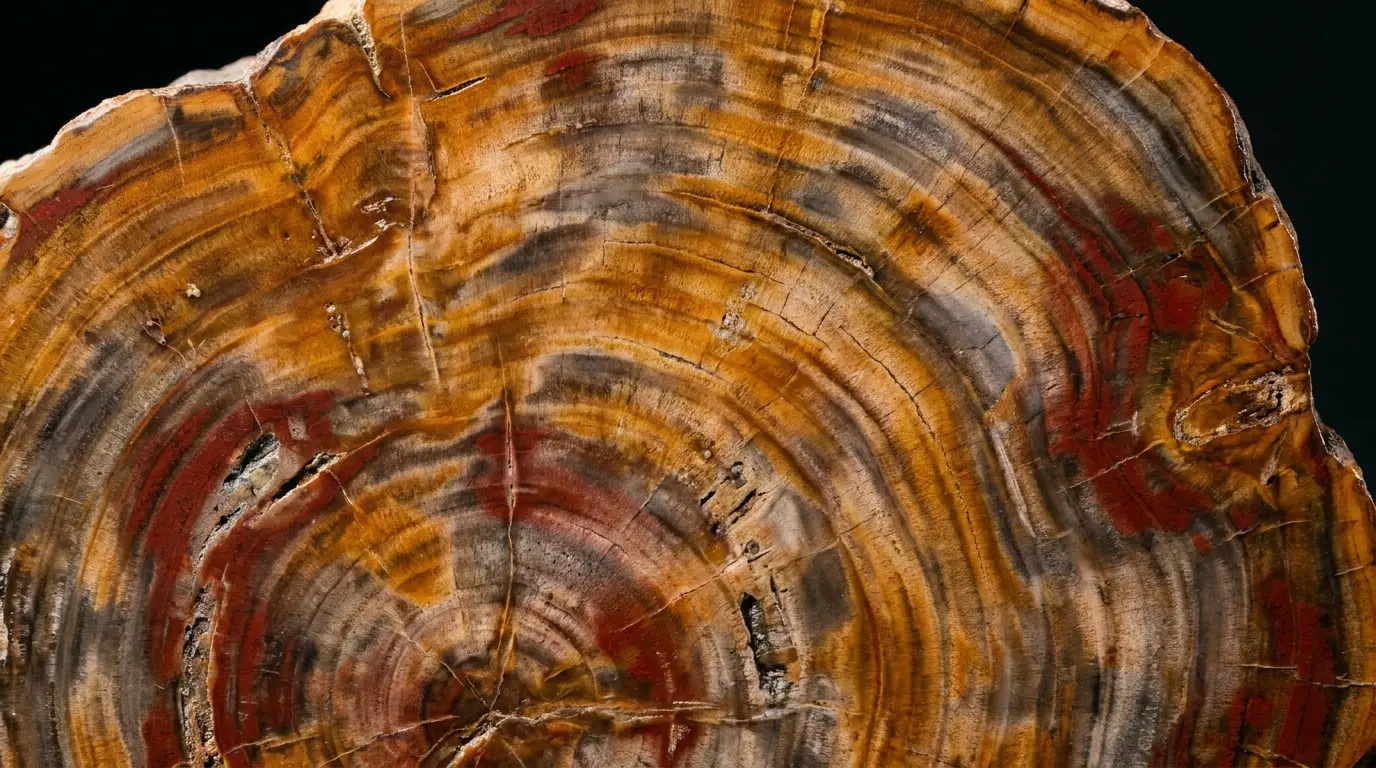
Direct From the Source: Madagascar to Your Warehouse
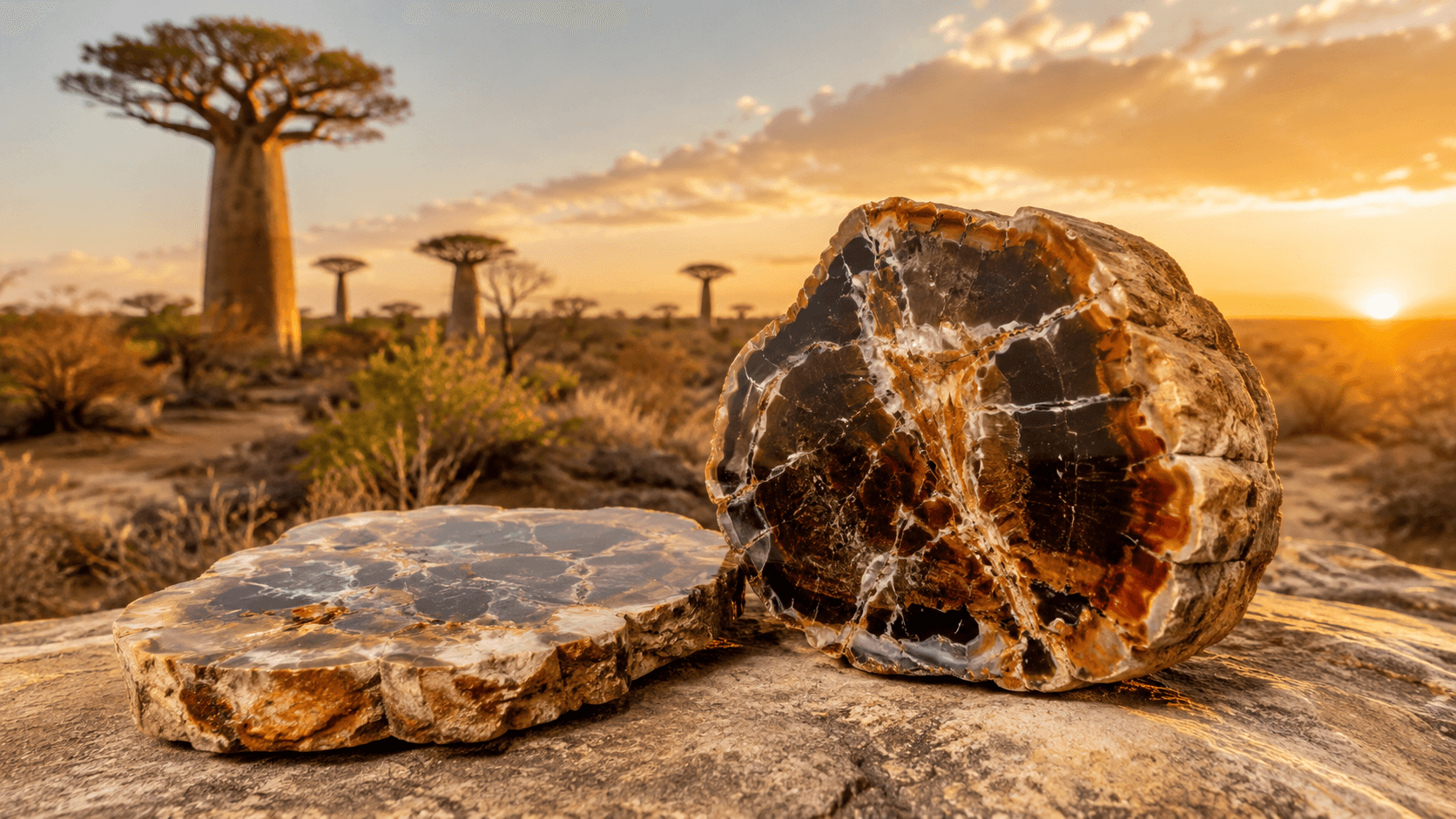
Most petrified wood sold in bulk passes through two or three intermediaries before it reaches a buyer. Each stage adds margin, removes traceability, and flattens the material into an anonymous category — "petrified wood, mixed grade." Medusa works differently. We extract our own trunks in southwestern Madagascar, document each one at the site, and sell directly to trade buyers: hospitality groups, architecture firms, retail chains, and distributors who need volume without losing sight of what they're actually buying.
For wholesale and bulk orders, this direct line matters. It means consistent sourcing, no unexplained gaps between what was promised and what arrives, and a single point of contact who can speak to the specific trunks in a shipment — not a catalogue number.
Every Trunk Is a Named Individual, Not a SKU
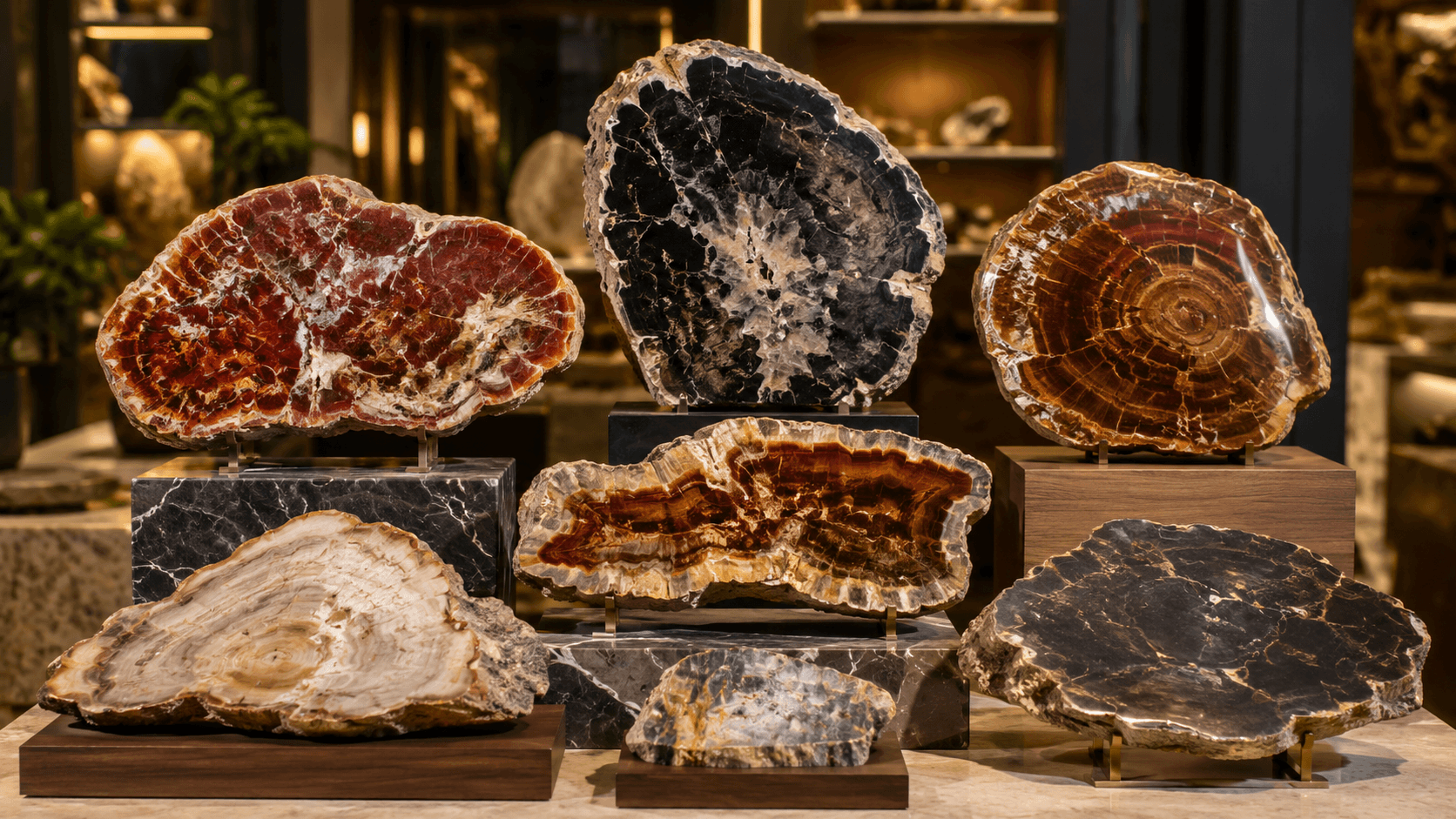
A container of petrified wood is never a uniform product. Each trunk fossilized roughly 230 million years ago, buried under its own specific conditions, absorbing its own particular mix of minerals. Iron produced reds and ochres. Manganese produced blacks and violets. Chromium and cobalt, more rarely, produced greens and blues. No two trunks minaralized the same way, and once a trunk is cut, that exact tonal signature is gone for good.
This is why Medusa names each trunk before it's ever touched by a saw: Ambra for amber tones, Argentea for silvered grey, Fusca for deep browns, Umbra for near-black density, Viridis for the rarer green veining. For bulk buyers, this isn't a marketing flourish — it's a way to order with precision. You're not requesting "petrified wood, brown." You're requesting slabs from Fusca, with its known grain and known color range, in the quantity your project requires.
A trunk is minerals holding the memory of a tree. Cut it, and the color it took 230 million years to build is spoken for.
What Bulk Buyers Are Actually Sourcing
Wholesale orders from Medusa typically fall into a few categories, often combined within a single shipment:
- Raw or semi-prepared trunk sections — for buyers who finish and cut on their own premises.
- Polished slabs and cross-sections — ready for tabletops, counters, or reception surfaces.
- Vessel and basin blanks — pre-hollowed forms for finishing into sinks or planters.
- Decorative volume pieces — bookends, spheres, freeform accent stones sold by the lot.
Order sizes range from a handful of statement pieces for a single flagship location to full container loads for multi-site rollouts. Because supply depends on what has actually been extracted and named, we work from confirmed inventory rather than promises — a distinction that matters once a project has a fixed installation date.
Material Specifications for Trade Buyers
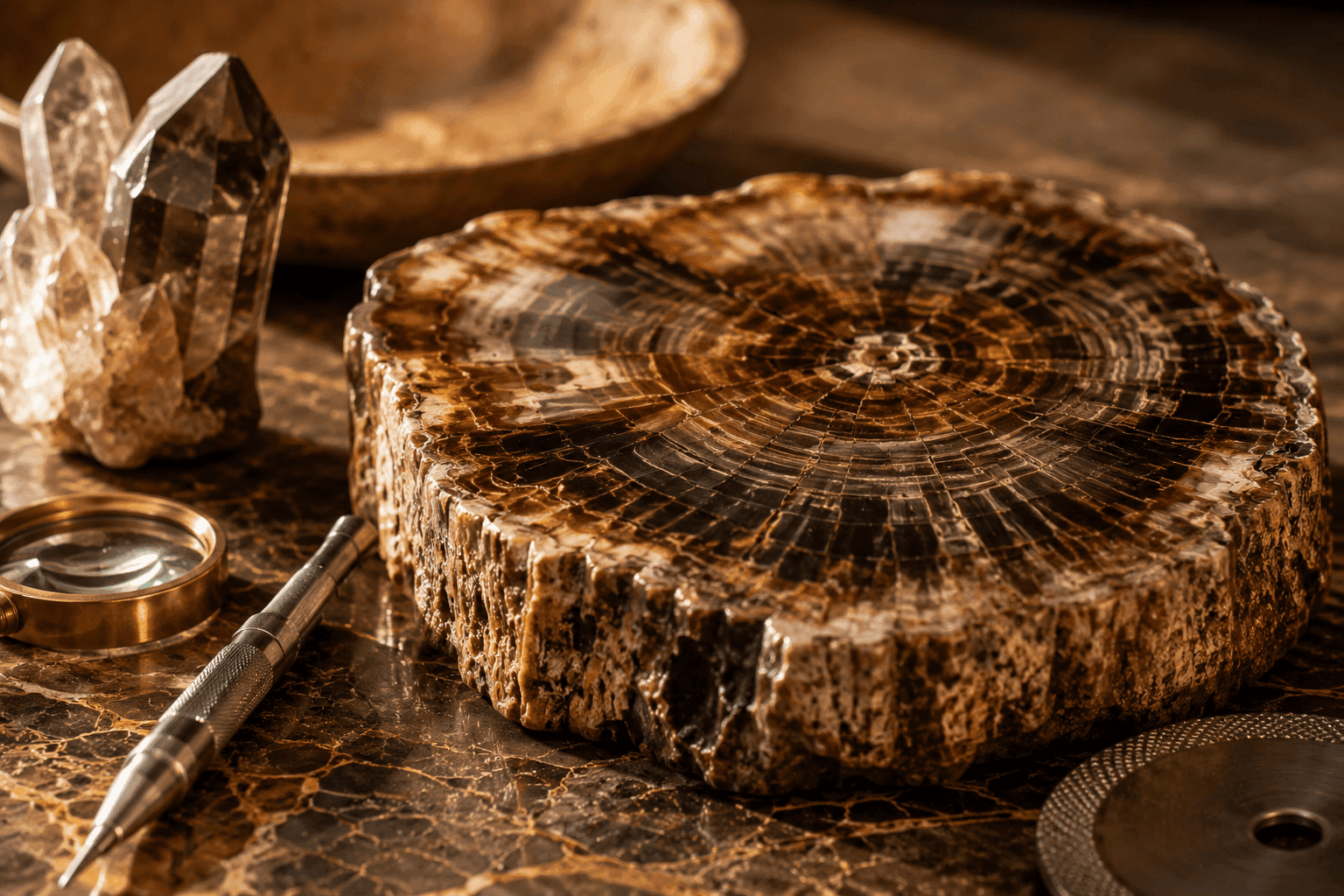
For specification sheets and procurement documentation, the relevant facts are fixed and don't vary by trunk name:
- Origin: southwestern Madagascar, extracted trunk by trunk.
- Age: approximately 230 million years, dating to the Triassic period.
- Composition: silicified wood — structurally quartz, not organic material.
- Hardness: 7 on the Mohs scale, comparable to quartz and harder than most natural stone counters.
- Behavior: heavy, cold to the touch, unaffected by water, heat, UV exposure, or frost — no sealing or climate control required.
- Color drivers: trace metals present during fossilization — iron for red/ochre ranges, manganese for black/violet, chromium and cobalt for the rarer green/blue veining.
These properties make it viable for high-traffic commercial installations — hotel lobbies, restaurant surfaces, retail displays — where wear resistance and low maintenance are procurement requirements, not preferences.
Working With Medusa: Process for Wholesale Partners
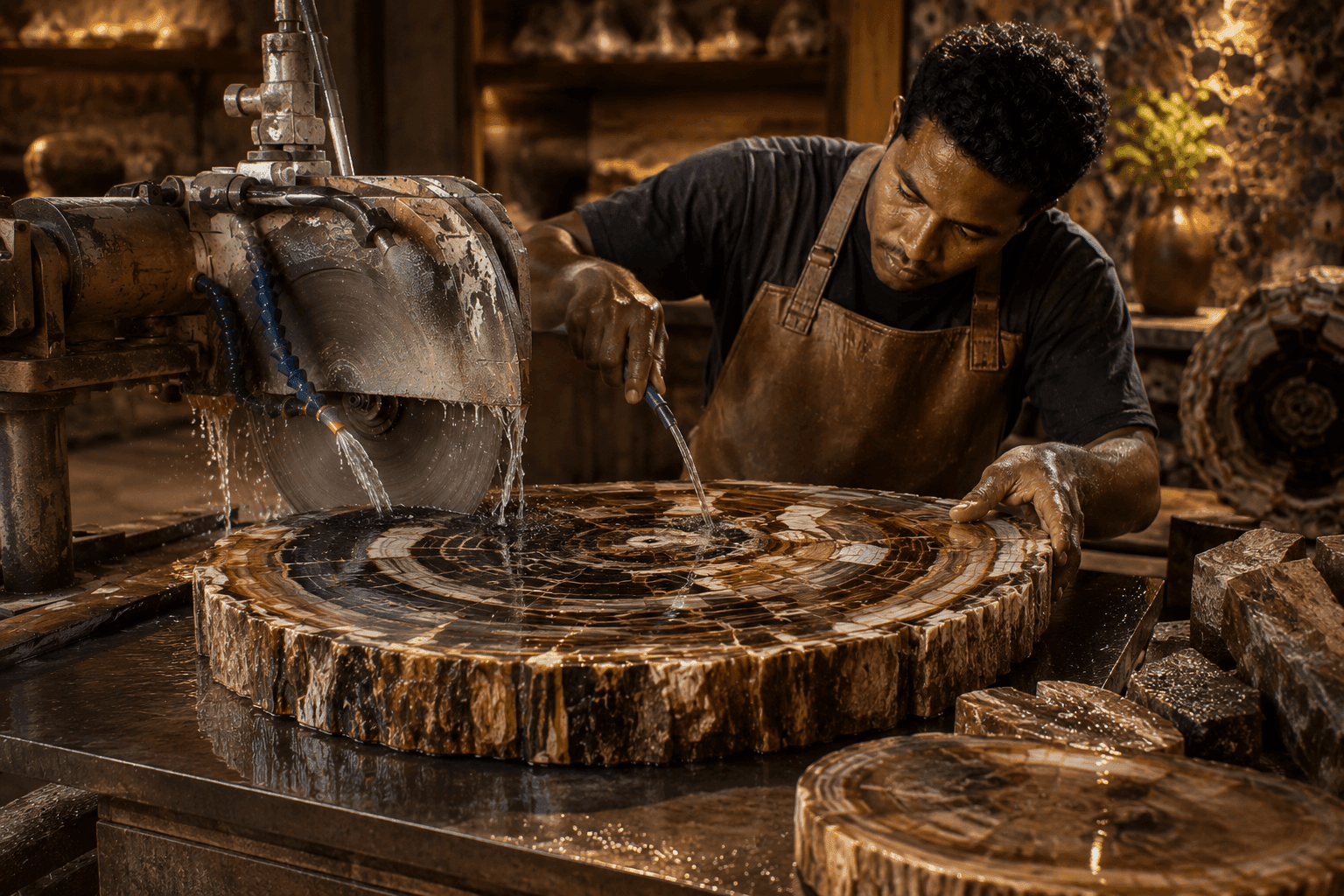
Bulk orders follow a straightforward sequence:
- Brief: you share project scope, quantities, format (raw, slab, vessel, decorative), and timeline.
- Selection: we propose available named trunks matching your color and volume requirements, with photos of the actual material.
- Quotation: pricing is confirmed on devis, based on the specific trunks, cutting requirements, and finishing level — never a flat catalogue rate, since no two trunks are identical.
- Production and logistics: cutting, polishing, and packing are scheduled against your deadline, with export documentation handled on our end.
Lead times depend on whether the order draws from prepared inventory or requires fresh extraction and finishing. We flag this clearly at quotation stage, so procurement teams can plan around a realistic date rather than an optimistic one.
Discuss volume, available trunks, and timelines with our wholesale team.
Contact Our Wholesale DeskFrequently Asked Questions
Is there a minimum order quantity for wholesale?
Minimums depend on the format requested — raw trunk sections, finished slabs, or decorative lots each have different thresholds. Contact us with your project details for a tailored answer.
Can colors be guaranteed consistent across a large order?
Within a single named trunk, tonal consistency is high, since the material came from one tree with one mineralization history. Across different trunks — even within the same color family, like Fusca — natural variation should be expected and is part of the material's character.
Does petrified wood need sealing or special maintenance after installation?
No. As a quartz-based material with a hardness of 7 on the Mohs scale, it resists water, heat, UV, and frost without treatment. This is a practical advantage for commercial installations with heavy use.
Can we order raw, uncut trunk sections for our own finishing?
Yes. Many trade buyers prefer raw or semi-prepared sections to control final cutting and polishing themselves. Availability depends on current extraction and is confirmed per trunk.