
What You Are Really Buying
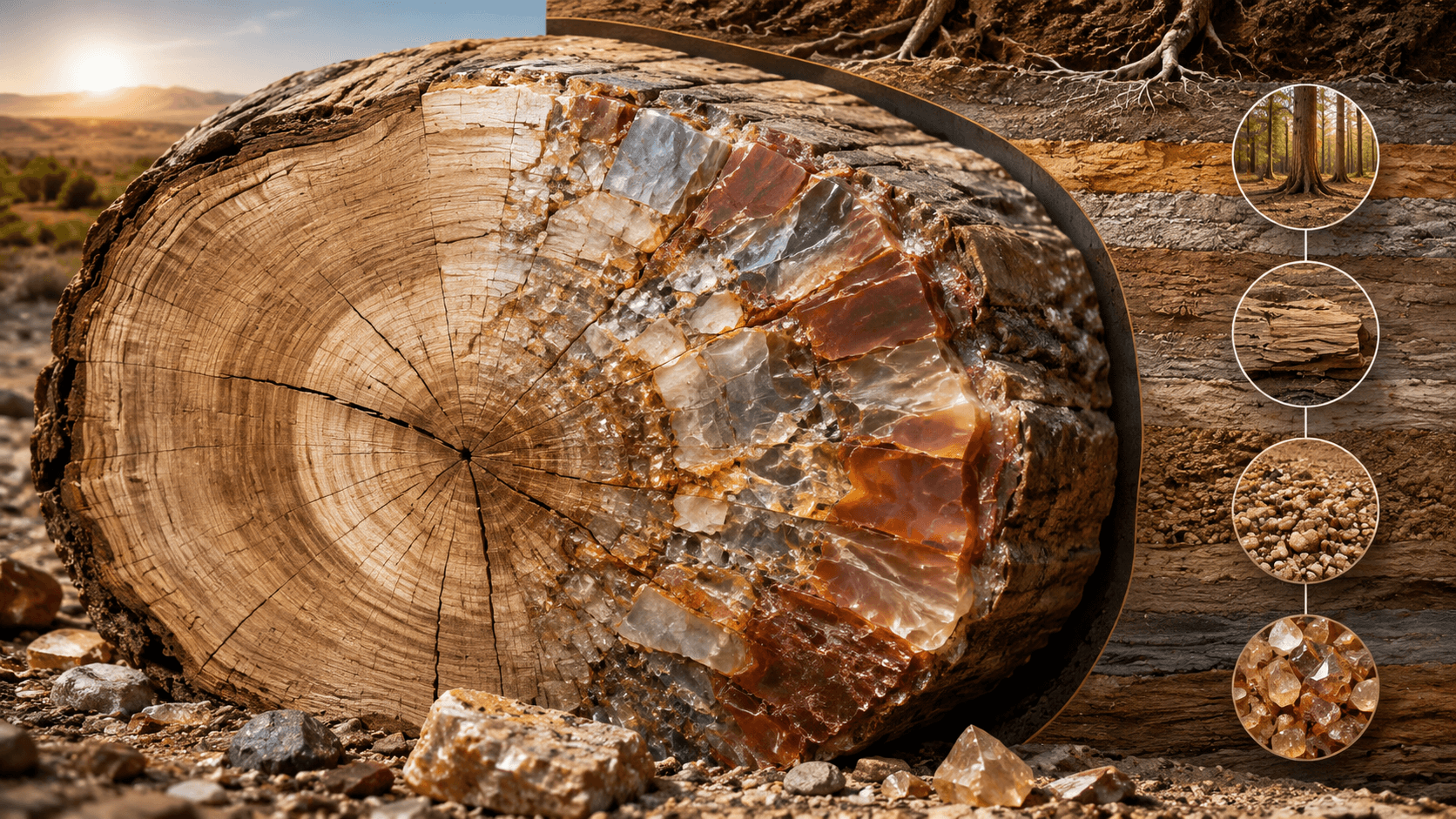
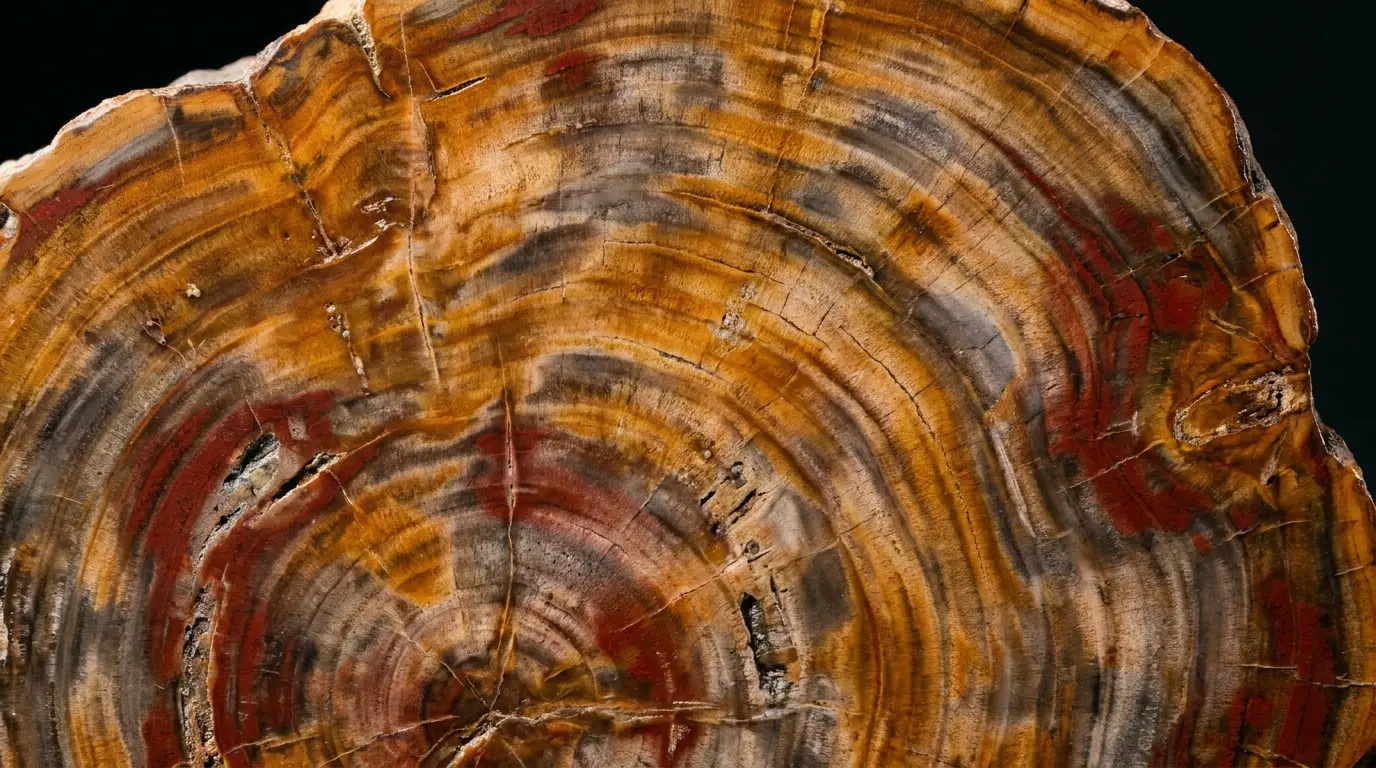
When you look for petrified wood for sale, you are not shopping for a material. You are choosing a single tree that stopped living around 230 million years ago, in the Triassic, and slowly became stone.
At Medusa, every trunk is lifted one by one from the south-west of Madagascar. We do not buy petrified wood by the ton, sort it by grade, and sell it by the square metre. Each trunk arrives whole, is studied, and is given a name. That difference shapes everything that follows on this page.
The transformation itself is precise. Over millions of years, mineral-rich water seeped through the buried wood and replaced its organic tissue, cell by cell, with silica. The result is quartz — the same mineral as rock crystal. The wood is gone; its architecture remains. Growth rings, bark texture, the grain of the trunk: all preserved in stone that ranks 7 on the Mohs scale.
The tree is no longer wood. It is quartz that still remembers being a tree.
This is why a Medusa piece behaves nothing like timber. It is heavy. It stays cool to the touch. It is indifferent to water, heat, UV light and frost. A table that lives outdoors through winter will not care.
Named Trees, Not Product Lines
Most sellers offer categories. We offer arbres — individual trees, each with a name that describes its own colour:
- Ambra — amber, warm and honeyed
- Argentea — silver, cool and pale
- Fusca — brown, deep and earthy
- Umbra — dark, close to shadow
- Viridis — green, rare and mineral
These names are not marketing. They are the only honest way to speak about what we sell, because the colour of each trunk is unique and cannot be reordered. The tones come from the metals present during fossilisation: iron gives red and ochre, manganese produces black and violet, chrome and cobalt bring green and blue.
Here is the point that matters most when you buy. When a trunk is cut and worked, its colour disappears with it. Once Viridis is gone, there is no second Viridis. The next green trunk we find will be its own tree, with its own name and its own shade. You are not choosing from a palette that restocks. You are claiming a colour that ends with the tree.
If you want to understand how these hues form, our detailed piece on the colours of petrified wood follows the chemistry tone by tone.
What Is Available Right Now
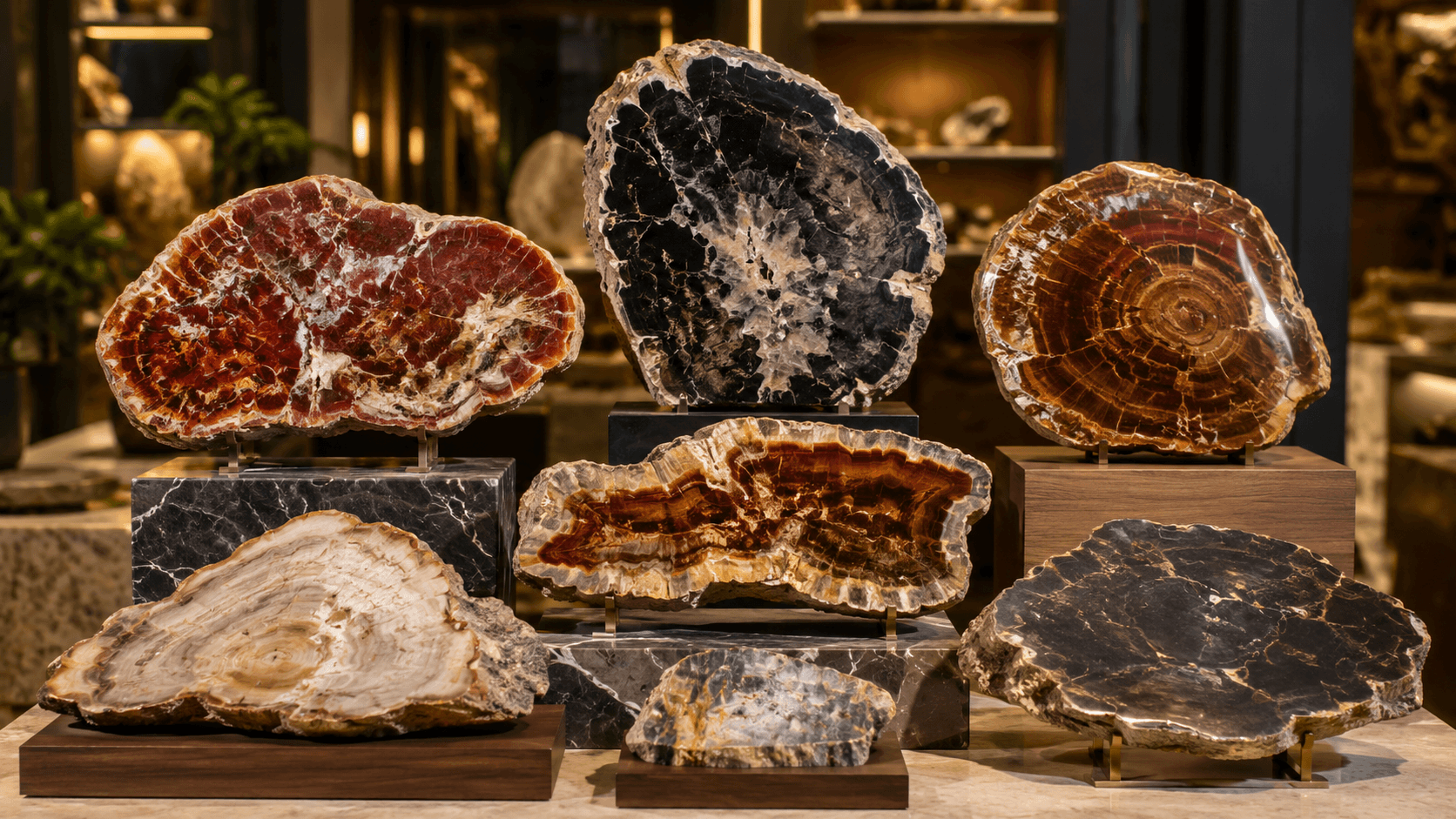
Because each trunk is singular, our offering changes as pieces are claimed and new trunks are worked. Broadly, what we make falls into a few families:
Tables. Dining tables, low tables, console tops. A single cross-section becomes the surface, so the growth rings sit at the centre of the room. These are the pieces where scale and grain speak loudest.
Basins and vasques. A trunk hollowed and polished into a sink. Quartz does not fear water, so a Medusa basin will outlive the bathroom around it.
Decorative objects. Smaller sections, offcuts kept whole, pieces chosen for a shelf, an entrance, a desk. The place to begin if you are new to fossil wood.
Each object carries the name of the tree it came from. When you enquire, you are not asking for "a green table" — you are asking whether Viridis, or a specific trunk, is still available.
Discover the trunks currently available and reserve the one that speaks to you.
Explore the collectionHow to Choose Your Piece
A few questions make the decision clear.
Colour first, or use first? Some clients arrive with a room in mind and let the space decide — Ambra for warmth, Argentea for a cooler, minimal interior, Umbra when the piece should recede. Others fall for a single trunk and build around it. Both are right.
Where will it live? Quartz is inert, so there is no wrong room. A basin belongs to water; a table anchors a dining space; an object finds an entrance or a study. Weight is the practical constraint, not durability — these pieces are dense, and placement should be considered before delivery.
Whole section or worked piece? A raw polished cross-section keeps the bark and the irregular edge. A finished table or basin is shaped for use. Neither is more authentic; both come from the same trunk.
If you are weighing a fossil wood table specifically, our guide to choosing a petrified wood table goes deeper into proportion, base and grain.
Authenticity and Origin
The market has imitations — resin, printed surfaces, dyed stone. Genuine Madagascar petrified wood proves itself in a few ways you can verify.
- Weight. It is quartz. It is heavier than it looks.
- Temperature. It stays cool. Timber and resin do not.
- Hardness. At 7 on Mohs, it resists scratching by steel. Read more in our note on the hardness of petrified wood.
- The grain that goes through. The rings and grain are not printed on the surface. They run through the whole mass, because they are the mass.
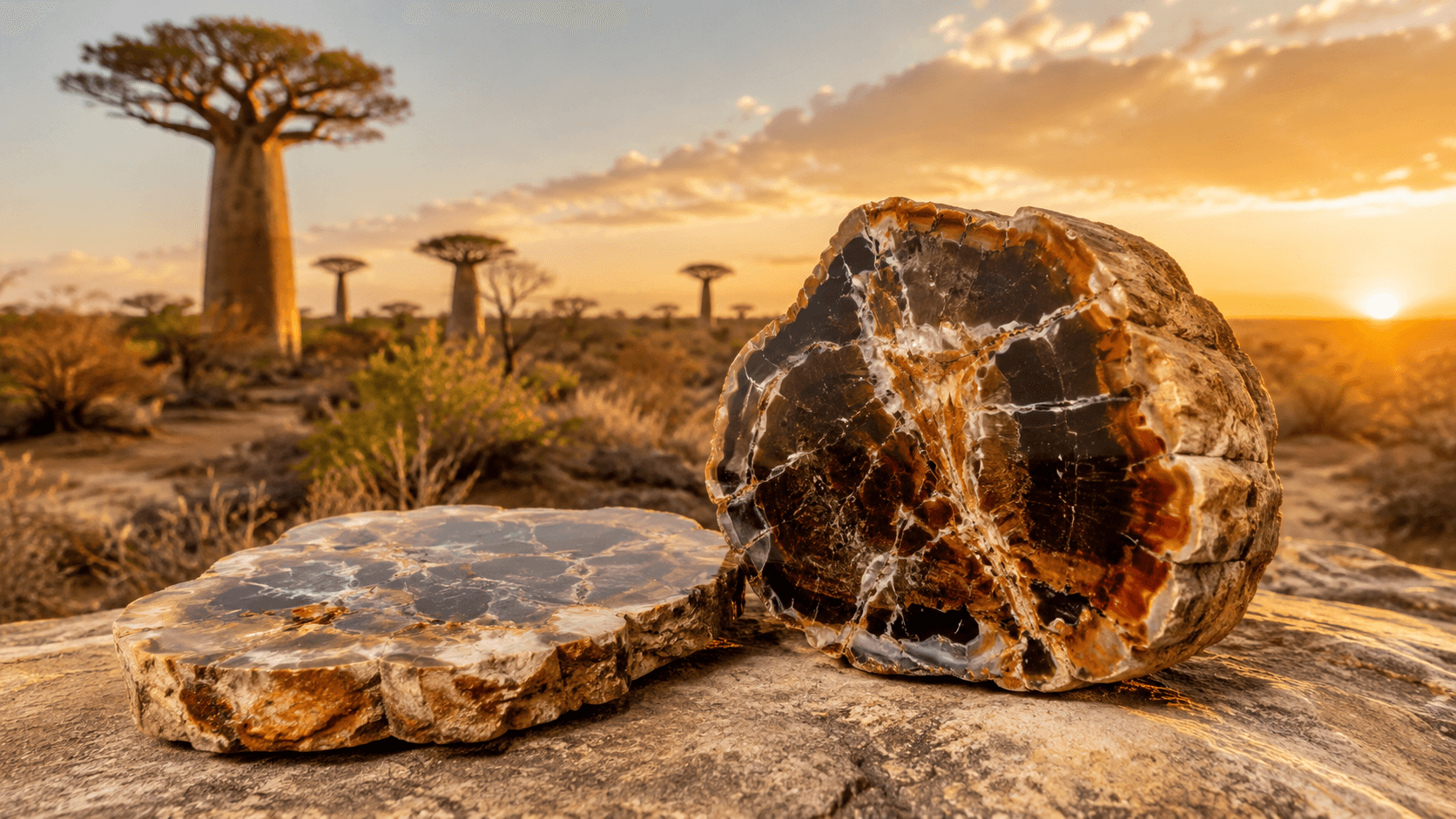
Our trunks come only from the south-west of Madagascar, one of the few places where Triassic fossil wood surfaces in this quality. We name and record each one. When you receive a Medusa piece, you know which tree it was.
Buying, Delivery and Devis
Because no two trunks are the same, we do not publish prices. Each piece is quoted individually — selon la pièce, according to the tree, its size, and the work it needed. This is not evasiveness; it is the only honest way to price something that exists once.
The process is simple:
- Browse the current collection and note the trunks that hold your attention.
- Contact us for a devis on the specific piece — nous consulter for availability and detail.
- We arrange delivery, accounting for the real weight of quartz.
Frequently Asked Questions
Why is there no price on your website?
Because every piece is a single trunk with its own dimensions, colour and finishing work. A published price would suggest interchangeable products, which these are not. Each piece is quoted individually — contact us for a devis on the trunk you want.
Is Madagascar petrified wood suitable outdoors?
Yes. It is quartz, so it is unaffected by water, heat, UV light or frost. A table or basin can live outdoors permanently without deterioration. The only real consideration is weight and stable placement.
Can I order a specific colour again later?
No, and this is central to what we do. Each colour belongs to one tree. When that trunk is worked, its exact shade ends. A future green trunk will be its own tree, Viridis or another name, with its own tone — never a copy of the one before.
How do I know a piece is genuine and not resin?
Genuine petrified wood is heavy, stays cool to the touch, and cannot be scratched by steel (7 on the Mohs scale). The grain runs through the whole mass rather than sitting on the surface. Every Medusa trunk is recorded by name and origin from south-west Madagascar.