
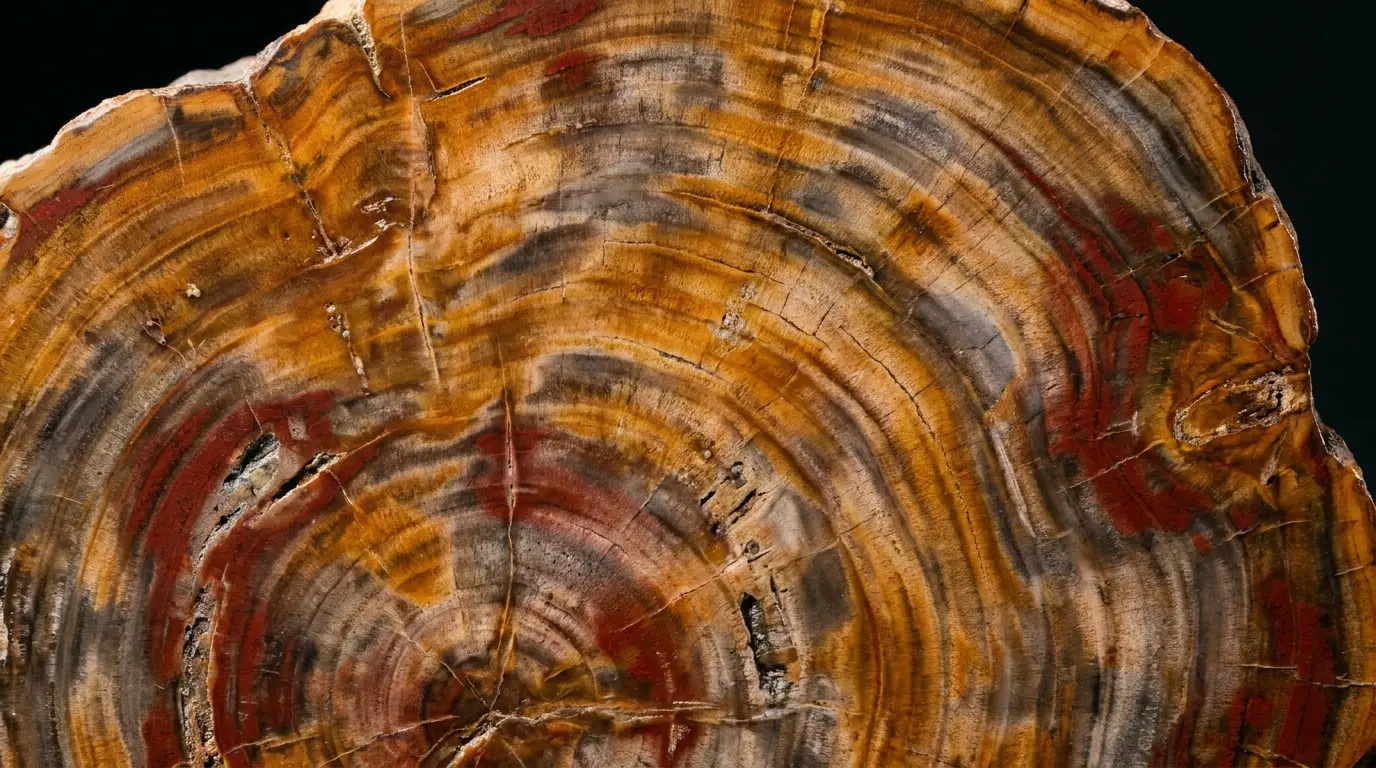
What Shapes the Price of Petrified Wood
Petrified wood is not a commodity. Two trunks pulled from the same stretch of ground in southwestern Madagascar can differ enormously in value, because value here is not a function of volume — it is a function of identity. What you are paying for is a specific tree, 230 million years old, that mineralized in a specific way, in a specific place, and now exists as a finite, non-renewable object.
At Medusa, we don't quote a generic "price per kilo." We quote a piece — a named tree, a cut, a finish. This guide explains the factors that genuinely move the needle, so that when you ask us for a quote, you understand exactly what you're evaluating.
The Individual Tree Behind Every Price Tag
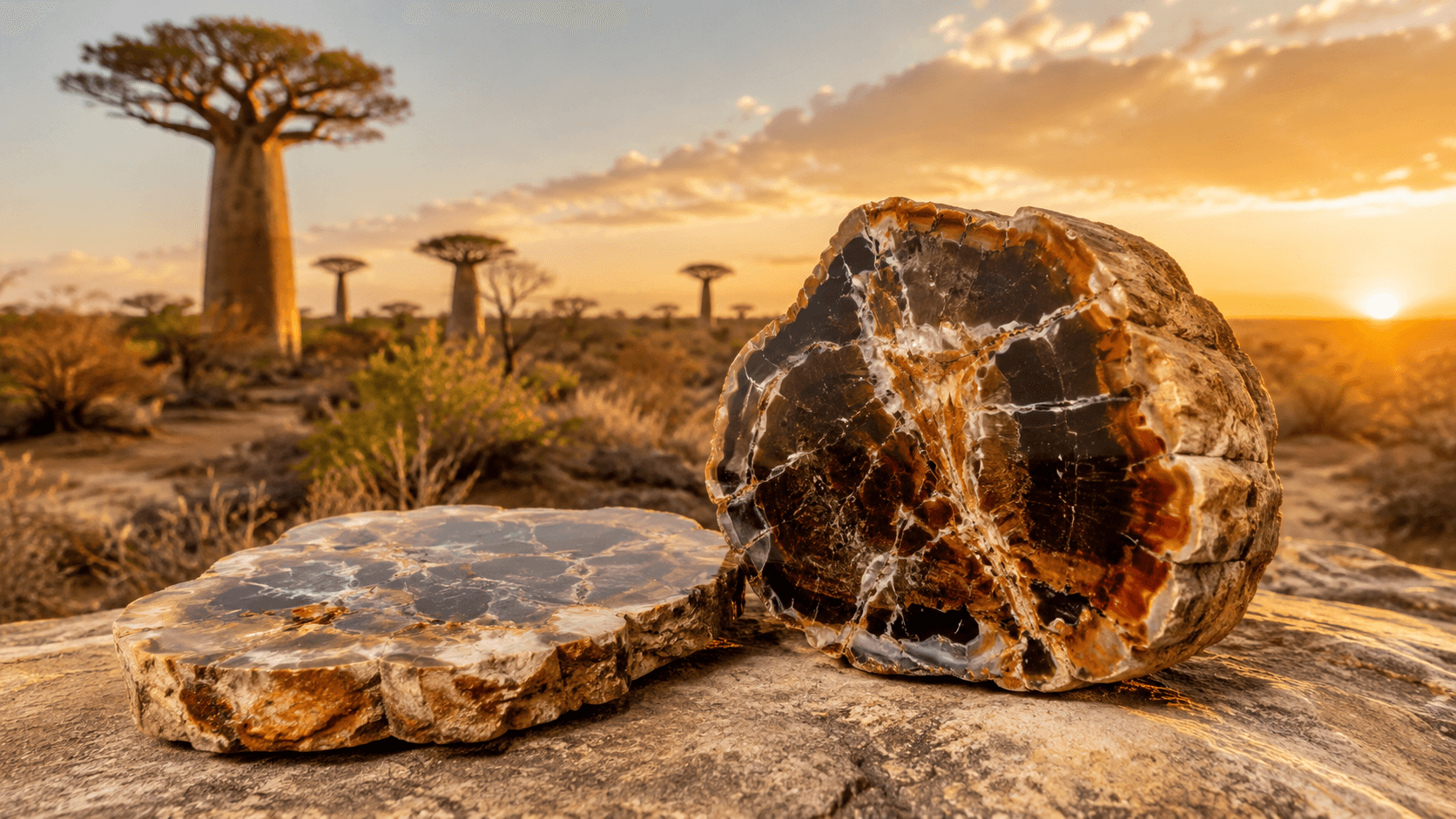
Every trunk we bring up is treated as an individual, not a batch. We give each one a name — Ambra, Argentea, Fusca, Umbra, Viridis — because each carries a mineral signature that will never occur again in exactly the same way. Once a trunk is cut, that particular combination of color, density, and pattern is gone. There is no restocking a tree.
This is the first and most important driver of cost: you are not buying "petrified wood," you are buying what remains of one tree among many, and what remains is finite by definition.
- Size and completeness of the trunk section
- Whether the piece retains its natural silhouette or has been fully worked
- Rarity of the specific mineral coloring in that individual tree
- How much material was lost or gained in stabilizing and cutting
A slab of petrified wood is not manufactured. It is recovered, once, from a tree that stopped growing before the first dinosaurs walked.
Hardness, Density, and the Cost of Working Quartz
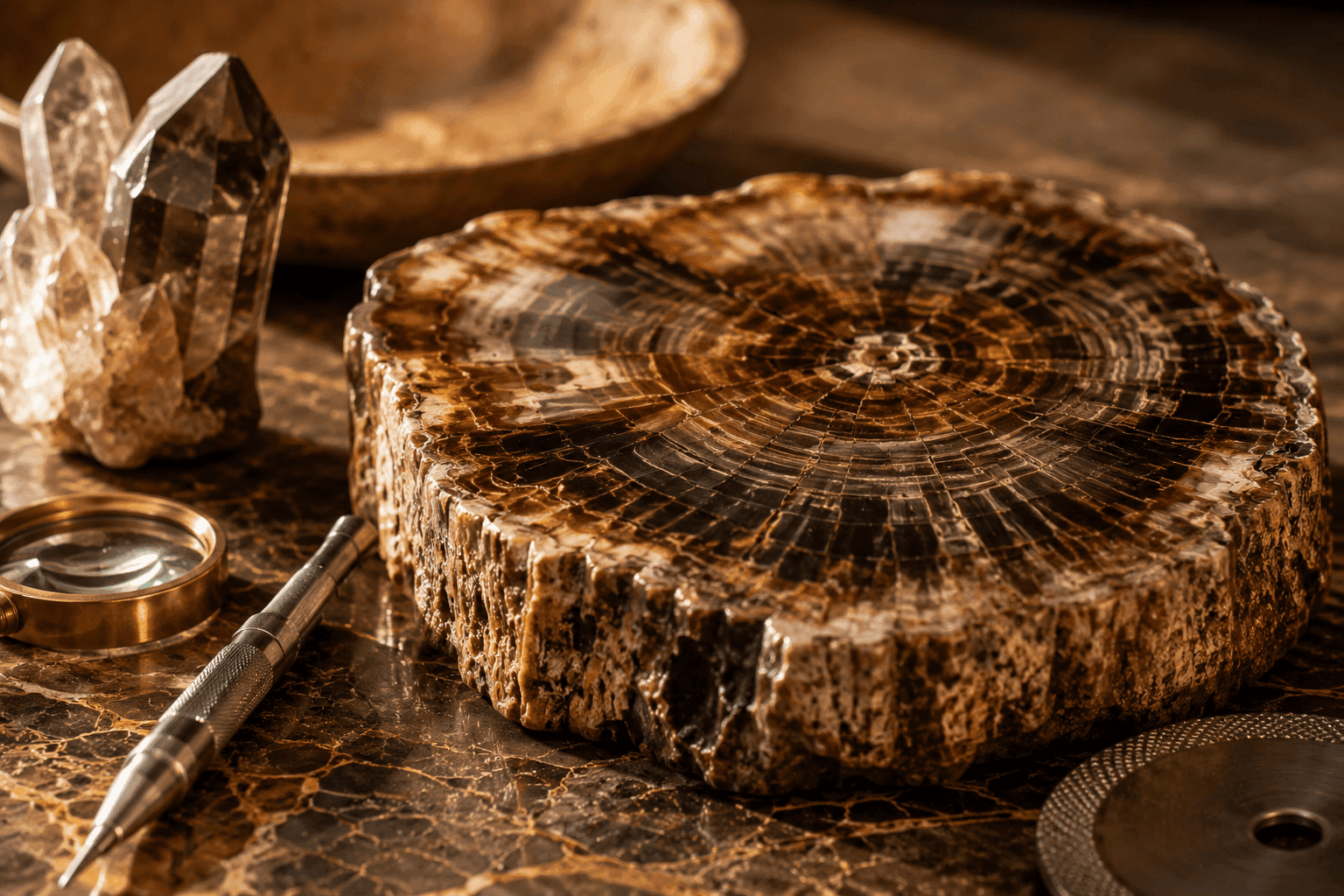
Petrified wood from Madagascar is fossilized to the point of being pure quartz — a mineral rated 7 on the Mohs hardness scale. That figure matters commercially, not just scientifically. Cutting, polishing, and shaping a material this hard requires diamond tooling, slower passes, and more time than working any true wood species. Every hour spent shaping the stone is an hour spent against a material that resists the tool.
The density adds a second layer of cost: these pieces are heavy. Freight, handling, and installation for a table base or a vasque in petrified wood are not comparable to timber furniture of the same footprint. This weight is also the reason the material outlasts almost anything else in a home — it will not warp, crack under heat, fade in UV light, or suffer frost. That durability is a value in itself, but it is also a cost embedded upstream, in every stage of production.
Color, Rarity, and the Palette That Disappears
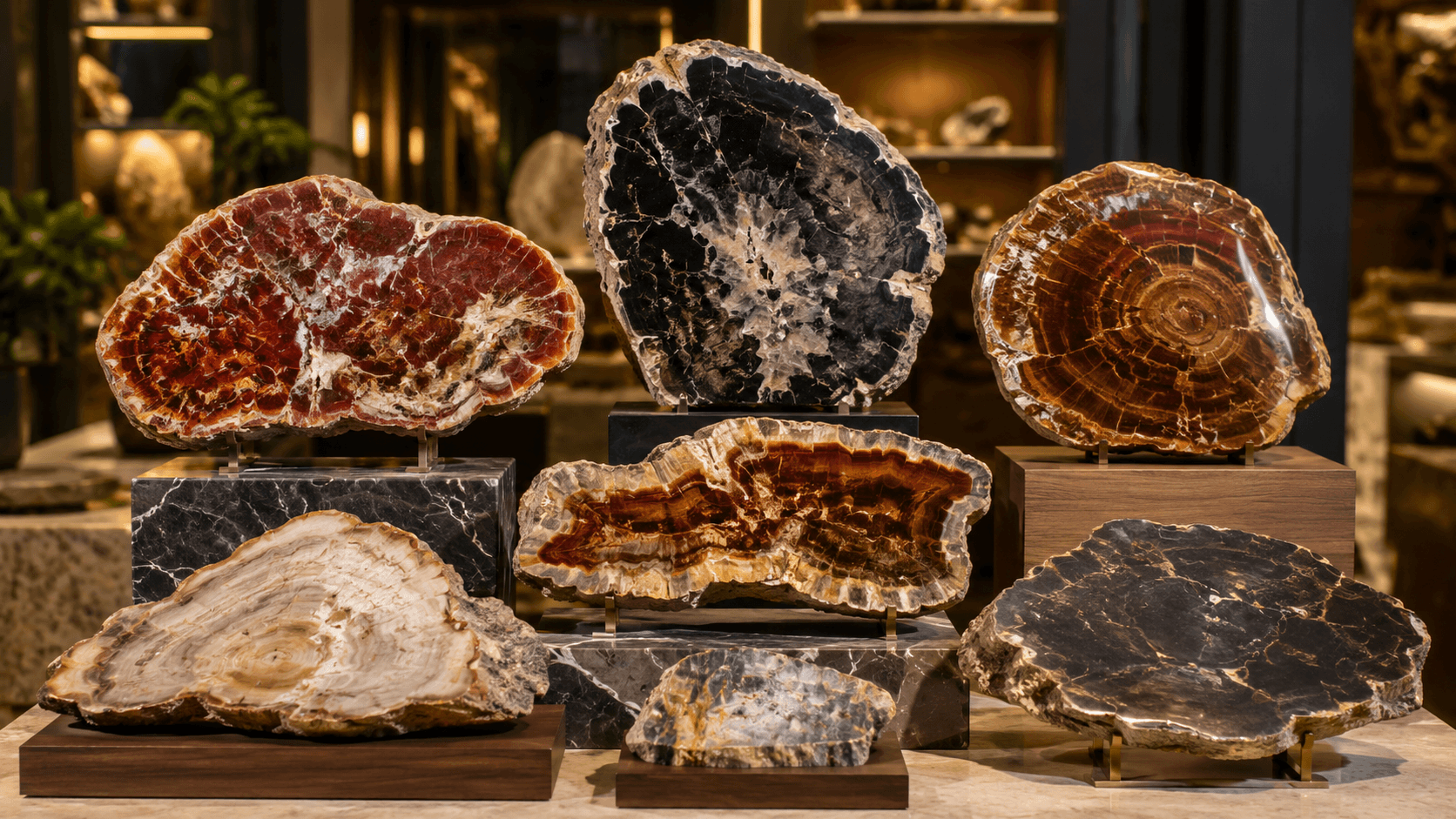
Color in petrified wood is not applied — it is chemical. Iron produces reds and ochres. Manganese produces blacks and violets. Chromium and cobalt, far rarer, produce greens and blues. Each trunk absorbed its own combination of trace metals over millions of years, which is why two pieces from the same forest floor can look nothing alike.
This is where rarity becomes measurable in practical terms:
- Warm ambers and browns are the most commonly recovered tones
- Deep blacks and violets appear less frequently
- True greens and blues, tied to chromium or cobalt content, are the scarcest
- Strong contrast between growth rings and matrix raises visual and material interest
A piece with an unusual mineral palette costs more to source in the first place, simply because fewer trunks yield it. This is not a marketing claim — it is geology.
Craftsmanship and Finishing: Where Time Becomes Value
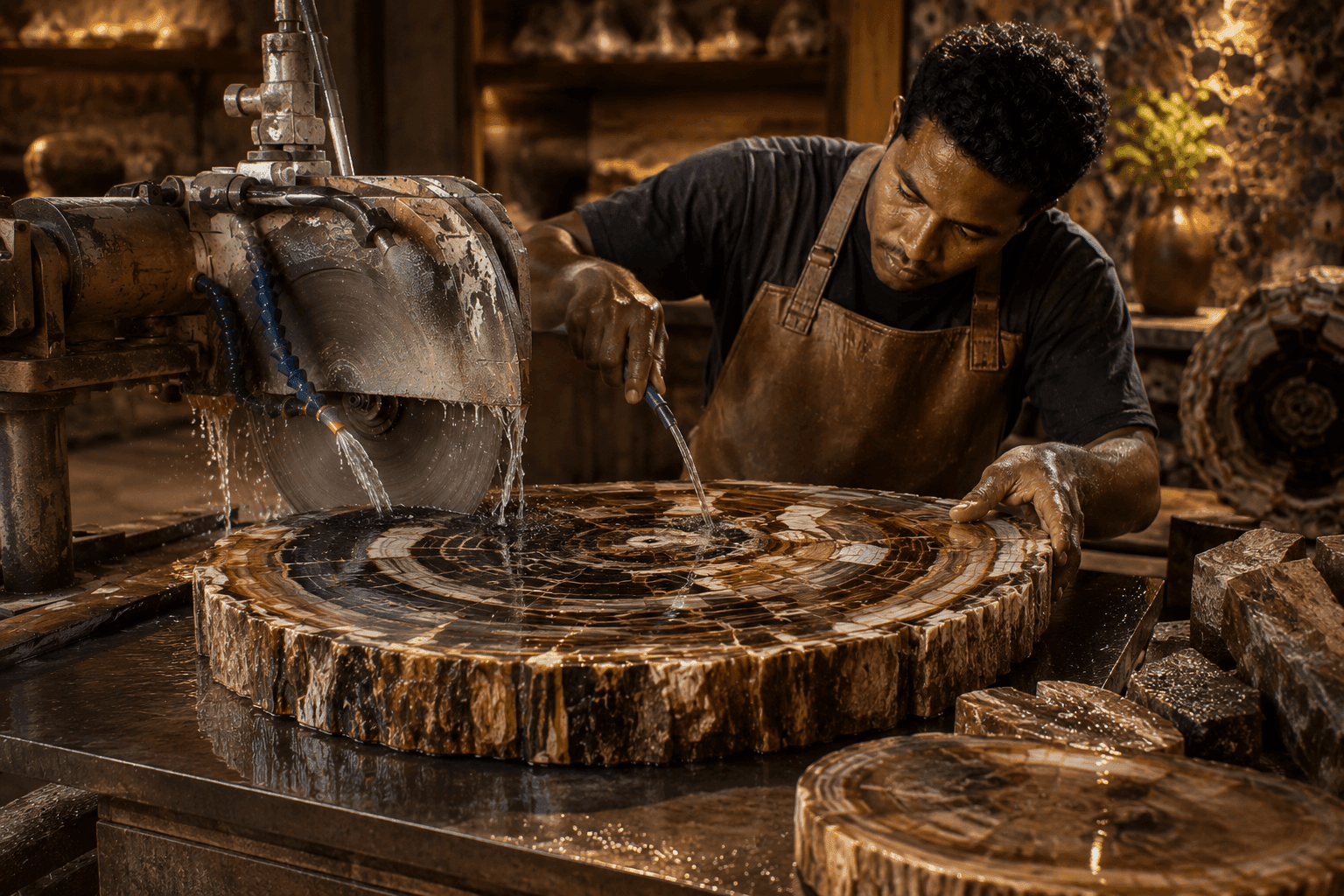
No two trunks cut the same way. An artisan working petrified wood has to read the piece before touching it — where the grain runs, where a fracture might open, where the color is strongest. This is not templated production. A vasque, a table top, or a sculptural base is finished according to what that specific block of stone allows, which means the hours invested vary from piece to piece.
- Rough trunk sourcing and transport
- Stabilization and structural assessment
- Cutting along the most favorable plane
- Polishing to reveal grain and mineral pattern
- Finishing for functional use (sealing edges, leveling bases, fitting drains for vasques)
Each step adds labor that cannot be shortened without damaging the material or its appearance. This is why a finished piece for interior decoration carries a different value than the raw slab it came from.
Every piece we offer comes with its own story and its own quote — nothing here is priced off a catalogue.
Browse the CollectionGetting an Accurate Quote
Because each trunk is unique, we don't publish fixed price lists. What we do instead is walk you through the piece in question — its origin tree, its color, its dimensions, and the work required to bring it to its final form. Reach out with the piece you're considering, and we'll provide a precise quote based on what that individual tree can actually offer.
Frequently Asked Questions
Why doesn't Medusa publish fixed prices for petrified wood?
Because no two trunks are identical. Size, color rarity, and the amount of work each piece requires vary enough that a single price list would misrepresent most pieces. We provide value on request, based on the actual trunk in question.
Is petrified wood more expensive than natural wood furniture?
The comparison isn't direct. Petrified wood is fossilized quartz, not wood — it requires diamond tooling, more time to shape, and heavier handling. In exchange, it is immune to water, heat, UV fading, and frost in a way no timber can match.
Does color affect the value of a piece?
Yes. Colors come from trace metals absorbed during mineralization — iron for reds and ochres, manganese for blacks and violets, chromium or cobalt for the rarer greens and blues. Scarcer colorations naturally command more attention when sourcing.
Why does Medusa name each trunk instead of grouping pieces by category?
Because each trunk is an individual object recovered once, with its own mineral history. Naming it — Ambra, Argentea, Fusca, Umbra, Viridis — reflects that reality rather than treating it as interchangeable stock.