
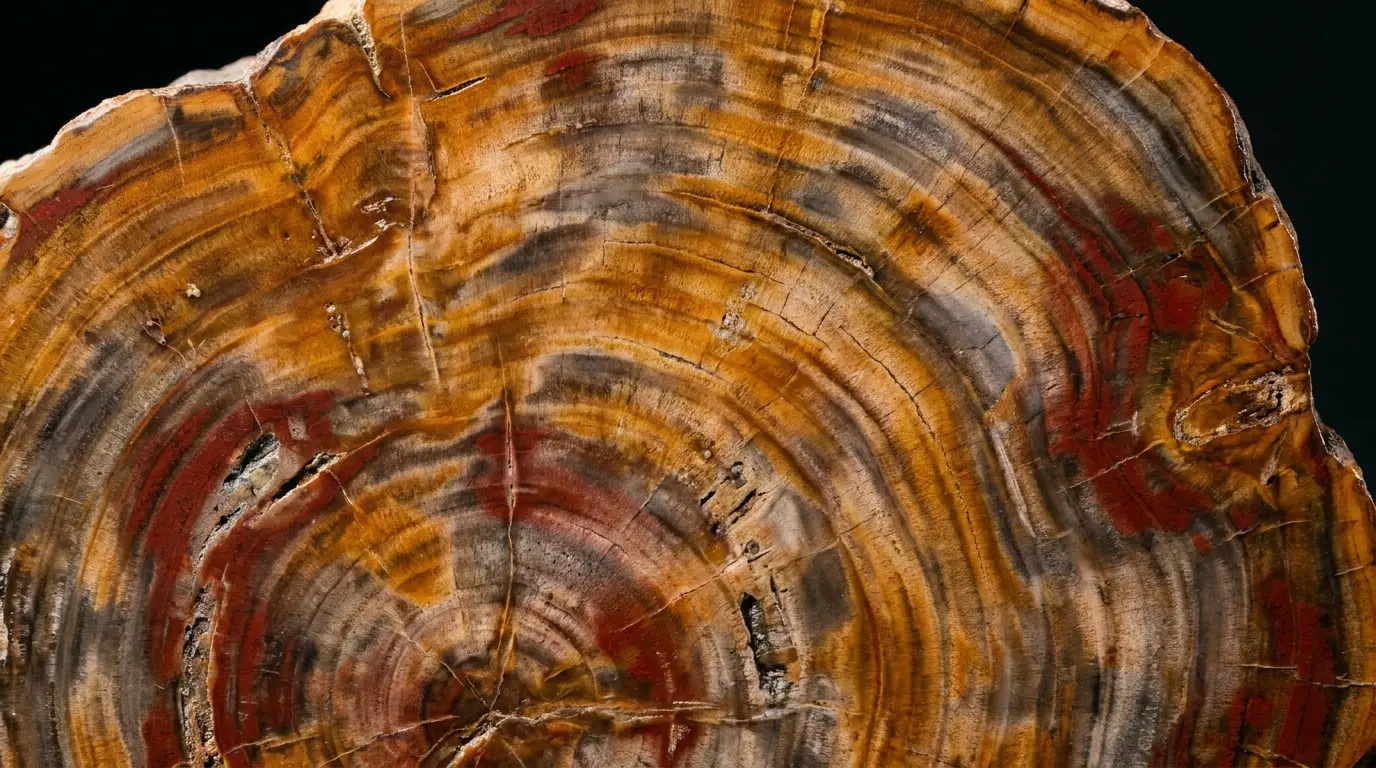
What "Authentic" Actually Means
The petrified wood market is crowded with resin composites, dyed reconstitutions, and low-grade fragments sold as decorative curiosities. None of it comes close to what a genuine fossilized tree offers. Authentic petrified wood is silicified organic matter — a tree that stood in the forests of southwestern Madagascar roughly 230 million years ago, buried before it could rot, and slowly replaced cell by cell with quartz. What you buy, when you buy it correctly, is mineral history with a trunk's memory still legible in its grain.
Buying authentic petrified wood means buying a specific piece with a specific origin — not a category, not a lookalike. This is where most retailers stop short, and where the difference becomes obvious the moment you see the material in person.
The Trunk, Not the Slab
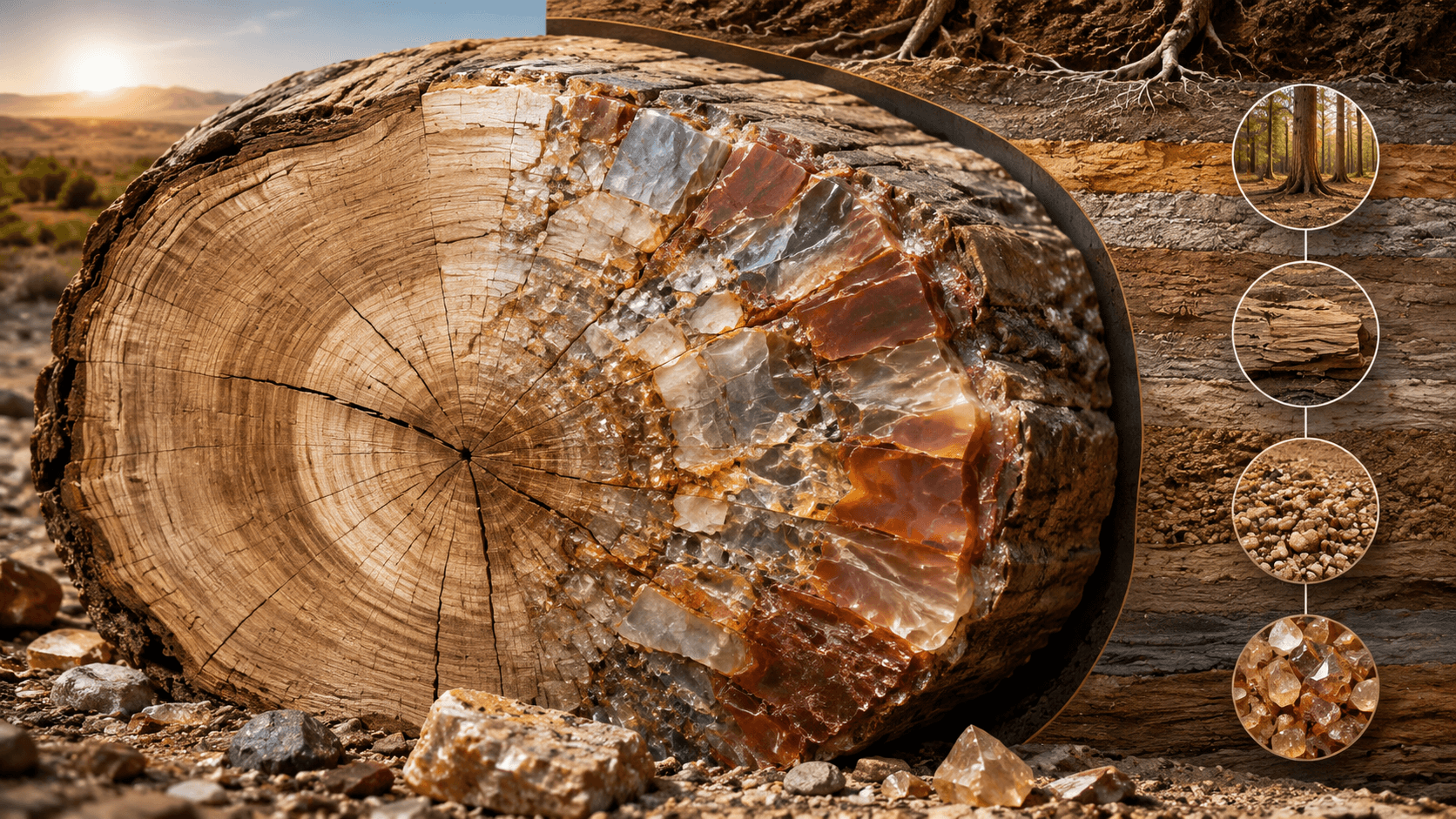
At Medusa, every trunk is treated as an individual — because it is one. Each tree is extracted, one at a time, from the deposits of southwestern Madagascar. Each receives a name: Ambra for the amber-toned trunks, Argentea for the silvered ones, Fusca for deep browns, Umbra for the darkest specimens, Viridis for the rare greens. These aren't product lines invented for a catalogue. They're names given to distinguish one mineralized life from another, because no two trees fossilized the same way.
The color you see is chemistry, not decoration. Iron oxide produces the reds and ochres. Manganese gives blacks and violets. Chromium and cobalt, rarer and prized accordingly, produce blues and greens. When a trunk is cut, its particular palette is used — and what's left of that tree's mineral signature is gone. There is no reproducing it. This is the central fact buyers should understand before purchasing anything labeled "petrified wood": you are not choosing a finish, you are choosing a tree.
Why Madagascar, and Why It Matters to a Buyer
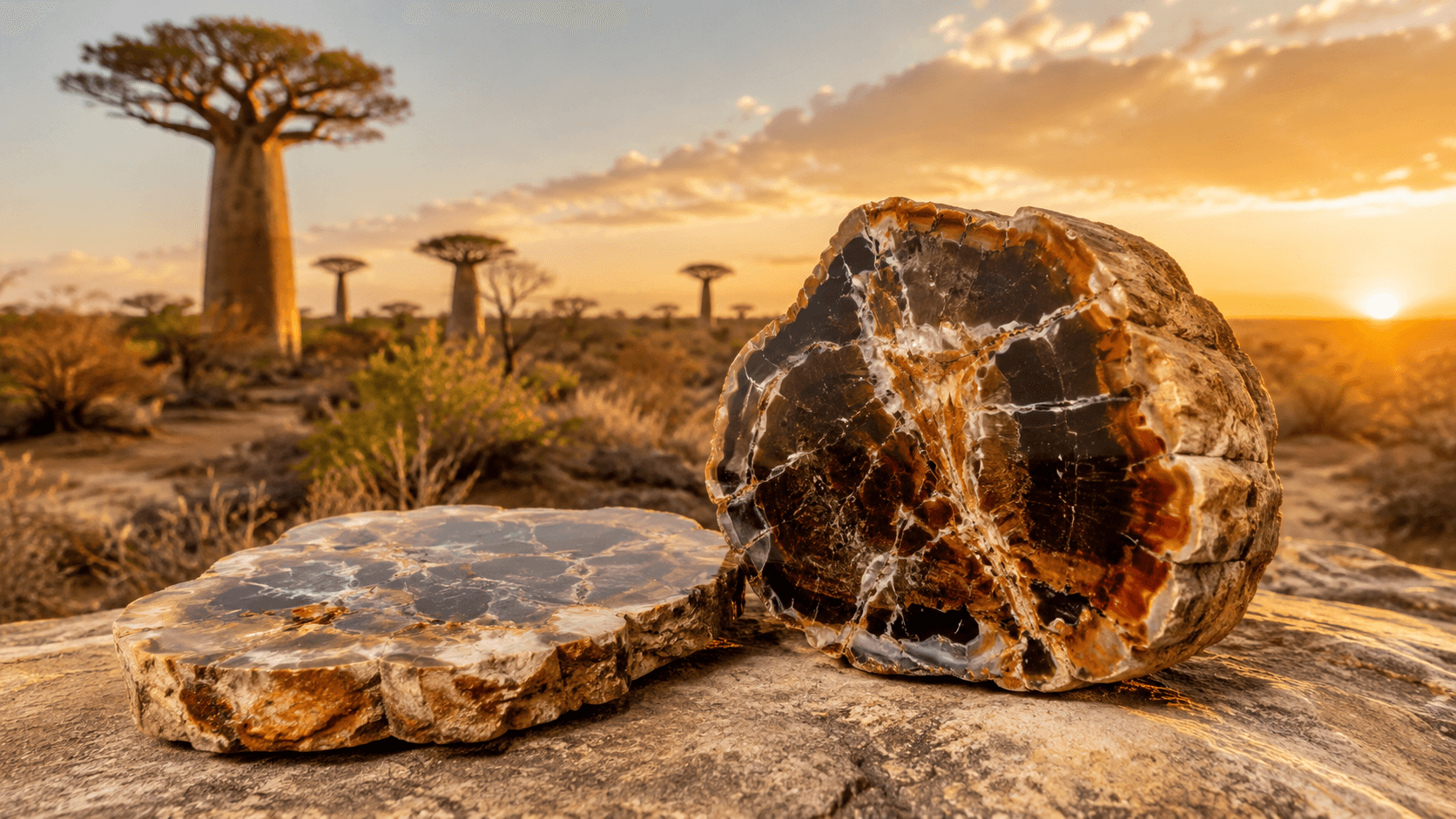
Not all fossilized wood is equal, and origin is not a marketing detail — it determines the physical quality of what you're buying. The deposits of southwestern Madagascar are exceptional for the density and contrast of their veining, a result of specific mineral-rich conditions during silicification in the Triassic period. Buyers sourcing from lesser deposits often receive material that is technically petrified wood but visually flat, with none of the striation or color depth that defines a museum-grade piece.
When you buy petrified wood from Medusa, you're buying material verified to this origin — not wood of uncertain provenance dressed up with a compelling backstory.
What You're Actually Buying: The Physical Facts
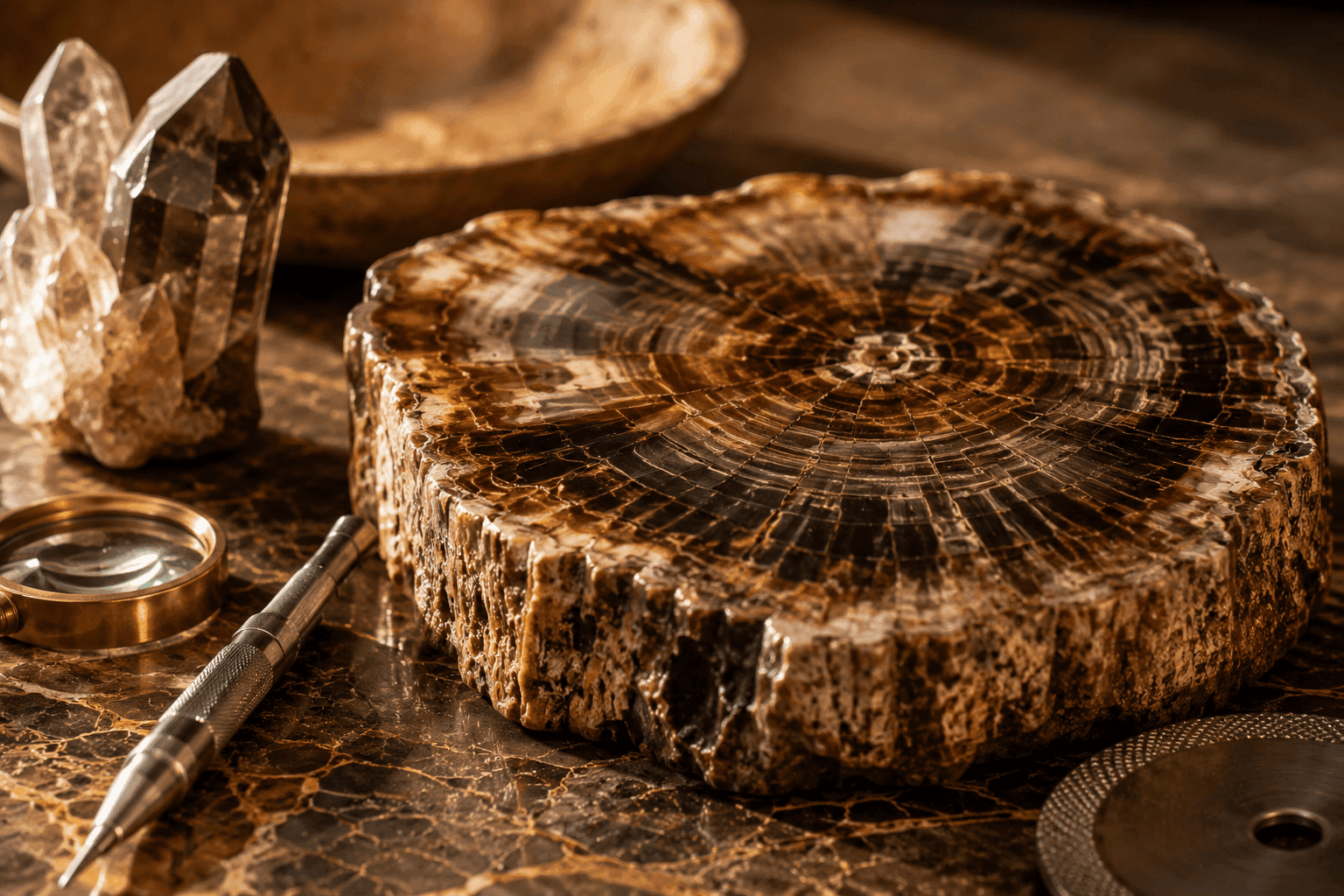
Because petrified wood is quartz, its properties are those of stone, not timber:
- Hardness of 7 on the Mohs scale — harder than a steel blade, resistant to scratching under normal use.
- Total insensitivity to water — no sealing required, no risk of swelling or staining.
- Stable under heat and cold — a petrified wood tabletop tolerates a hot dish or an unheated room without complaint.
- UV-stable — colors do not fade in direct sunlight, unlike dyed composites.
- Substantial weight — a genuine trunk section is dense; this heft is itself a mark of authenticity, since resin fakes are conspicuously light.
This is useful information at the point of purchase: if a piece marketed as petrified wood feels light, scratches easily, or shows uniform, printed-looking patterning, it is not authentic.
From Ground to Room
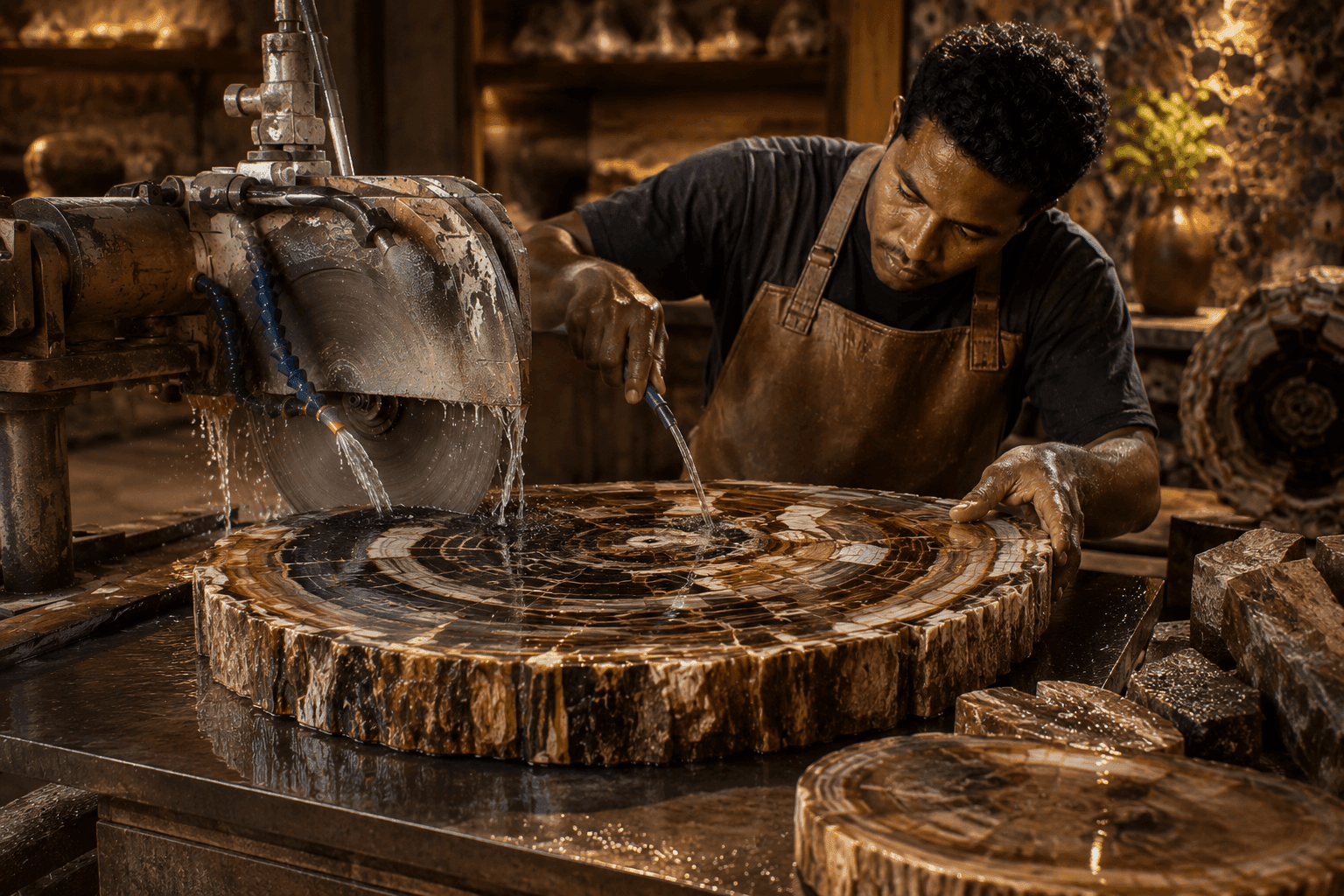
Authenticity extends past the raw material into how it's handled. Each Medusa trunk is cut and polished according to its own internal structure — its fracture lines, its density variations, the natural contours left by 230 million years of pressure. This isn't a production line stamping out identical tabletops. It's a craft process responding to what each individual tree offers, which is why two pieces from the same species of ancient tree can still look nothing alike.
A tree does not fossilize twice. What you buy is what remains — nothing repeated, nothing replaced.
Living With It
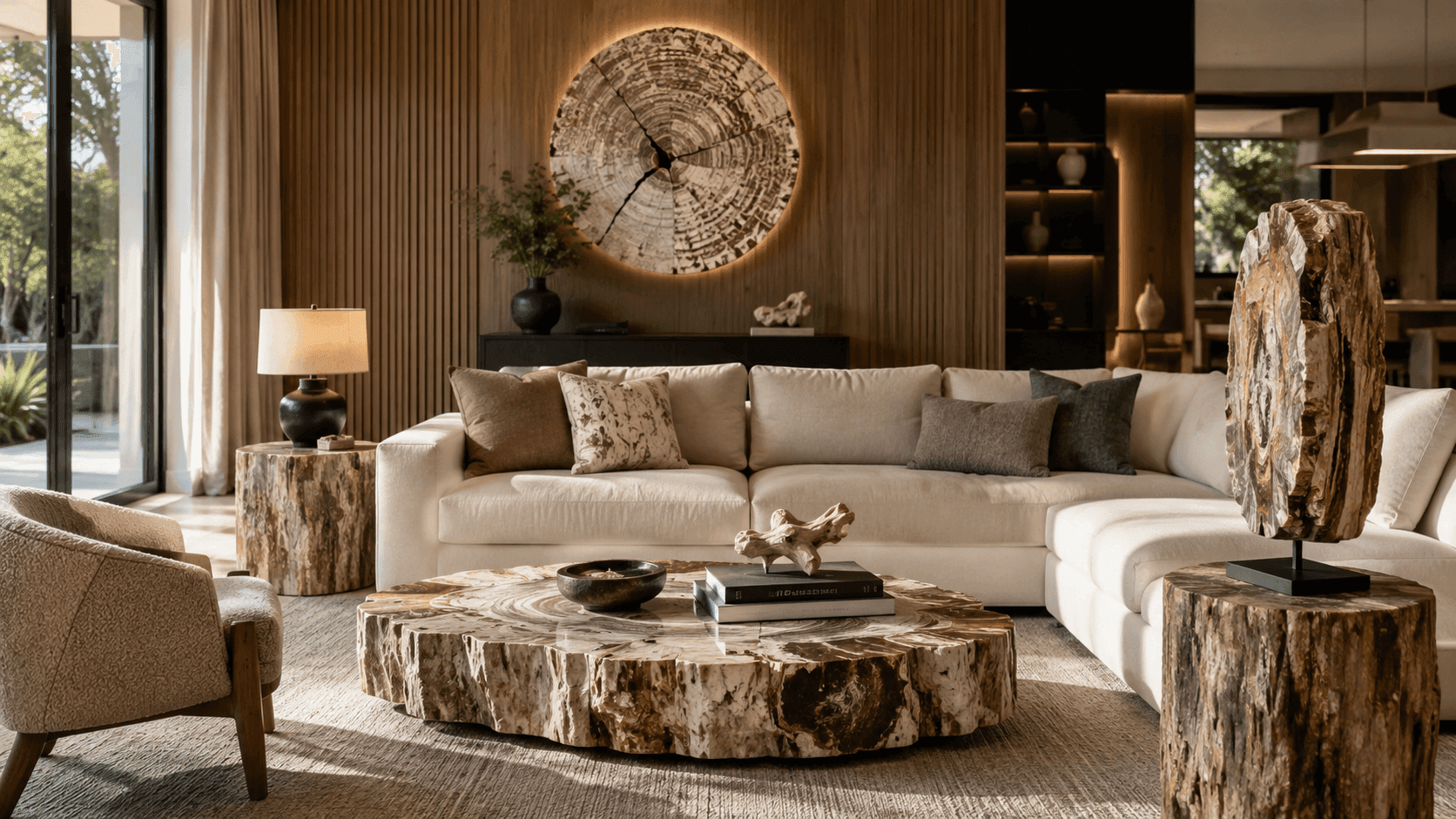
A petrified wood table, vessel, or sculptural object doesn't behave like furniture. It behaves like geology placed indoors. It won't warp, won't need refinishing, won't fade over a decade of sunlight through a window. Buyers looking for a functional piece — a console, a washbasin, a low table — should expect something closer to a stone fixture in permanence, with the visual complexity of wood grain frozen at the moment of mineralization.
See which trunks are currently available and request a quote for your piece.
Browse the ShopFrequently Asked Questions
How can I tell if petrified wood is authentic?
Authentic petrified wood is quartz: it is cold to the touch, notably heavy for its size, and hard enough to resist scratching (7 on the Mohs scale). Dyed reconstitutions are lighter, warmer to the touch, and often show unnaturally uniform coloring.
Why does Medusa name individual trunks instead of selling by category?
Because each trunk is a single tree, not a product type. Names like Ambra, Argentea, Fusca, Umbra, and Viridis identify a specific mineralization and color profile that cannot be reproduced once that trunk has been cut and used.
Does the origin of petrified wood affect its quality?
Yes. The southwestern Madagascar deposits produce denser veining and richer color contrast than most other sources, owing to the specific mineral conditions present during fossilization roughly 230 million years ago.
What is the price of a piece of petrified wood?
Pricing depends on the trunk, its size, its coloration, and the finish required, so we do not list fixed prices. Contact us for a quote tailored to the piece you have in mind.